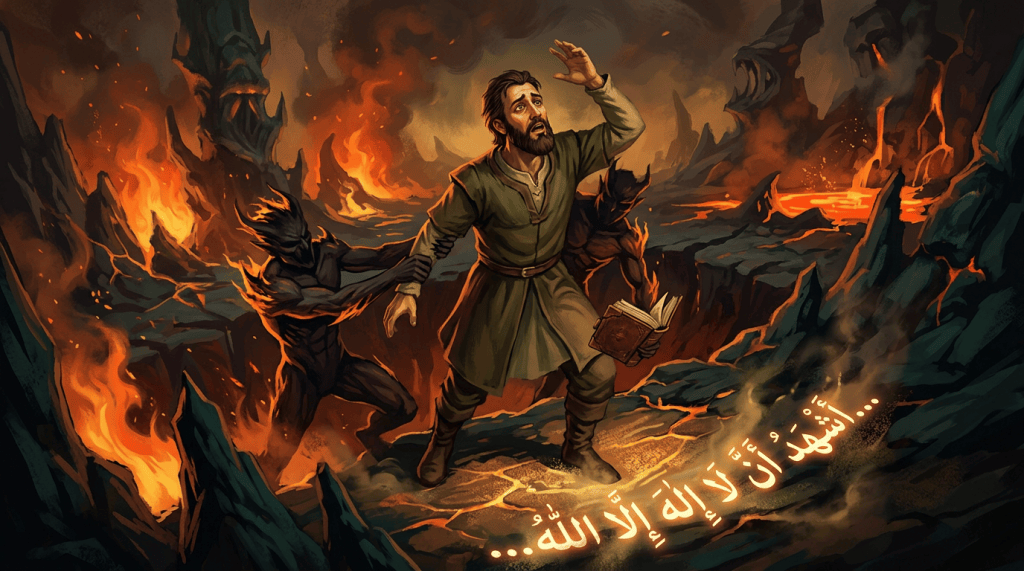
A man lies dying.
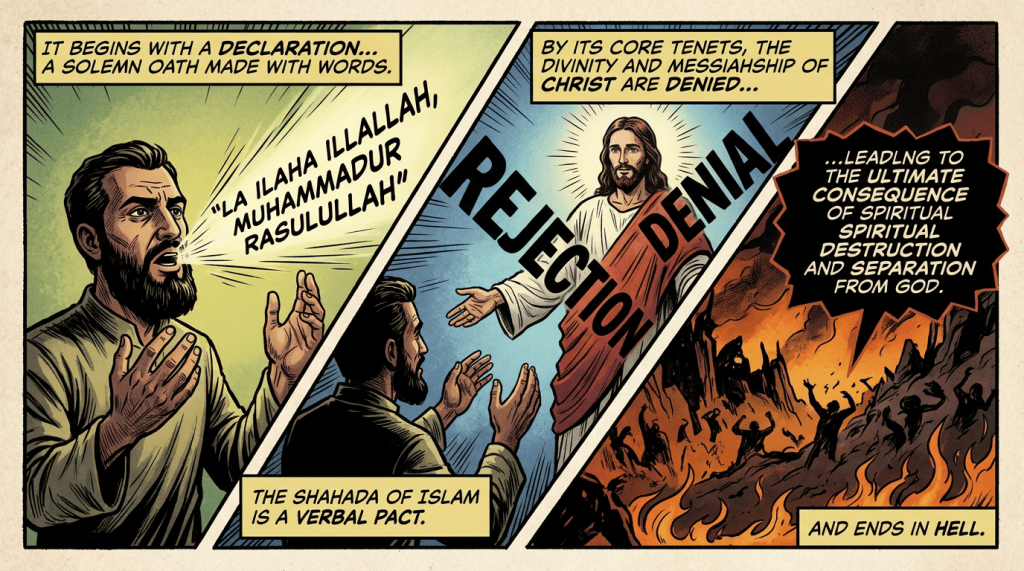
In his final moments he recites the Islamic declaration of faith: “There is no god but Allah, and Muhammad is the messenger of Allah.”
To many observers this appears as a last act of monotheistic piety.
Measured by the plain words of the Bible, it is something else entirely. It is a public installation of a messenger whose defining message denies that Jesus is the Christ, the Son, and the one come in the flesh. That denial is the precise mark the apostle John identifies as the spirit of antichrist.
The man who dies in that confession dies without the Son. The text states the consequence without qualification: he shall not see life, and the wrath of God abides on him.The Shahada is not a generic affirmation of one God. It is a two-part commitment. The first clause names the sole object of worship as the Allah of Muhammad’s revelation. The second clause elevates Muhammad as that Allah’s authoritative messenger.
The content of the message Muhammad delivered is not ambiguous. It states that Jesus was not crucified and that he is only a prophet, not the divine Son. John wrote, “Who is a liar but he that denieth that Jesus is the Christ? He is antichrist, that denieth the Father and the Son” (1 John 2:22). He added, “Every spirit that confesseth not that Jesus Christ is come in the flesh is not of God: and this is that spirit of antichrist” (1 John 4:3).
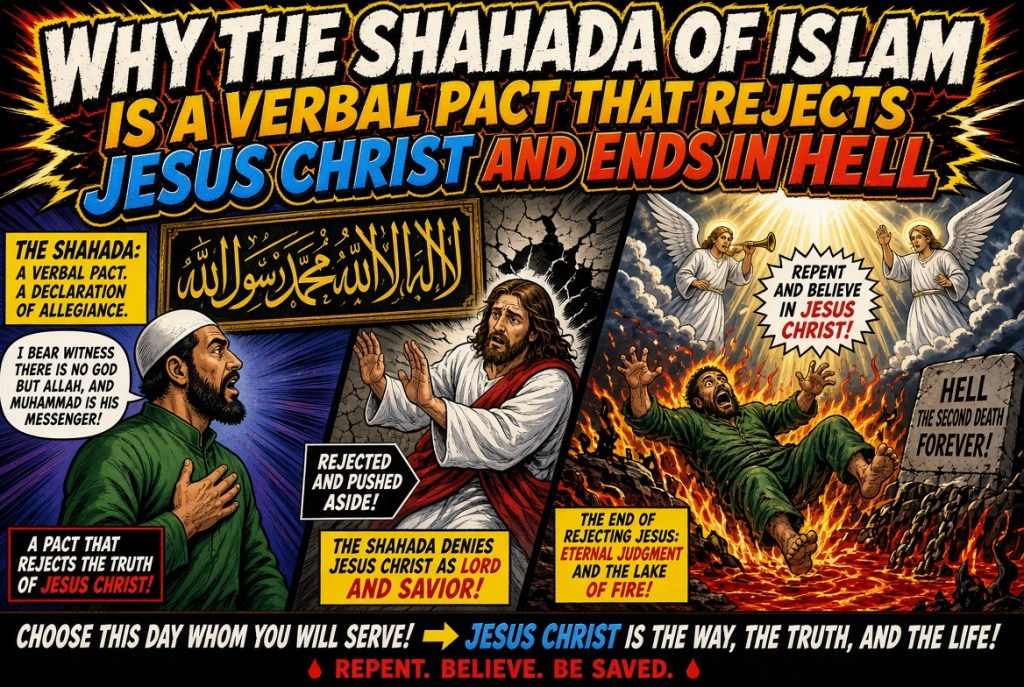
The Shahada does not confess that Jesus Christ is come in the flesh as the Son. It installs the messenger who rejects that confession. The verbal act therefore places the speaker under the description John supplied.
This is not a matter of later theological systems or post-biblical creeds. The test is stated in the first-century text itself. Any spirit, any message, any confession that does not acknowledge Jesus Christ come in the flesh fails it. The Shahada fails it by design. It does not leave the question open. It settles the question by declaring Muhammad the messenger whose word on the matter is final. In doing so it rejects the Jesus who said, “I am the way, the truth, and the life: no man cometh unto the Father, but by me” (John 14:6).
The origin of the message reinforces the character of the act. The same apostle who gave the test also warned that Satan transforms himself into an angel of light (2 Corinthians 11:14). Paul further declared that even an angel from heaven preaching another gospel is to be accursed (Galatians 1:8).
The historical accounts of Muhammad’s first encounters describe a spirit that appeared in light, issued commands under duress, and produced a message that from its opening words inverted the claims made about the Son. Whether one accepts every detail of those accounts, the finished message stands. It is another gospel. Reciting the Shahada is the spoken acceptance of that other gospel as authoritative. It is the verbal entry into the system built upon it.
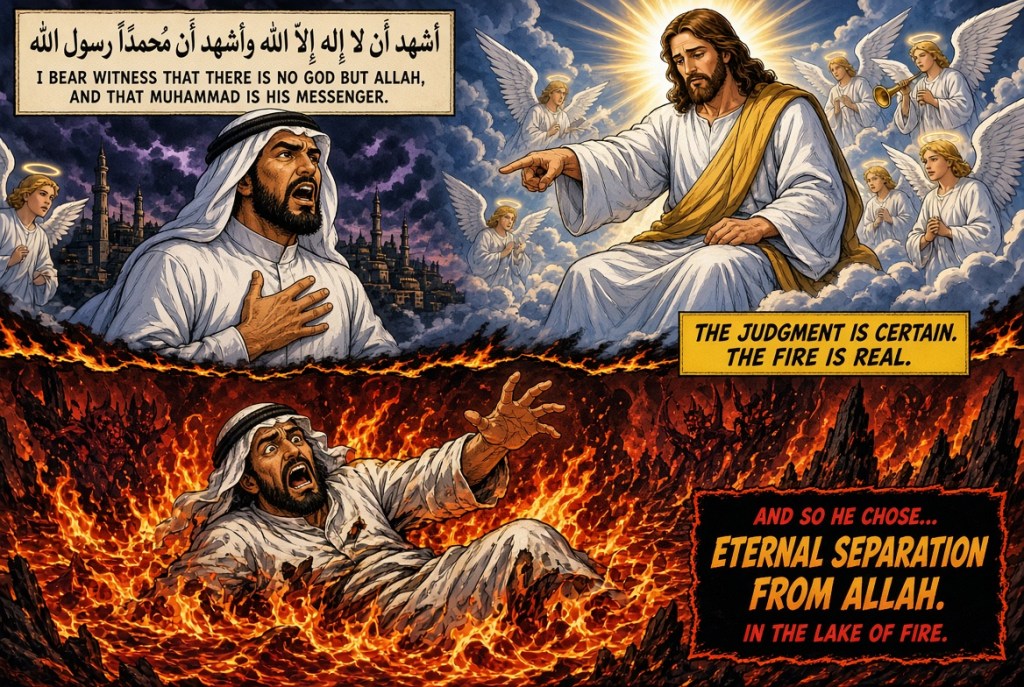
Death does not alter the content of the confession. Hebrews 9:27 states the order plainly: “it is appointed unto men once to die, but after this the judgment.” The judgment follows the death. There is no text that suspends the test of the Son until some later moment or grants a post-mortem opportunity to reverse a denial of him. The man who recites the Shahada in his final breaths dies affirming the denial. He dies without the Son. John wrote, “He that hath the Son hath life; and he that hath not the Son of God hath not life” (1 John 5:12).
Jesus himself stated the parallel consequence: “He that believeth on the Son hath everlasting life: and he that believeth not the Son shall not see life; but the wrath of God abideth on him” (John 3:36). A confession that installs a false messenger in place of the testimony concerning the Son, an origin that matches the pattern of a transformed angel of light, and an end for those who reject the Son that is the abiding wrath of God. It further states that the things sacrificed to other gods are sacrificed to devils (1 Corinthians 10:20). Fellowship with that system is fellowship with what the text calls devils.
The Shahada is the public pledge of that fellowship. When it is spoken at the threshold of death, it is the final pledge.
The only deathbed confession the text records as resulting in life is the opposite of the Shahada. The thief on the cross called upon the true Christ and received the promise of paradise that same day (Luke 23:42–43). He did not affirm a messenger who denied the crucifixion and the Sonship. He affirmed the crucified Lord. The Shahada does the contrary.
It affirms the system that rejects that Lord. The difference is not one of timing or sincerity of feeling. It is a difference in the object of the confession. One has the Son. The other does not.
Revelation describes the final separation. Those not found written in the book of life are cast into the lake of fire (Revelation 20:15). Jesus spoke of everlasting punishment (Matthew 25:46) and of hell, where the worm dieth not and the fire is not quenched (Mark 9:43–48). These are the destinations the text assigns to those who do not have the Son. A man who dies reciting the Shahada has, by his own final words, placed himself in that category. He has rejected the only name under heaven given among men whereby we must be saved (Acts 4:12).
The judgment that follows death therefore assigns him the end the text reserves for those who reject the Son.
This conclusion does not rest on political animus or cultural preference. It rests on the measuring rod the apostle John supplied and on the plain statements of consequence that accompany rejection of the Son.
The Shahada is the verbal mechanism by which a person accepts the denial and rejects the Son. When that acceptance occurs at the moment of death, the man dies without life and under the wrath of God. That man goes to Hell and the awaits the lake of fire to burn in torment for a eternity.


Leave a Reply