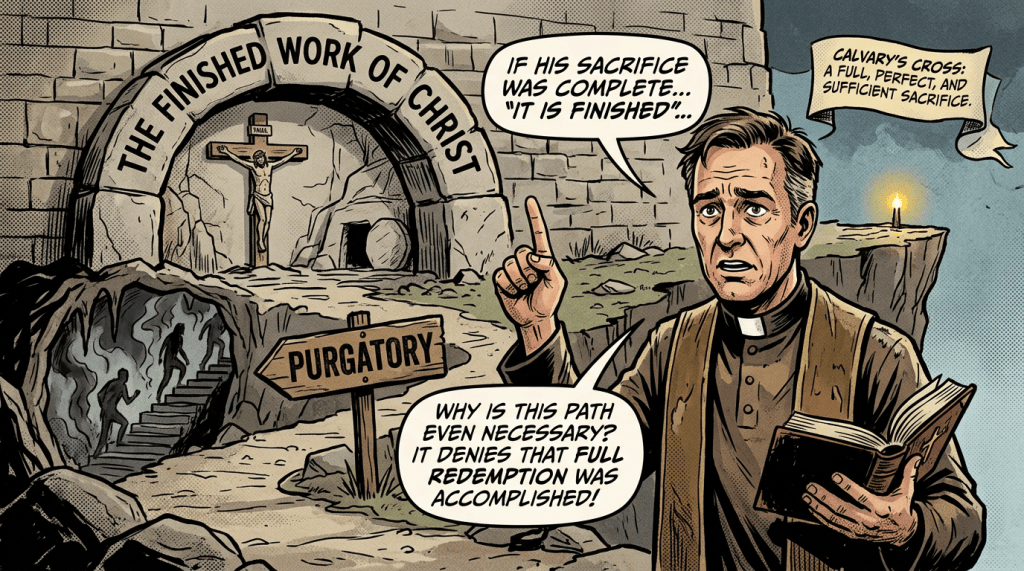
The Roman Catholic doctrine of purgatory teaches that many of the faithful, after death, undergo a period of purification through suffering before they can enter heaven. The claim rests primarily on passages in the Apocrypha, on later ecclesiastical tradition, and on the assertion that temporal punishment remains even after sins are forgiven.
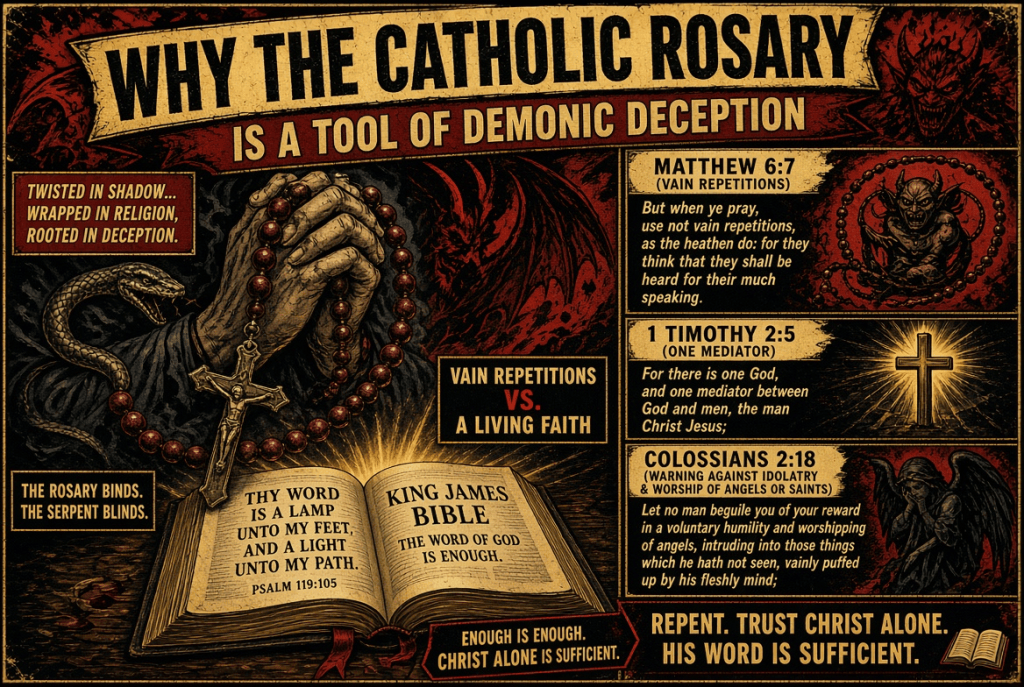
Scripture, however, supplies no such intermediate state. It presents death as the entrance to judgment, the blood of Christ as the complete cleansing of the believer, and any teaching that adds post-mortem suffering as a departure from the apostolic gospel.
The principal text cited in support of purgatory is 2 Maccabees 12:39–45, which describes Judas Maccabeus offering sacrifices and prayers for the dead so that they might be released from sin. The passage belongs to the Apocrypha, a collection of books written between the close of the Old Testament and the New Testament era. These writings were never received as Scripture by the Jewish community that preserved the Hebrew canon, nor were they treated as inspired by the New Testament writers. Jesus and the apostles quote extensively from the Law, the Prophets, and the Psalms; they do not cite the Apocrypha as authoritative.
When the Protestant churches returned to the Hebrew canon confirmed by the early church’s practice, they rejected the Apocrypha precisely because it lacked the marks of inspiration and because portions of it, including the Maccabean account, introduced ideas foreign to the rest of Scripture. A doctrine that depends on a non-canonical text for its primary biblical warrant cannot claim the authority of the written Word.
Even if the Apocrypha were granted temporary consideration, the passage in 2 Maccabees does not establish a formal state of purgatorial fire. It records a pious but erroneous practice of offering sacrifices for the dead, a practice that finds no parallel in the Mosaic law and no confirmation in the teaching of Christ or the apostles. The New Testament nowhere instructs believers to pray or offer sacrifices for the departed. Instead, it locates the decisive moment at death.
Hebrews 9:27 states, “And as it is appointed unto men once to die, but after this the judgment.” The sequence is immediate: death, then judgment. There is no intervening period in which the soul undergoes further purification by suffering. Luke 16:19–31 places the rich man and Lazarus in their respective states immediately after death, with a great gulf fixed between them. Jesus’ words to the thief on the cross—“To day shalt thou be with me in paradise” (Luke 23:43)—likewise indicate immediate entrance into the presence of Christ for the one who believes.
The claim of a second chance or of necessary post-mortem cleansing also collides with the New Testament’s teaching on the sufficiency of Christ’s sacrifice. Hebrews 10:10–14 declares that “we are sanctified through the offering of the body of Jesus Christ once for all” and that “by one offering he hath perfected for ever them that are sanctified.” First John 1:7 states that “the blood of Jesus Christ his Son cleanseth us from all sin.” The believer who has trusted in that finished work is already cleansed; no additional suffering is required to complete what Christ has accomplished.
To insert a period of punitive purification after death is to imply that the cross left something undone. That implication is precisely what the apostles rejected when they insisted that salvation is by grace through faith, not of works (Ephesians 2:8–9).
First Timothy 4:1 warns that “in the latter times some shall depart from the faith, giving heed to seducing spirits, and doctrines of devils.” The addition of a post-death purgation that requires the prayers and payments of the living fits the description of a doctrine that leads people away from the sole sufficiency of Christ. Historically, practices resembling payment for the release of the dead appear in various pagan systems, including forms of ancestor veneration and sacrificial rites associated with Baal and other ancient Near Eastern cults.
While direct lines of transmission are complex, the functional parallel remains: a religious system that offers relief from post-mortem suffering in exchange for ritual acts performed by the living. Scripture replaces all such systems with the once-for-all offering of Christ.
The practical consequence of the purgatory doctrine is the displacement of assurance. Instead of the confidence that to be absent from the body is to be present with the Lord (2 Corinthians 5:8), the believer is left uncertain whether further suffering awaits. Instead of the finished work that perfects forever those who are sanctified, the soul is placed under an ongoing process administered by the Church. The New Testament knows no such uncertainty for those who have believed the gospel. It knows only the judgment that follows death and the cleansing that the blood of Christ has already secured.
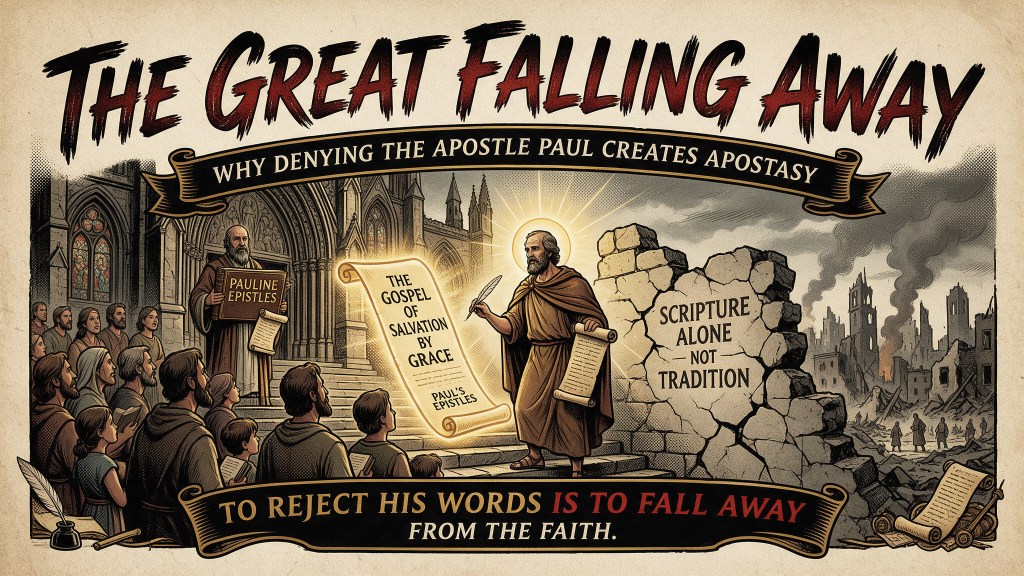
Purgatory therefore stands as an addition that the apostolic writings do not contain and that the finished work of Christ does not require. It depends on a non-canonical text, contradicts the immediate sequence of death and judgment, and diminishes the sufficiency of the cross. In the language of 1 Timothy 4:1, it belongs among the doctrines that seduce from the faith once delivered. Scripture’s testimony is clear: after death comes judgment, and for the one who has trusted in Christ, the blood has already cleansed from all sin. No further purification is needed, and none is offered.


Leave a Reply