
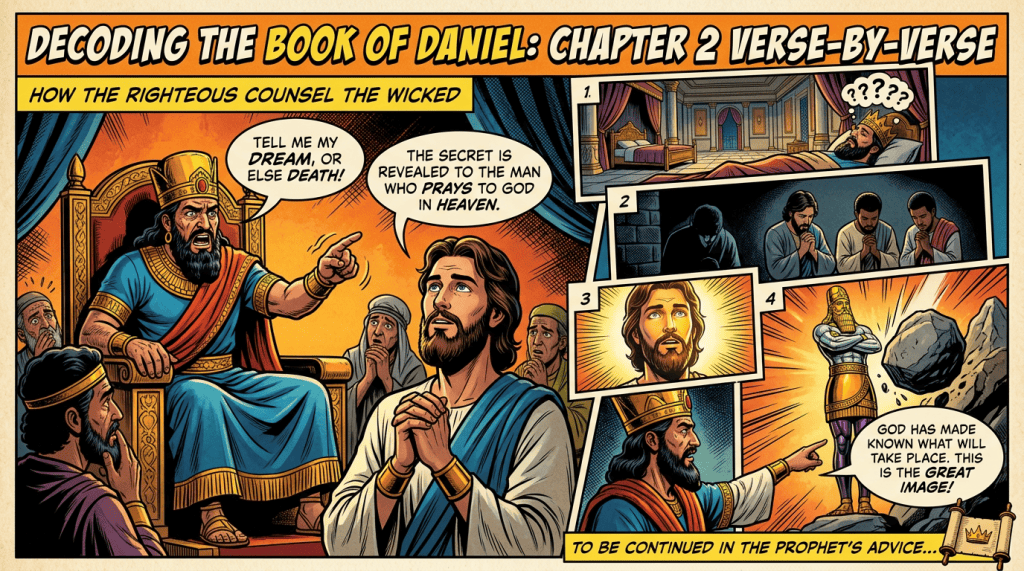
Daniel 2 shows a righteous man (Daniel, a captive from Judah) counseling a wicked, pagan king (Nebuchadnezzar of Bdabylon). Babylon corresponds to modern-day Iraq, a nation currently under Islamic rule. This perspective focuses on the practical and spiritual lessons of how the godly operate, speak, and point people to the true God while living and serving in a land of unbelief.
Verses 1–3
Nebuchadnezzar is troubled by dreams that disturb his spirit and rob his sleep. He commands the magicians, astrologers, sorcerers, and Chaldeans to come and show him the dream.
A powerful but spiritually empty ruler faces an internal crisis that his own system cannot resolve. The wise men of the land are summoned as the expected counselors. Lesson: Wicked rulers and systems (whether ancient Babylonian or modern Islamic/unbelieving environments) often turn first to their own experts when troubled. The righteous may not be the first called, yet God can place them in the path of opportunity.
Verses 4–11
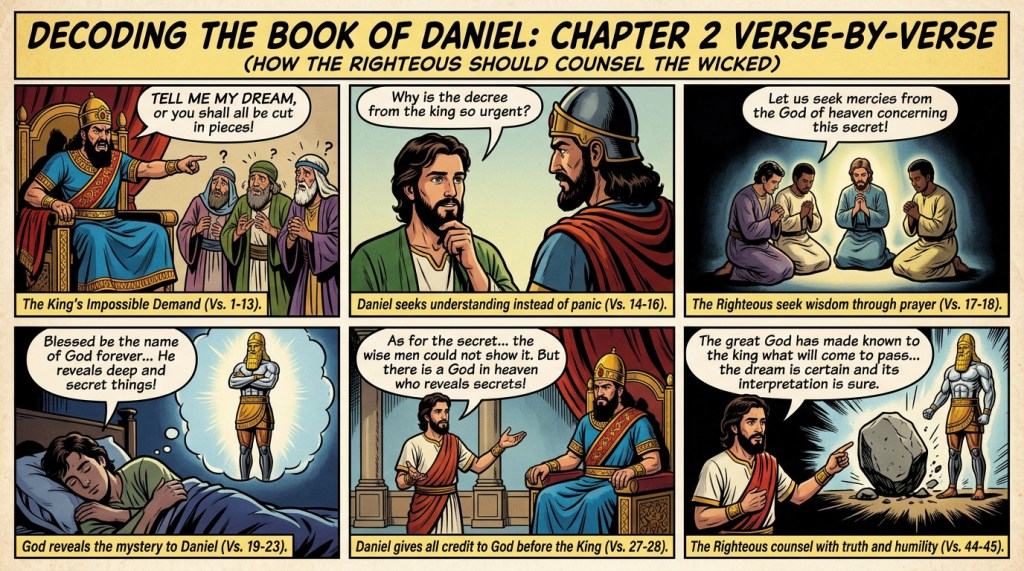
The Chaldeans demand the king first tell them the dream so they can give the interpretation. The king refuses, declaring that if they cannot show both the dream and its meaning they will be cut in pieces and their houses made a dunghill. They reply that no man on earth can do what the king asks—only the gods whose dwelling is not with flesh.
The professional counselors of the wicked culture admit their total inability. They cannot access what only the true God knows. Lesson: When the righteous counsel the wicked, they must not imitate the methods or confidence of the unbelieving “wise.” The systems of the world ultimately have no true revelation of the things of God.
Verses 12–13
The king becomes furious and decrees that all the wise men of Babylon be destroyed. The decree reaches Daniel and his companions.
The failure of the pagan counselors puts the lives of the righteous at risk as well. Lesson: Living among the wicked means the righteous can be swept into their crises and judgments. Faithfulness does not always shield from immediate danger; it positions one for divine intervention.
Verses 14–16
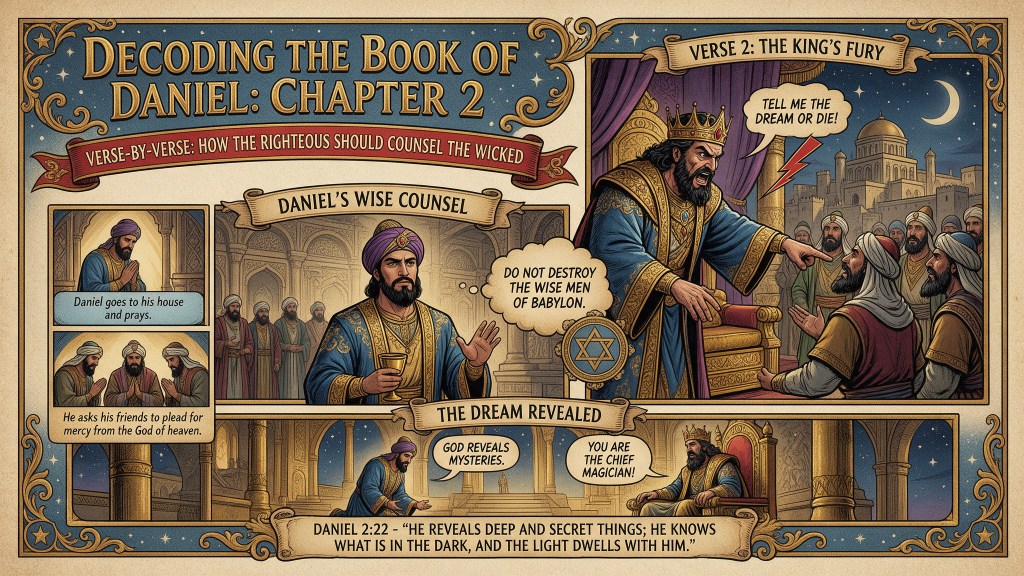
Daniel answers with counsel and wisdom to Arioch, the captain of the king’s guard. He asks why the decree is so hasty, learns the matter, then goes to the king and requests time so that he may show the interpretation.
The righteous respond with calm wisdom rather than panic or anger. Daniel seeks understanding and asks for time instead of making empty promises. Lesson: Effective counsel from the righteous begins with wisdom, restraint, and a request for opportunity. In a hostile or Islamic-ruled environment, the godly do not need to match the fury of the wicked; they can ask for space to seek God.
Verses 17–18
Daniel makes the matter known to Hananiah, Mishael, and Azariah and urges them to desire mercies of the God of heaven concerning this secret so that they should not perish with the rest of the wise men.
The righteous do not counsel in isolation. They gather with other believers and specifically ask for mercies from the God of heaven. Lesson: Before speaking to the wicked, the righteous seek God together. Their counsel is not rooted in personal cleverness but in dependence on the Lord. This is especially vital when operating in a land of unbelief where human solutions have already failed.
Verses 19–23
The secret is revealed to Daniel in a night vision. He blesses the God of heaven, declaring that wisdom and might are His, that He changes times and seasons, removes and sets up kings, gives wisdom to the wise, and reveals deep and secret things. He thanks God for making the king’s matter known.
Revelation comes from God alone. Daniel’s first response is praise and acknowledgment that all wisdom belongs to the Lord, not to himself. Lesson: The righteous counsel the wicked only after receiving from God, and they give glory to Him immediately. Their words will later point the king to the same truth: the God of heaven is the revealer of secrets.
Verses 24–30
Daniel goes to Arioch and stops the destruction of the wise men, asking to be brought before the king. Arioch presents him as a captive of Judah who can make known the interpretation. The king asks if Daniel can do it. Daniel answers that the wise men, astrologers, magicians, and soothsayers cannot show the secret, but there is a God in heaven who reveals secrets and makes known what shall be in the latter days. He stresses that the secret was not revealed to him because of any superior wisdom of his own, but for the sake of those who would make the interpretation known and so the king might know the thoughts of his heart.
Daniel first protects others from destruction, then stands before the king and immediately redirects all credit to God. He openly declares the inability of the pagan counselors and the exclusive ability of the God of heaven. He refuses personal glory. Lesson: This is the model of righteous counsel to the wicked. Point past yourself to the true God. Do not claim superior human wisdom. In modern terms, a believer in an Islamic or unbelieving society can testify that only the God of heaven reveals truth, while the systems and experts of that culture cannot.
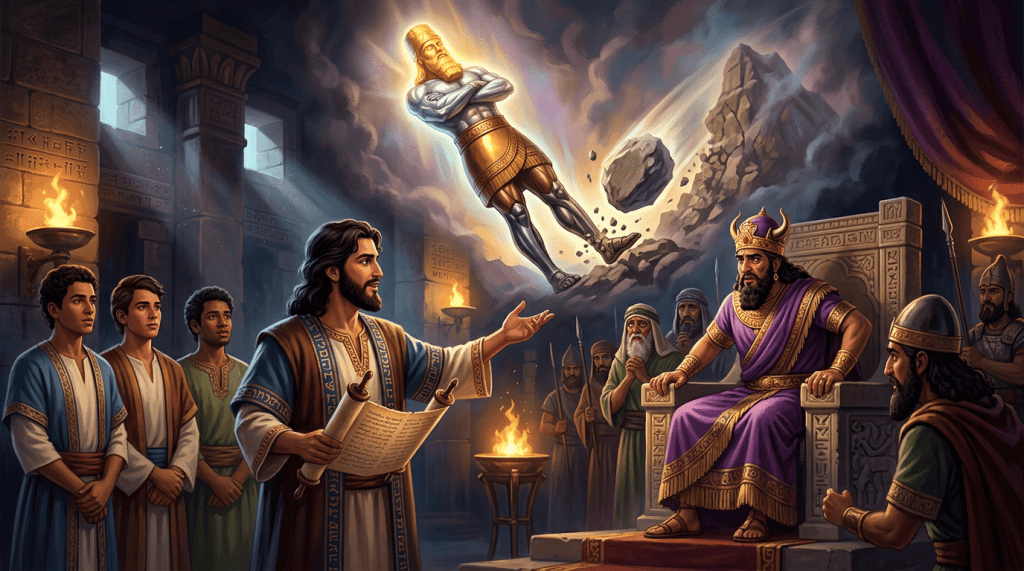
Verses 31–45
Daniel recounts the dream of the great image and gives the interpretation, consistently attributing the revelation and the future events to the God of heaven. He ends by affirming that the great God has made known what shall come to pass, and the dream is certain and the interpretation sure.
The righteous deliver the message God has given without alteration or self-promotion. The content itself testifies of God’s sovereignty over kings and kingdoms. Lesson: When counseling the wicked, speak what God has revealed. The authority does not rest in the counselor but in the God who revealed the matter.

Verses 46–49
Nebuchadnezzar falls on his face, worships Daniel, and commands offerings to him. He confesses that Daniel’s God is a God of gods, a Lord of kings, and a revealer of secrets. He makes Daniel a great man, gives him gifts, and sets him as ruler over the province of Babylon and chief of the governors over the wise men. Daniel requests that his three companions also be set over the affairs of the province, while he himself sits in the gate of the king.
The king’s response includes improper worship directed at Daniel, yet he also acknowledges the true God. Daniel accepts the position of influence but immediately uses it to elevate his fellow righteous men. Lesson: The righteous may receive honor or authority from wicked rulers after faithful counsel, yet they must not accept worship that belongs to God alone. They use new influence to protect and position other believers. God can elevate His servants so they may continue to counsel and serve.
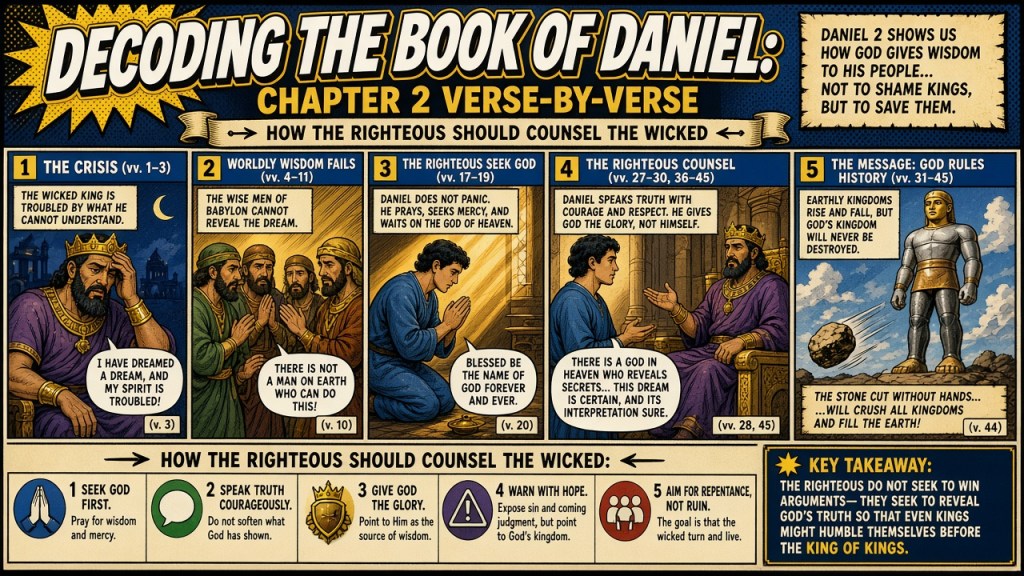
Daniel 2 demonstrates how the righteous counsel the wicked: they respond with wisdom rather than panic (vv. 14–16), seek mercies from the God of heaven together with other believers (vv. 17–18), receive revelation from God and give Him immediate praise (vv. 19–23), openly declare that only the God of heaven can reveal secrets while refusing personal credit (vv. 27–30), deliver the message faithfully (vv. 31–45), and handle resulting honor without seizing glory that belongs to God (vv. 46–49).
The foundation is dependence on the Lord rather than imitation of the world’s methods. These principles equip the godly to speak truth in any environment of unbelief.


Leave a Reply