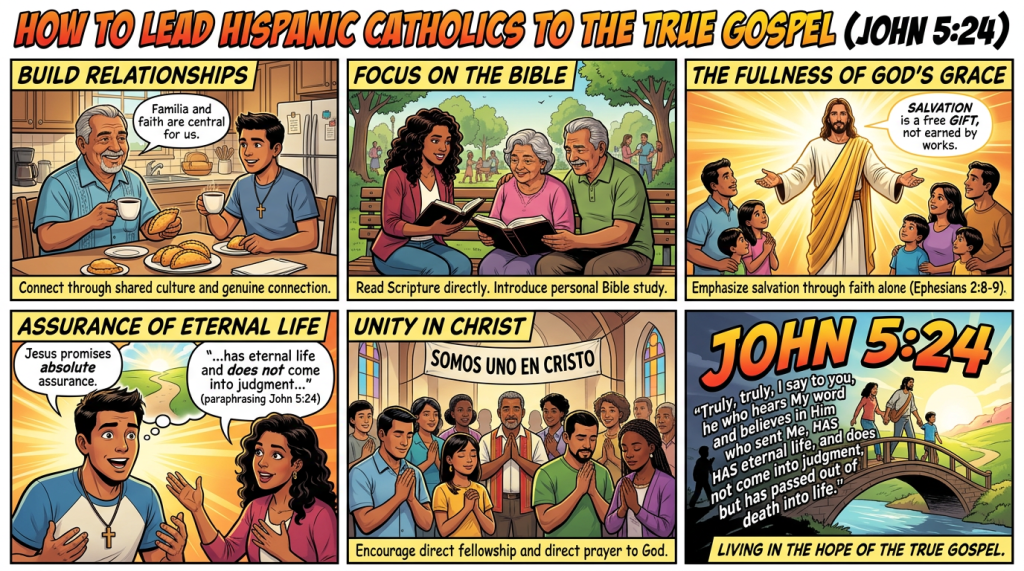
The most effective way to reach Hispanic Catholics is the same method Scripture has always prescribed for any people bound by a false religious system: the clear, uncompromised proclamation of the Word of God that produces faith in Christ alone.
John 5:24 states the matter with finality: “Verily, verily, I say unto you, He that heareth my word, and believeth on him that sent me, hath everlasting life, and shall not come into condemnation; but is passed from death unto life.” Hearing and believing the specific word concerning the Father’s Son is the sole condition for passing from death to life. No cultural adaptation, no shared political program, and no softened presentation of Mary or the sacraments can substitute for that hearing and believing.
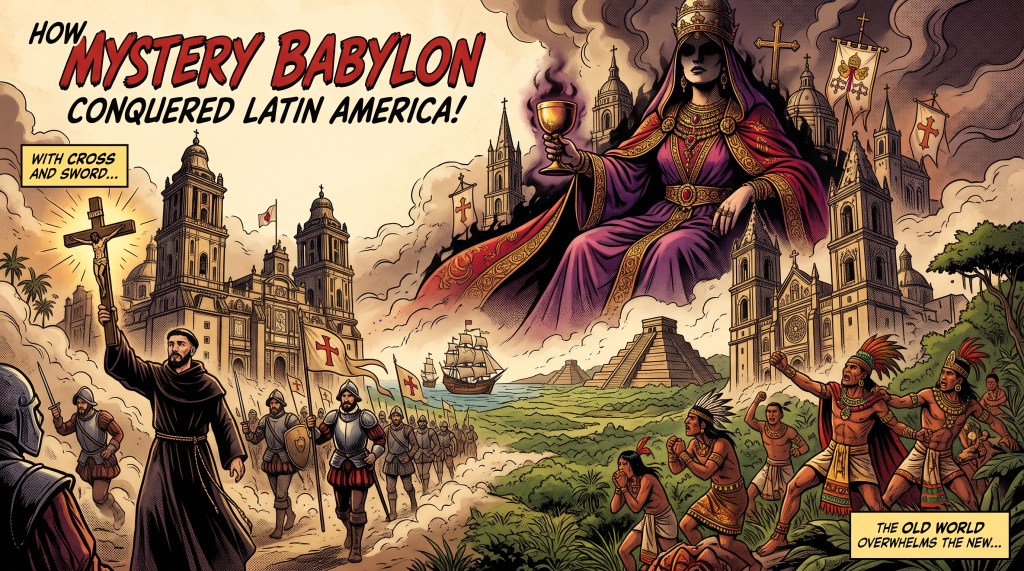
Hispanic Catholicism in the Americas was formed under the long shadow of the 1531 Guadalupe event and the subsequent colonial mission. The result is a population whose religious identity is frequently fused with ethnic heritage, family loyalty, and a maternal figure who functions as protector and intercessor. That fusion creates real obstacles, but it does not alter the biblical method.
Romans 10:17 declares that faith comes by hearing, and hearing by the Word of God. The task is therefore to place the plain statements of Scripture before individuals and families so that the Spirit of God may convict and convert.
The largest practical obstacles are not linguistic or economic. They are doctrinal and relational. First, devotion to Our Lady of Guadalupe functions for millions as both religious and cultural anchor. The image is treated as proof that Mary is the special mother of the Americas, the one who hears and protects. Any direct challenge is experienced as an attack on Mexican or broader Latin American identity rather than as a theological claim.
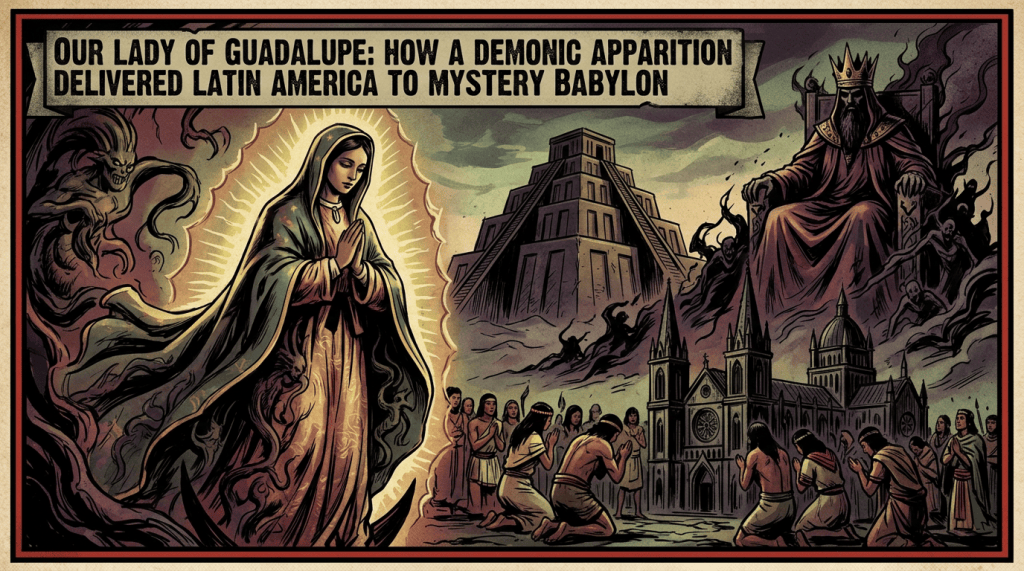
Second, the sacramental system teaches that grace is received through baptism, the Mass, confession, and penance. Many sincere Catholics therefore measure spiritual standing by participation in these rites rather than by personal faith in the finished work of Christ. Third, family and community pressure is intense. Leaving the Church can mean strained relationships with parents, godparents, and neighbors who view the departure as betrayal of heritage. Fourth, biblical literacy is often low.
Authority has historically rested with the priest and the tradition of the Church; the written Word is secondary. Finally, political and institutional actors frequently treat Catholicism as the default religious identity of Hispanics, reinforcing the assumption that to be Hispanic and Christian is to be Catholic.
None of these obstacles is overcome by accommodation. Presenting a “Hispanic-friendly” version of the gospel that retains Marian titles, downplays the exclusivity of Christ, or treats the Mass as a legitimate form of worship simply confirms the existing system. Scripture’s pattern is the opposite. The apostles preached the necessity of repentance toward God and faith toward the Lord Jesus Christ (Acts 20:21).
They refused to allow any addition to the gospel of Christ’s death for sins, burial, and resurrection according to the Scriptures (1 Corinthians 15:1–4). When religious identity and cultural practice conflicted with that message, they called people to separate (2 Corinthians 6:14–18; Revelation 18:4).
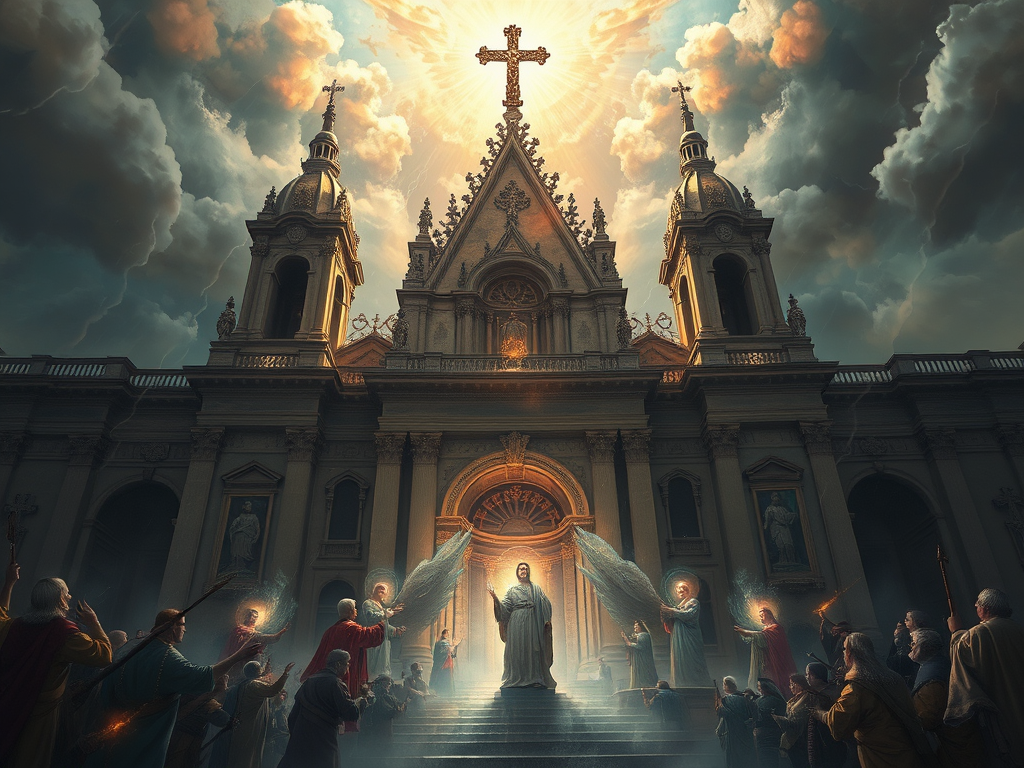
The practical approach follows from these texts. Begin with the person of Christ and the condition of the sinner. Use the Bible or a faithful literal translation so that the words themselves carry the authority. Show from John 5:24, Ephesians 2:8–9, and Romans 3:21–28 that everlasting life is the present possession of the one who hears and believes the testimony concerning the Son, not the future reward of the one who accumulates sacramental merit. Contrast this with the Catholic system’s requirement of ongoing works, purgatory, and mediators.
Present the biblical Mary as the humble servant who rejoiced in God her Savior (Luke 1:47), not as a co-redemptrix or perpetual intercessor. When the Guadalupe image or other apparitions arise, apply the test of 2 Corinthians 11:13–15 and Deuteronomy 13: any message that adds mediators or leads to image veneration is to be rejected, however culturally meaningful it has become.
Patience is required, but not compromise. Many will need repeated, private exposure to Scripture rather than a single public confrontation. Household Bible reading, verse-by-verse explanation of the Gospel of John, and clear testimony of personal conversion often open doors that formal debate closes. The goal is not to produce cultural Protestants who merely exchange one set of external markers for another; it is to see individuals pass from death unto life by believing the word of Christ.
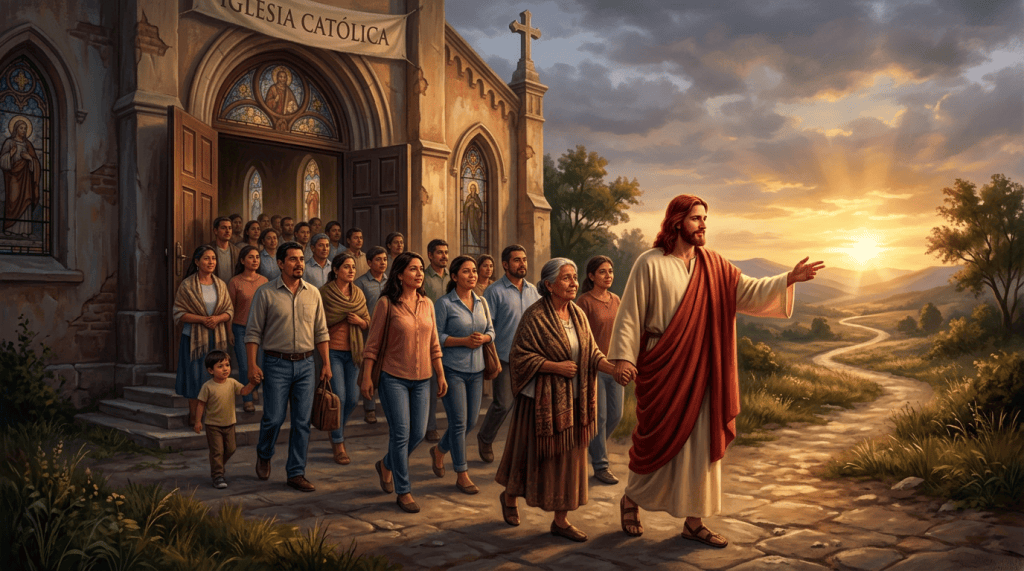
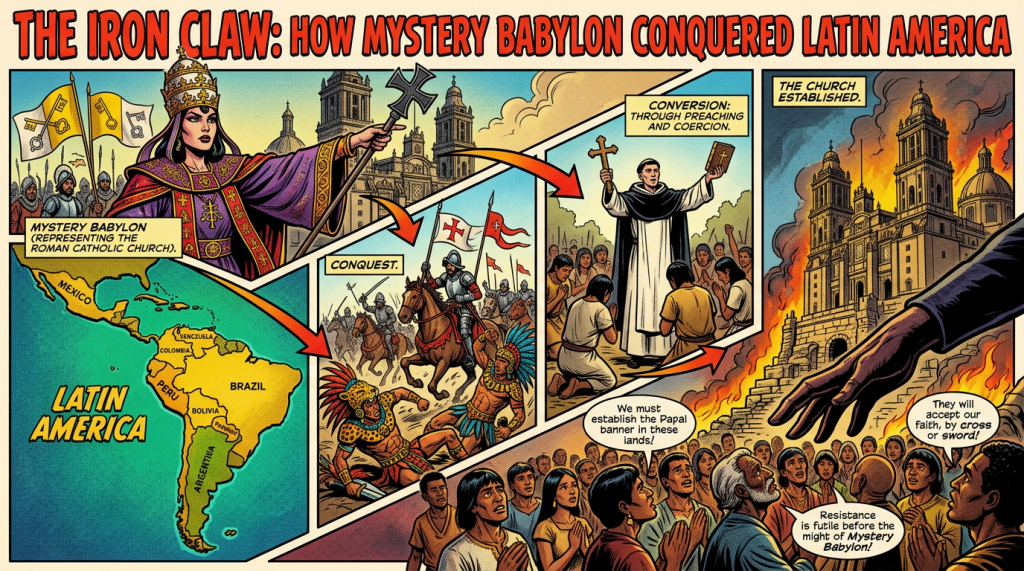
Political or social programs that treat Hispanic Catholics primarily as a voting bloc or as clients of institutional charity do not accomplish this work. They may increase institutional influence; they do not produce the hearing and believing described in John 5:24. The Church’s historic success in Latin America came through the fusion of imperial power, sacramental practice, and a compelling maternal image. The biblical response is not a rival image or a rival political alliance, but the plain preaching of the cross.
Hispanic Catholics are not a special category exempt from the conditions of the gospel. They are sinners who need the same Savior offered to every nation. The obstacles are real and must be named without rancor. The method remains the method given by Christ Himself: they must hear His word and believe on Him who sent Him. Everything else is secondary. When that word is faithfully spoken, the Spirit who raised Christ from the dead is able to call men and women out of every counterfeit system and into the liberty of the sons of God.


Leave a Reply