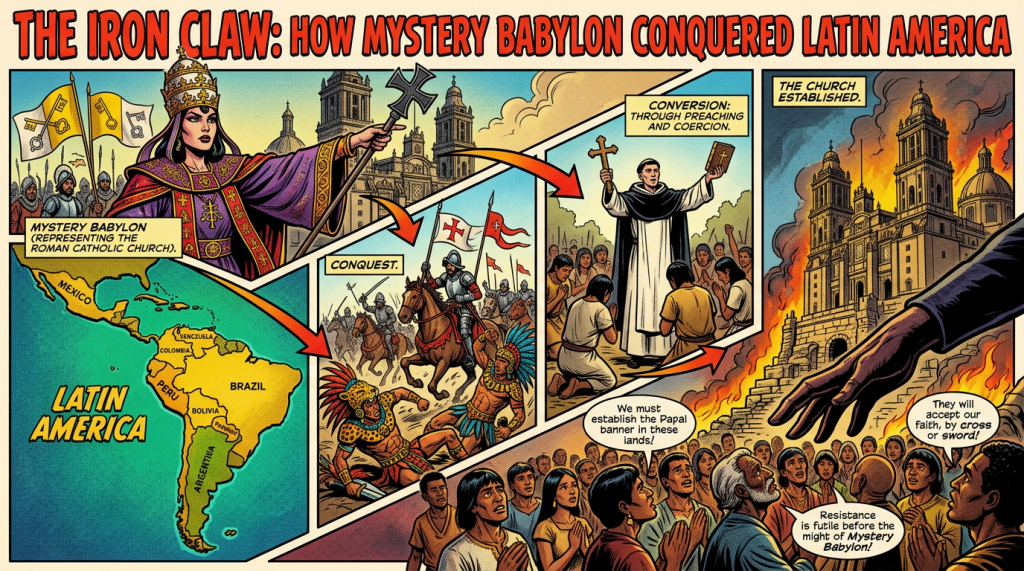
Using the Bible as the sole standard of truth, the Spanish-driven expansion of the Roman Catholic Church into Mexico and South America (roughly 1492–1820s) represents one of the most extensive historical campaigns of institutional religion fused with imperial power.
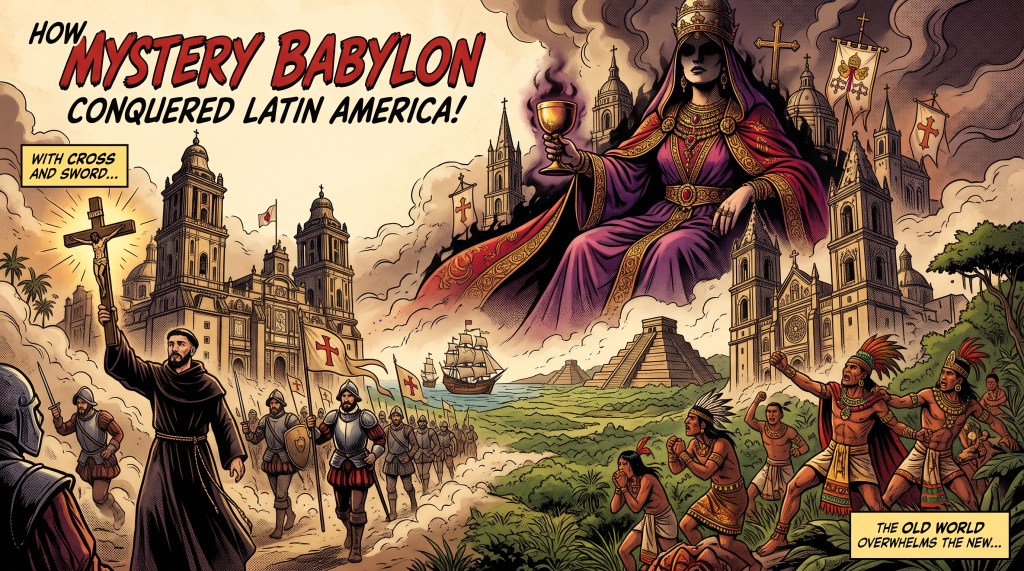
Far from the voluntary, Scripture-centered preaching of the apostolic church in Acts, this was a “spiritual conquest” that systematically advanced doctrines and practices the bible condemns as idolatry, works-righteousness, and false mediation. The result was the implantation of a system later identified in Revelation 17 as Mystery Babylon—a global religious power marked by purple and scarlet opulence, image worship, Marian exaltation, and the suppression of pure biblical faith.
Historical Drivers: Spain, the Papacy, and Conquest
The process began immediately after the 1492 fall of Granada ended the Reconquista. In 1493 Pope Alexander VI issued the bull Inter Caetera, granting Spain (and Portugal) rights over newly discovered lands on the condition that the Catholic faith be planted and “barbarous nations” be brought under Christian dominion. Subsequent bulls established the Patronato Real, giving the Spanish Crown near-total control over ecclesiastical appointments, tithes, and mission strategy in the Americas. Conversion was not merely a religious goal; it was the legal and moral justification for conquest and settlement.
Key military milestones:
- Hernán Cortés’s campaign against the Aztec Empire (1519–1521).
- Francisco Pizarro’s conquest of the Inca Empire (beginning 1531–1532).
- Subsequent expansion into Central America, the Andes, and the Southern Cone.
Missionary orders followed closely. The first systematic group—the “Twelve Apostles” of the Franciscans—arrived in Mexico in 1524. Dominicans, Augustinians, and later Jesuits established missions and “reductions” across the continent. By the mid-16th century, dioceses existed in Santo Domingo, Mexico City, Lima, and elsewhere. Churches and monasteries were frequently built on the sites of destroyed indigenous temples. Mass baptisms were reported in the millions in the early decades (one contemporary claim cited a million by 1531 in central Mexico alone). The encomienda system tied native labor to Spanish settlers in exchange for “protection” and Christian instruction—often producing forced or coerced conversions.
The Message Spread: Doctrines and Practices Contradicting Scripture
Catholic missionaries and clergy presented a package of teachings and practices that stand in direct opposition to the bible’s standard:
- Salvation by Sacraments and Baptism Rather Than Faith Alone
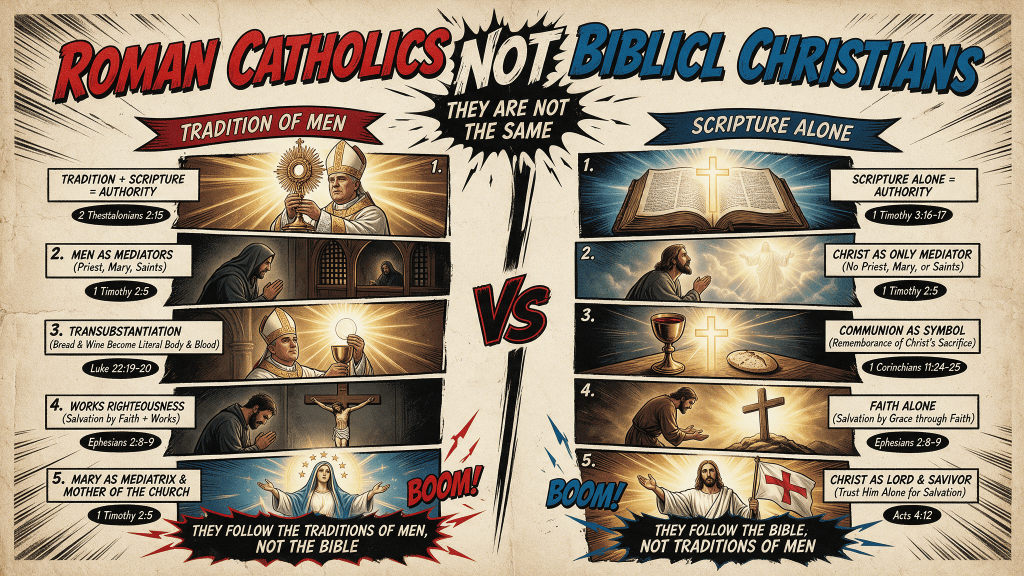
Influenced by earlier papal statements (such as Boniface VIII’s Unam Sanctam, 1302) and the urgency of baptizing as many as possible, the system treated baptism and the sacraments as necessary channels of grace. This contradicts Ephesians 2:8–9 (“by grace are ye saved through faith… not of works”) and the clear apostolic pattern of belief preceding baptism (Acts 8:37, KJB; Acts 16:31).
- Image Worship and Idol Destruction/Replacement
Indigenous idols were destroyed, yet Catholic statues, images of saints, and especially Marian images were introduced and venerated. The KJB forbids the making or bowing to graven images (Exodus 20:4–5; Leviticus 26:1). Building churches on former temple sites and transferring devotion from native deities to Catholic figures did not eliminate idolatry; it replaced one form with another.
- Marian Exaltation and Syncretism
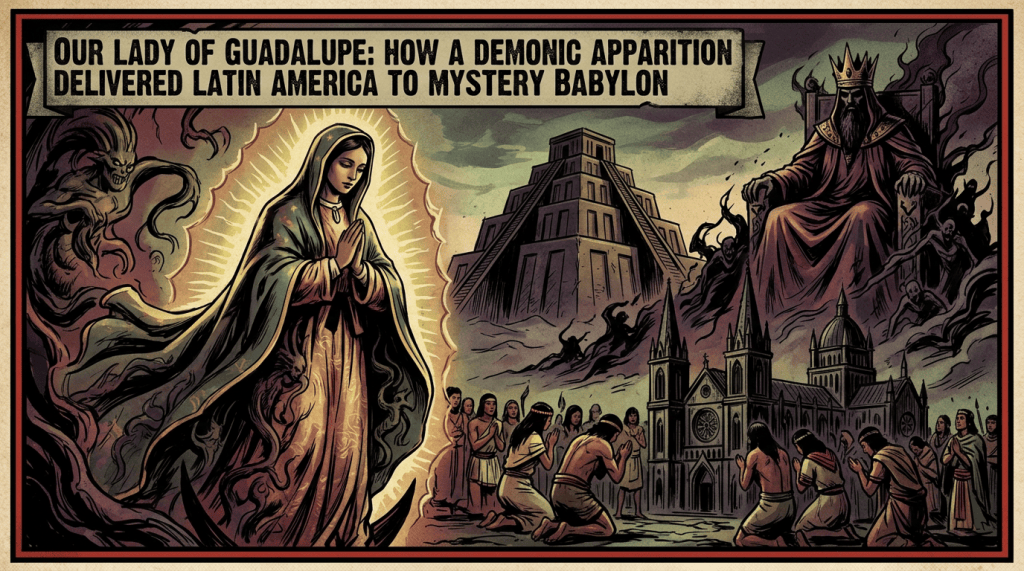
The 1531 apparition of Our Lady of Guadalupe on Tepeyac Hill (a site previously associated with the Aztec mother goddess Tonantzin) became a central tool of conversion. Indigenous peoples continued to address the figure as Tonantzin; the image absorbed attributes of pre-Hispanic fertility and protective goddesses while being presented as the Virgin Mary. This matches the pattern of the condemned “Queen of Heaven” (Jeremiah 7:18; 44:17–19) and the later Marian doctrines (Immaculate Conception, Mediatrix, Co-Redemptrix) that elevate a creature to a role Scripture reserves for Christ alone (1 Timothy 2:5; Isaiah 42:8).
- Rejection of Scripture Alone
Evangelization relied on oral catechism, images, processions, and priestly mediation rather than the open Scriptures. Vernacular Bible reading was restricted or forbidden for centuries, consistent with the RCC’s long-standing elevation of tradition and the Magisterium over sola scriptura (Mark 7:13; 2 Timothy 3:16–17).
- Coercion and Persecution
While some clergy (notably Bartolomé de las Casas) condemned the worst physical abuses of the encomienda and argued for peaceful persuasion, the overall enterprise was backed by military conquest, forced labor, and the suppression of indigenous religion. Las Casas himself remained committed to Catholic conversion as the goal. This stands in contrast to the voluntary response modeled in Acts and the warning against using force to impose faith.
Demographic and Institutional Outcome
The combination of military conquest, mass baptism, the encomienda, mission reductions (especially Jesuit reductions in the Paraguay region), and the Guadalupe phenomenon produced one of the largest Catholic populations in the world. By the late colonial period, Latin America was overwhelmingly Catholic. The Church became a landowner, educator, and political power alongside the Crown. The system that was planted was not the apostolic faith of Acts but the hierarchical, sacramental, image-centered, and Marian form of Christianity that the bible identifies with the harlot of Revelation 17—arrayed in purple and scarlet, holding a golden cup of abominations, and reigning over peoples and nations.
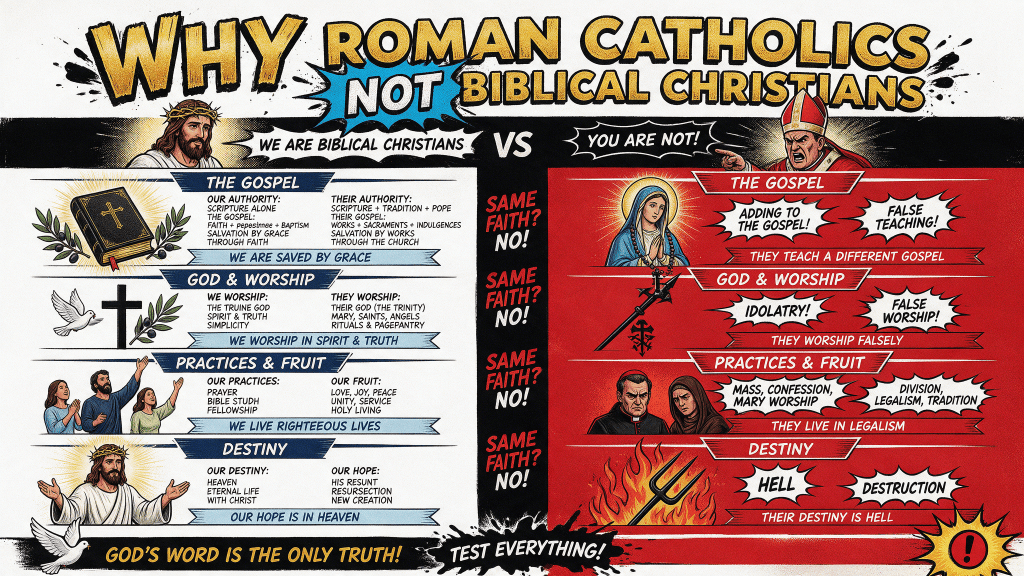
In short, Spain’s expansion under papal authorization spread a religious system whose core practices—image veneration, Marian mediation, sacramental works-salvation, and the subordination of Scripture to church authority—directly contradict the Bible. The historical record shows both the scale of the effort and the character of the message that was planted.


Leave a Reply