Ephesians 5:11 commands the church, “And have no fellowship with the unfruitful works of darkness, but rather reprove them.” The apostolic mandate is not accommodation, dialogue that softens the edges, or political alliance that mutes the gospel. It is exposure.
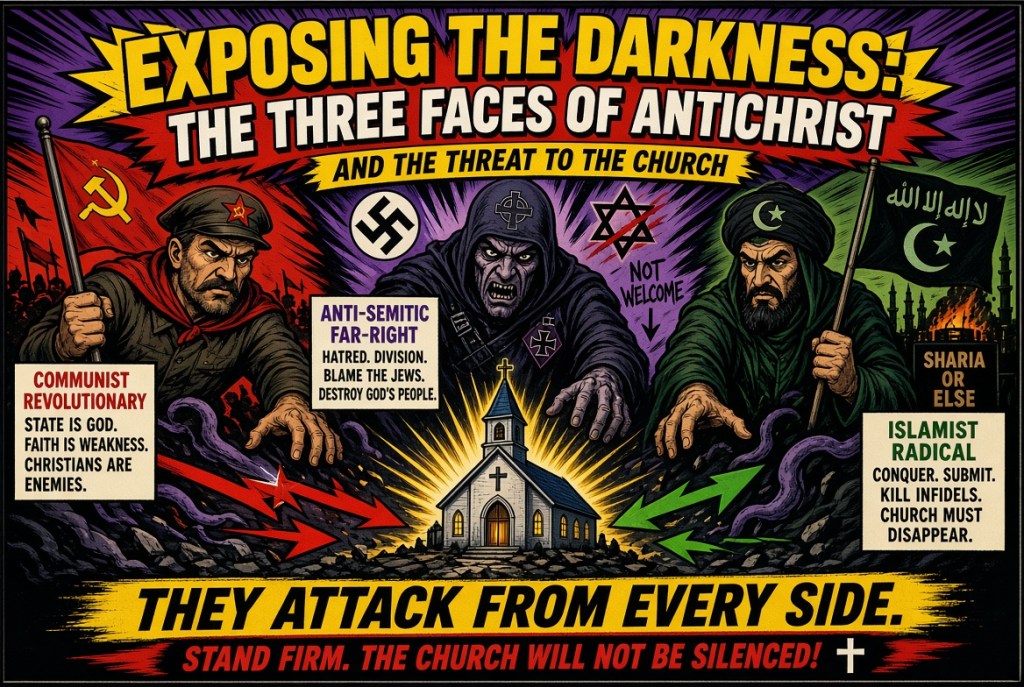
The spirit of antichrist, defined in the Johannine epistles as the denial that Jesus is the Christ come in the flesh (1 John 2:22; 4:3; 2 John 7), is not confined to one historical figure. It operates through any system that rejects the incarnation, the atoning death and resurrection, or the sufficiency of faith in Christ alone. Three contemporary movements embody this rejection in distinct but converging ways: the communist left, the antisemitic right that elevates Roman Catholicism and ethnic identity over the apostolic gospel, and the religion of Islam. Each presses against the born-again church, and each must be named and refused.
The communist left, whether organized under the Democratic Socialists of America or diffused through cultural institutions, begins with the denial of the Creator. Its materialist anthropology treats man as the product of economic forces and social construction rather than the image-bearer of Genesis 1–2. From this premise flow policies that directly contradict Scripture: the treatment of the unborn as disposable, the redefinition of male and female as fluid categories, the elevation of sexual autonomy over the marriage covenant of Genesis 2 and Ephesians 5, and the use of state power to punish those who affirm Romans 1. These are not peripheral disagreements. They are the fruit of a worldview that confesses no Christ come in the flesh, because it confesses no God who became flesh.
In the present environment this movement does not primarily persecute with the sword. It captures schools, universities, corporations, and regulatory bodies. Born-again believers who refuse to affirm the new creeds face professional exclusion, parental rights challenges, and the steady pressure to treat silence as the price of participation. Churches that rent facilities, employ staff, or speak publicly on the created order encounter lawfare and social ostracism.
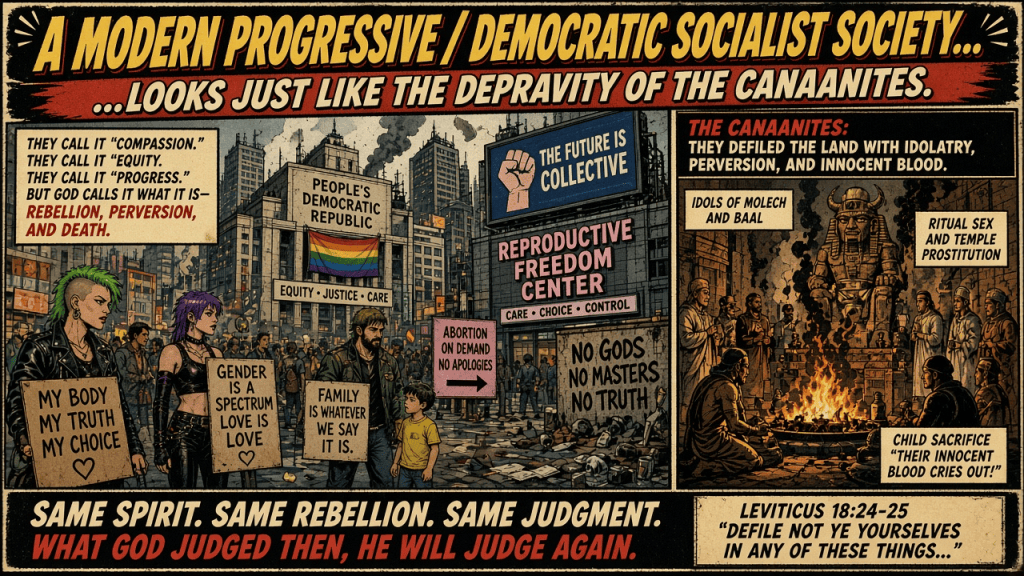
The threat is real because the ideology is totalizing: it cannot tolerate a rival account of human nature and final authority. Historical communist regimes demonstrated what follows once such power is consolidated—open hostility to the gospel and the liquidation of churches. Contemporary forms in the West operate through soft power, but the direction is the same. The church that fellowships with these works of darkness, whether through political calculation or cultural accommodation, violates the command of Ephesians 5:11.
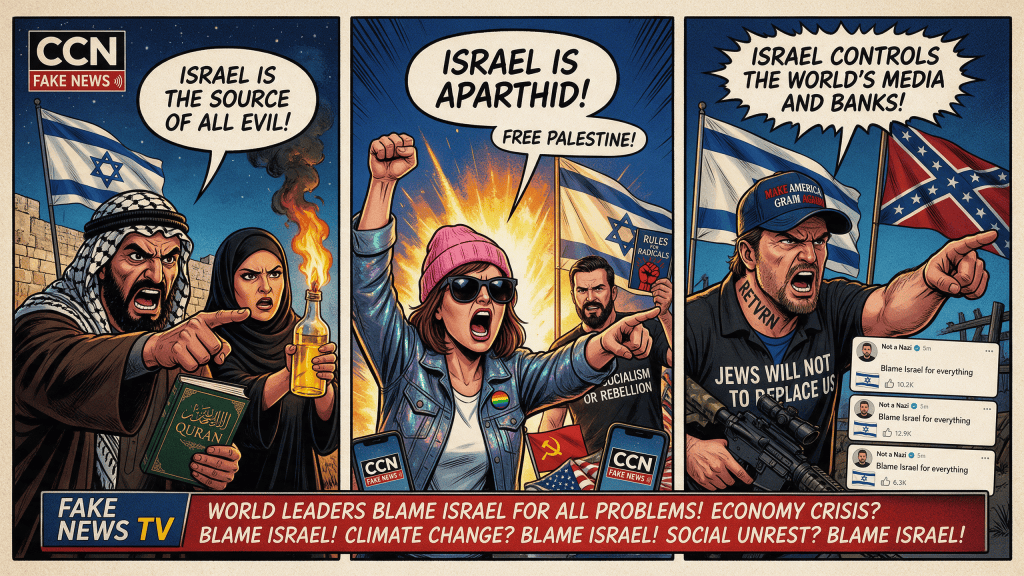
The antisemitic right presents a different danger because it claims the name of Christ while undermining the gospel. Circles associated with the Groyper movement and America First politics combine white-nationalist rhetoric, conspiracy theories that treat the Jewish people as a unique and malevolent force, and a pronounced identification with traditionalist Roman Catholicism.
Premillennial understandings of the Abrahamic promises and the future of ethnic Israel are not the gospel; Christians have differed on eschatology for centuries. What appears in this ecosystem, however, exceeds eschatological disagreement. High-profile figures have denied the resurrection of Christ. Speakers asserting that there is no salvation outside the Roman Catholic Church have been platformed without correction from those who still claim Protestant credentials.
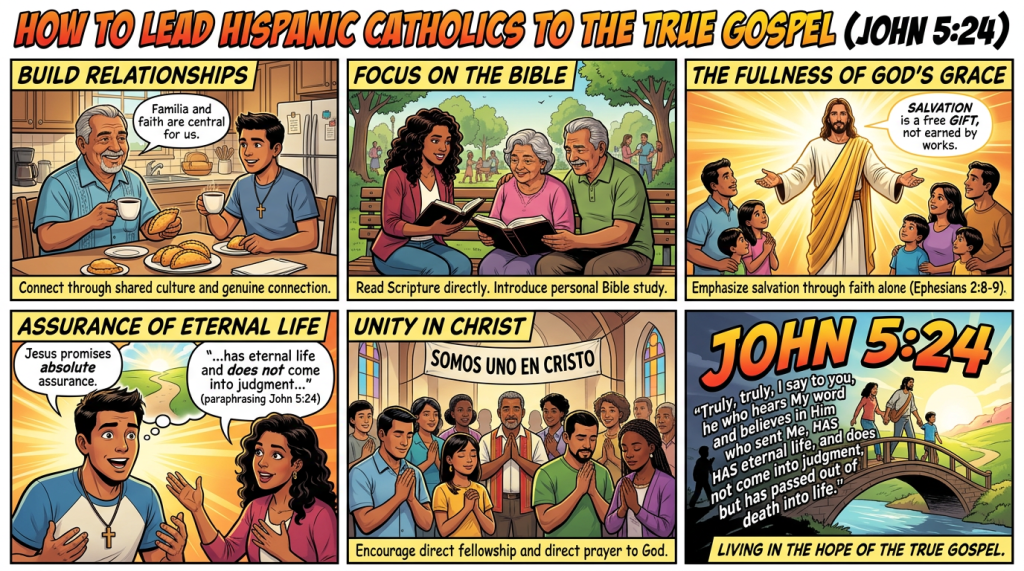
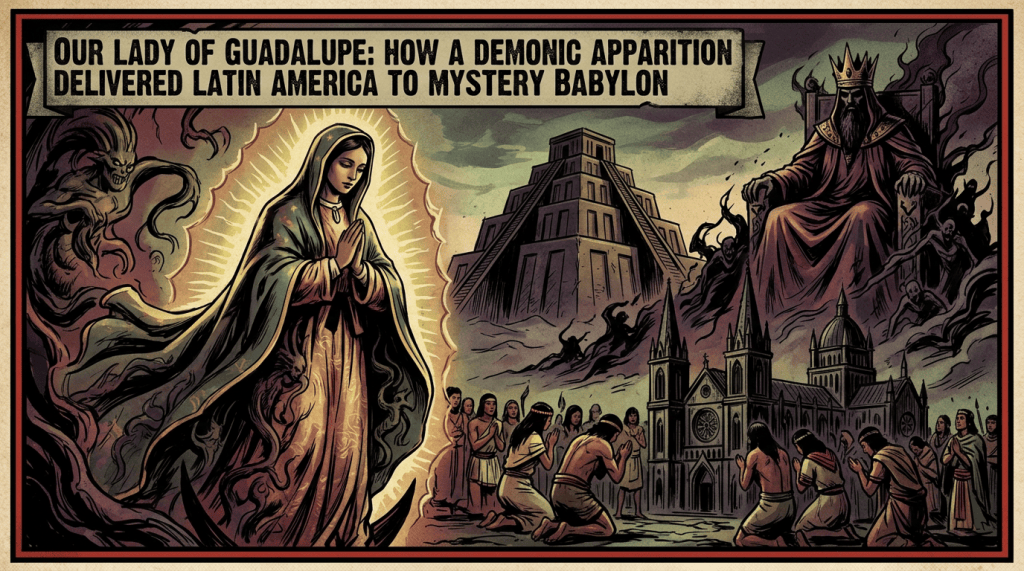
Roman Catholic doctrine adds the authority of the magisterium, the necessity of the sacraments administered by that church, and the veneration of Mary and the saints to the finished work of Christ. The Reformers identified such additions as another gospel (Galatians 1:6–9). When this system is fused with ethnic nationalism and antisemitic tropes that deny the irrevocable gifts and calling of God to Israel (Romans 11:28–29), the result is a counterfeit Christianity.
It divides congregations, pressures believers to subordinate the sufficiency of the cross to political or ethnic loyalties, and treats the Jewish people not as the recipients of the promises recorded in Genesis but as obstacles to be removed. The born-again believer who holds that justification is by faith alone in Christ’s atoning death and bodily resurrection finds himself labeled disloyal for refusing to accept either Catholic exclusivity or racial conspiracy. This is not secondary political friction. It is the introduction of another gospel inside spaces that still use Christian language, and it must be reproved rather than tolerated for the sake of a broader cultural alliance.
Islam constitutes the most direct doctrinal expression of the antichrist spirit. Its foundational texts deny the Trinity, the divine sonship of Jesus, the historical crucifixion, and the resurrection as the basis of atonement. This is not silence or ambiguity; it is explicit rejection of the claims the apostles treated as definitional. Where Islamic majorities or strong subcultures form, the public proclamation of John 14:6 and Acts 4:12 becomes socially or legally costly.
Demographic patterns in parts of Europe and certain Western cities have already produced parallel societies, speech restrictions under blasphemy norms, and elevated risks for converts and public critics. Historical patterns of dhimmitude and contemporary violence against Christians in Muslim-majority regions supply the concrete record.
For the church the threat is displacement. Christian values regarding the exclusivity of Christ, the equality of men and women before the law, and the freedom to evangelize are replaced by Islamic ones.
Converts face family and communal pressure that can include violence. Churches that refuse to mute the deity and atoning work of Christ encounter organized opposition. The mechanism is external rather than primarily internal division, but the effect on the born-again believer is the same: pressure to compromise the confession that Jesus is the Christ come in the flesh. Accommodation in the name of pluralism or outreach that softens this confession is fellowship with the works of darkness.

These three movements are not a single coordinated conspiracy. They arise from different sources and pursue different immediate goals. Yet each, on its own terms, opposes the christological and soteriological content the New Testament marks as decisive.
The communist left does so through materialist cultural and institutional power. The antisemitic right does so through gospel substitution and ethnic idolatry inside circles that still invoke Christian identity. Islam does so through a systematic alternative religion that has already rejected the incarnation and atonement. In each case the born-again church faces the same biblical choice: reprove the darkness or have fellowship with it.
The response required by Ephesians 5:11 is not political triangulation that treats one threat as useful against the others. It is separation from false doctrine, clear proclamation of the apostolic gospel, and refusal to mute the person and work of Christ for the sake of any alliance.
The church that loses the capacity to name these rejections as works of darkness will not long retain the capacity to preach the light.


Leave a Reply