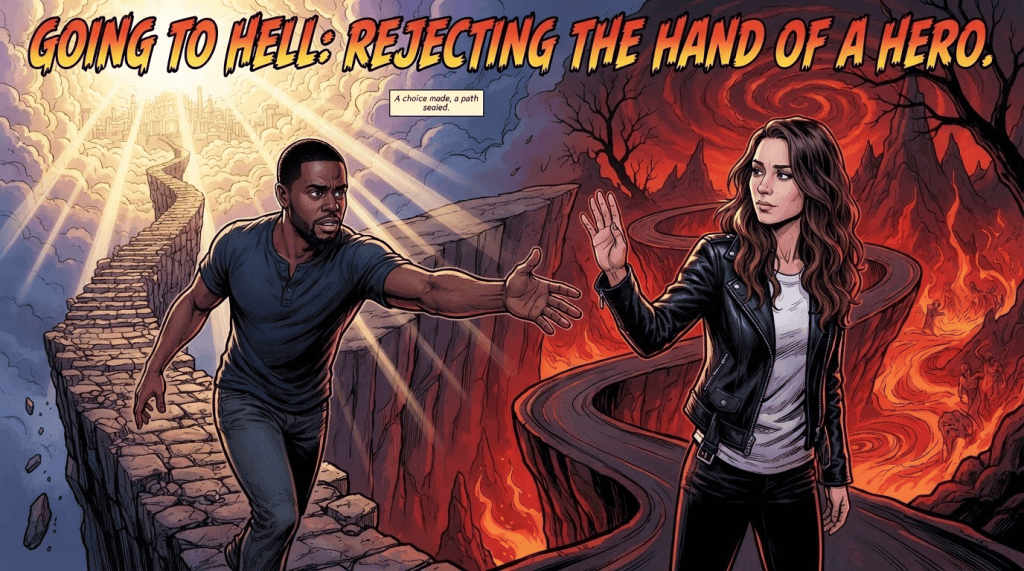
Two friends once shared the ordinary ground of work, projects, and common interests. Jacob and Troian walked the same broad road that most people travel without much thought.
Then Jacob was saved.
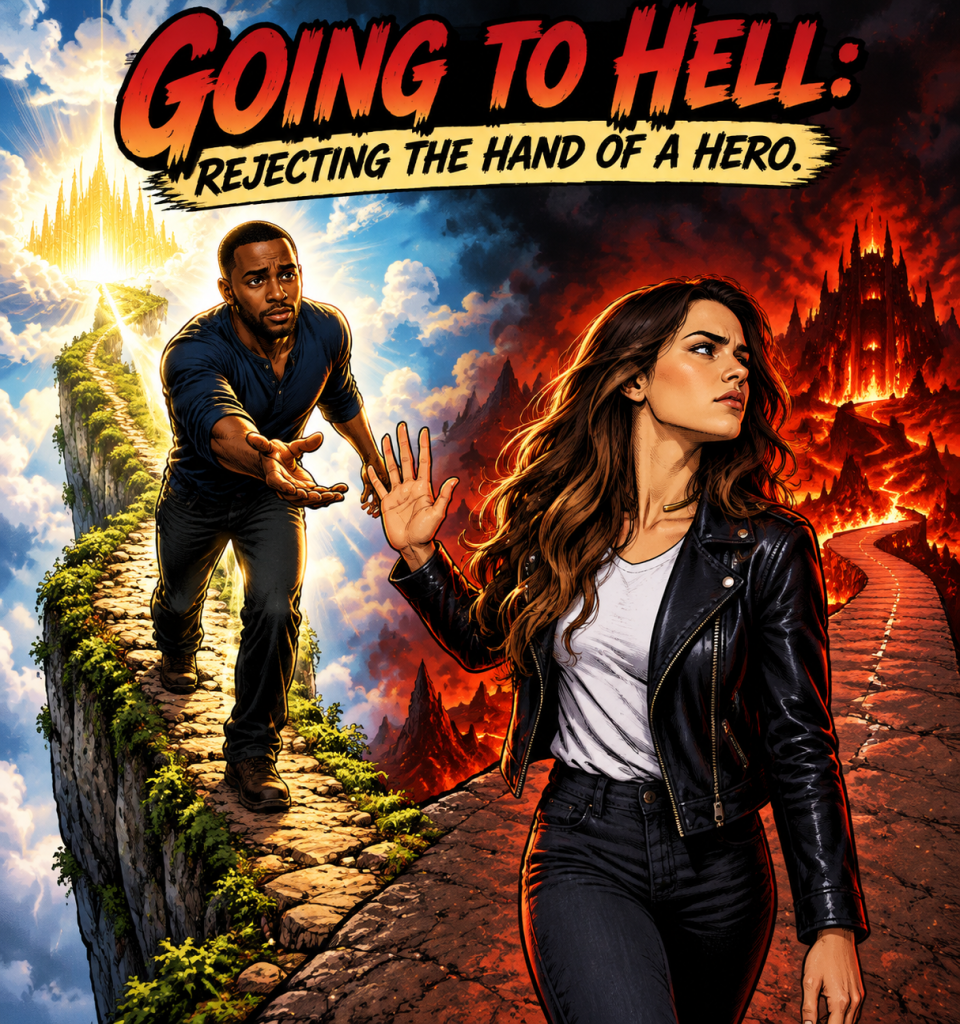
His entire orientation shifted. Because he still regarded Troian as a friend, he tried to explain what he had learned so she might understand the change and, if she would, join him. Troian, remaining of the world, was angered by the difference. She refused further friendship. Jacob still wished to bring her along the path he now walked, yet she would not move. They stood on opposite sides, still visible to one another, until the race ended with Jacob inside and Troian outside.
The Bible describes exactly this geography of choice. “Enter ye in at the strait gate: for wide is the gate, and broad is the way, that leadeth to destruction, and many there be which go in thereat: Because strait is the gate, and narrow is the way, which leadeth unto life, and few there be that find it.”
The broad way requires no special decision; it simply continues. The narrow way requires a turn. When Jacob made that turn, agreement between the two friends ended. “Can two walk together, except they be agreed?” He did not disappear. He remained a light set on a hill that cannot be hid, so that his good works might be seen. The hand he extended was therefore not hidden in private conviction. It stayed in plain view because he still hoped Troian would follow.
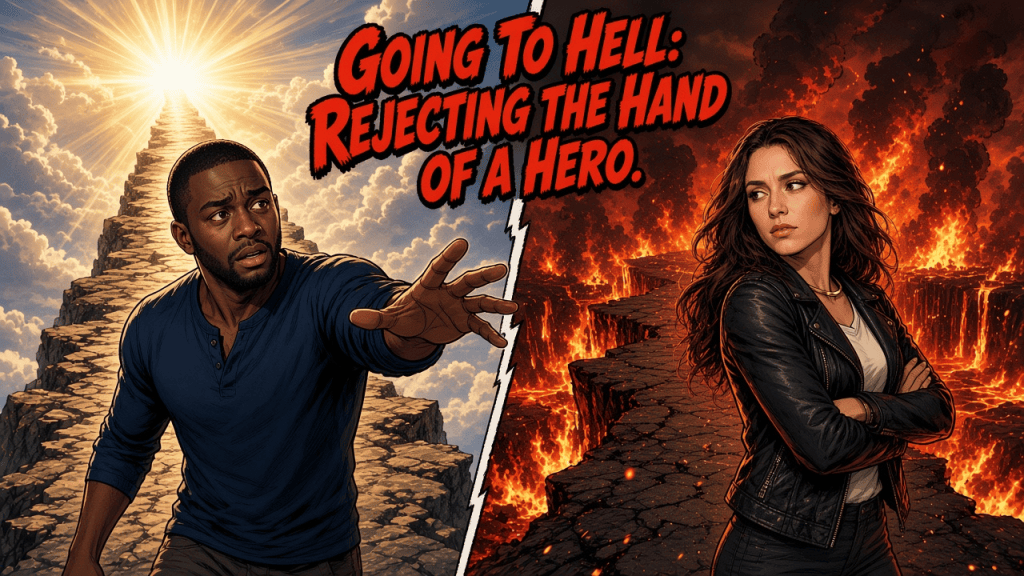
Her response followed a pattern the Scripture records without softening. The world does not love its own once they cease to be its own. “If ye were of the world, the world would love his own: but because ye are not of the world, but I have chosen you out of the world, therefore the world hateth you.” The hatred is concrete. It appears between those who once shared daily life, just as Cain hated Abel “because his own works were evil, and his brother’s righteous.”
The upright way became an abomination to Troian. Anger rose at the change; the former bond was severed. Jacob could still wish her to come with him, yet she would not take the step. Separation was required of him: “Be ye not unequally yoked together with unbelievers: for what fellowship hath righteousness with unrighteousness? and what communion hath light with darkness?”
From his side the division carried sorrow, yet the path of the just continues as a shining light that grows brighter toward the perfect day. He was to finish the course and keep the faith. The grief over a friend left behind is acknowledged in Scripture as great heaviness and continual sorrow, but that grief does not permit a return to the broad way on the other’s terms.
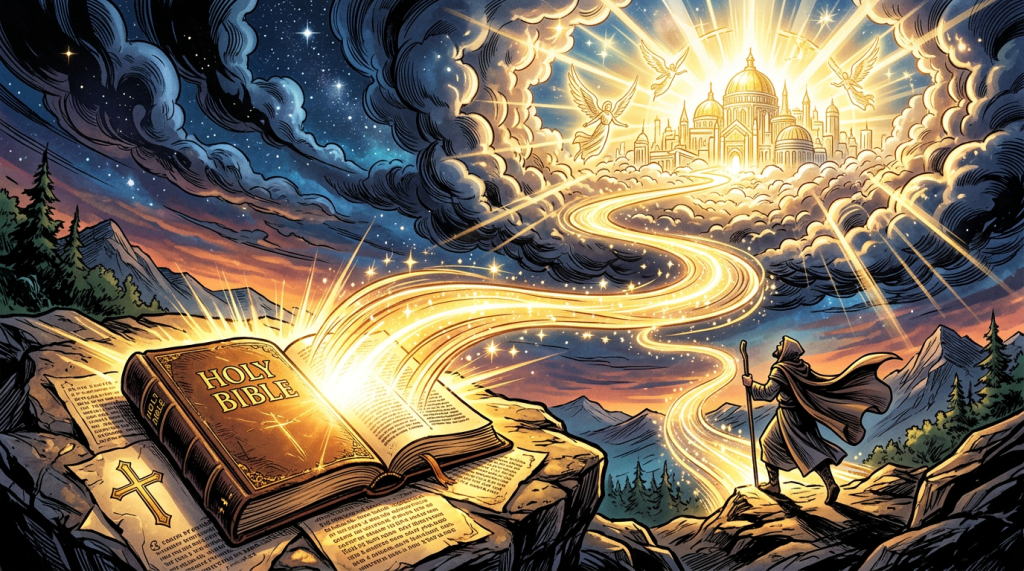
From Troian’s side the same events read as progressive refusal of a visible invitation. The call reached her through a known life. Wisdom stretched out her hand; she did not regard it. Counsel was set before her and set at nought. She saw the light and chose the familiar road. The opportunity was not abstract. It was embodied in Jacob, who remained where she could still see him.
The parallel with the rich man and Lazarus is exact. Lazarus lay at the rich man’s gate, full of sores, desiring the crumbs that fell from the table. The rich man therefore knew the difference in their conditions and continued in purple and fine linen. Troian knew the difference in Jacob’s path and continued without him. Both treated the visible righteousness as something to be endured or abandoned rather than followed. Both had Moses and the prophets, or their living equivalent, already speaking.
The final accounting renders the choice irreversible and the sight permanent. The rich man in hell lifts up his eyes, being in torments, and sees Abraham afar off and Lazarus in his bosom. He remembers the life lived in sight of the righteous man. He begs for the least relief and is told that a great gulf is fixed so that none can pass from one side to the other. The same sight is promised more widely: there will be weeping and gnashing of teeth when those outside see Abraham, Isaac, Jacob, and the righteous in the kingdom of God while they themselves are thrust out.
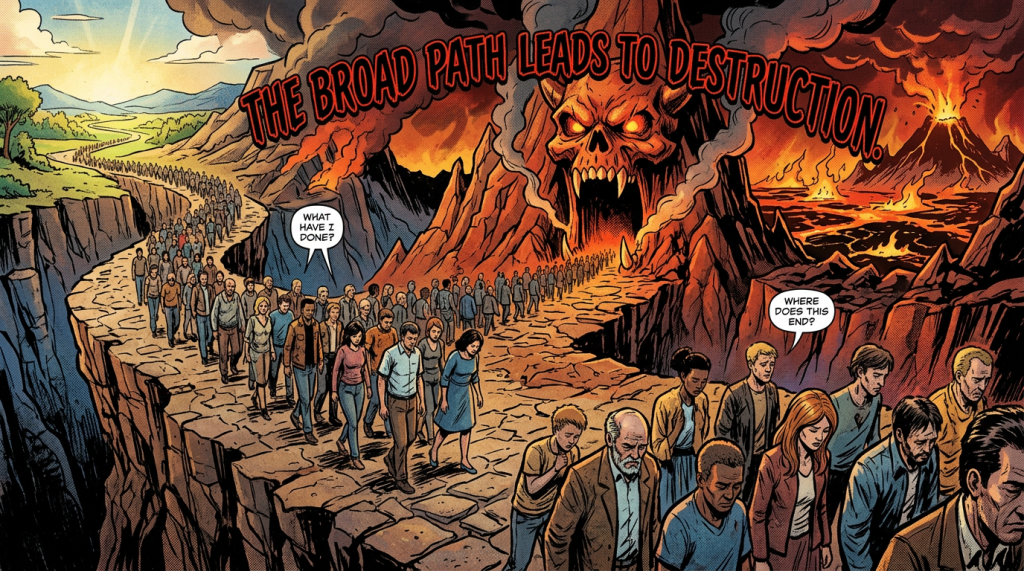
Troian finishes on the broad way that leads to destruction and enters the lake that burns with fire and brimstone, which is the second death. She does not arrive there ignorant of the alternative. The alternative stood nearby in Jacob, spoke, and kept walking where it could still be seen. Like the rich man who, once in torment, begged that his brothers be warned lest they come to the same place, her refusal carries its own testimony: those who know a righteous man yet will not follow him are already being shown the end of that choice.
This pattern supplies both encouragement and warning while the hand is still extended. For anyone who finds himself where Jacob stood, the charge is to remain the light that cannot be hid. The former friend’s hatred does not cancel the duty to shine. The sorrow does not cancel the necessity of separation. The race continues, and the Judge of all the earth will do right when the two paths reach their separate ends.
For anyone who finds herself where Troian stood, the same pattern is a present warning. The light is still set on the hill. The call has not yet given way to the silence that answers those who refused. Once the race is finished, the gulf fixed, and the eyes lifted from the place of torment, the sight of the one who entered will remain, and no passage will open.
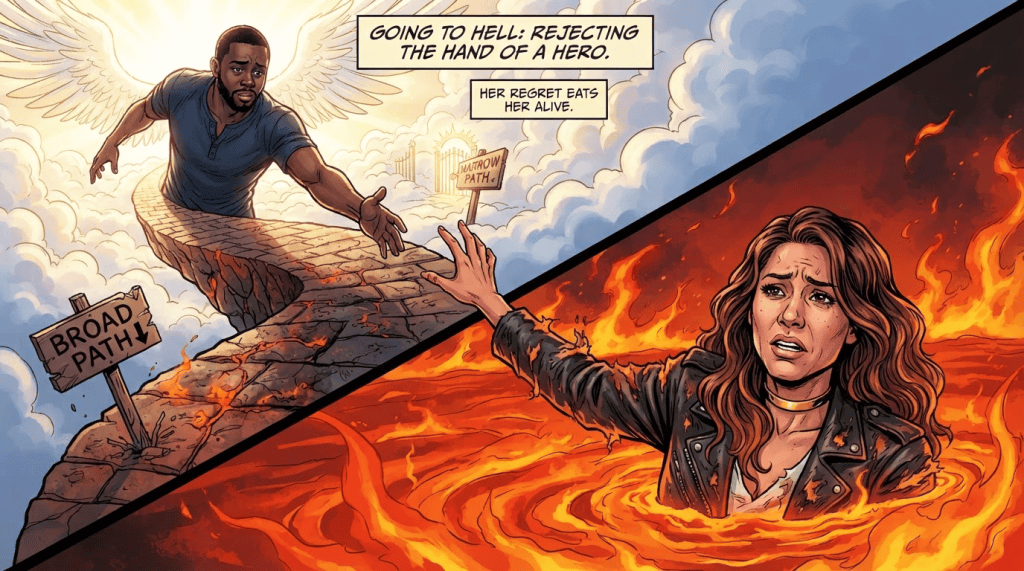
The Bible records the dilemma through precisely such lives: the hero’s hand stays visible until the end, and the refusal of that hand ends in the fire while the one who took it is seen, comforted, on the other side of an impassable divide.


Leave a Reply