
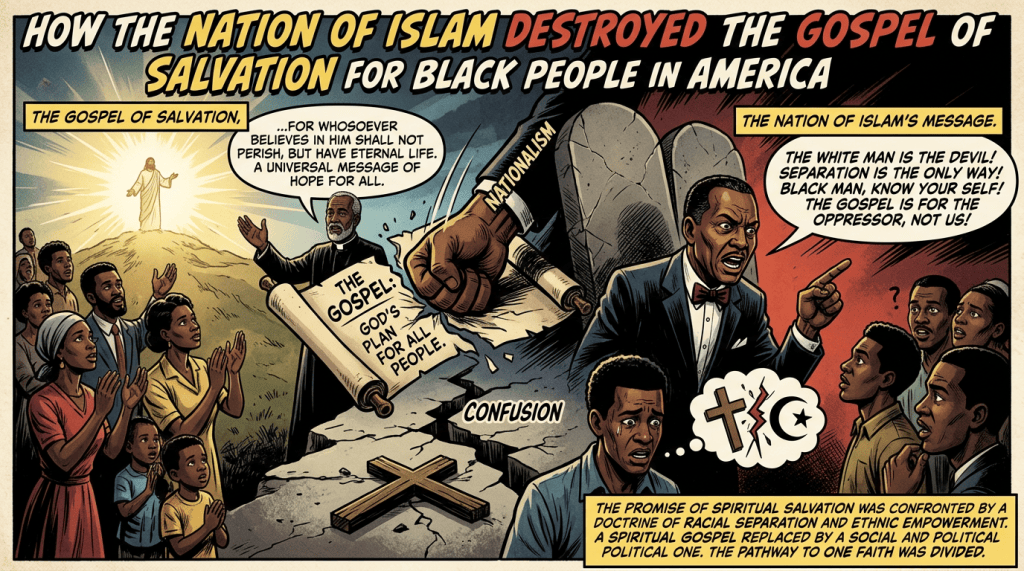
The Nation of Islam did not merely offer Black Americans an alternative faith. From its founding in Detroit in 1930 through its national prominence in the 1960s and 1970s, it waged a sustained, race-based assault on the historic Black church and the gospel of Jesus Christ.
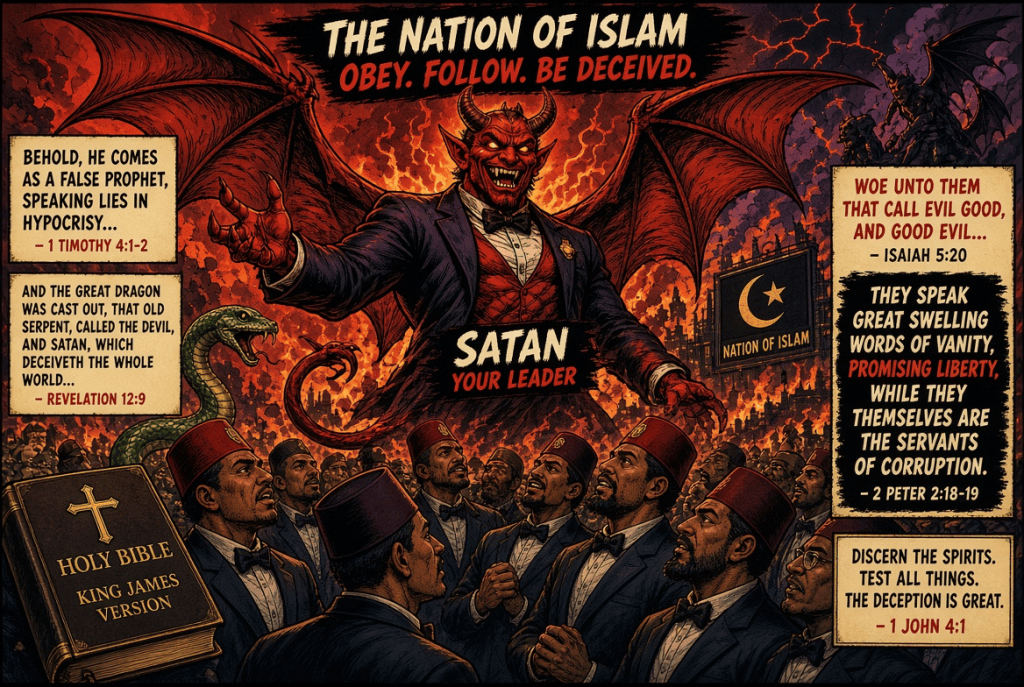
Under Wallace Fard Muhammad and then Elijah Muhammad, the movement taught that Christianity was a slave-making religion invented by white “devils,” that the biblical Jesus was only a prophet who never died on the cross for the sins of the world, and that salvation lay in racial separation and the worship of a human founder. The result was not liberation but a doctrinal replacement that pulled people out of churches and into a mythology that denies the one blood of humanity and the exclusivity of the cross.
Fard appeared in Detroit’s Black neighborhoods as a silk peddler claiming to be from Mecca. Within months he was teaching that the so-called Negroes were the lost Tribe of Shabazz, that whites were a race of engineered devils, and that Christianity was the tool used to keep them in mental chains. Contemporary accounts note that he attacked the churches for preaching a passive “turn-the-other-cheek” ethic that served white interests. Many of his early converts came directly from Baptist and Methodist congregations. When Fard vanished in 1934 after repeated arrests, Elijah Muhammad took the message nationwide and expanded it. In Message to the Blackman in America and in Muhammad Speaks, he declared Christianity “one of the most perfect black-slave-making religions on our planet.” He wrote that after the coming judgment “there will be no Christian religion or churches” and that “Jesus was a Muslim, not a Christian.”
The centerpiece of the attack was the Yakub myth. According to Elijah Muhammad, roughly 6,600 years ago a Black scientist named Yakub was exiled to the island of Patmos with 59,999 followers. Through six centuries of selective breeding in which darker infants were killed, he “grafted” the white race—a people “not made by nature to accept righteousness.”
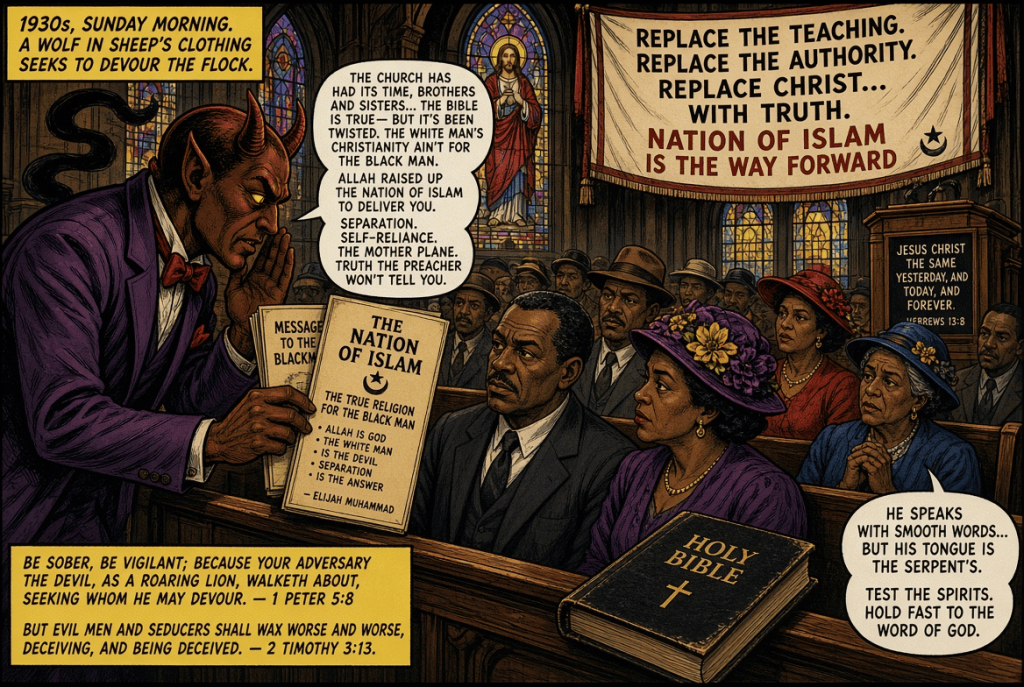
This race of “devils” was permitted to rule for 6,000 years through “tricknology.” The biblical creation account was rewritten: Genesis 1:26 (“Let us make man”) became a reference to Black scientists creating whites; Adam became the father of the white race; the Fall became their exile to Europe. The Black man, by contrast, was declared the original man, the maker of the universe, and, in the person of Fard, God himself. “God is a man,” Elijah taught, “and we just cannot make Him other than a man.” Christians, he said, worship an “invisible spook somewhere in space.”
These claims are not minor differences of emphasis. They are a direct denial of the gospel. The King James Bible states that “God is not a man, that he should lie; neither the son of man, that he should repent” (Numbers 23:19). “God is a Spirit: and they that worship him must worship him in spirit and in truth” (John 4:24). All nations are of “one blood” (Acts 17:26). Jesus is “the Word” who “was made flesh” (John 1:1, 14), who “knew no sin” (2 Corinthians 5:21), who died on the cross for sins and rose bodily (1 Corinthians 15:3–4). “Who is a liar but he that denieth that Jesus is the Christ? He is antichrist, that denieth the Father and the Son” (1 John 2:22). Louis Farrakhan has repeated the same denial in public: “God does not love this world. God never sent Jesus to die for this world… He never was on no cross. There was no Calvary for that Jesus.” He has claimed, “I represent the Messiah. I represent the Jesus and I am that Jesus.”
The practical effect inside Black communities was measurable. In the 1930s the new temples drew people who had been told their churches offered only a white god and a delayed heaven. In the 1960s and 1970s, at the height of the civil-rights struggle, NOI ministers pointed to the segregated Sunday morning hour and to non-violent strategies as proof that Christianity had failed. Malcolm X, while still in the movement, argued that the greatest miracle of American Christianity was that Black people had not risen in violence. Elijah Muhammad labeled Martin Luther King Jr. an enemy of his own people for seeking integration rather than separation. The message was consistent: the Black church was not merely imperfect; it was a tool of the devil race. Salvation required leaving it.
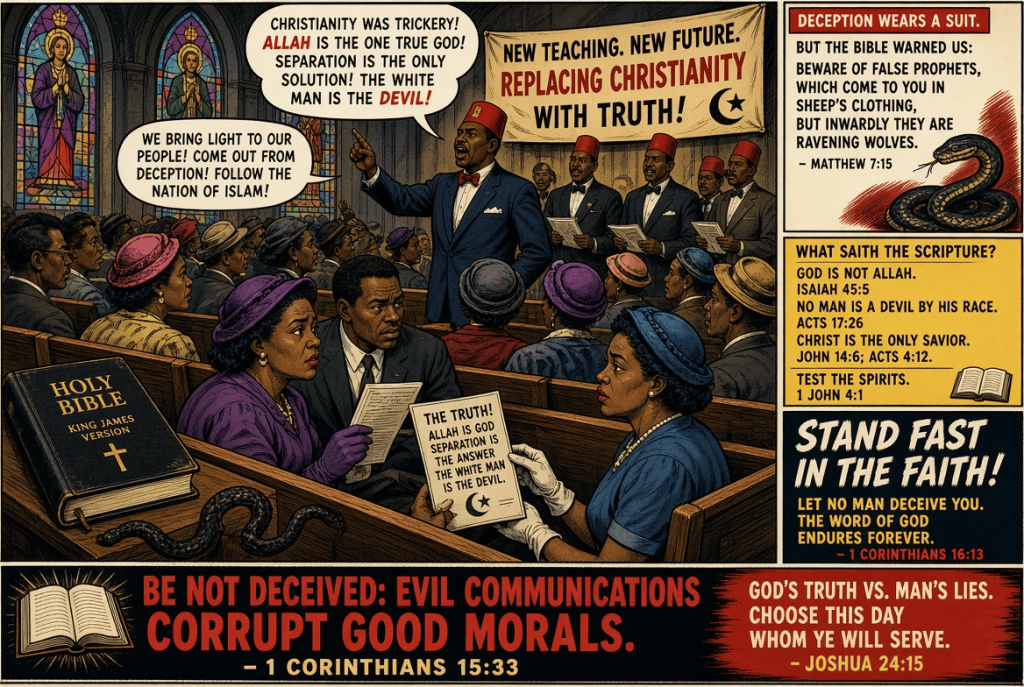
After Elijah Muhammad’s death in 1975 his son Warith Deen Muhammad led the larger body toward mainstream Islam and moderated some of the harshest rhetoric. Farrakhan’s continuing Nation of Islam retained the core racial theology and the claim that Fard was Allah in person. The damage, however, had already been done. Generations heard that the God of the Bible was a white invention, that the cross was a symbol of slavery rather than atonement, and that their true identity and destiny were racial rather than found in Christ. The historic Black church, which had preserved the gospel through slavery, Jim Crow, and the Great Migration, was recast as an obstacle rather than a refuge.
None of this is a defense of every failure of American Christianity. Segregation in churches was real and sinful. Some white Christians used Scripture to justify oppression. Those sins are condemned by the same Bible the Nation of Islam rejected. Partiality is sin (James 2:1–9). The answer to a corrupted presentation of the gospel is not another gospel. The answer is the actual gospel: that Christ died for sinners of every nation, that repentance and faith in him alone bring forgiveness, and that in him “there is neither Jew nor Greek… bond nor free” (Galatians 3:28).
The Nation of Islam’s racial theology offered a temporary sense of dignity and economic self-help. It also offered a false Jesus, a false God, and a false origin story that contradicted both history and Scripture. By teaching that an entire race was created as inherent devils and that the Christian faith of Black America was a slave religion, it attacked the only message that actually levels all men before the cross.
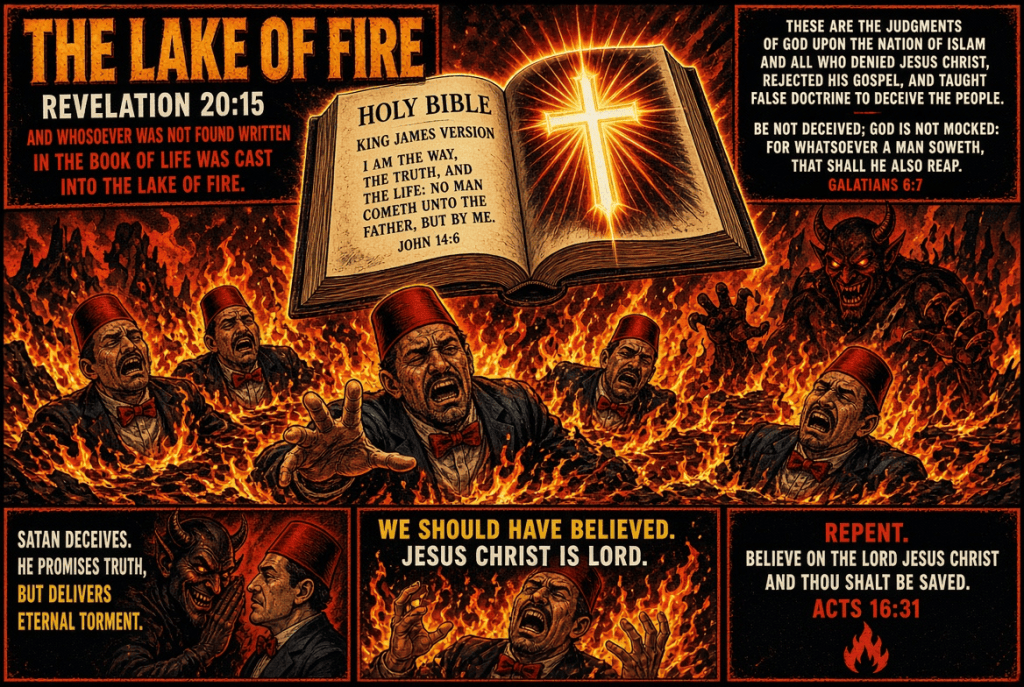
The record of the attack should be clear: for decades the Nation of Islam did not merely criticize the churches. It sought to replace the gospel of salvation with a racial mythology, and in doing so it led many away from the only Savior who is the same yesterday, today, and forever.


Leave a Reply