
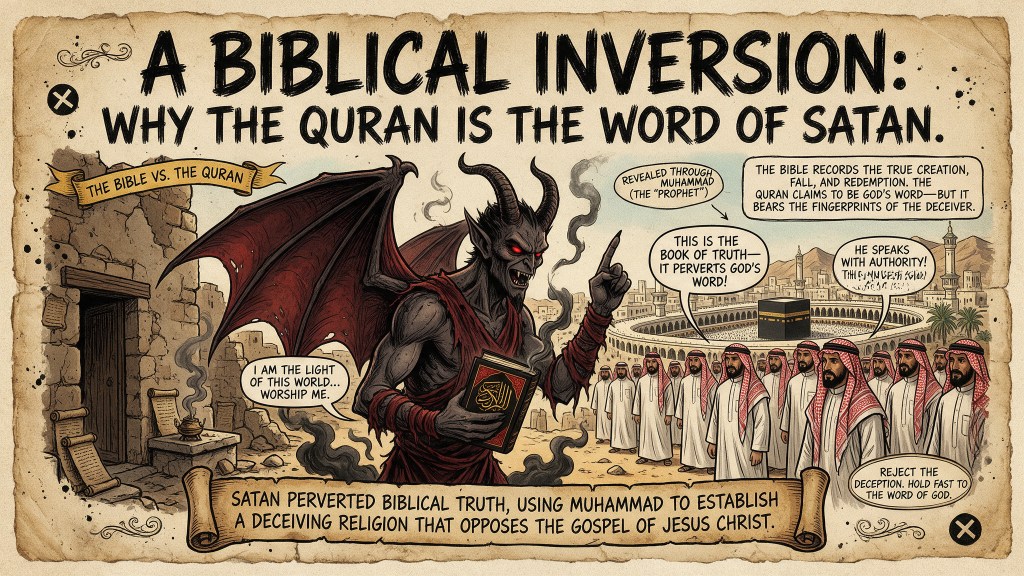
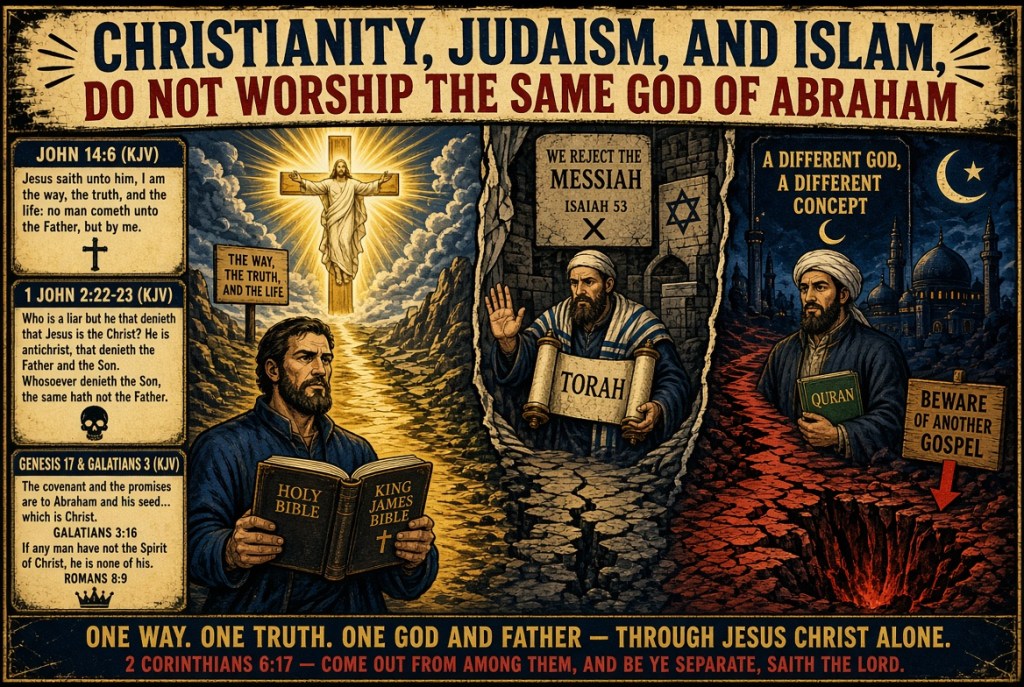
The New Testament does not leave the test for the spirit of antichrist in the realm of speculation. In 1 John 2:22 and 4:2–3, the apostle identifies it with unmistakable clarity: the denial that Jesus is the Christ, the refusal to confess that he has come in the flesh as the Son of God, and the active substitution of another message in place of the apostolic gospel.
That test is not limited to the first century. It supplies a criterion by which any subsequent revelation may be measured. Applied to the Quran, the result is not ambiguity. The text systematically inverts the central claims of the biblical account of Jesus Christ. If the figure addressed as Allah is not the God of Abraham, Isaac, and Jacob but the adversary described in Scripture, then the Quran is not a parallel scripture. It is the word of the devil, delivered as a counterfeit.
The most direct inversion concerns the death of Jesus. Surah 4:157–158 states: “And [for] their saying, ‘Indeed, we have killed the Messiah, Jesus, the son of Mary, the messenger of Allah.’ And they did not kill him, nor did they crucify him; but [another] was made to resemble him to them. And indeed, those who differ over it are in doubt about it. They have no knowledge of it except the following of assumption. And they did not kill him, for certain. Rather, Allah raised him to Himself.”
The verse does not merely reinterpret the event. It denies that the crucifixion occurred. It asserts that the appearance of death was a deception arranged by Allah, that another was substituted, and that Jesus was taken up alive. The New Testament treats the crucifixion and resurrection as the decisive act by which sin is dealt with and death is defeated (1 Corinthians 15:3–4; Hebrews 9:26–28). The Quran replaces that act with a divine sleight of hand that leaves the problem of sin unresolved and the promise of atonement unfulfilled. The substitution is not a minor historical disagreement. It is the removal of the very event the apostolic witness declares to be the heart of the gospel.
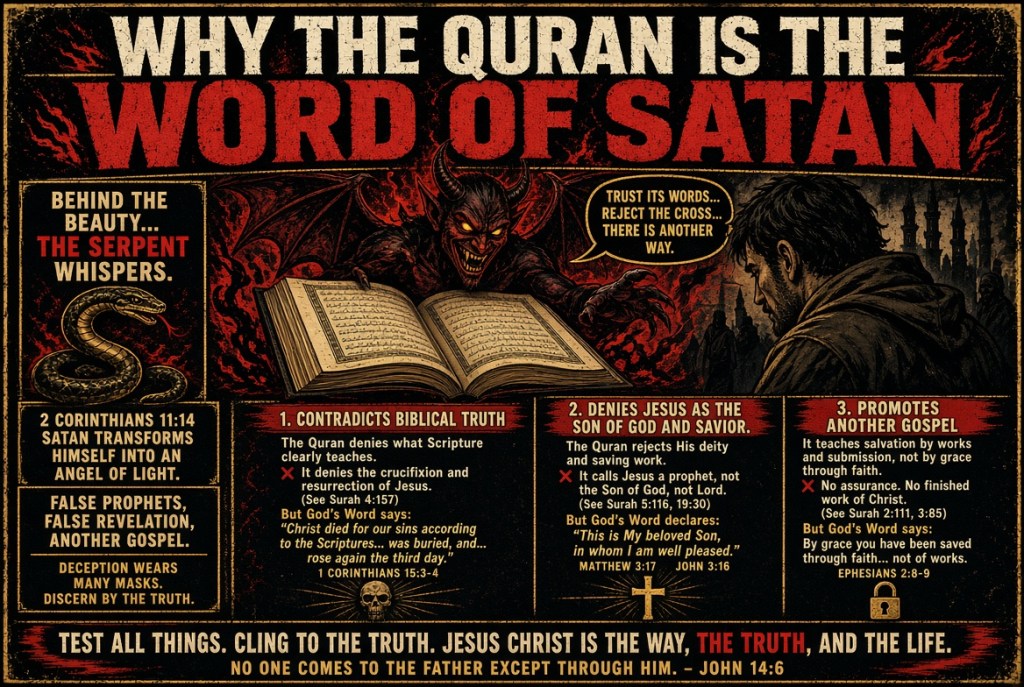
The denial of Jesus’s identity follows the same pattern. Surah 5:17 declares that those who say “Allah is the Messiah, the son of Mary” have disbelieved. Surah 4:171 instructs: “O People of the Scripture, do not commit excess in your religion or say about Allah except the truth. The Messiah, Jesus, the son of Mary, was but a messenger of Allah and His word which He directed to Mary and a soul [created at a command] from Him. So believe in Allah and His messengers. And do not say, ‘Three’; desist—it is better for you. Indeed, Allah is but one God. Exalted is He above having a son.”
The text does not merely reject one formulation of the Trinity. It rejects the claim that Jesus is the Son of God in any sense that would place him above the status of a created messenger. The Johannine test is met in the negative: the Quran refuses to confess that the one who came in the flesh is the Christ, the Son. Where the New Testament presents Jesus as the unique revealer of the Father (John 1:18; 14:6–9), the Quran presents him as a servant whose highest role is to confirm a later message that contradicts the earlier one.
These inversions are not isolated. They belong to a larger pattern in which the biblical narrative is rewritten to serve a different end. The covenant God made with Abraham through Isaac is displaced. The people through whom the promises were given are repeatedly described as cursed, transformed into apes and pigs, and designated the most intense in enmity toward the believers (Surah 5:60; 5:82; 5:51).
Surah 5:51 commands believers not to take Jews or Christians as protectors or friends. The practical effect is to reverse the biblical order in which the gospel is first for the Jew and then for the Gentile, and in which the continuing existence of the Jewish people is tied to the faithfulness of God’s promises (Romans 9–11). The Quran does not merely criticize particular Jewish or Christian actions. It redefines the status of the people and the nature of the covenant itself.
The same pattern appears in the eschatological claims that have shaped the modern conflict over the land. The figure the Quran and the hadith present as the returning Jesus (Isa) is not the one who died and rose; he is the one who was never crucified and who returns to confirm the later message and to subordinate the earlier community. The Mahdi who is said to rule from the territory of the former Seleucid realm is not a servant of the biblical Messiah; he is the one whose arrival is paired with the elimination of the Jewish presence that the biblical prophets treat as permanent.
These are not peripheral traditions. They are the logical outcome of a text that has already denied the crucifixion, the sonship, and the covenant. When Western movements adopt the maximalist territorial claim associated with those traditions while translating it into the language of human rights, they advance the practical result of the inversion without requiring their audiences to affirm the underlying denial.
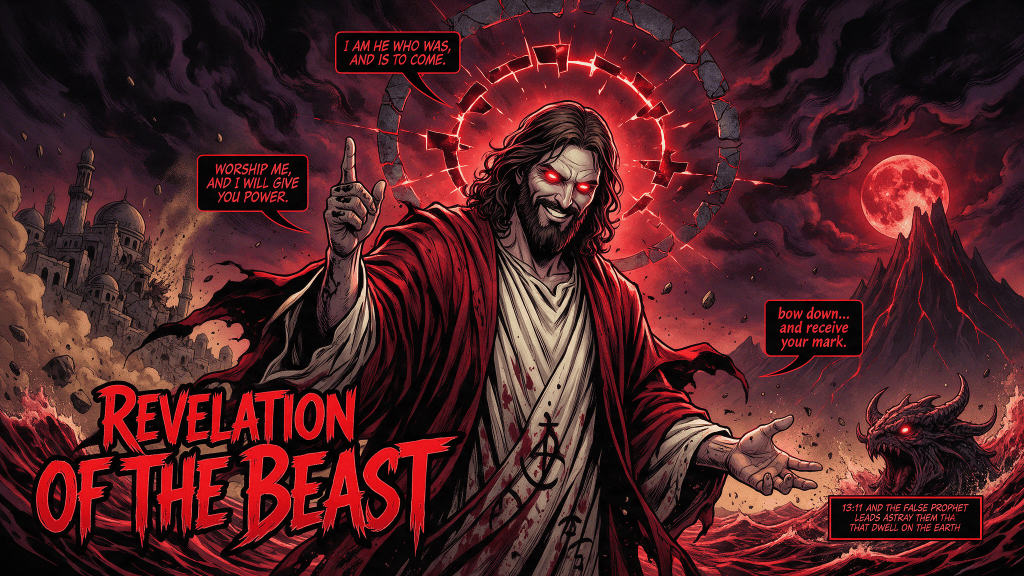
The Quran does not confess that Jesus is the Christ who came in the flesh, died, and rose. It denies the crucifixion, rejects the sonship, and substitutes a different messenger and a different covenant. If the one who speaks in those verses is the adversary Scripture describes as the father of lies, then the words are his words. They invert the gospel rather than confirm it.
The biblical warning was written for precisely this kind of substitution: a message that speaks of God, of Jesus, and of judgment while denying the specific claims on which the apostolic witness rests. The verses are public. The contradictions are specific. The test is not obscure.
Those who continue to treat the Quran as a parallel revelation of the same God are not merely overlooking historical details. They are declining to apply the criterion the New Testament itself provides for distinguishing the spirit of truth from the spirit of antichrist.



Leave a Reply