
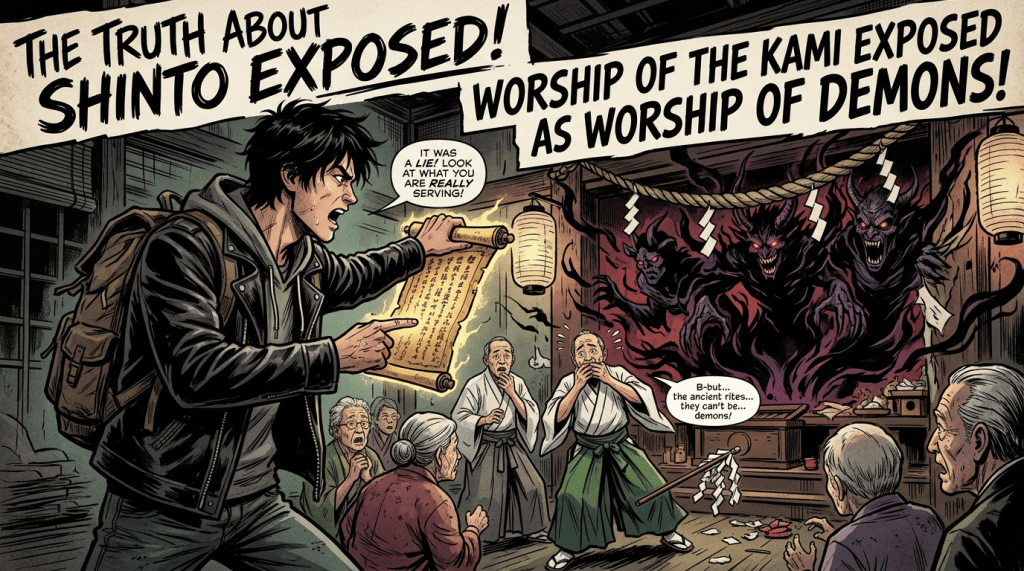
Japan stands as one of the most prosperous, educated, and technologically advanced societies on earth, yet fewer than one percent of its people identify as Christian, and the number of those who would meet a definition of born-again believers—those who have trusted solely in the death, burial, and resurrection of Christ for the forgiveness of sins—is smaller still.
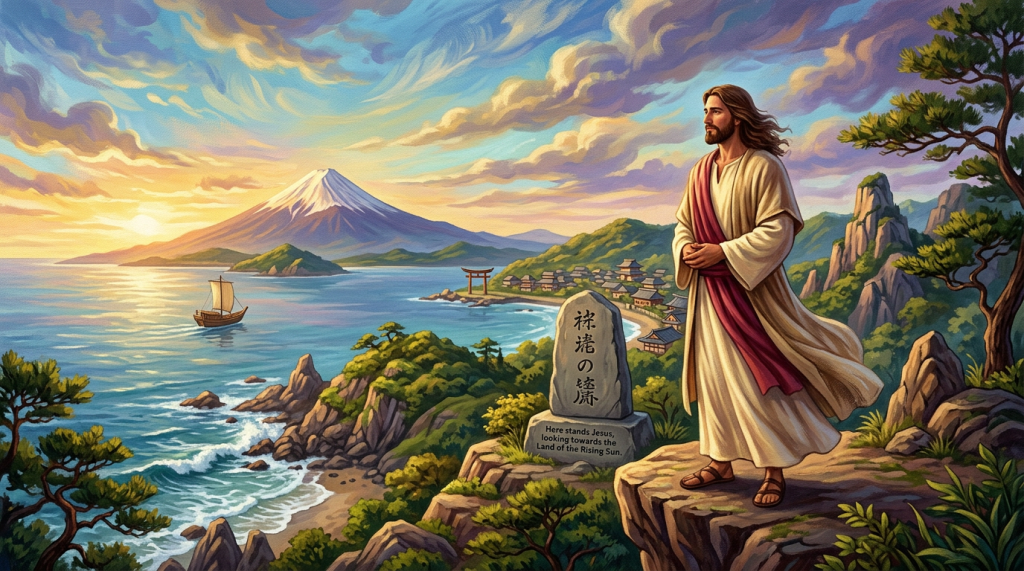
This is not an accident of geography or economics. It is the long-term result of a religious system that has defined Japanese identity for centuries and that, measured by the plain statements of the Bible, constitutes the organized service of unclean spirits.
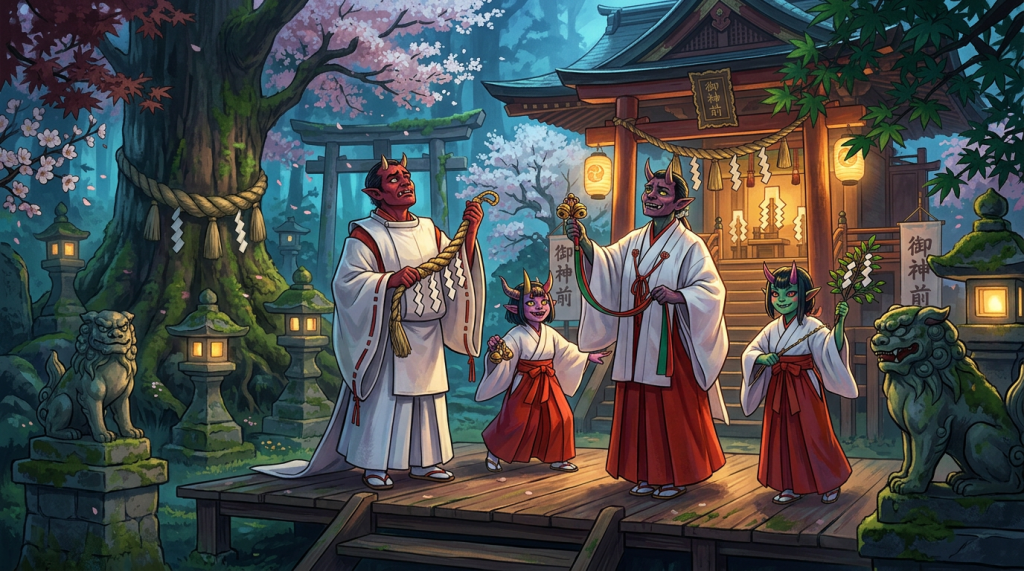
Shinto, “the way of the kami,” has no founder and no scripture comparable to the Bible. Its center is the kami: personal spiritual powers believed to inhabit mountains, rivers, storms, rice fields, animals, ancestors, and exceptional human beings. Tradition speaks of eight million such beings. Amaterasu, the sun goddess and mythic ancestress of the imperial line, occupies the highest place in the classical accounts preserved in the Kojiki.
Shrines exist to house or summon these powers. Worshippers purify themselves, present offerings of food and sake, bow, clap, and petition for protection, prosperity, or harmony. Life-cycle events, community festivals, and even many corporate and political ceremonies still move through these rites. Buddhism arrived later and was extensively syncretized with the kami; the two systems have long shared households, calendars, and sacred sites.
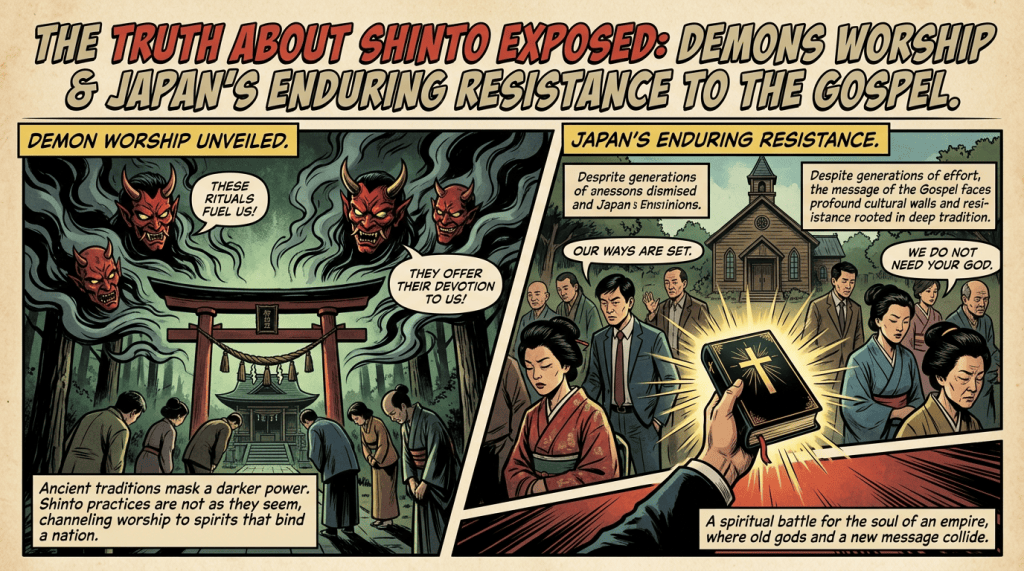
The Bible does not treat such arrangements as neutral cultural heritage. “Thou shalt have no other gods before me,” the first commandment declares, and it forbids bowing down to or serving any likeness of anything in heaven or earth. Later texts identify the recipients of Gentile sacrifice and service: “They sacrificed unto devils, not to God; to gods whom they knew not, to new gods that came newly up.” Paul applies the same judgment without geographic exception: the things the nations sacrifice, they sacrifice to devils, and believers are not to have fellowship with them.
On this reading, the kami who receive Japan’s offerings, prayers, and ritual attention are precisely those unclean spirits. The creation narrative of the Kojiki—in which successive kami simply appear, a divine pair generate the islands through sexual union and ritual, and major deities are born from the purification of a god who has visited the underworld—stands in direct contradiction to the biblical account of one Creator who speaks all things into existence and who alone is to be worshiped.
The core act is the presentation of offerings and petitions at shrines. Food, sake, cloth, or symbolic gifts are set before the kami; the worshipper bows, claps to draw attention, and speaks or thinks a request for protection, harvest, health, success, or purification. Norito (formal liturgical prayers) address the kami as personal agents capable of hearing and responding. These rites occur at roughly 80,000–100,000 shrines, from grand complexes such as Ise (dedicated to Amaterasu) to neighborhood hokora. Household kamidana shelves perform a smaller version of the same service. On the KJV’s terms, each such offering is the Gentile sacrifice directed to devils, and each petition is fellowship with them.
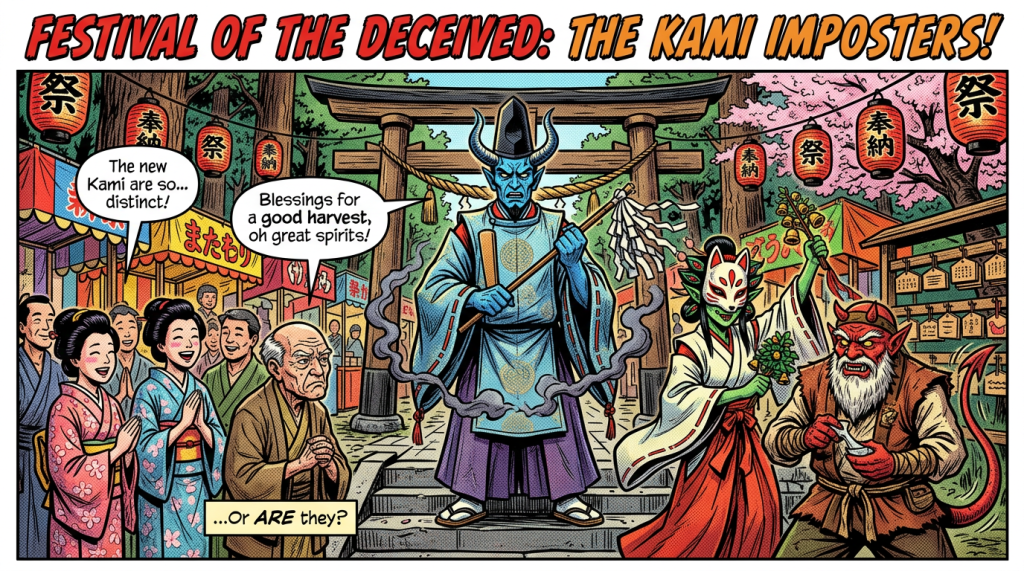
Certain practices make the spiritual agency more explicit. In some matsuri and older ritual forms, a designated person becomes a temporary vessel (kamigakari or similar mediated possession) through which a kami is believed to speak or act. Inari shrines, among the most numerous, center on a kami of rice and prosperity whose messengers are foxes (kitsune); foxes themselves are treated in folk belief as spirit-beings that can possess or deceive. Other localized kami are associated with particular animals, trees, rocks, or water sources and are approached to avert misfortune or secure favor.
Purification rites (harae, misogi) aim to remove kegare (impurity or pollution) that is understood as spiritual contamination, often linked to contact with death, blood, or disruptive forces—categories that overlap with biblical descriptions of uncleanness connected to other spirits. The Kojiki and related myths supply the narrative warrant: kami emerge, generate land and further spirits through birth and ritual, die or descend to Yomi, and are later enshrined. These are the “new gods that came newly up.”
Historically, this service was defended by the state precisely because it was understood as foundational. Edicts against Christianity cited the danger to the shrines of the kami. Later State Shinto elevated imperial and national rituals as obligatory custom.

Practitioners describe the kami as sacred presences and the rites as harmony, gratitude, or cultural continuity. That description does not alter the category assigned by Deuteronomy 32:17 and 1 Corinthians 10:20. Explored under the stated standard, Shinto demon worship is the ongoing, institutionalized offering of prayer, food, and ritual attention to the unclean spirits the Bible says stand behind the gods of the nations.
The numerical outcome is stark. Contemporary government figures and independent surveys place Christian affiliation at roughly one percent or less, with active participation frequently estimated lower. Protestant and evangelical congregations exist, yet they remain small, aging, and culturally marginal. The same worldview that classifies the kami as proper recipients of service continues to classify the biblical demand—that all such service cease and that salvation be found only in the finished work of Christ—as an alien and unnecessary intrusion.
Japan’s low number of born-again Christians is therefore not a puzzle of communication technique or economic development.
It is the predictable result of a civilization whose deepest religious reflexes have been trained, for more than a millennium, to offer prayer and ritual fellowship to spirits the Bible identifies as devils, and to regard any gospel that forbids that offering as a threat to order itself. Until that identification is faced, the grip will remain.



Leave a Reply