
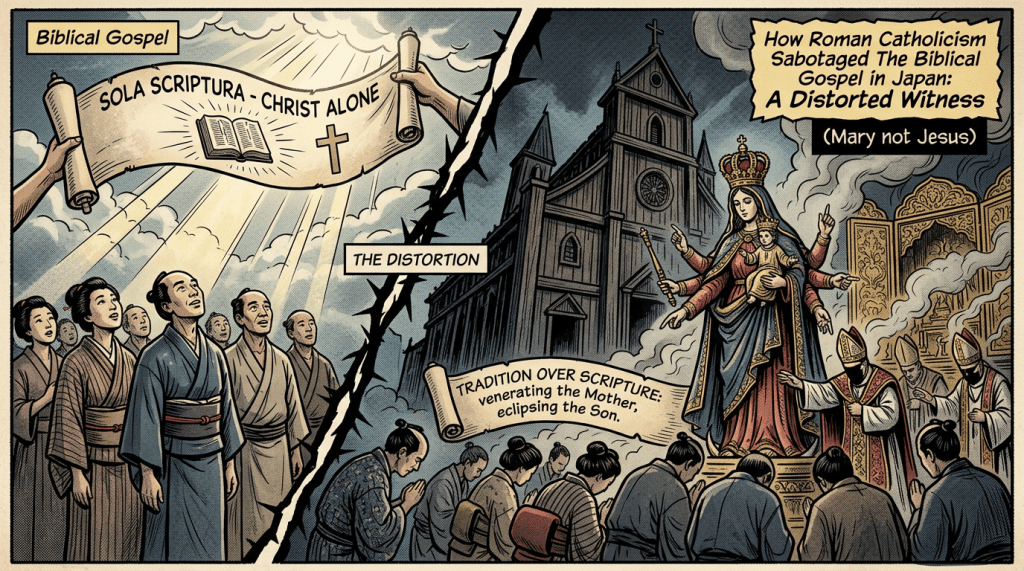
The first “Christian” teaching to reach Japan was not the gospel the apostle Paul delivered to the Corinthians—that Christ died for our sins according to the scriptures, that he was buried, and that he rose again the third day (1 Corinthians 15:1–4).

It was the religion of the Roman Catholic Church, the system a literal reading of Revelation identifies as Mystery Babylon the Great, the Mother of Harlots. Headquartered on the seven hills of Rome, arrayed in purple and scarlet, decked with gold, and historically drunken with the blood of the saints, this institution rode the continuing Roman beast system and presented the nations with a counterfeit centered on a “Queen of Heaven” who matches the profile of the ancient Babylonian goddess Inanna/Ishtar.
When that system arrived in 1549, it occupied the only early opening, provoked a total ban, and left a cultural memory in which Christianity meant foreign image-worship of a demonic queen rather than the exclusive message of Christ’s finished work. The biblical gospel was delayed for centuries precisely because Mystery Babylon arrived first.
Revelation 17 depicts a harlot seated on a scarlet beast full of blasphemous names, having seven heads and ten horns. The seven heads are seven mountains; the woman reigns over the kings of the earth and is drunk with the blood of the saints. She holds a golden cup full of abominations.
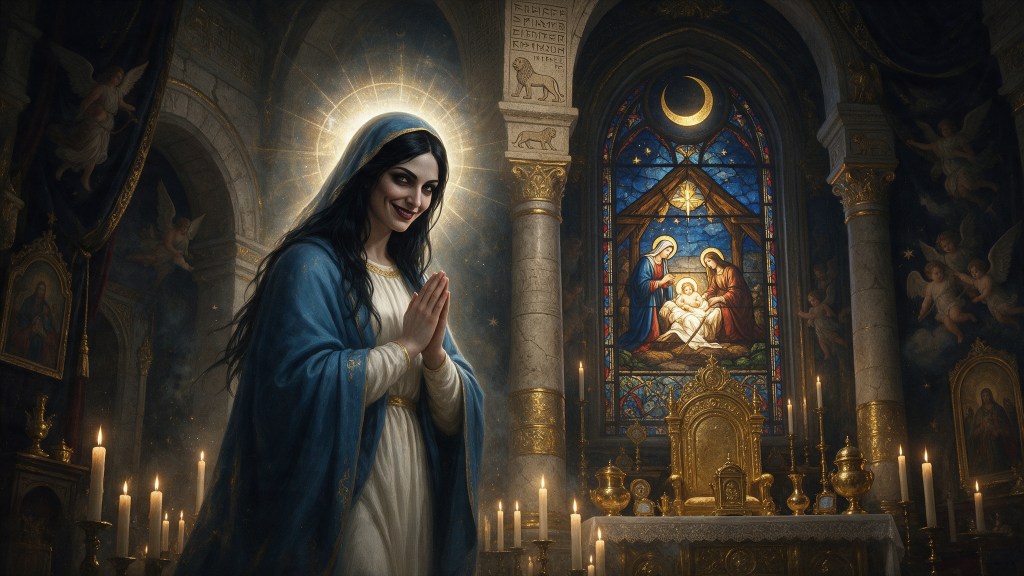
These markers—Rome’s seven hills, papal opulence in purple and scarlet, global political influence, and a long record of suppressing Bible believers—align with the Roman Church in a way that fits no other institution, including Jerusalem, which was destroyed in 70 AD, lacked ongoing global commercial power, and stood as Rome’s victim rather than its rider.
The same chapters describe her sudden future fall. What the Jesuits carried to Japan was this system: sacramental mediation that obscures the once-for-all sacrifice, meritorious works, submission to Roman jurisdiction, and, above all, the elevation of Mary.
The Catholic Mary is not the biblical woman of Luke and Acts. Scripture presents a humble servant who needed a Savior (Luke 1:47), offered the ordinary sin offering after childbirth (Luke 2:24), and had normal marital relations afterward (Matthew 1:25). She fades from the narrative after Acts 1.
The Roman version, by contrast, is sinless from conception, perpetually virgin, bodily assumed, “Queen of Heaven,” and Mediatrix who dispenses grace. These titles and attributes reproduce the profile of Inanna/Ishtar, the Babylonian demon queen whose worship Jeremiah 7:18 condemns—families offering cakes to the Queen of Heaven and provoking the Lord to anger.
Inanna/Ishtar was queen of heaven and earth, linked to Venus, perpetual in her mythical purity, an intercessor who descended and ascended, and the recipient of temples, statues, and offerings. After the fourth century the Roman Church adopted and expanded this template, culminating in later dogmas of the Immaculate Conception and Assumption.
The golden cup of abominations in Revelation 17 thus includes the redirection of prayer, pilgrimage, and devotion to this figure. Japanese missionaries brought statues, rosaries, and prayers to this Queen of Heaven into a land already populated by kami.

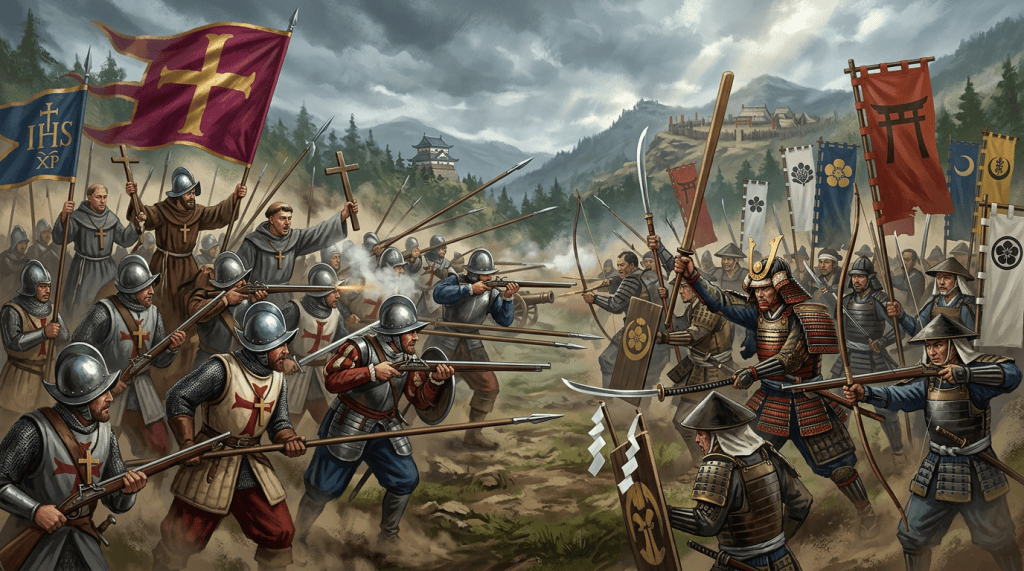
Japanese rulers recognized a rival system of spiritual powers. Hideyoshi’s 1587 edict and the Tokugawa ban of 1614 defended “the land of the kami” against a teaching that destroyed shrines and created allegiance to a foreign authority seated on seven hills. The twenty-six martyrs of 1597, the mass executions of the 1620s, the fumie tests requiring people to trample images of Christ or Mary, and the danka temple-registration system were aimed at the religion as it had been presented—Mystery Babylon’s version.
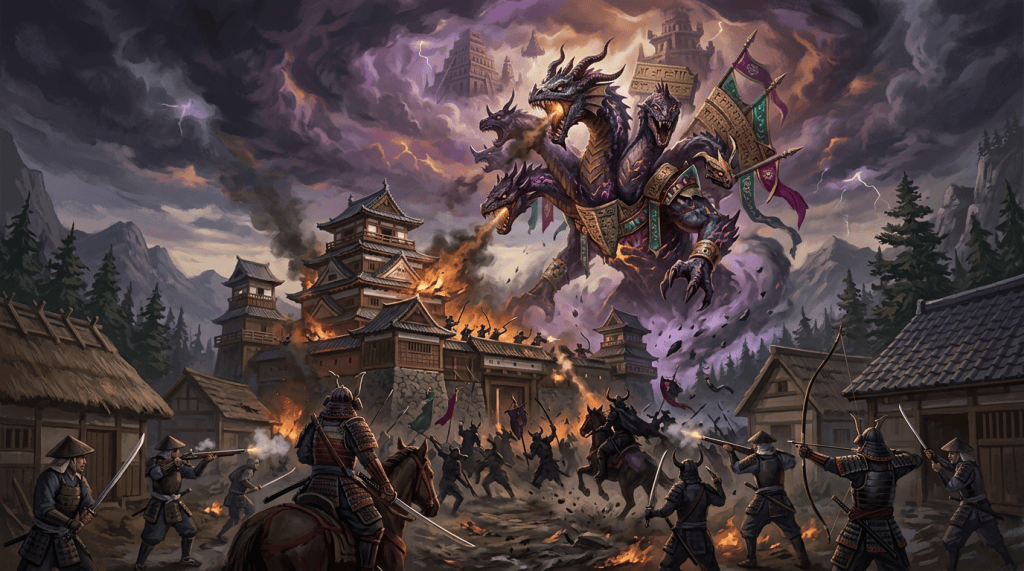
The Shimabara Rebellion and the subsequent sakoku policy closed the country to Catholic powers for more than two centuries. No open proclamation of any Christian message remained. The pure gospel of Christ’s death for sins, burial, and resurrection could not be preached because the earlier arrival of the harlot system had been judged an existential threat.
Underground Kakure Kirishitan communities preserved distorted fragments of exactly that system: garbled prayers, Mary images disguised as Kannon, and secret rites without Scripture. What survived was not 1 Corinthians 15:1–4 but an echo of Queen of Heaven devotion. When Protestant missionaries finally entered after 1873, they inherited a population taught for generations that “Kirishitan” meant loyalty to a distant Roman power, the use of images, and service directed to a female intercessor—the very pattern Jeremiah and Revelation condemn.
The fumie experience had already trained officials and people to view Christian images as another form of idolatry to be rejected in favor of the kami. The biblical refusal of all other gods and all Queen of Heaven worship therefore arrived carrying the baggage of the Babylonian counterfeit that had preceded it.The numerical outcome follows. Christian affiliation remains near or below one percent. The low number of those who have received the gospel Paul delivered first of all reflects, in significant part, the prior occupation of Japan’s only early window by Mystery Babylon.
An initial witness confined to Christ’s atoning death and resurrection would still have confronted the kami. It would not have carried the additional liabilities of Roman jurisdiction, image veneration, and devotion to a figure identifiable as Inanna/Ishtar under the title Queen of Heaven.
By presenting the religion of the harlot, the Roman Church did not merely fail to plant the biblical message; it triggered the closure, shaped the memory, and left a distorted witness that continued to hinder the true gospel long after the ban was lifted.
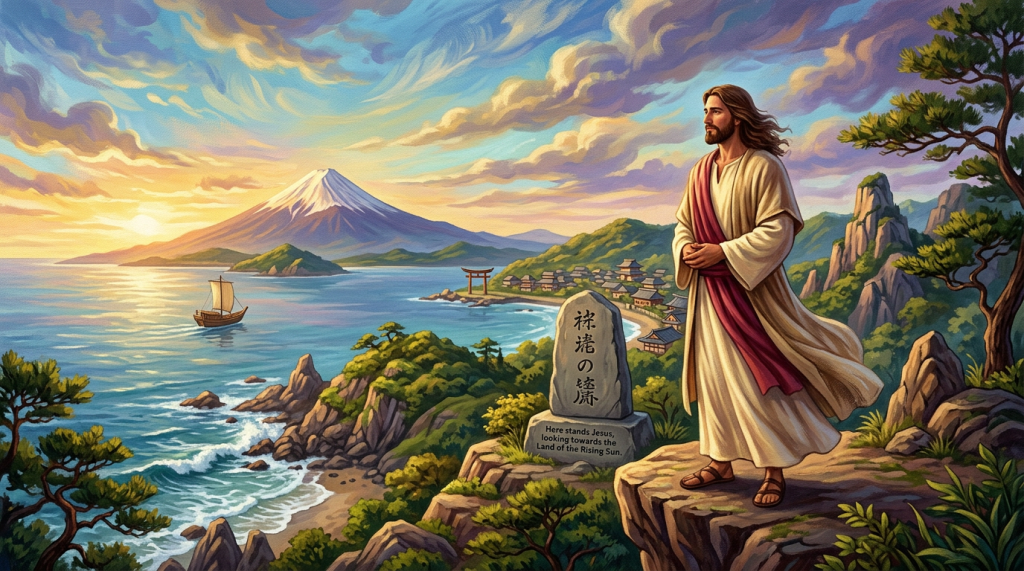
That is the concrete cost, in one of the world’s most resistant fields, of the Mother of Harlots arriving in place of the apostolic proclamation.


Leave a Reply