
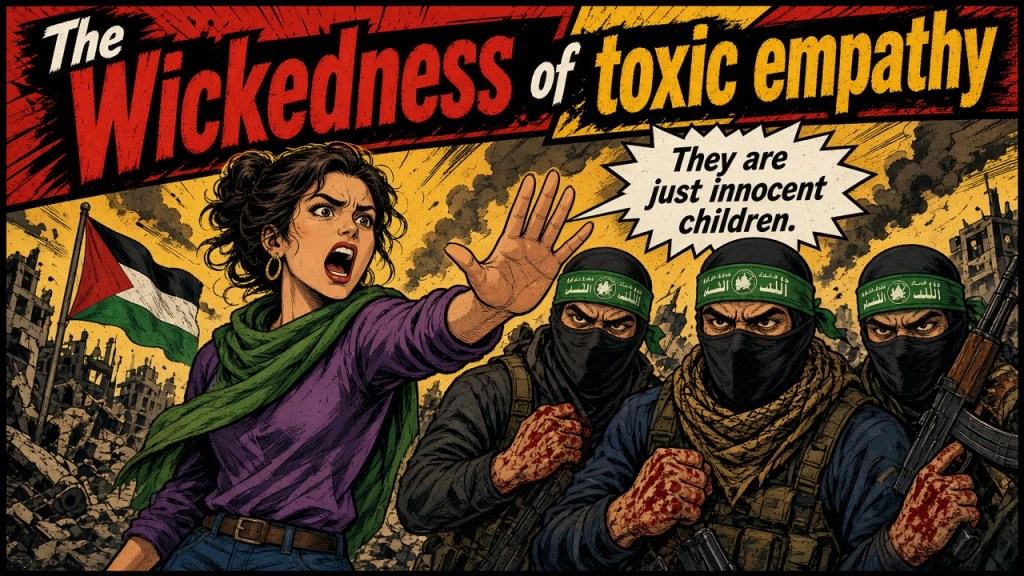
In recent years a peculiar moral disorder has taken root in public discourse. It presents itself as compassion, yet it systematically extends sympathy to the wicked while condemning those who uphold justice.
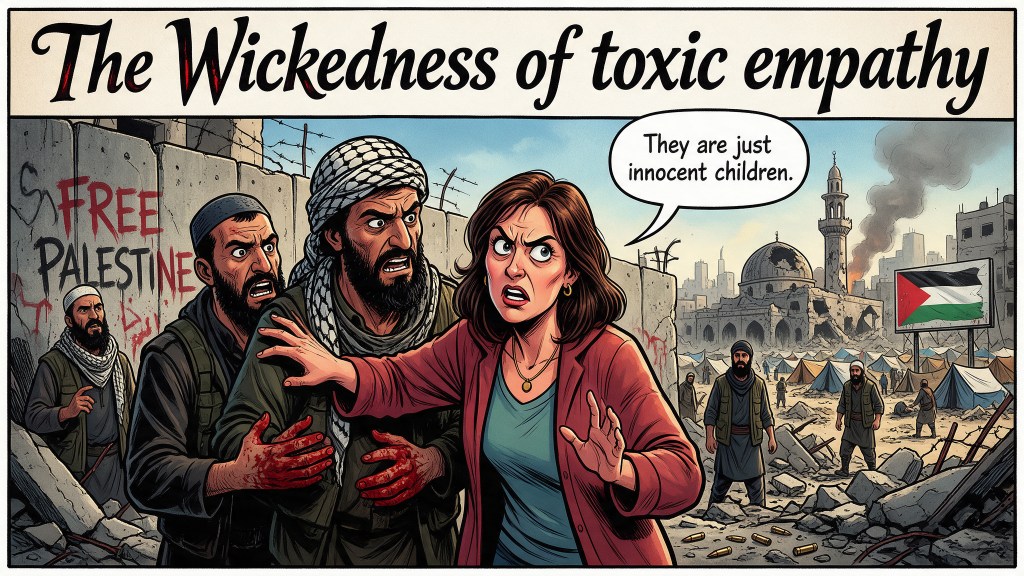
The Bible, read literally as the standard by which all claims must be judged, names this disorder an abomination. Proverbs 17:15 declares, “He that justifieth the wicked, and he that condemneth the just, even they both are abomination to the LORD.” Isaiah 5:20 adds woe to those “that call evil good, and good evil.” What contemporary observers call toxic empathy is precisely this inversion: the tender mercies of the wicked that Proverbs 12:10 warns are cruel.
The pattern appears first in the treatment of individual criminals. When Nidal Hasan, the Fort Hood shooter, faces execution for murdering fourteen people—including a pregnant soldier and her unborn child—while shouting “Allahu Akbar,” a chorus of voices emphasizes his humanity, his grievances, or the supposed excess of capital punishment. The blood he shed, the image of God he violated (Genesis 9:6), recedes.
The same occurs with Christa Pike, who tortured and murdered Colleen Slemmer, carving a pentagram into her body and taking a fragment of skull as a souvenir. Accounts that dwell on Pike’s childhood trauma or the trauma of a botched execution attempt treat the perpetrator as the primary object of concern.

Deuteronomy 19:13 is clear: in cases of deliberate murder, “Thine eye shall not pity him, but thou shalt put away the guilt of innocent blood.” Toxic empathy pities the murderer and leaves the guilt of blood in place.
A prominent illustration comes from Lila Rose, a public advocate who has elsewhere criticized progressive emotional manipulation. In response to arguments drawn from Romans 13—that the magistrate “beareth not the sword in vain” as “a revenger to execute wrath upon him that doeth evil”—she maintains that capital punishment “can be just in extreme circumstances” but is not required in modern America. She appeals to the sparing of Cain, to the episode of the woman taken in adultery, and to the claim that “justice no longer requires blood” once secure prisons exist.
Lifelong incarceration, she argues, is not toxic empathy; it protects the common good while allowing time for repentance. Yet Genesis 9:5–6 is not a temporary provision for societies lacking prisons. It rests on the permanent fact that man is made in the image of God. Romans 13 reaffirms the sword as the instrument of divine wrath. The selective elevation of mercy narratives and modern practicalities over these texts is the justifying of the wicked by redefining justice so that it no longer exacts the blood the Scripture requires.

The same inversion scales upward in the “Free Palestine” movement. On 7 October 2023, Hamas and allied groups murdered roughly twelve hundred people, the large majority civilians, at a music festival, in family homes, and on the roads of southern Israel. They raped, mutilated, and took 251 hostages, including infants and the elderly.
The movement’s dominant response has not been to name this wickedness. It has been to frame Palestinian civilians—and, by extension, the organizations that rule and arm them—as the primary victims of Israeli oppression. Adult members of groups whose founding documents call for the obliteration of Israel and the killing of Jews are frequently cast as resistance fighters or as people whose cause must be protected for the sake of “innocent children.”
Hamas’s own charter cites the hadith that the Day of Judgment will not come until Muslims fight and kill the Jews; its leaders have spoken of civilian deaths among their own people as necessary sacrifices. Hezbollah’s foundational statements likewise seek Israel’s destruction. Yet much of the Western activism treats these commitments as secondary or as understandable reactions, while the Israeli civilians who were burned, shot, and abducted are reduced to symbols of the oppressor.
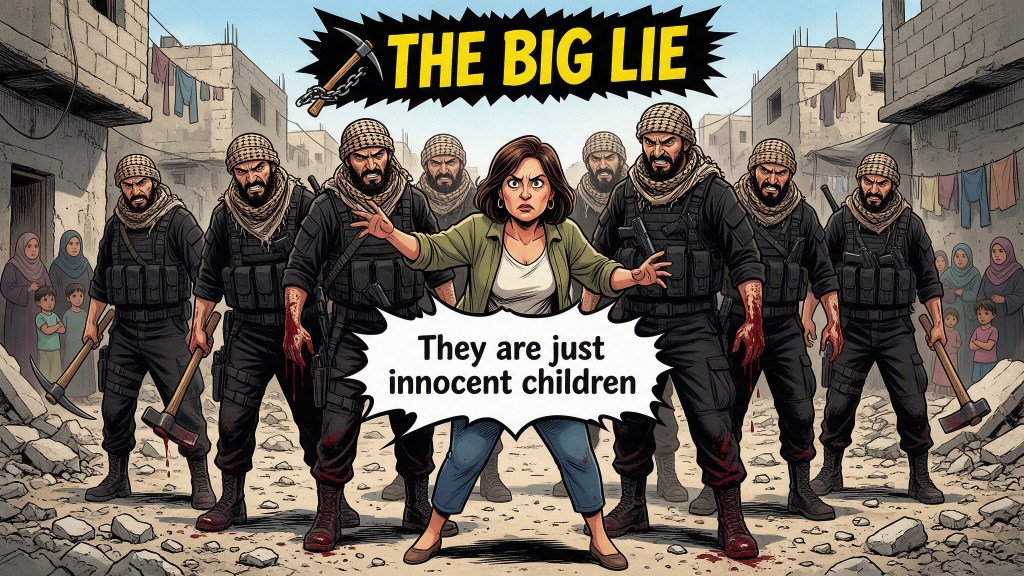
This is the classic move of toxic empathy: the wicked are recast as the innocent, and the acts that restrain them are decried as the true evil. The command in Genesis 12:3 to bless Abraham’s seed and the continuing distinction of Israel in Romans 9–11 are ignored or inverted. The universal prohibition on shedding innocent blood is applied only in one direction.
When Israeli forces respond to the deliberate massacre and the ongoing rocket fire and hostage-holding, the response itself is treated as the original sin. Civilian casualties in Gaza, many of them the foreseeable result of Hamas’s practice of embedding military infrastructure in residential areas and discouraging evacuation, become proof of Israeli wickedness rather than evidence of the original choice to maximize Palestinian exposure.
The eye that Scripture forbids to pity the murderer is instead directed exclusively toward the population the murderer has placed in harm’s way.Throughout these cases a notable feature is the prominence of women in advancing the emotional and moral claims. The original biblical diagnosis of toxic empathy noted the vulnerability of the foolish woman who is “clamorous: she is simple, and knoweth nothing” (Proverbs 9:13) and who “plucketh it down with her hands” (Proverbs 14:1).

First Timothy 2:14 records that “Adam was not deceived, but the woman being deceived was in the transgression.” This is not a claim that every woman participates or that men are immune; Scripture records both wise women who build and wicked women who destroy. It is an observation that the form of empathy that prioritizes feeling over the plain text—sympathy for the condemned over the blood of the victim, for the population under Islamist rule over the explicit ideology that targets Jews—has been advanced with particular energy and cultural authority by many women.
Lila Rose’s arguments against the necessity of capital punishment in contemporary America exemplify the pattern: the language of mercy, the appeal to potential repentance, and the aversion to “shedding any more human blood” take precedence over the Noahic and Romans 13 texts. In the Free Palestine activism, women have been conspicuous in campus encampments, social-media campaigns, and public statements that elevate Palestinian suffering while remaining silent or hostile toward the Israeli victims of 7 October and the hostages still held.
The clamorous quality Proverbs describes—the loud, simple insistence that empathy itself is righteousness—fits the public style of much of this advocacy. When older women are instructed in Titus 2 to teach younger women sobriety, love of husband and children, discretion, and domestic fidelity so that the word of God is not blasphemed, the redirection of moral energy into public justification of the wicked stands in contrast.

The societal cost is the one Scripture predicts. When the wicked are justified and the just condemned, the guilt of innocent blood remains. Potential killers are not made afraid of the sword (Romans 13). Groups that announce their intention to kill Jews and destroy the Jewish state are treated as legitimate interlocutors rather than as practitioners of the evil the magistrate is charged to restrain.
The house is plucked down. The remedy is not the abolition of compassion. It is the subordination of feeling to the text: the refusal to call the murderer righteous, the insistence that the eye not pity when bloodguilt is at stake, and the recognition that the image of God in the victim is not cancelled by the biography or the political narrative of the perpetrator. Toxic empathy flourishes where that order is reversed. The Bible has already named the result.


Leave a Reply