They meet in apartments with the curtains drawn, or in rented rooms booked under another name, because the only churches the state will license are the ones that have agreed to place the Party ahead of the gospel.
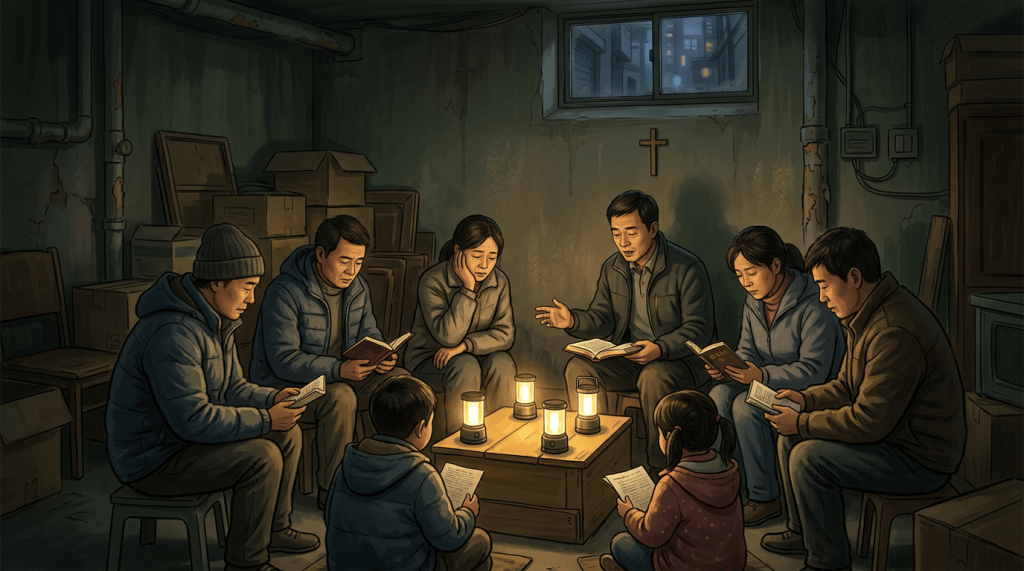
For these independent Chinese Christians, the choice is not between comfort and inconvenience. It is between a legal religious life that subordinates Christ to the Chinese Communist Party and an illegal one that does not. In that refusal they stand where the church in Smyrna stood.
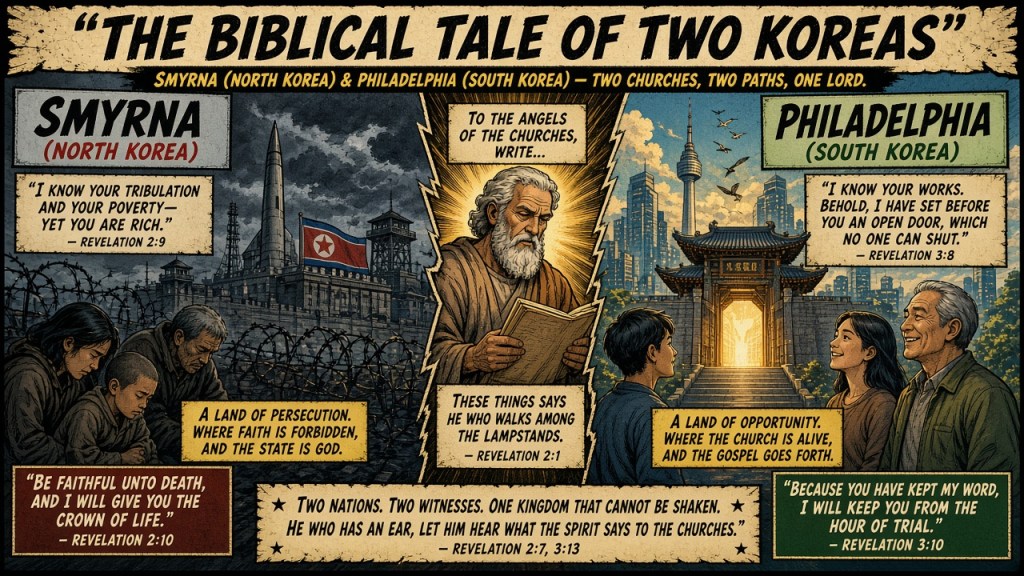
The letter preserved in Revelation 2:8–11 was written to a small assembly in a prosperous Roman city on the Aegean coast. Smyrna was loyal to the empire, proud of its imperial cult, and home to a community that used its civic standing against the Christians. Christ addresses them as “the first and the last, which was dead, and is alive.” He tells them He knows their works, their tribulation, and their poverty—“but thou art rich.”
He names “the blasphemy of them which say they are Jews, and are not, but are the synagogue of Satan.” Then He warns them plainly: the devil will cast some of them into prison, that they may be tried; they will have tribulation ten days; if they are faithful unto death, He will give them a crown of life. The overcomer, He says, shall not be hurt of the second death.
Nothing in that letter instructs the church to seek a safer arrangement with the powers that demand the pinch of incense. The commendation is for endurance under pressure, not for accommodation.
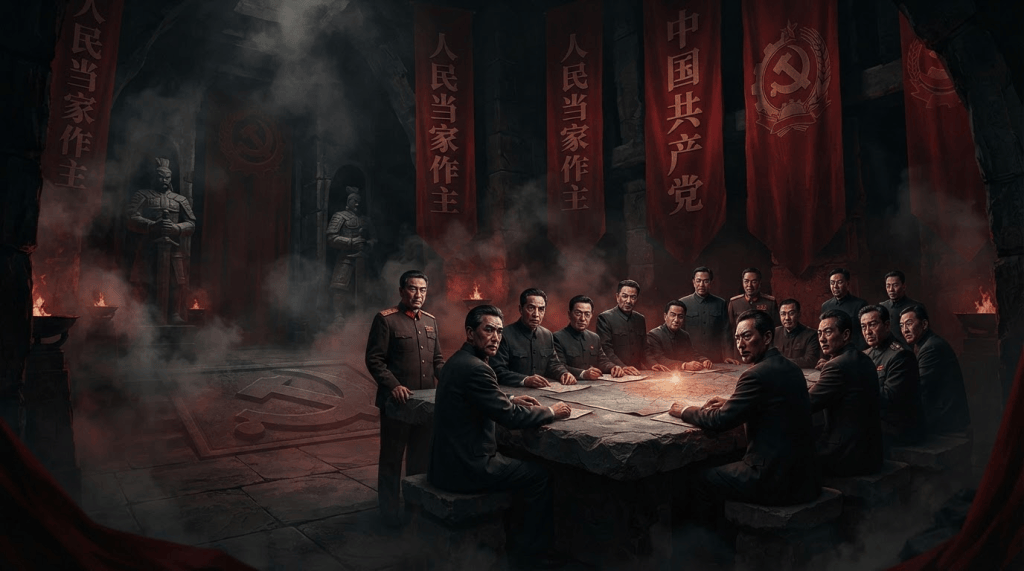
The parallel is not mystical. It is structural. Since 1949 the CCP has treated Christianity as a political problem to be managed, not a faith to be left alone. Marx’s heirs did not invent the hostility; they inherited an official atheism that regards Christianity as a rival sovereignty. Mao’s campaigns drove public worship underground. The Cultural Revolution banned it outright.
After the churches were allowed to reopen, the Party rebuilt a controlled channel: the Three-Self Patriotic Movement and China Christian Council for Protestants, the Chinese Catholic Patriotic Association for Catholics. Since 2018 those bodies have sat under the United Front Work Department of the Party’s Central Committee. Registration is not a neutral license. It requires clergy to be vetted, sermons to align with “Sinicization,” and the church to “adapt to socialist society.”
Sinicization, in the Party’s usage, does not mean translating the Bible into Chinese. It means the church may not convert China; China, under Party leadership, will reshape the church. Official meetings of the Three-Self leadership open with the national anthem and study sessions on Xi Jinping’s speeches, effectively turning Xi Jinping into a substitute for Christ himself.
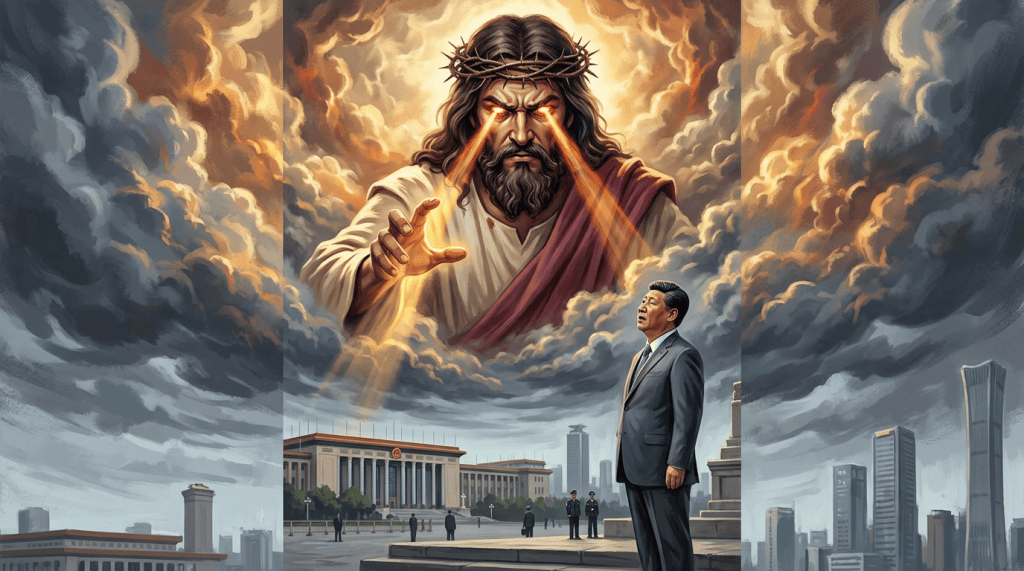
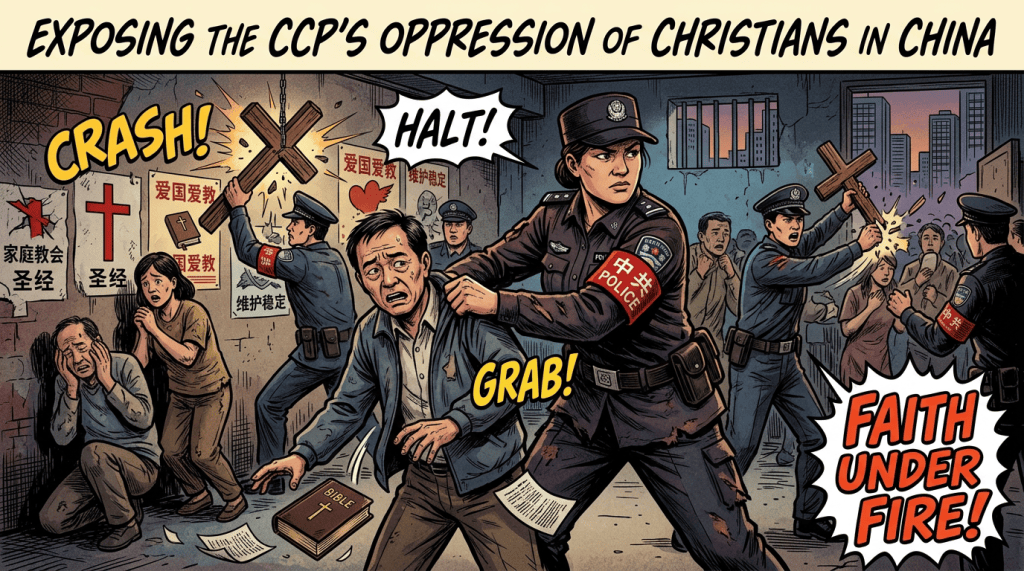
Pastors have been directed to work Party slogans—the Four Consciousnesses, the Four Confidences, the Two Upholds—into preaching. Crosses have been removed. In documented cases, images of Jesus have been replaced with portraits of Xi or Mao, and communist core values have been posted where Scripture once stood. The 1950 Christian Manifesto already pledged the new church structures to the Communist government. Later chairmen of the Three-Self movement have publicly supported action against Christians who refuse the system.
The Smyrna letter’s sharpest phrase is easy to misuse, and it should be read as it stands. “Them which say they are Jews, and are not, but are the synagogue of Satan” names people who claim covenant identity and religious legitimacy while blaspheming and opposing the church. In Smyrna that claim was ethnic and synagogue-shaped. The category the text marks, however, is the counterfeit claim itself: a body that presents itself as the true people of God, or as the sole lawful expression of that people, and uses the claim to slander and damage the assembly Christ recognizes.
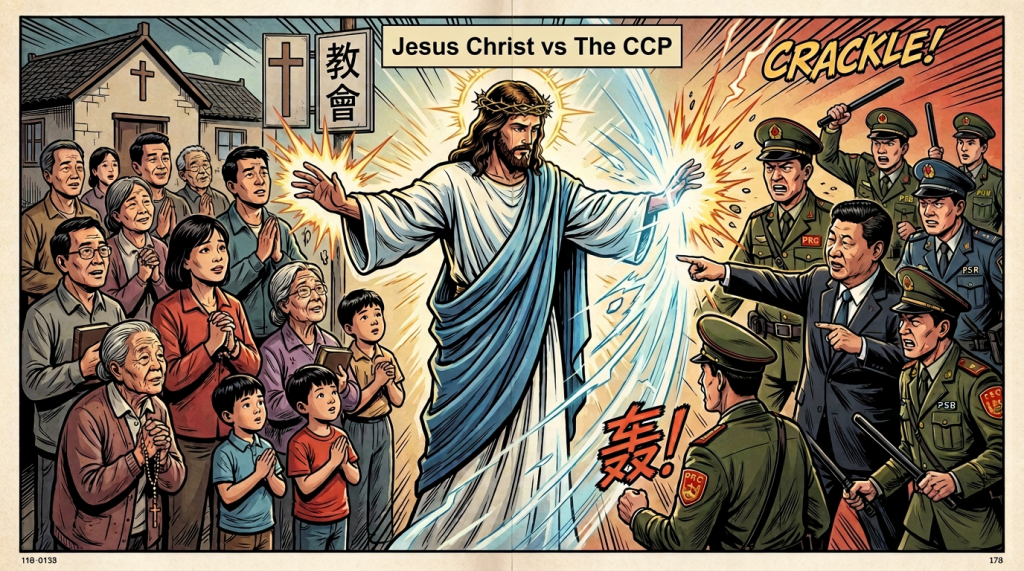
The CCP mirrors the synagogue of Satan through the system it built and the language it requires. The Party is officially atheist. It does not say it is Israel, in fact the party is hostile to the nation of Israel especially after the October 7th terrorist attack. What it does say is that it alone defines legitimate religion, legitimate patriotism, and the rightful moral community of the Chinese people. The patriotic associations are presented as the real church—the Chinese church, the lawful church, the church that loves the country—while unregistered believers (aka the true Christians) are labeled illegal, cultic, or tools of foreign subversion.
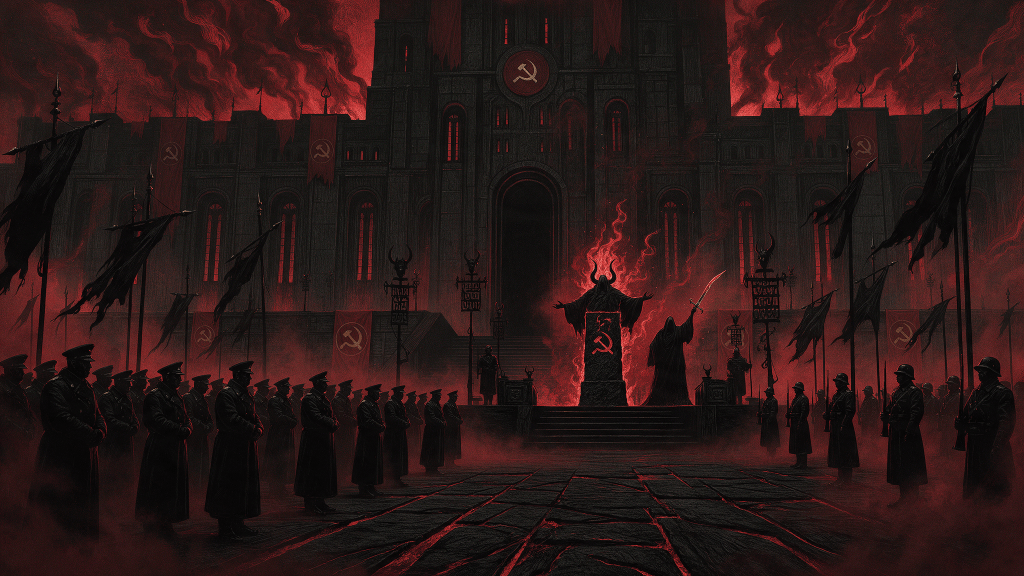
Xu Xiaohong, then chairman of the national Three-Self committee, told a state political conference that Western forces use Christianity to destabilize the country and that the state should bring “black sheep” to justice. Police interrogations recorded by released house-church members have included the charge that Christians who refuse the Three-Self body belong to a cult making it easier for the Chinese Government to attack Christians. Sermons inside the licensed system are steered toward Party confidence. Symbols of Christ are taken down and symbols of the Party put in their place. That is a claim of covenant standing—the right to say who the true religious community is—joined to active opposition against the congregations that will not accept it. The letter does not call that claim a misunderstanding. It calls it blasphemy, and it locates the opposition in the synagogue of Satan rather than in a neutral civil registry.
Independent and underground Christians decline the bargain. Their reasons are older than the present crackdown. Wang Mingdao, arrested in 1955, refused the Three-Self body because he would not yoke the church to an organization born of political campaigns.
Decades later, networks such as Early Rain Covenant Church in Chengdu, Zion Church in Beijing, and countless unnamed rural and urban gatherings have held the same line: Christ is head of the church, and conscience is not a department of the United Front. Pastor Wang Yi, sentenced in 2019 to nine years, wrote before his imprisonment that he respected the authorities God had established in China and would submit to their physical restraints, yet he called the persecution of the church a wicked act and pledged to continue preaching.
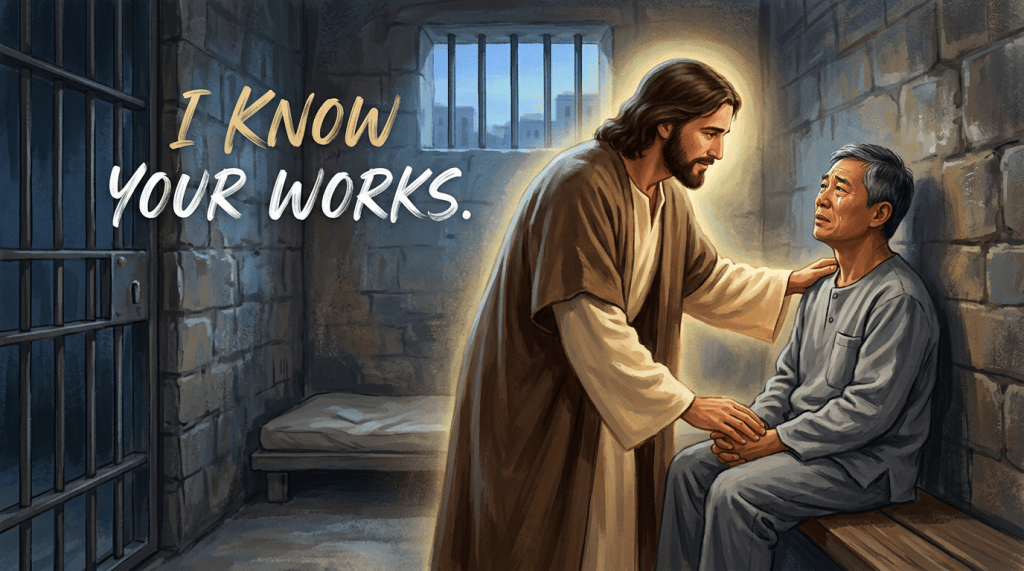
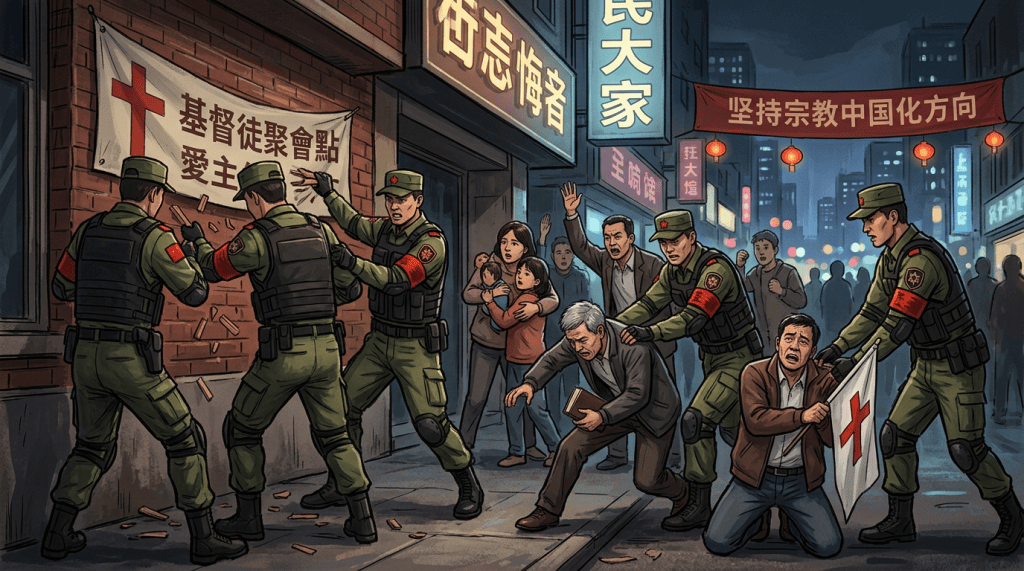
Pastor Ezra Jin of Zion Church was held for 266 days before release; colleagues from the same network remained in detention on charges that rights groups describe as pretexts. Early Rain’s remnants are still raided. The pattern is national: meeting places closed, phones confiscated, leaders charged with fraud, illegal business operations, or endangering state security rather than with the crime of believing.
Official rolls count roughly 38 to 44 million registered Protestants and Catholics to the state run church. Estimates that include unregistered Christians under the attack of the CCP run far higher, some above 100 million which ranges from 7-10% of the Chinese Population. The precise census is unknowable. What is knowable is that the believers who refuse registration are the ones the state treats as illegal, and that their refusal is the condition of their tribulation.
They are poor in the ways Smyrna was poor. Jobs disappear. Landlords cancel leases. Children are barred from Sunday school. A father weighs a promotion against the risk that his name appears on a religious-affairs list. A pastor’s wife explains to neighbors why the police came at dawn. The poverty is not only monetary. It is the loss of ordinary civic standing in a system that rewards displayed loyalty. Christ called that condition poverty and, in the same breath, wealth. The wealth is not a slogan. It is the knowledge that the One who was dead and is alive already sees the works done in secret, and that no United Front cadre can cancel the standing He gives.
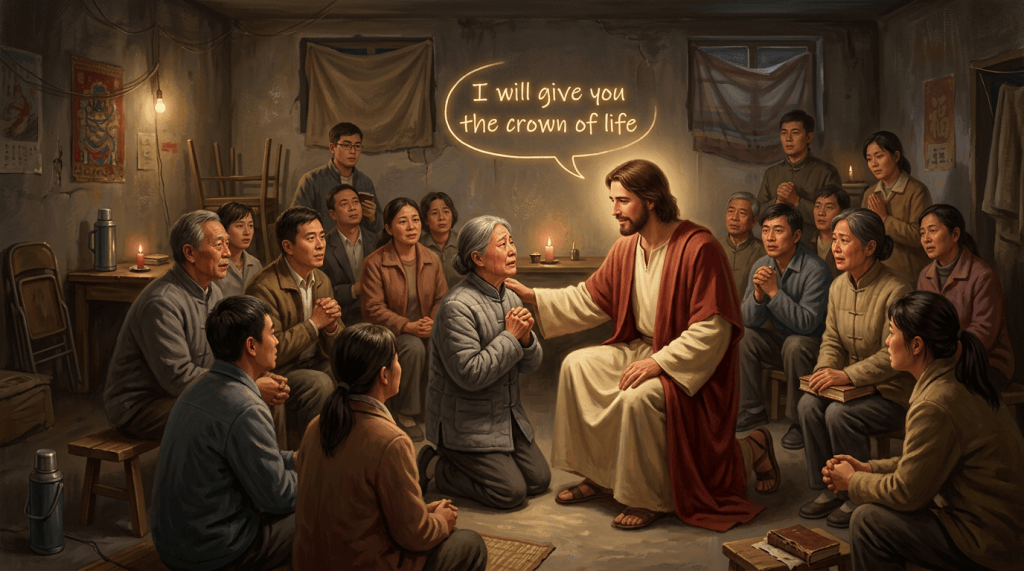
The text is careful about agency. It does not say the emperor alone casts them into prison. It says the devil shall cast some of you into prison, that ye may be tried. Atheist governments who push communist ideals and target true Christians are far more in line with the works of the devil than the works of Jesus Christ.
Earthly officers sign the warrants. The biblical diagnosis is that spiritual opposition uses political instruments. Chinese house-church Christians do not need a theory of empire to recognize the sequence: a sermon that will not praise the Party, a raid, a charge that has nothing to do with theft, a cell. The “ten days” in the letter marks the trial as real and bounded, not as the last word. Faithfulness unto death is the commanded posture, and the crown of life is attached to it, not to successful registration.
None of this requires romanticizing every unregistered gathering. House churches differ in teaching, order, and courage. Some shrink into private piety; some, under pressure, fracture. The point of comparison is narrower. Where a congregation refuses to let an officially atheist party dictate the content of worship, the identity of its officers, or the object of its songs, it occupies the ground Smyrna occupied. The state church, by institutional design, accepts a political lordship as the price of legality and lends its name to the claim that this arrangement is the true church. The independent church declines the price and accepts the prison the letter already named.
Readers outside China sometimes treat this as a foreign-policy anecdote. It is also a test of whether the sentences in Revelation still mean what they say. A church that is poor, slandered by those who claim the rightful religious identity, and liable to detention, yet continues to confess that Jesus is Lord, is not an embarrassment to the gospel. It is the setting in which the gospel’s promises were first written down for persecuted people. The second death—the lake of fire in the same book—does not have the last word over the one who overcomes. That claim is either true for a believer in a Chengdu detention center or it is true for no one.
What follows is offered in the voice of that older letter, to the assemblies that still meet without permission.
To the believers in China who have not bowed to the patriotic associations: the words already spoken to Smyrna are spoken still. He who is the first and the last, who was dead and is alive, knows your works, he is Jesus Christ.
He knows the tribulation and the poverty, and He calls you rich. He knows the blasphemy of those who say they hold the true covenant standing and the lawful church, and are not, and who oppose you for refusing their claim. Do not fear the things you will suffer. The adversary still works through prisons and staged charges, that some of you may be tried. The trial has a limit. Be faithful unto death, and He will give you the crown of life. The one who overcomes shall not be hurt of the second death.
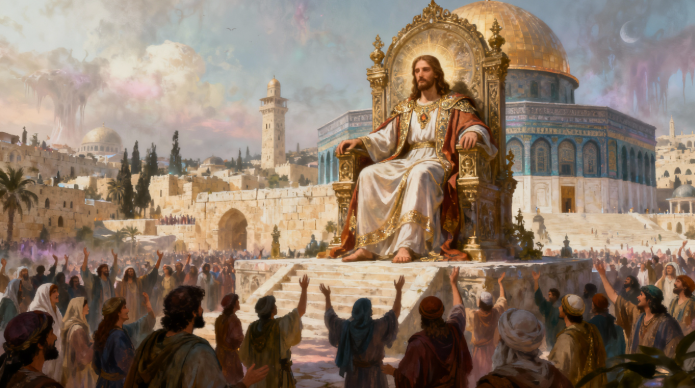
This is not a call to earn that life by endurance. The gospel that Smyrna held, and that you hold, is the announcement of what Christ has already done. Paul set it down in the words received and delivered: that Christ died for our sins according to the scriptures, that he was buried, and that he rose again the third day according to the scriptures. Whoever hears His word and believes on Him who sent Him has everlasting life, and shall not come into condemnation, but is passed from death unto life. If you confess with your mouth the Lord Jesus, and believe in your heart that God has raised him from the dead, you shall be saved. The prison does not create that standing, and release from prison does not complete it. The One who was dead and is alive has already passed through the death that political power can inflict, and He alone opens the way past the second death.
Hold what you have been given. The Party can close a room. It cannot close the grave it did not open. He that hath an ear, let him hear what the Spirit saith unto the churches.


Leave a Reply