
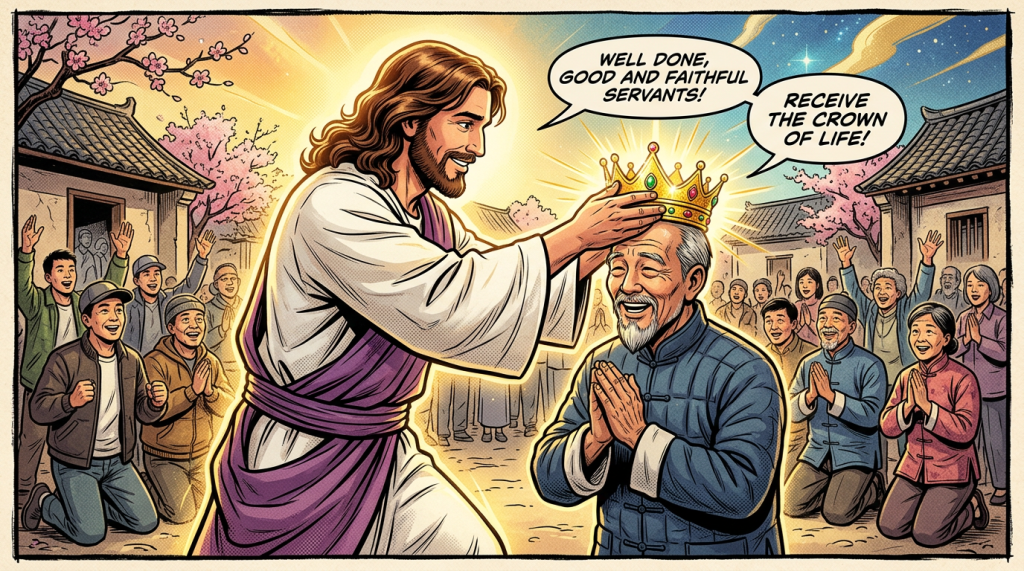
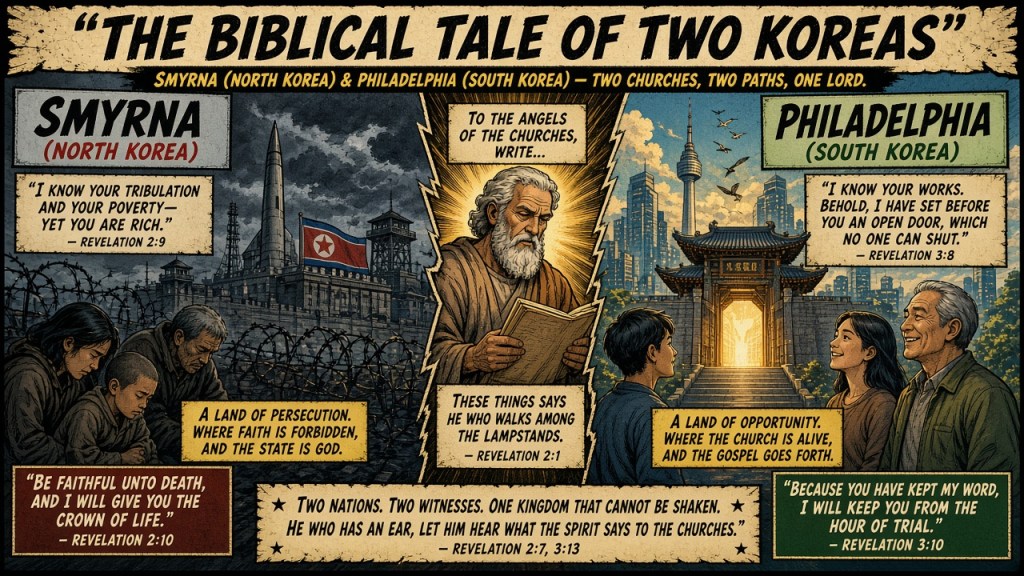
The promise is older than the raids, and more specific than a general assurance that suffering is meaningful. In the letter to the church in Smyrna, Christ names the prison in advance and attaches a gift to the conduct He requires inside it: “be thou faithful unto death, and I will give thee a crown of life” (Revelation 2:10).
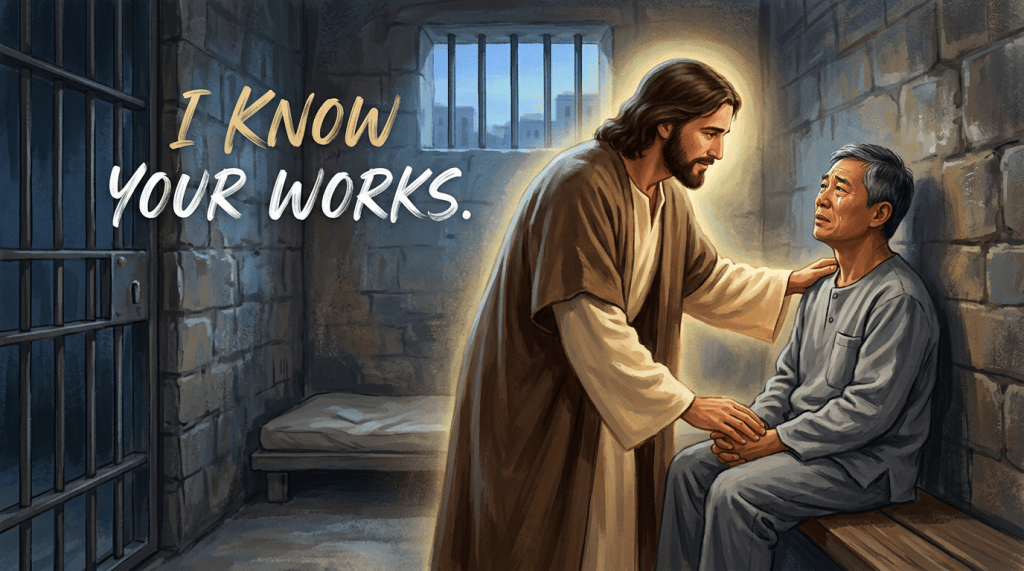
Chinese believers who refuse the patriotic associations are living in the conditions that sentence describes. The Bible’s account of how the crown is obtained is not a political program. It is a command to remain faithful, and a set of promises made by Jesus Christ.
The suffering is not theoretical. Since the People’s Republic was founded, the Communist Party has treated an allegiance above the Party as a rival sovereignty.
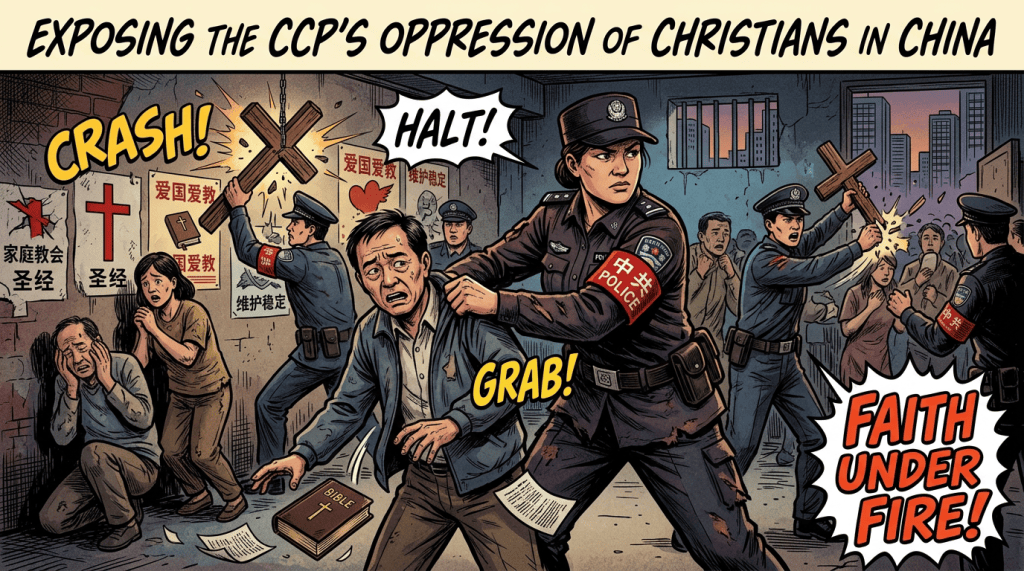
Public worship was banned under Mao. After the churches reopened, the legal path was rebuilt as a controlled one: the Three-Self Patriotic Movement, the China Christian Council for Protestants, and the Chinese Catholic Patriotic Association for Catholics are now supervised through the Party’s United Front Work Department. Sinicization, as the Party defines it, requires the church to adapt to communist society. Pastors in the licensed system have been directed to preach Party slogans. Crosses have come down.
Those who will not accept that arrangement meet outside the law. Pastor Wang Yi of Early Rain Covenant Church in Chengdu was sentenced in 2019 to nine years after writing that he would continue to preach under persecution. Zion Church in Beijing was struck by coordinated raids; its founder was held for 266 days, and other leaders remained in detention on charges rights groups describe as pretexts.
Meeting places are closed. Phones are taken. The ordinary charges are fraud, illegal business operations, and endangering state security. Jobs disappear. Children are kept from religious instruction. The poverty Christ named in Smyrna—material loss beside a wealth He still called real—is the ordinary condition of the unregistered assembly.
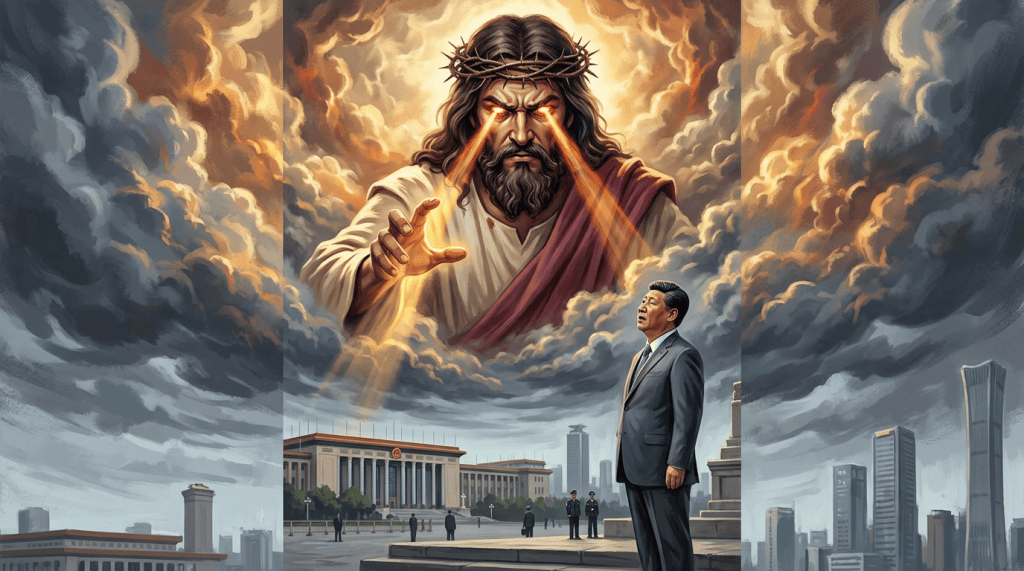
James attaches the same crown to the same kind of pressure: “Blessed is the man that endureth temptation: for when he is tried, he shall receive the crown of life, which the Lord hath promised to them that love him” (James 1:12). The temptation in that verse is the trial that proves love, not a private mood. Endurance is the terms the text sets. For a believer in China, endurance has a public shape. It is the refusal to call the Party the head of the church. It is the refusal to treat a state-licensed pulpit, a required slogan, or a portrait in the place of the cross as a faithful adjustment. It is continuance when the landlord cancels the room, when the interrogation calls the unregistered gathering a cult, and when faithfulness may end in death rather than in release. Revelation 2:10 does not say the crown is given for successful registration, or for outlasting the Party, or for a prudent silence that keeps the family safe. It says faithful unto death.
That requirement sits on a gospel the same Scriptures have already defined, and it does not replace it. Paul delivered what he also received: that Christ died for our sins according to the scriptures, that he was buried, and that he rose again the third day according to the scriptures (1 Corinthians 15:3–4). Jesus said that whoever hears His word and believes on Him that sent Him has everlasting life, and shall not come into condemnation, but is passed from death unto life (John 5:24). The confession that saves is named without reference to a religious-affairs bureau: if thou shalt confess with thy mouth the Lord Jesus, and shalt believe in thine heart that God hath raised him from the dead, thou shalt be saved (Romans 10:9).
The crown of life in the Smyrna letter is promised to people who already stand before the One who holds it, and who love Him enough not to recant when the devil, through human officers, casts some of them into prison that they may be tried.

The promises that accompany the command are as concrete as the cell. He knows the works, the tribulation, and the poverty, “but thou art rich” (Revelation 2:9). The wealth is not a mood. It is His accounting, made before the trial is over and independent of the United Front’s files. He says, “Fear none of those things which thou shalt suffer.” The fear He forbids is not the body’s natural recoil. It is the fear that would trade the confession for safety. The tribulation is given a limit—“ten days”—real, and not the last word. The gift at the end of faithfulness is the crown of life, which He says He will give. The overcomer “shall not be hurt of the second death” (Revelation 2:11).
Political power can impose the first death. The second, the lake of fire later in the same book, is outside its reach for the one who overcomes.
None of this asks the persecuted believer to earn God’s favor as if Christ had not died and risen. It tells him what the risen Christ has attached to a faithfulness that does not break. The Party can close a room, script a charge, and hold a man until death. It cannot confer the crown, and it cannot inflict the second death on the one to whom Christ has promised otherwise. The path the text marks is therefore narrow and already written.

Do not fear the things you will suffer. Do not take the state church’s claim of lawful religion as the true one. Love Him. Endure the trial. Be faithful unto death. The crown is His to give, and the verse says He will give it. He that hath an ear, let him hear what the Spirit saith unto the churches.



Leave a Reply