
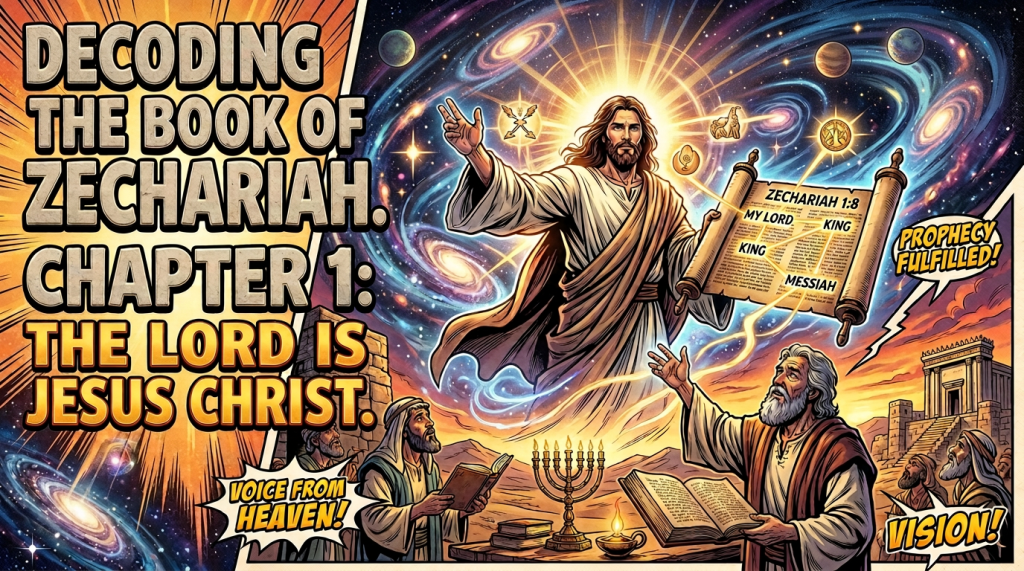
Zechariah functions as the Old Testament counterpart to Revelation. Both books are apocalyptic visions given through an interpreting angel, packed with recurring symbols found almost nowhere else: colored horses patrolling the earth, four horns and opposing craftsmen, a measuring line over Jerusalem, a golden lampstand fed by two olive trees, seven eyes, flying scrolls, and chariots as spirits of heaven.

Zechariah 1–8 supplies the imagery John later expands, while chapters 9–14 foreshadow the Gospels’ picture of a pierced, rejected king and the nations’ final assault on Jerusalem. The LORD of hosts who speaks comfort, jealousy, and judgment in Zechariah is the same Lord whose unveiled glory closes Revelation. Together the two books frame one continuous prophetic drama from exile to the end.
1 In the eighth month, in the second year of Darius, came the word of the LORD unto Zechariah, the son of Berechiah, the son of Iddo the prophet, saying,
The word comes from the LORD (Jesus Christ) to Zechariah in the Persian period. Darius rules the empire centered in the territory of modern day Iran. The setting is the post-exile community that has returned toward Israel.
2 The LORD hath been sore displeased with your fathers.
Jesus Christ states that He was severely displeased with the earlier generation. Their disobedience produced the judgment that sent them into exile.
3 Therefore say thou unto them, Thus saith the LORD of hosts; Turn ye unto me, saith the LORD of hosts, and I will turn unto you, saith the LORD of hosts.
The same LORD of hosts calls for repentance: return to Him and He will return to them. The triple emphasis underscores that the invitation and the response both belong to Him.
4 Be ye not as your fathers, unto whom the former prophets have cried, saying, Thus saith the LORD of hosts; Turn ye now from your evil ways, and from your evil doings: but they did not hear, nor hearken unto me, saith the LORD.
The prior generation ignored the prophets who spoke in the name of the LORD of hosts. The warning is not to repeat that refusal.
5 Your fathers, where are they? and the prophets, do they live for ever?
Both the disobedient fathers and the prophets who warned them have died. Human longevity does not outlast the word that was spoken.

6 But my words and my statutes, which I commanded my servants the prophets, did they not take hold of your fathers? and they returned and said, Like as the LORD of hosts thought to do unto us, according to our ways, and according to our doings, so hath he dealt with us.
The statutes overtook the fathers exactly as announced. They later acknowledged that the LORD of hosts had acted according to their own ways. The exile under Babylon (modern day Iraq) is the historical outworking of that statement.
7 Upon the four and twentieth day of the eleventh month, which is the month Sebat, in the second year of Darius, came the word of the LORD unto Zechariah, the son of Berechiah, the son of Iddo the prophet, saying,
A second dated word arrives roughly three months later, still under Darius (Persian/Iranian imperial context)
8 I saw by night, and behold a man riding upon a red horse, and he stood among the myrtle trees that were in the bottom; and behind him were there red horses, speckled, and white.
Night vision: a man on a red horse stands among myrtle trees in a low place, with red, speckled, and white horses behind him. The colored horses parallel the horsemen of Revelation 6 (white, red, black, pale), where riders are sent out over the earth. Myrtle trees are associated in Scripture with restoration (Isaiah 55:13).
9 Then said I, O my lord, what are these? And the angel that talked with me said unto me, I will shew thee what these be.
Zechariah asks the interpreting angel for the meaning.
10 And the man that stood among the myrtle trees answered and said, These are they whom the LORD hath sent to walk to and fro through the earth.
The man among the myrtles identifies the riders as agents sent by the LORD (Jesus Christ) to patrol the earth. Revelation 6 likewise depicts horses and riders commissioned to go forth.
11 And they answered the angel of the LORD that stood among the myrtle trees, and said, We have walked to and fro through the earth, and, behold, all the earth sitteth still, and is at rest.
Their report: the earth is quiet and at rest. The angel of the LORD (frequently a theophanic figure in the Old Testament many relate to Christ) receives the report. The rest stands in contrast to the coming unrest pictured by the horsemen in Revelation 6.
12 Then the angel of the LORD answered and said, O LORD of hosts, how long wilt thou not have mercy on Jerusalem and on the cities of Judah, against which thou hast had indignation these threescore and ten years?
The angel of the LORD intercedes for Jerusalem (Israel) and the cities of Judah (Israel), citing the seventy years of indignation—the Babylonian exile (Iraq).
13 And the LORD answered the angel that talked with me with good words and comfortable words.
The LORD (Jesus Christ) replies with words of comfort.
14 So the angel that communed with me said unto me, Cry thou, saying, Thus saith the LORD of hosts; I am jealous for Jerusalem and for Zion with a great jealousy.
The message to proclaim: the LORD of hosts is intensely jealous for Jerusalem and Zion (Israel).
15 And I am very sore displeased with the heathen that are at ease: for I was but a little displeased, and they helped forward the affliction.
He is severely displeased with the nations that are at ease. He had been only a little displeased with His people, yet the nations increased the affliction. Historically this includes Babylon (Iraq) and the surrounding powers; the text leaves the “heathen” collective.
16 Therefore thus saith the LORD; I am returned to Jerusalem with mercies: my house shall be built in it, saith the LORD of hosts, and a line shall be stretched forth upon Jerusalem.
He has returned to Jerusalem (Israel) with mercies. His house (the temple) will be built, and a measuring line will be stretched over the city. A measuring line over Jerusalem reappears in Revelation 11:1–2.
17 Cry yet, saying, Thus saith the LORD of hosts; My cities through prosperity shall yet be spread abroad; and the LORD shall yet comfort Zion, and shall yet choose Jerusalem.
The cities will again overflow with prosperity. The LORD will comfort Zion and again choose Jerusalem (Israel).
18 Then lifted I up mine eyes, and saw, and behold four horns.
A second vision: four horns.
19 And I said unto the angel that talked with me, What be these? And he answered me, These are the horns which have scattered Judah, Israel, and Jerusalem.
The horns are the powers that scattered Judah, Israel, and Jerusalem. Horns commonly symbolize kingdoms or strength (compare Daniel and the beast imagery of Revelation 13 and 17).
20 And the LORD shewed me four carpenters.
The LORD shows four craftsmen (carpenters/artisans).
21 Then said I, What come these to do? And he spake, saying, These are the horns which have scattered Judah, so that no man did lift up his head: but these are come to fray them, to cast out the horns of the Gentiles, which lifted up their horn over the land of Judah to scatter it.
The four craftsmen are sent to terrify and cast out the horns of the Gentiles that exalted themselves over the land of Judah and scattered it. The scattering powers are overcome so that Israel can lift up its head again. The text simply calls them the horns of the Gentiles that scattered Judah.
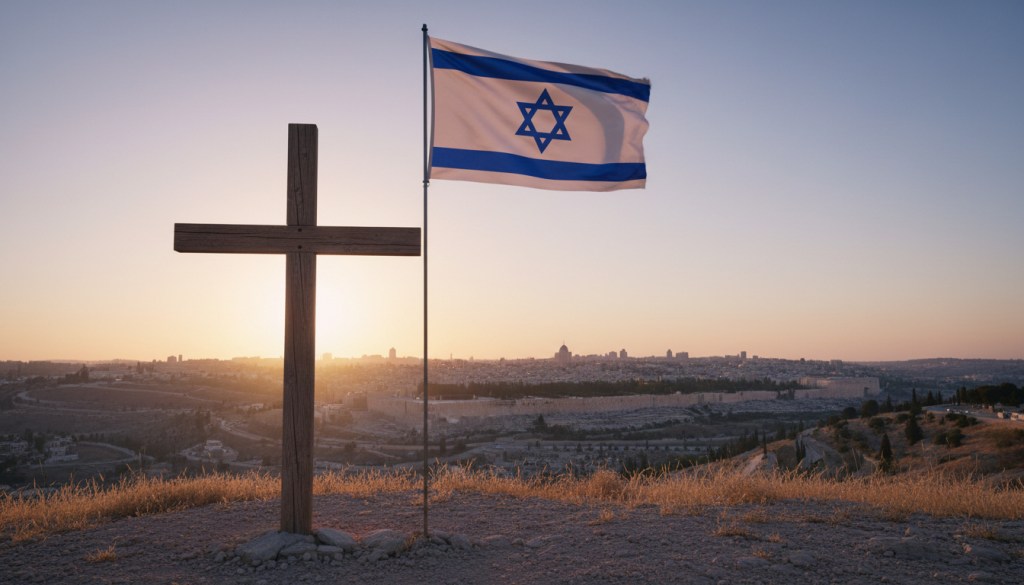
In the immediate historical setting of Zechariah (after the seventy-year indignation of 1:12), the dominant power that had scattered Judah was Babylon, whose core territory is modern Iraq. Earlier scattering of the northern kingdom (Israel) had come through Assyria (largely modern Iraq/Syria region). Later prophetic and historical sequences that continued to affect the same land and people include the successive Gentile empires often linked to the “four horns” image (Babylon/Iraq, Medo-Persia/Iran, Greece, and Rome). Rome’s later dispersion is the one that left Judea without a continuous independent Jewish polity for centuries.
Chapter 1 therefore centers on a call to return, a patrol of the earth by colored horses (Revelation 6 parallel), comfort and jealous regard for Jerusalem/Israel after the seventy-year indignation under Babylon (Iraq), the rebuilding of the house, and the overthrow of the powers that scattered the people. Later chapters of Zechariah contain additional images (olive trees, lampstand, measuring, nations gathered against Jerusalem) that are echoed more directly in Revelation.



Leave a Reply