
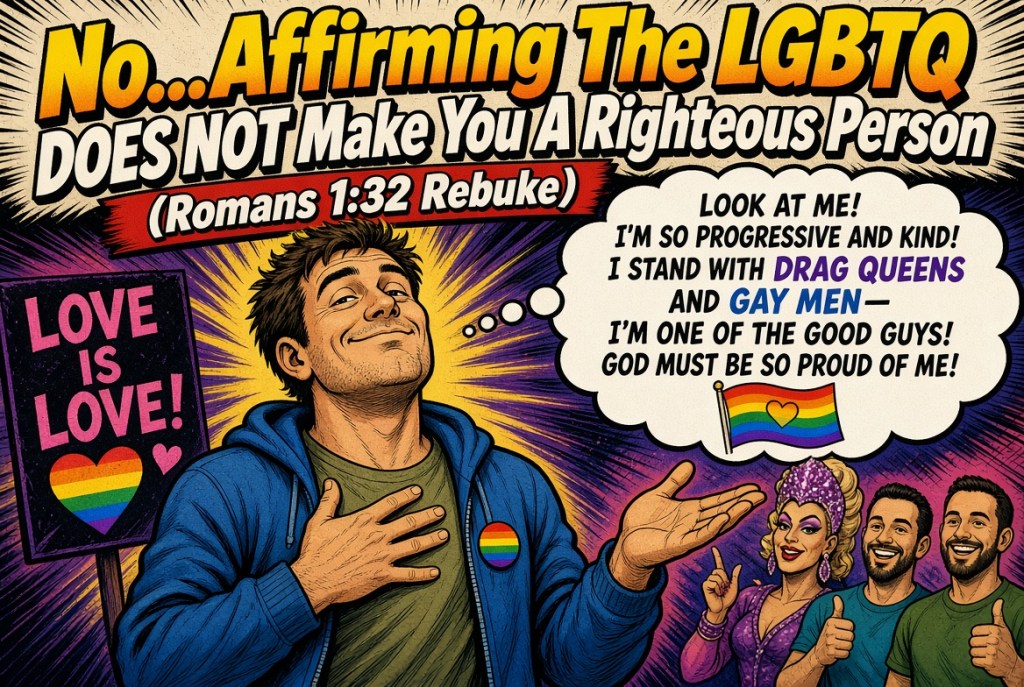
In contemporary progressive culture, moral respectability is no longer measured by honesty, fidelity, self-control, or protection of the vulnerable.
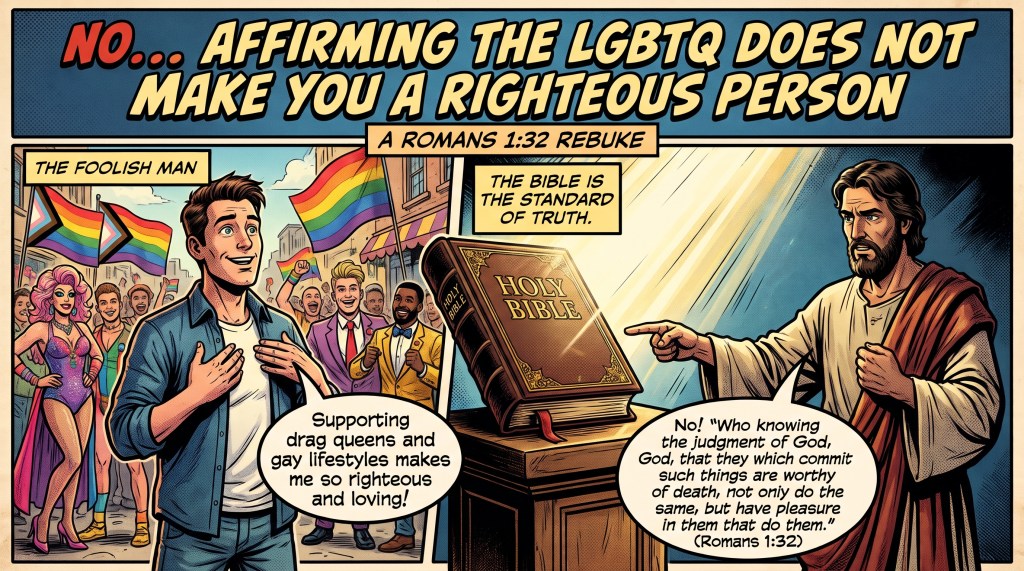
It is measured by a narrow, aggressively enforced checklist: the public use of preferred pronouns for those identifying as transgender, the open endorsement of same-sex sexual activity, and the defense of drag performances, including those directed at children. Those who comply are certified as good. Those who refuse are branded hateful. This is not an organic expansion of kindness. It is the construction of a counterfeit standard of righteousness that inverts the moral order described in Scripture and substitutes a political identity for any enduring account of the good.
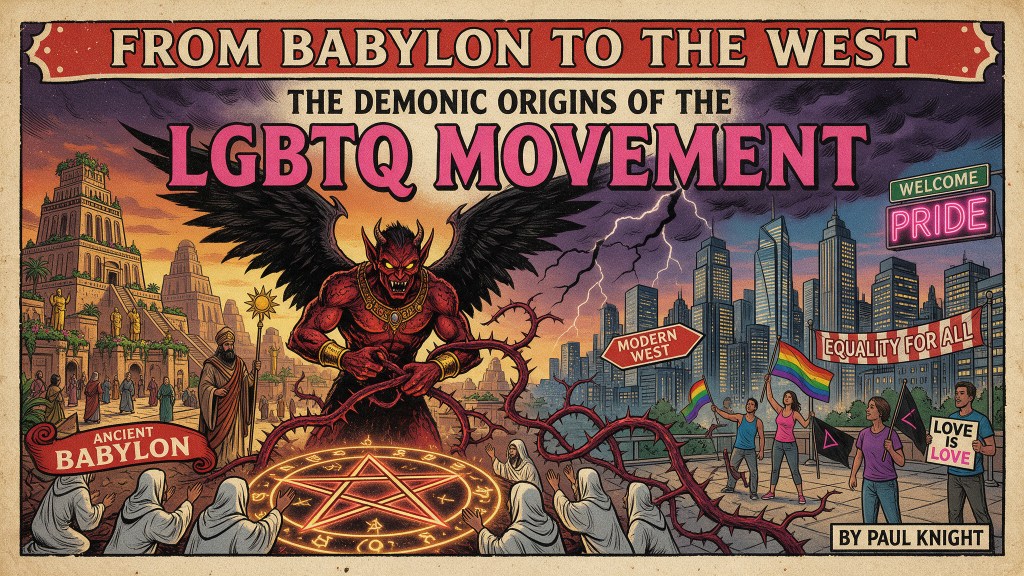
What was once ritual inversion under the Mesopotamian goddess Ishtar/Inanna—whose hymns credited her with the power to turn a man into a woman and a woman into a man—has been secularized into a mandatory public creed. Cult personnel known as assinnu, kurgarrû, and gala performed sex-role reversals in mixed garments under a deity who treated the body as reassignable material. Contemporary ideology simply removes the explicit temple while retaining the claim that sex is not fixed by the Creator but is subject to desire, diagnosis, and medical intervention.
The progressive demand that others affirm this claim with language is treated as the minimum requirement of decency. Refusal is treated as moral failure. This standard is self-created and circular. Progressive institutions and media treat rainbow symbolism, gender-affirming protocols, and the celebration of same-sex relations as shorthand for virtue. Corporations replace national flags with pride flags during designated months. Universities punish faculty who state that biological sex is binary and immutable.
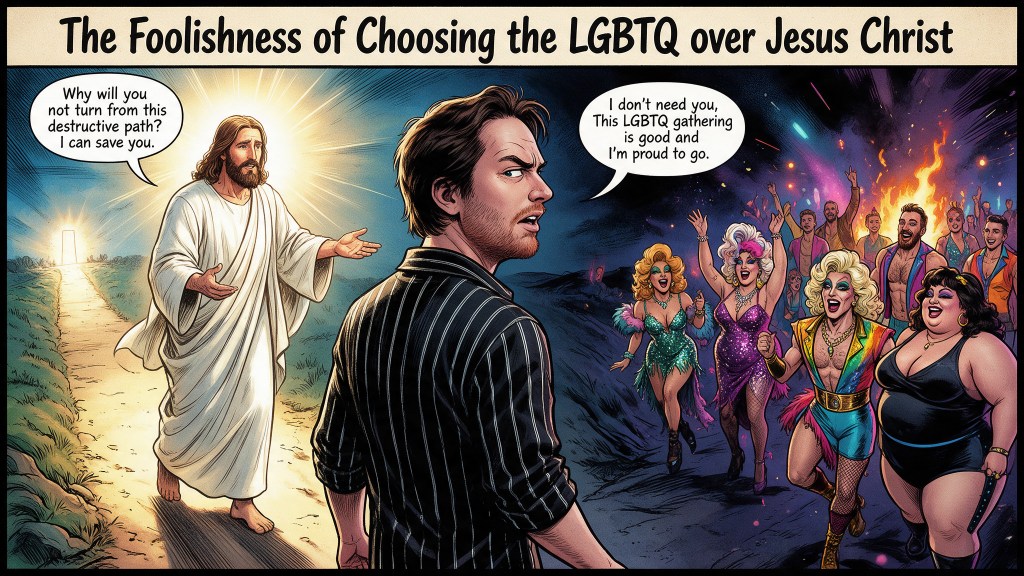
Children’s programming is rewritten to include the required representations, and corporate silence is punished as evidence of bigotry. The 1969 Stonewall raid on an unlicensed bar involving illegal activity has been rewritten as an unambiguous civil-rights uprising, allowing subsequent legal and cultural demands—decriminalization of sodomy, redefinition of marriage, and medicalization of gender distress in minors—to be framed as the completion of justice rather than the severance of public morality from the male-female distinction in Genesis 1:27 and 2:24.
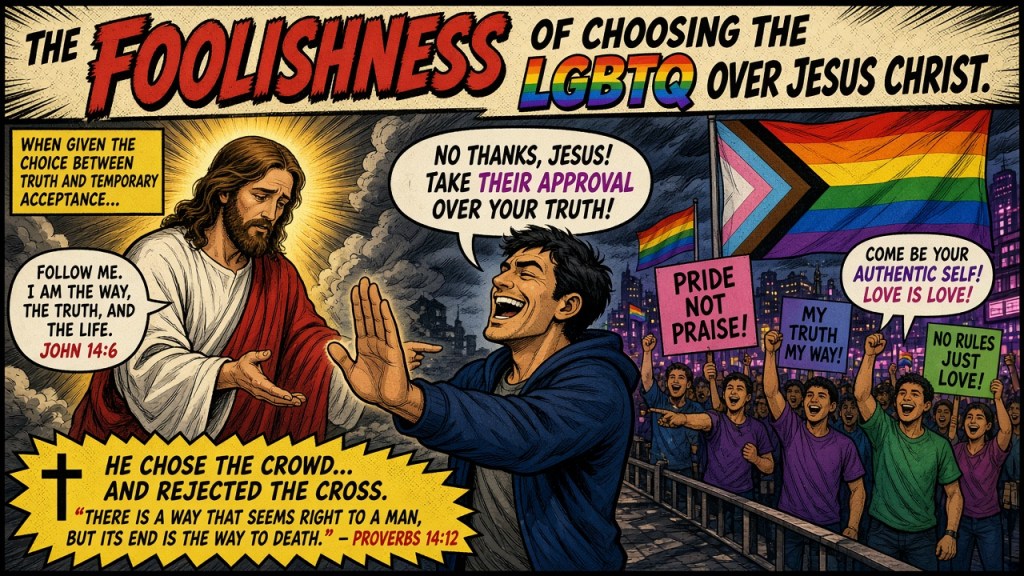
Affirmation becomes the test; dissent becomes the unforgivable sin. Isaiah 5:20’s warning against those who call evil good and good evil describes the mechanism exactly.
Using a transgender-identifying person’s preferred pronouns is elevated to a moral act in this system. Biological sex is observable, binary in the overwhelming majority of cases, and fixed at the chromosomal level.
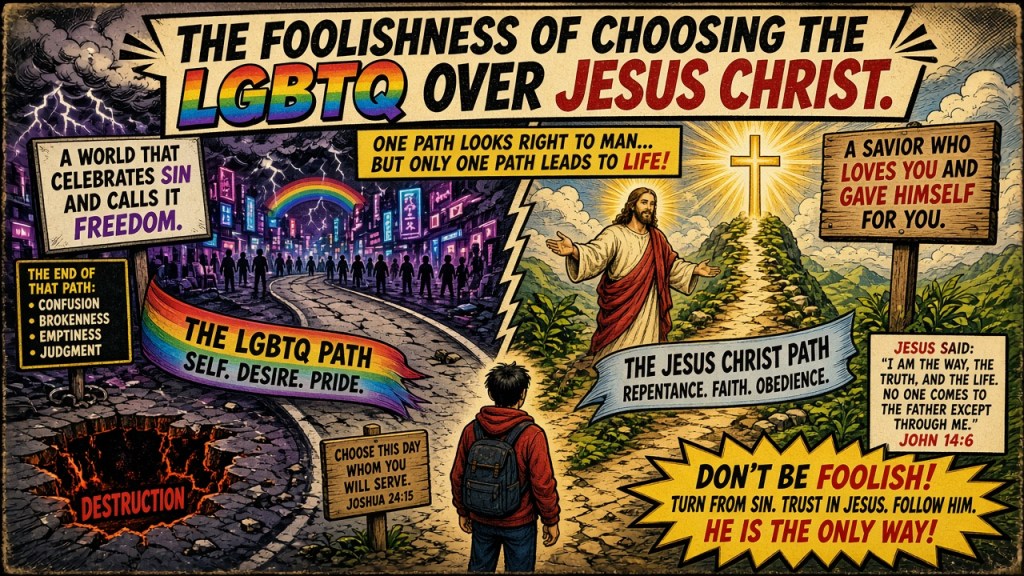
Preferred pronouns that contradict it require the speaker to affirm that a man can be a woman or that the categories themselves are optional. Christian analyses of the relevant texts note that this participates in a falsehood: God created humanity male and female, and Deuteronomy 22:5 treats deliberate sex-role inversion as an abomination.
The progressive response is that refusal to use the pronouns is itself the harm. Compassion is redefined as endorsement. The medical pathway that often follows—puberty blockers, cross-sex hormones, and surgeries that produce sterility, loss of sexual function, and lifelong medical dependence—is defended as care even as systematic reviews in Europe and the Cass Review document weak evidence and substantial risks.
The articles treat the application of these interventions to children as a modern analogue of the child-sacrifice practices condemned in Leviticus 18:21 and 20:2–5. The body is offered on the altar of identity. Those who object are accused of cruelty rather than of protecting the young from irreversible decisions made under social pressure and contested science.

Support for same-sex sexual activity and the defense of drag follow the same logic. Romans 1:26–27 describes the exchange of natural relations for unnatural ones as a consequence of suppressing the truth about the Creator. 1 Corinthians 6:9–10 lists those who practice such acts among those who will not inherit the kingdom, while noting that some who formerly did so were washed and sanctified. Progressive morality inverts the evaluation: the practice itself becomes a badge of authenticity, and public celebration becomes evidence of goodness.
Drag performances, including those marketed to children, are defended as harmless expression or even empowerment. The historical and ritual precedents for cross-dressing and gender inversion under Ishtar and related cults are either ignored or romanticized. The result is a public standard in which endorsing the acts that Scripture classifies under divine judgment is treated as the mark of the righteous, while stating the biblical or biological description is treated as the mark of the wicked.
Romans 1:32 supplies the precise diagnosis. After detailing the suppression of truth, the exchange of the Creator’s glory for images of the creature, the descent into dishonorable passions, and the reprobate mind filled with vice, the text concludes: “Although they know God’s righteous decree that those who practice such things deserve to die, they not only continue to do these very things but also approve of those who practice them.” The progressive use of LGBTQ affirmation as a shield of righteousness matches the second clause.

The knowledge that certain sexual practices and the rejection of the male-female binary violate the created order is available both through natural observation and through the explicit biblical record. Yet the culture not only tolerates the practices but celebrates them, institutionalizes them, and treats approval as moral superiority. This is not ignorance. It is the posture of those who have exchanged the truth of God for a lie and who take pleasure in the approval of what the preceding verses place under judgment.
The articles identify this as strong delusion in the sense of 2 Thessalonians 2:11. Once the created order is rejected, the categories of good and evil are reassigned according to political utility. Progressive theology, as described in the surveyed pieces, repackages the inversions—Ishtar-style gender fluidity, Molech-style offering of children to identity, and the broader exchange of divine authority for human sovereignty—as justice, equity, and compassion. The rainbow flag truncates the seven-color covenant sign of Genesis 9 into a six-color political emblem. Institutions enforce the new creed through speech codes, employment consequences, and social ostracism.
The person who publicly affirms the checklist is certified good; the person who declines is certified bad. No further inquiry into character, conduct toward one’s own family, or treatment of the weak is required. The shield is complete.
This construction cannot sustain itself indefinitely because it is parasitic on the very distinctions it denies. The demand for pronouns presupposes that language still tracks reality for everyone else. The celebration of same-sex relations and drag presupposes that male and female remain intelligible categories worth inverting.
The claim that affirmation is kindness presupposes that the person experiencing distress deserves protection from falsehood and from medical harm rather than ritual endorsement of it. When the counterfeit standard is applied consistently, it produces the outcomes already visible: rising rates of rapid-onset gender dysphoria among adolescent females, desistance data from earlier cohorts, European reversals on pediatric medicalization, and the quiet recognition among some clinicians that social contagion and underlying mental-health conditions are major factors. The progressive response has been to intensify the demand for affirmation rather than to revisit the premises.
The biblical alternative is not cruelty. 1 Corinthians 6:11 records that some who practiced the listed behaviors were washed, sanctified, and justified. The exit is repentance and reception of a righteousness that is not self-constructed. The progressive alternative offers a righteousness that consists in the public performance of approval.
Those who adopt it have, in the language of Romans 1, been given over. They know the decree and approve the practitioners. The shield of LGBTQ affirmation does not make them good. It marks their participation in the inversion.





Leave a Reply