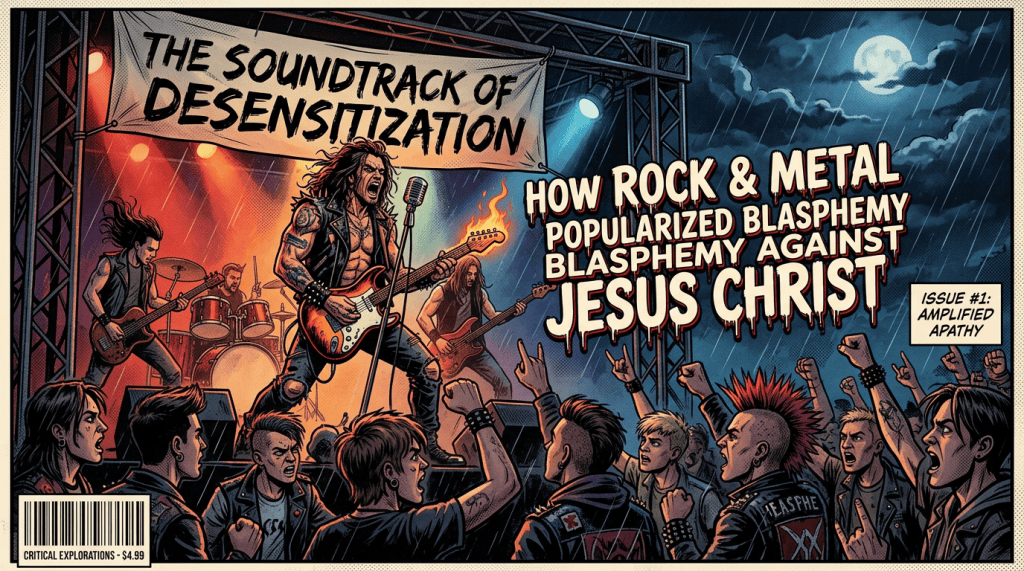
For more than half a century, rock and metal have occupied a privileged place in American popular culture: commercially dominant, critically celebrated, and largely insulated from sustained examination of their theological content.

LD Entertainment
Bleecker Street
Under a literal reading of the Bible—the text that for centuries defined blasphemy as contemptuous or irreverent speech against God—the record is plain. A substantial body of commercially successful work has repeatedly taken the name, titles, and words of Jesus Christ and placed them in contexts of denial, mockery, or inversion. The result has not been fringe provocation alone; it has been the normalization of language that Scripture classifies as blasphemy.
The biblical standard is not obscure. Exodus 20:7 forbids taking the name of the Lord in vain. Leviticus 24:16 treats blasphemy against that name as a capital offense. Matthew 12:31 acknowledges that blasphemy against God is real sin even while distinguishing the unpardonable form. When popular songs systematically violate these boundaries and still achieve multi-platinum status, chart dominance, and cultural ubiquity, the claim of popularization is empirical rather than rhetorical.
Consider the 2000 single “Judith” by A Perfect Circle. Addressed to the singer’s paralyzed mother, the track states: “Fuck your God / Your Lord, and your Christ.” It then asserts that the Savior “has abandoned you,” that “He did this,” and that listeners should “Praise the one who left you broken down and paralyzed,” all while sarcastically repeating “He did it all for you.” The song reached the top five on both the Billboard Rock and Alternative charts. Under the plain wording of Exodus 20:7 and Matthew 12:31, the combination of explicit profanity directed at Christ and the attribution of suffering to Him as abandonment constitutes blasphemy. Its commercial trajectory demonstrates that such language could occupy mainstream rock radio without lasting penalty.
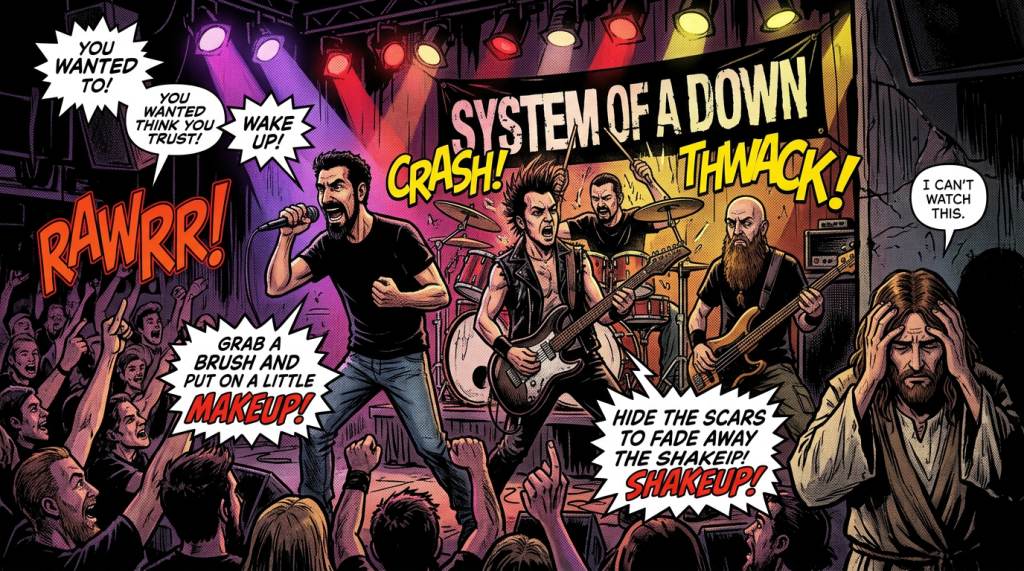
System of a Down’s 2001 hit “Chop Suey!” performs a different but related appropriation. The bridge places the words Jesus spoke on the cross—“Father, into your hands I commend my spirit” and “Why have you forsaken me?”—inside a song whose chorus centers on “self-righteous suicide” and the claim that “angels deserve to die.” These are not allusions in the abstract; they are near-verbatim quotations from Luke 23:46 and Matthew 27:46, inserted into a composition that frames suicide as self-righteous and declares that angels merit death. The track, from the multi-platinum album Toxicity, became one of the band’s signature songs. Scripture presents Christ’s words on the cross as unique to the atoning death of the Son of God. Relocating them into a celebration of suicide takes the central redemptive speech of the New Testament and subordinates it to a theme Exodus 20:13 forbids.
Disturbed’s 2008 number-one rock single “Inside the Fire” offers a third variant. Written from the perspective of a speaker who claims to be immortal and who demands “Give your soul to me for eternity,” the song invites the grieving listener to “release your life” and “take your place inside the fire.” Band accounts identify the voice as the devil. The lyrics nevertheless assert ownership of souls, close the door of heaven, and present suicide as the path of reunion. Deuteronomy 32:39 and Matthew 10:28 locate authority over life, death, and the soul with God alone. A commercially dominant track that places those claims in the mouth of the adversary, and that treats the fire of judgment as a desirable destination, popularizes precisely the usurpation Scripture condemns.
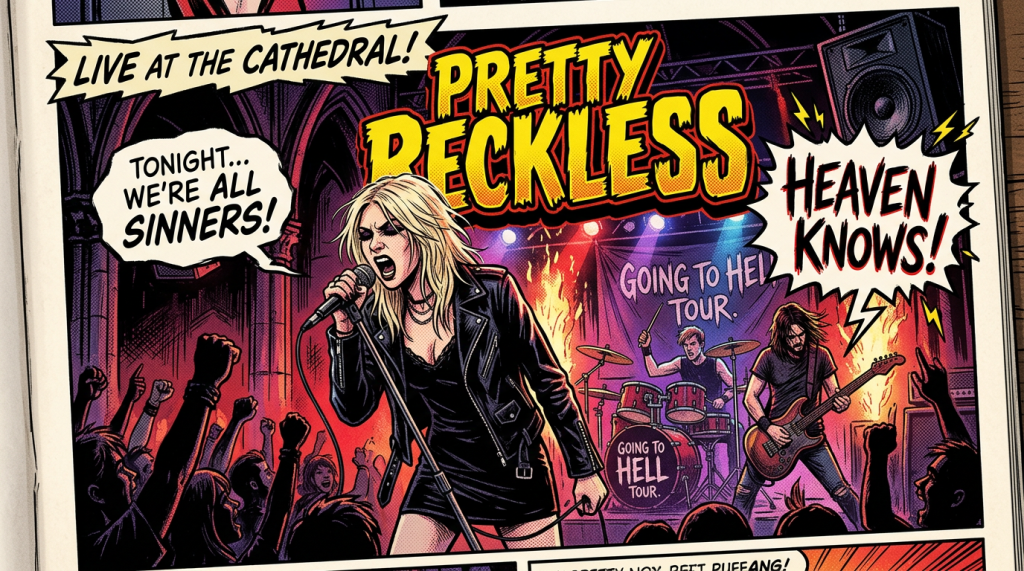
Earlier and later examples follow the same pattern. Alice in Chains’ 1990 single “Man in the Box” repeatedly pairs “Jesus Christ” with the parenthetical “Deny your maker” inside imagery of confinement and waste. The Pretty Reckless’ platinum-certified “Heaven Knows” (2014) turns the refrain “Oh, Lord, Heaven knows, we belong way down below” into an anthemic hook, asking the Lord to confirm a destiny Scripture presents as judgment rather than belonging. Danzig’s “Twist of Cain” (1988) locates a murderous impulse in both “the God above” and “the God below,” while claiming a father “born of light.” Each song achieved significant airplay or sales. Collectively they illustrate a durable market for material that, measured by the King James text, takes the name and character of Christ in vain.
None of this requires conspiracy. Rock and metal have long prized transgression as aesthetic and commercial currency. What the biblical standard makes visible is the specific content of that transgression when it concerns Jesus Christ. The songs do not merely employ religious vocabulary; they deny, invert, or mock claims the New Testament treats as foundational—Christ’s unique authority, His words from the cross, the prohibition on self-murder, and the distinction between God and the adversary.
Their success on rock charts, their multi-platinum certifications, and their continued presence in playlists and media demonstrate that such language has been absorbed into the ordinary soundtrack of a large audience.
Defenders often reply that the material is artistic, ironic, or personally cathartic, and that intent should control interpretation. The King James standard, however, evaluates the speech itself. Exodus 20:7 and Leviticus 24:16 do not contain exemptions for artistic framing or commercial context. When the name of Christ is placed beside “Fuck,” beside an invitation to suicide, or beside an assertion that angels deserve to die, the plain wording meets the biblical definition of blasphemy regardless of the singer’s later explanations.
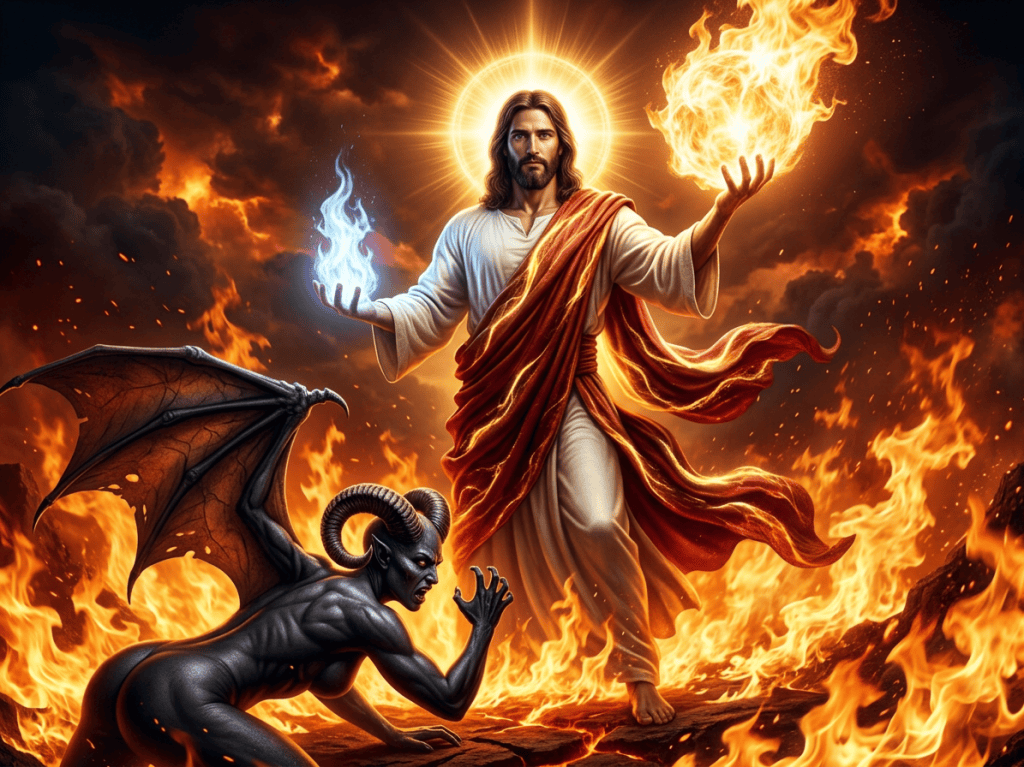
The cumulative effect is measurable. For decades, a major commercial genre has repeatedly circulated language that a literal reading of Scripture classifies as contemptuous speech against Jesus Christ. The songs examined here are not obscure. They are among the better-known tracks of their respective eras. Their chart performance, certifications, and cultural persistence supply the evidence that blasphemy against the God of Scripture has been popularized—not merely uttered, but rewarded, broadcast, and normalized—within rock and metal.


Leave a Reply