
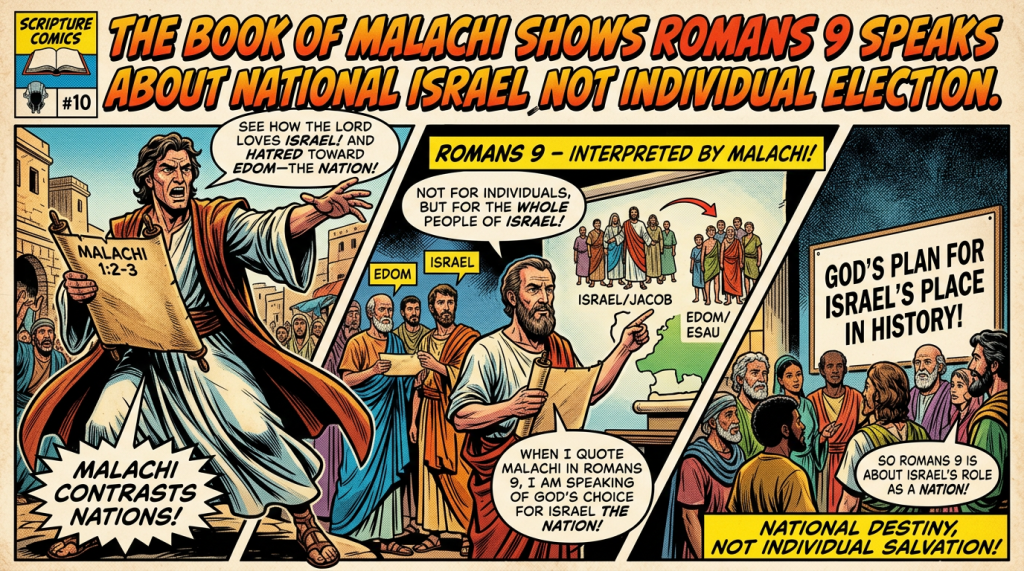
For centuries, reformed theologians have treated Romans 9 as the charter document of unconditional individual election and double predestination. The text, read plainly in the bible and in its own context, refuses the assignment.
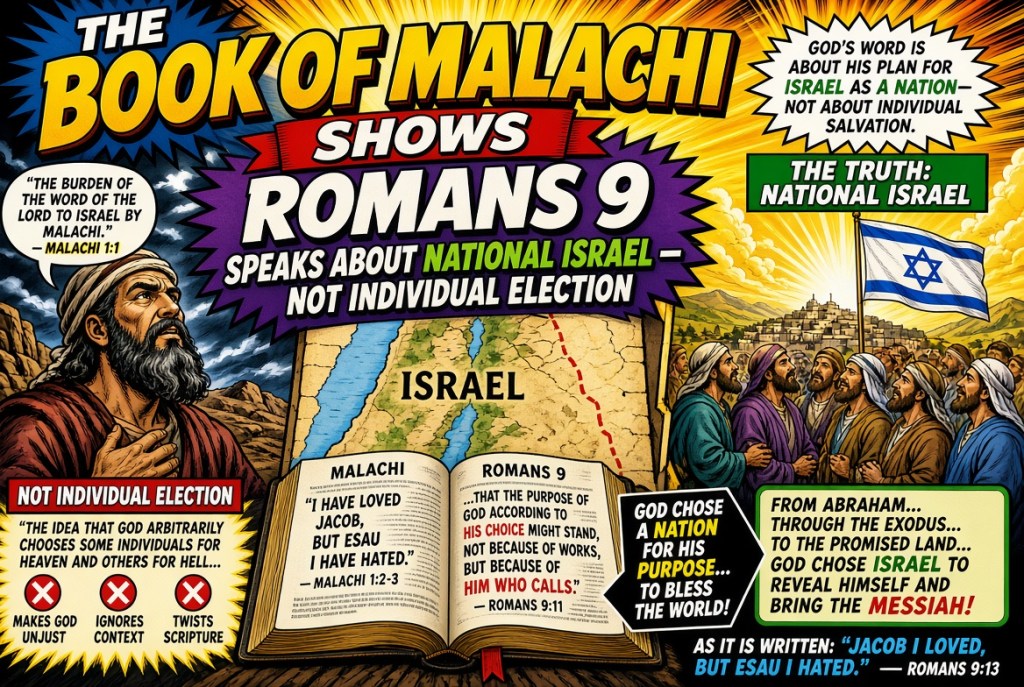
Paul is not explaining why God creates some people for heaven and others for hell. He is answering a far more concrete and urgent question: Has the word of God failed because most of Israel has rejected the Messiah?
The chapter opens with Paul’s anguish over his own people and closes with the reason they stumbled. Everything in between—Isaac and Ishmael, Jacob and Esau, Pharaoh, the potter and the clay—serves that national and covenantal purpose.
Verses 1–3: The Actual Subject
Paul opens with an oath-like protestation of his grief: “I say the truth in Christ, I lie not, my conscience also bearing me witness in the Holy Ghost, That I have great heaviness and continual sorrow in my heart. For I could wish that myself were accursed from Christ for my brethren, my kinsmen according to the flesh.”
The sorrow is not abstract. It is directed at a specific people—his kinsmen according to the flesh. The hypothetical willingness to be accursed is the measure of that national grief. Nothing in these verses concerns the eternal destinies of individuals outside Israel or a secret decree fixing those destinies.

Verses 4–5: The Privileges Belong to Israel
“Who are Israelites; to whom pertaineth the adoption, and the glory, and the covenants, and the giving of the law, and the service of God, and the promises; Whose are the fathers, and of whom as concerning the flesh Christ came, who is over all, God blessed for ever. Amen.”
Every item listed is a corporate endowment of the nation. The adoption, covenants, law, temple service, and promises were given to Israel as a people. The Messiah came from them according to the flesh. The verse does not distribute these privileges to an invisible class of elect individuals scattered across the nations; it identifies the historic people to whom they were given. The problem Paul must answer is why that people, so privileged, has largely rejected the Messiah.
Verse 6: The Distinction That Saves God’s Word
“Not as though the word of God hath taken none effect. For they are not all Israel, which are of Israel.”
The word of God has not failed. The reason is the distinction Paul immediately draws: not every ethnic Israelite belongs to the Israel of promise. This is a distinction within the nation, not a statement about God’s eternal choice of unrelated individuals. The verse protects the integrity of the promises precisely by refusing to equate physical descent with covenant standing.
Verses 7–9: The Children of the Promise
“Neither, because they are the seed of Abraham, are they all children: but, In Isaac shall thy seed be called. That is, They which are the children of the flesh, these are not the children of God: but the children of the promise are counted for the seed. For this is the word of promise, At this time will I come, and Sarah shall have a son.”
Paul cites Genesis 21:12. The seed is called in Isaac, not in Ishmael. The children of the flesh are not automatically the children of God; the children of the promise are counted for the seed. The example is the choice of the covenant line. It is not an illustration of God choosing some individuals for heaven and others for hell before they are born. The promise concerns the channel through which the nation and the Messiah would come.
Verses 10–13: Jacob and Esau as Nations
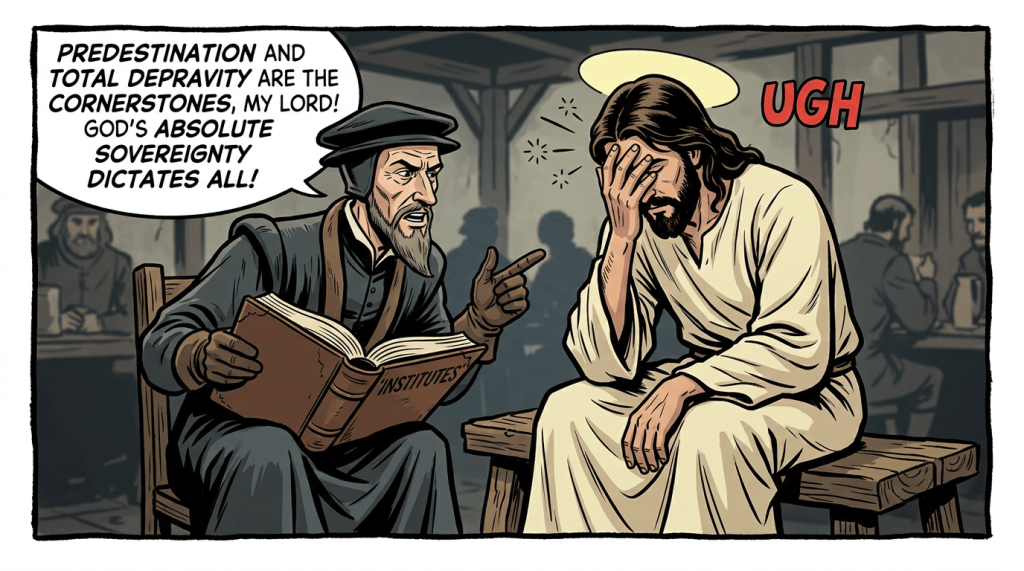
“And not only this; but when Rebecca also had conceived by one, even by our father Isaac; (For the children being not yet born, neither having done any good or evil, that the purpose of God according to election might stand, not of works, but of him that calleth;) It was said unto her, The elder shall serve the younger. As it is written, Jacob have I loved, but Esau have I hated.”
The parenthetical purpose clause explains why the choice was announced before birth: so that God’s elective purpose would stand on His call rather than on works or natural priority. Genesis 25:23 had already defined the scope: two nations and two manner of people were in the womb; the elder would serve the younger. Malachi 1:2–3, written long afterward, applies the same contrast to the two peoples—Israel preserved, Edom laid waste. “Hated” is the comparative idiom of covenant preference (as Leah was “hated” relative to Rachel in Genesis 29). It does not mean God eternally hates persons. The election is of the national line so that the purpose of God might stand.
Verses 14–16: No Unrighteousness in God’s Mercy
“What shall we say then? Is there unrighteousness with God? God forbid. For he saith to Moses, I will have mercy on whom I will have mercy, and I will have compassion on whom I will have compassion. So then it is not of him that willeth, nor of him that runneth, but of God that sheweth mercy.”
The objection arises from the preceding national election. God’s answer, drawn from Exodus 33:19, affirms His freedom to show mercy according to His own purpose. The statement that it is not of him who wills or runs does not teach that human faith is irrelevant; it teaches that the standing of the covenant people rests on God’s merciful call rather than on Israel’s striving. The context remains God’s dealings with the nation.
Verses 17–18: Pharaoh Raised Up
“For the scripture saith unto Pharaoh, Even for this same purpose have I raised thee up, that I might shew my power in thee, and that my name might be declared throughout all the earth. Therefore hath he mercy on whom he will have mercy, and whom he will he hardeneth.”
Pharaoh was raised up so that God’s power and name would be known. Exodus records both Pharaoh’s self-hardening and God’s subsequent judicial hardening. The episode demonstrates God’s right to deal with a rebellious ruler for the sake of His name among the nations. It does not establish a pattern in which God creates individuals for the purpose of damning them. Verse 18 summarizes the principle already illustrated: mercy and hardening occur according to God’s will in the accomplishment of His revealed purposes.
Verses 19–21: The Potter’s Right
“Thou wilt say then unto me, Why doth he yet find fault? For who hath resisted his will? Nay but, O man, who art thou that repliest against God? Shall the thing formed say to him that formed it, Why hast thou made me thus? Hath not the potter power over the clay, of the same lump to make one vessel unto honour, and another unto dishonour?”
The imaginary objector challenges God’s right to find fault if no one can resist His will. Paul’s answer is the potter’s authority over the clay. The imagery is drawn from the prophets who address Israel and the nations (Jeremiah 18; Isaiah 29:16; 45:9; 64:8). In Jeremiah 18 the potter reshapes the vessel according to the clay’s behavior. God has the sovereign right to form the lump—Israel and the surrounding peoples—into vessels for honor or dishonor. The verses do not teach that God fashions individual souls for eternal destruction without regard to their response.
Verses 22–24: Vessels of Wrath and Mercy
“What if God, willing to shew his wrath, and to make his power known, endured with much longsuffering the vessels of wrath fitted to destruction: And that he might make known the riches of his glory on the vessels of mercy, which he had afore prepared unto glory, Even us, whom he hath called, not of the Jews only, but also of the Gentiles?”
God endured with much longsuffering the vessels of wrath. They are “fitted to destruction”—the language describes their condition as those prepared by persistent rebellion, not an eternal manufacturing decree. The purpose clause shows what God was willing to display: His wrath and power on the one hand, the riches of His glory on the vessels of mercy on the other. Those vessels of mercy are identified in verse 24: “even us, whom he hath called, not of the Jews only, but also of the Gentiles.” The calling is the historical call of the gospel that has reached both remnant Israel and the nations. The passage concerns God’s freedom to form a people from both, not the secret predestination of individuals to heaven or hell.
Verses 25–26: Hosea and the Calling of Gentiles
“As he saith also in Osee, I will call them my people, which were not my people; and her beloved, which was not beloved. And it shall come to pass, that in the place where it was said unto them, Ye are not my people; there shall they be called the children of the living God.”
Paul applies Hosea’s words to the inclusion of Gentiles. Those who were not God’s people are now called His people. The citation confirms the expansion already stated in verse 24. It does not redefine election as an individual decree made before the foundation of the world.

Verses 27–29: Isaiah and the Remnant
“Esaias also crieth concerning Israel, Though the number of the children of Israel be as the sand of the sea, a remnant shall be saved: For he will finish the work, and cut it short in righteousness: because a short work will the Lord make upon the earth. And as Esaias said before, Except the Lord of Sabaoth had left us a seed, we had been as Sodoma, and been made like unto Gomorrha.”
Isaiah’s remnant language is applied directly to Israel. The vast number of the children of Israel does not guarantee that all will be saved; a remnant will be. The citations underscore both judgment on the nation and the preservation of a seed. They align with Paul’s opening concern and with the later promise in Romans 11 that God has not cast away His people. They do not teach that only a pre-selected handful of individuals from all nations were ever intended for salvation.
Verses 30–33: The Actual Reason for Israel’s Failure
“What shall we say then? That the Gentiles, which followed not after righteousness, have attained to righteousness, even the righteousness which is of faith. But Israel, which followed after the law of righteousness, hath not attained to the law of righteousness. Wherefore? Because they sought it not by faith, but as it were by the works of the law. For they stumbled at that stumblingstone; As it is written, Behold, I lay in Sion a stumblingstone and rock of offence: and whosoever believeth on him shall not be ashamed.”
The chapter concludes with a clear causal explanation. Gentiles attained righteousness by faith. Israel did not attain it because they pursued it by works of the law rather than by faith and therefore stumbled at Christ, the stumbling-stone. The final quotation promises that whoever believes on Him shall not be ashamed. The failure is located in the rejection of faith, not in an eternal decree that rendered faith impossible for the non-elect.
Romans 9, taken verse by verse, remains a defense of God’s faithfulness to Israel. It distinguishes the children of the promise from the children of the flesh, affirms God’s sovereign choice of the covenant nation and line, and shows how He is now calling both Jews and Gentiles while preserving a remnant. The Calvinist imposition of unconditional individual election and reprobation requires the text to answer a question it never asks and to ignore the national subject it repeatedly names.
The Bible’s own words are sufficient to rebuke the system.




Leave a Reply