
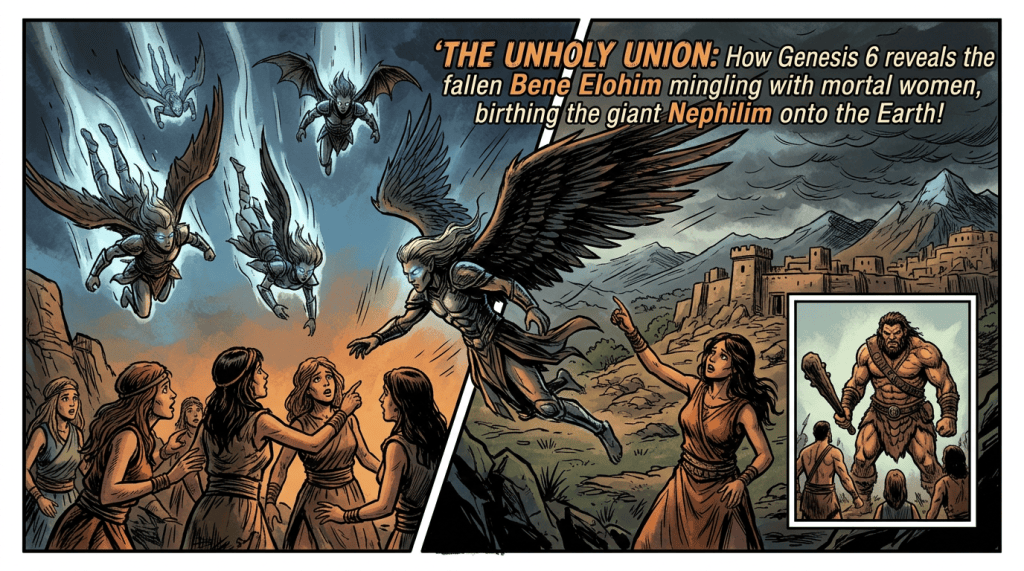
The record of the antediluvian world is given with a brevity that has invited many interpretations, yet the words themselves are not obscure. When men began to multiply upon the earth and daughters were born unto them, the sons of God saw the daughters of men that they were fair, and they took them wives of all which they chose.
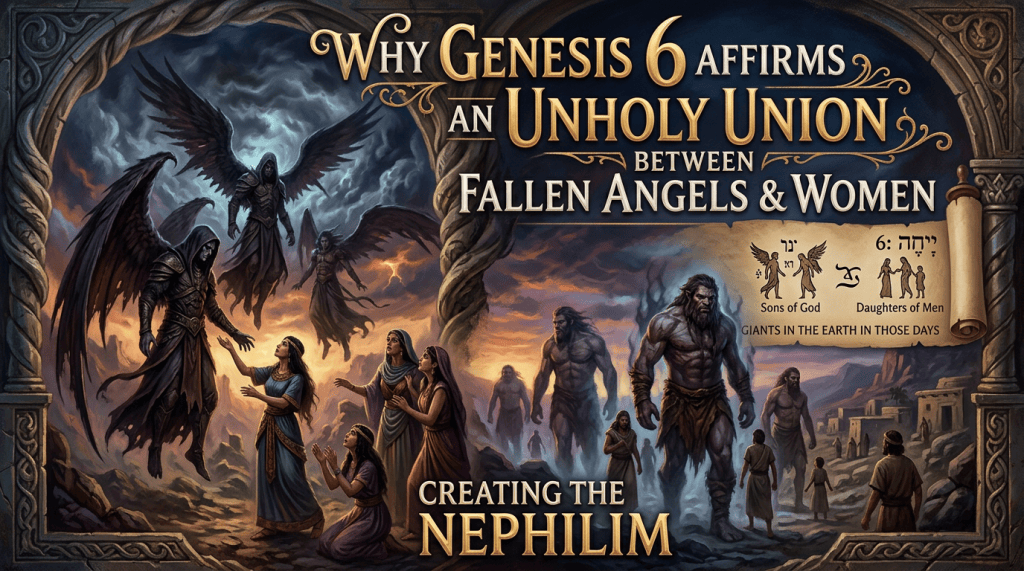
The Lord declared that His spirit would not always strive with man, for that he also is flesh, and fixed the remaining span of those days at one hundred and twenty years. There were giants in the earth in those days, and also after that, when the sons of God came in unto the daughters of men and they bare children to them: the same became mighty men which were of old, men of renown. The immediate sequel is the universal corruption of the earth, the imagination of the thoughts of man’s heart only evil continually, and the divine determination to destroy all flesh from under heaven.
The designation “sons of God” is not left without parallel. In the book of Job it is written that the sons of God came to present themselves before the Lord, and Satan came also among them. The same assembly appears again in the second chapter. When the Lord answers Job out of the whirlwind He asks, “Where wast thou when I laid the foundations of the earth? \ldots When the morning stars sang together, and all the sons of God shouted for joy?”
These are celestial beings who stand in the presence of God and who were present at the creation of the world. No sober reader supposes them to be the offspring of any human patriarch. The identical phrase, employed without qualification or distinguishing clause in Genesis, carries the same sense. To assign it another meaning is to introduce a discontinuity that the text itself does not authorize.
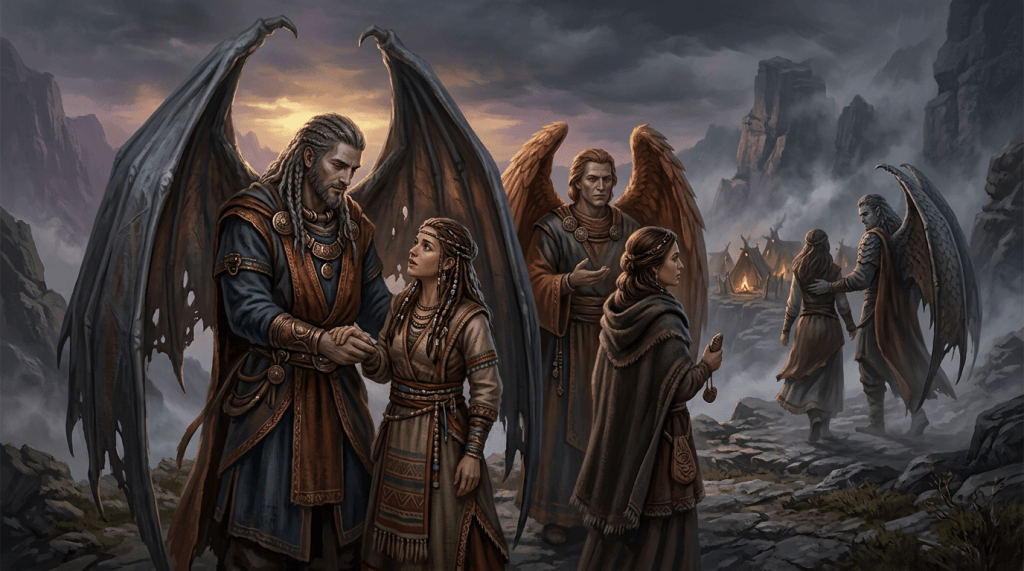
The epistle of Jude places the matter beyond dispute. It speaks of the angels which kept not their first estate, but left their own habitation, and whom the Lord hath reserved in everlasting chains under darkness unto the judgment of the great day. Immediately the apostle compares them to the inhabitants of Sodom and Gomorrha, who, giving themselves over to fornication and going after strange flesh, are set forth for an example, suffering the vengeance of eternal fire. The correspondence is precise: the angels forsook their proper abode and pursued strange flesh—the daughters of men.
The “strange flesh” is not ordinary human fornication but an unnatural crossing of the orders of creation. The same reality of fallen angels under restraint appears in the Revelation, where a star fallen from heaven receives the key of the bottomless pit, and the king over the destroying host is the angel of the bottomless pit, whose name in the Hebrew tongue is Abaddon and in the Greek Apollyon.
The children born of this union are distinguished from ordinary men. The text names them giants, and they became mighty men of renown. Later Scripture identifies the same race. The spies who searched the land of Canaan reported that they saw the giants, the sons of Anak, which come of the giants, and that they themselves were in their own sight as grasshoppers.
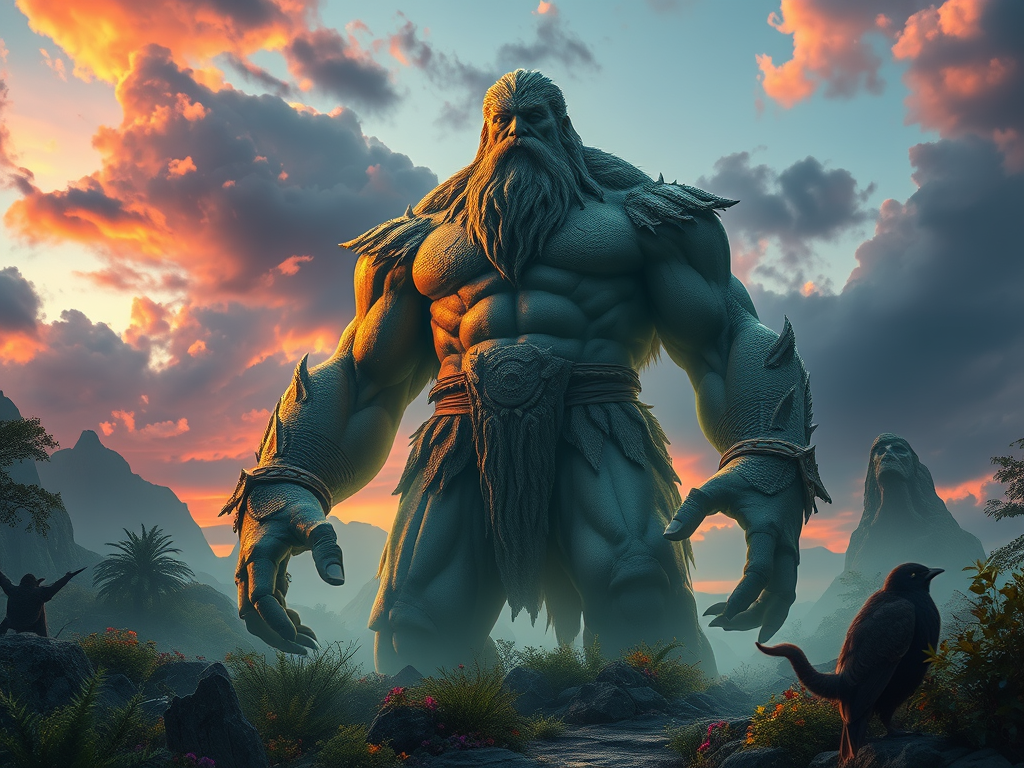
Deuteronomy records that the territory of the Ammonites was accounted a land of giants, in which giants dwelt in old time—a people great, and many, and tall, as the Anakims. The same sentence of total destruction is pronounced upon the nations that still harbored this seed: of the cities of these people nothing that breatheth was to be saved alive, lest Israel learn their abominations. No ordinary intermarriage of human lines ever produced a stature that reduced ordinary men to the appearance of insects, nor a distinct and repeatedly noted race requiring such measures.
The apostle Paul supplies the reason why such a union lies outside the ordinary course of nature. All flesh is not the same flesh: there is one kind of flesh of men, another of beasts, another of fishes, and another of birds. There are also celestial bodies and bodies terrestrial; the glory of the celestial is one, and the glory of the terrestrial is another. The distinction is absolute. Celestial beings possess an order of being different from that of men. When they came in unto the daughters of men, the result was not a normal human child but a hybrid race of giants.
The alternative reading—that the sons of God were merely the descendants of Seth who married the daughters of Cain—fails at every point of the text. Scripture never applies the title “sons of God” to the line of Seth in this connection, nor does it reduce the line of Cain to the undifferentiated designation “men.” Human intermarriage does not generate giants who make other men appear as grasshoppers. It does not account for Jude’s explicit reference to angels who left their habitation and went after strange flesh. The clause “and also after that” in the fourth verse of Genesis six shows that the same phenomenon occurred again after the flood, precisely as the continued presence of the Anakim and Rephaim confirms.

It is sometimes objected that angels are spirits and therefore cannot procreate. Yet the same Scriptures that call them spirits also record that they can appear in bodily form, eat, and interact with the material world. The narrative of Genesis six states that they took wives and that the women bare children to them. The reader is not required to furnish a mechanical explanation; he is required to receive the report that is given. To prefer a purely human interpretation because it better accords with systems formed long afterward is to set human reason above the written Word.
The judgment that followed was not a local correction of mixed marriages within a single family line. It was the destruction of the world. Only Noah, described as perfect in his generations, was spared, together with those who entered the ark with him. The corruption had entered the very seed of man through the intrusion of celestial beings. The consistent testimony of Genesis, Job, Numbers, Deuteronomy, the first epistle to the Corinthians, Jude, and the Revelation is that the Nephilim were the offspring of fallen angels and the daughters of men.
Every contrary construction must first set aside the words of Scripture and then supply a meaning the text itself will not bear. The plain sense of the record stands.


Leave a Reply