
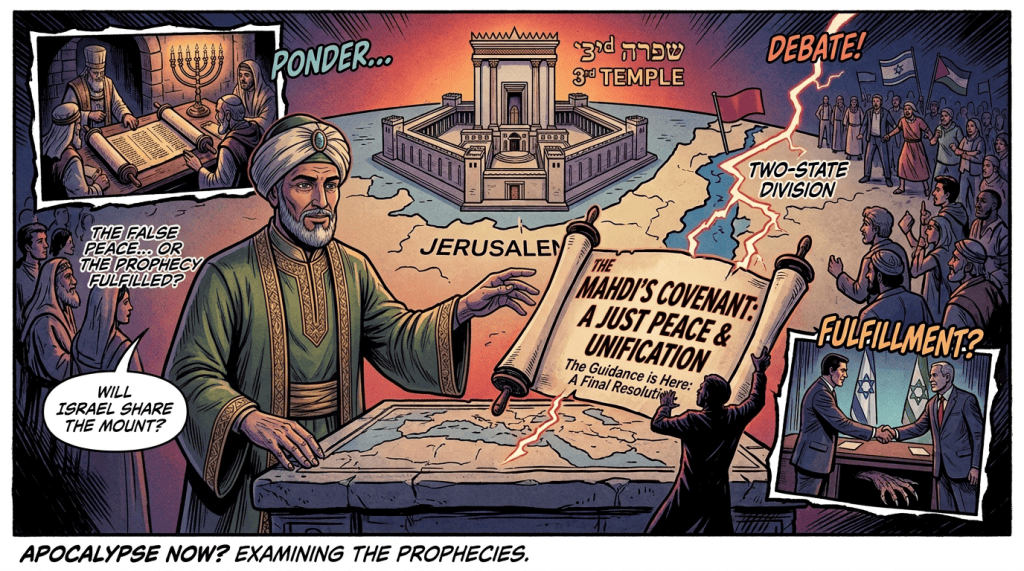
For more than a generation the two-state solution has been treated as the only respectable destination for Israeli-Palestinian diplomacy. This week the destination came into sharper focus. Canada, France and Britain announced they would ban imports from Israeli settlements, citing Israel’s plans for the E1 corridor east of Jerusalem as an “urgent threat” to the two-state vision.

Saudi Arabia, still the missing prize of the Abraham Accords, restated that it will not normalize with Israel until Jerusalem recognizes a Palestinian state. One year after a wave of Western recognitions of Palestine, the machinery of coercion and inducement is now aligned around a single map: a recognized Palestinian state beside a secure Israel, with Jerusalem somehow both united and shared.
Those who read the Hebrew prophets in the plain sense of the King James text have long expected precisely this kind of arrangement. They have also expected it to fail.
Daniel 9:27 is the verse that will not stay in the seminary. “And he shall confirm the covenant with many for one week: and in the midst of the week he shall cause the sacrifice and the oblation to cease.” The “he” is the prince who arises from the people who destroyed the Second Temple. The covenant lasts seven years. Sacrifices resume, which means a Temple stands again on the Mount.
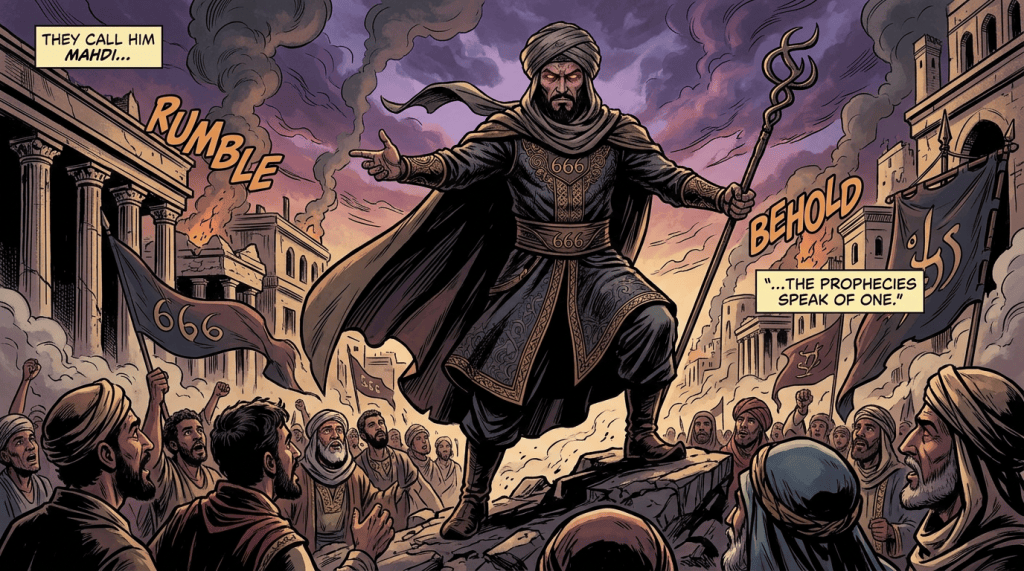
Midway the same prince stops the worship and sets up the abomination. Jesus pointed to the same event when he spoke of the “abomination of desolation” standing in the holy place. Paul described a man of sin who would sit in the temple of God. The sequence is not obscure. It requires a rebuilt Temple and a preceding political agreement that makes the Temple possible.
A two-state deal that formally recognizes Palestine while granting Israel the practical ability to restore sacrificial worship on the Temple Mount is the only contemporary proposal that supplies both elements at once. The diplomatic language already in circulation does not hide the trade. Jerusalem remains Israel’s capital; a Palestinian capital called Al-Quds occupies parts of the city’s east; religious sites stay under Israeli maintenance with the traditional Muslim carve-outs and Jordan’s historic role preserved.
That formulation leaves room—architecturally and politically—for a Jewish Temple to rise beside or south of the Dome of the Rock, an idea now discussed by Israeli ministers and even floated by some voices inside the Waqf. The land is parted; the Mount is unlocked. Joel 3:2 records the Lord’s complaint that the nations have “parted my land.” Isaiah 28 calls the security pact Israel’s leaders will make a “covenant with death” and an “agreement with hell.” The prophets did not describe a peace that lasts.
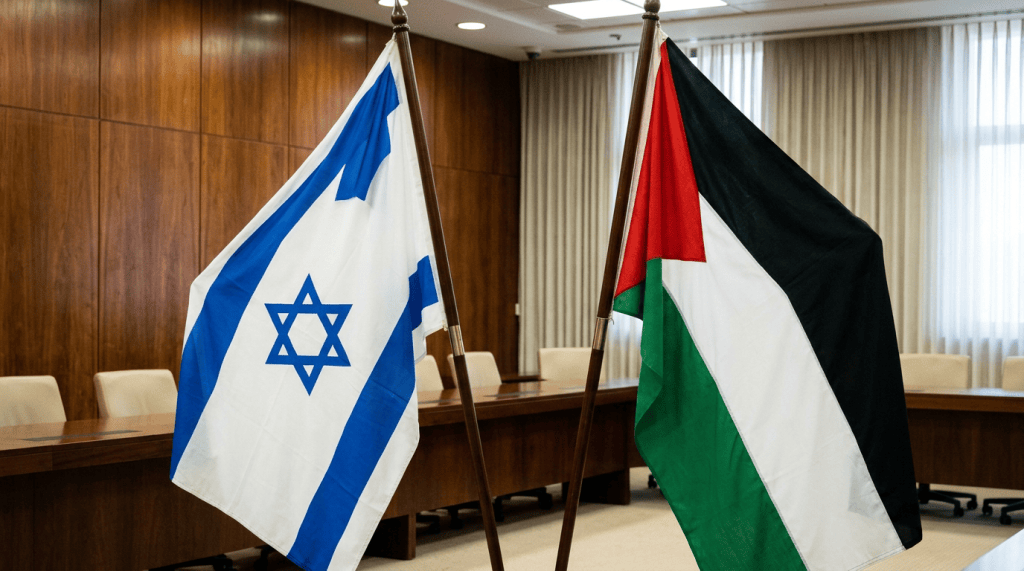
The “many” of Daniel’s covenant are no longer theoretical. They include the governments that recognized Palestine in 2025, the trio that this week applied economic pressure to the settlements, and the Gulf states whose eventual participation still hinges on a two-state outcome. A single broker—American, European, or a future figure who commands both Western and regional leverage—could confirm the package and call it historic. For three and a half years it would look like success: recognized borders, frozen settlement growth, international guarantees, and the resumption of rites unseen since 70 A.D. Then the same authority that ratified the deal would break it.
None of this requires dates or identifications. Prophecy is not a codebook for the evening news. It is a pattern. The pattern is a comprehensive peace that solves the Jerusalem question by dividing sovereignty and restoring Temple worship, underwritten by the nations, and then shattered from within. The current diplomacy is assembling the pieces with remarkable fidelity: recognition first, settlement pressure second, Saudi conditionality third, Temple speculation always in the background.
Those who dismiss the reading as fundamentalist fantasy should at least notice the symmetry. Islamic tradition also anticipates a temporary truce with the “Romans”—the Christian West—that later collapses, after which Jerusalem becomes the stage for a final confrontation. The two eschatologies do not agree on the identity of the coming prince, but they agree that the peace which precedes the last war will not be the peace that endures.

The two-state solution remains the only framework most of the world is willing to discuss. That fact does not make it holy. It may only make it the covenant the prophets warned would be confirmed, and then broken, in the week that ends the age.



Leave a Reply