
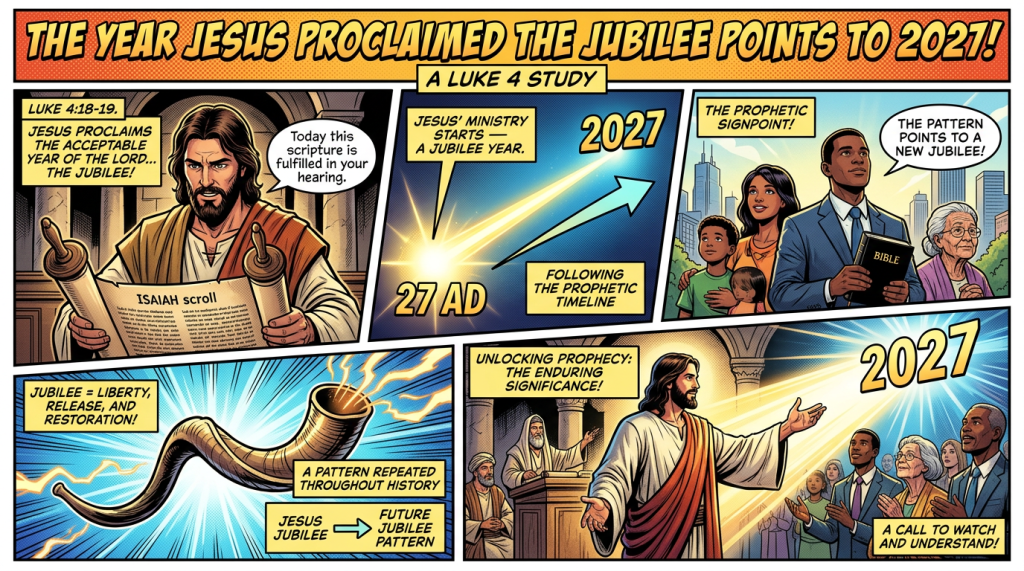
In the synagogue of Nazareth, Jesus opened the scroll of Isaiah and read the words that define the Year of Jubilee. He then sat down and told the congregation that the Scripture was fulfilled that very day.
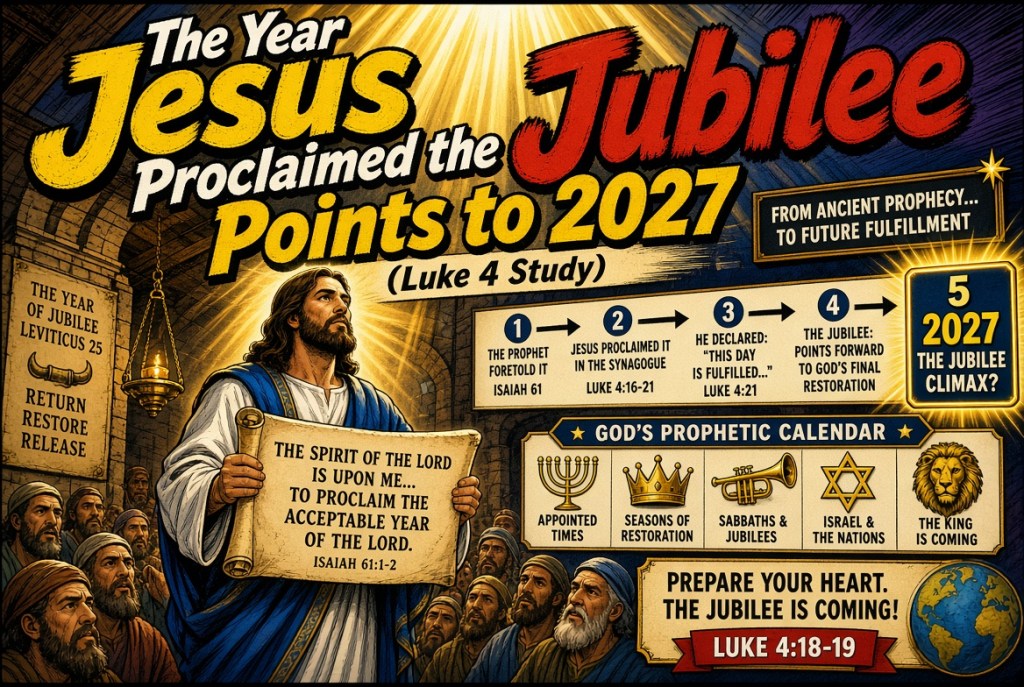
The chronological markers in the Gospels place that declaration near AD 27. Forty Jubilee cycles of fifty years later is the calendar year 2027. The argument is not speculative numerology. It is the plain sequence of the biblical text, the fixed chronology of Jesus’ ministry, and the arithmetic the law itself requires.
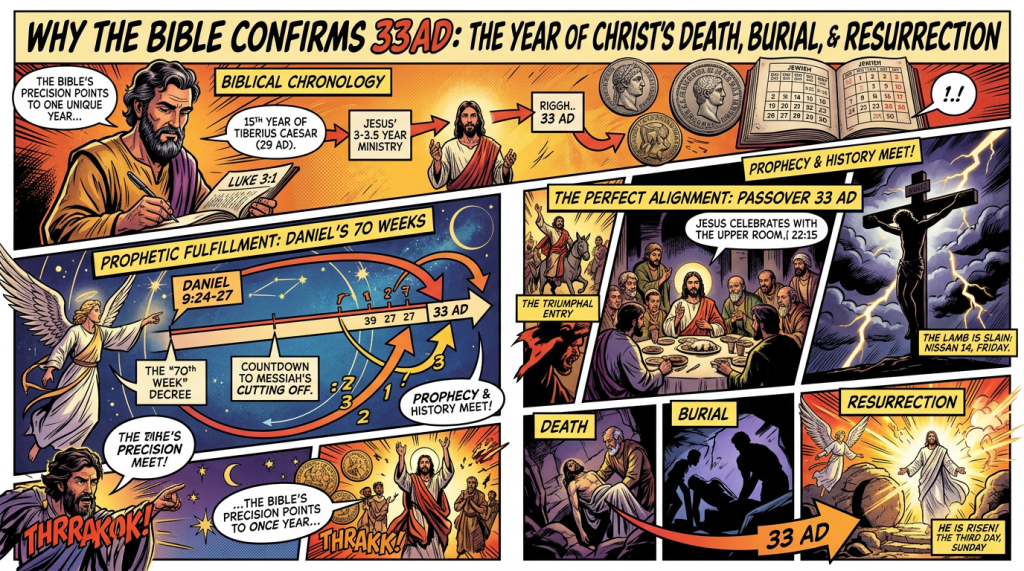
Luke 3:1 dates the beginning of John the Baptist’s ministry to the fifteenth year of Tiberius Caesar. Augustus died in AD 14; Tiberius’ fifteenth year therefore falls in AD 28 or 29. Luke 3:23 states that Jesus was about thirty years of age when He began His public work. The Gospel of John records at least three Passovers during that work (John 2:13; 6:4; 11:55), requiring a ministry of roughly three years that ends with the crucifixion on the Friday of Nisan 14 in AD 33. The opening of the ministry therefore sits in the late AD 20s. The most coherent placement, consistent with both the imperial date and the length of the ministry, is AD 27.
It is at the outset of that ministry that Jesus enters the synagogue in Nazareth. Luke 4:16–21 records the event. He is handed the book of the prophet Isaiah, opens to the place written, and reads: “The Spirit of the Lord is upon me, because he hath anointed me to preach the gospel to the poor; he hath sent me to heal the brokenhearted, to preach deliverance to the captives, and recovering of sight to the blind, to set at liberty them that are bruised, To preach the acceptable year of the Lord.” He closes the book, sits down, and declares, “This day is this scripture fulfilled in your ears.”
The passage He quotes is Isaiah 61:1–2. The language is not generic. It is the technical vocabulary of the Year of Jubilee. Leviticus 25:8–10 commands Israel to count seven sabbaths of years—forty-nine years—then to sound the trumpet on the Day of Atonement and “proclaim liberty throughout all the land unto all the inhabitants thereof: it shall be a jubile unto you.” The Hebrew word for that liberty is deror. Isaiah 61 uses the same term and the same framework: the anointed one proclaims liberty to the captives and announces “the acceptable year of the LORD.”
In the Greek of Luke 4 the word for deliverance and liberty is aphesis, the identical term the Septuagint employs throughout Leviticus 25 for the Jubilee release. Jesus is not merely quoting a comforting prophecy. He is declaring that the fiftieth year—the year of release, return, and liberty—has arrived.
The law itself fixes the interval. Leviticus 25:8–11 requires seven cycles of seven years, then the fiftieth year. The Jubilee is therefore a fifty-year period. Forty such periods equal two thousand years. Measured from the year Jesus publicly proclaimed the acceptable year of the Lord fulfilled—AD 27—the fortieth Jubilee lands in 2027.
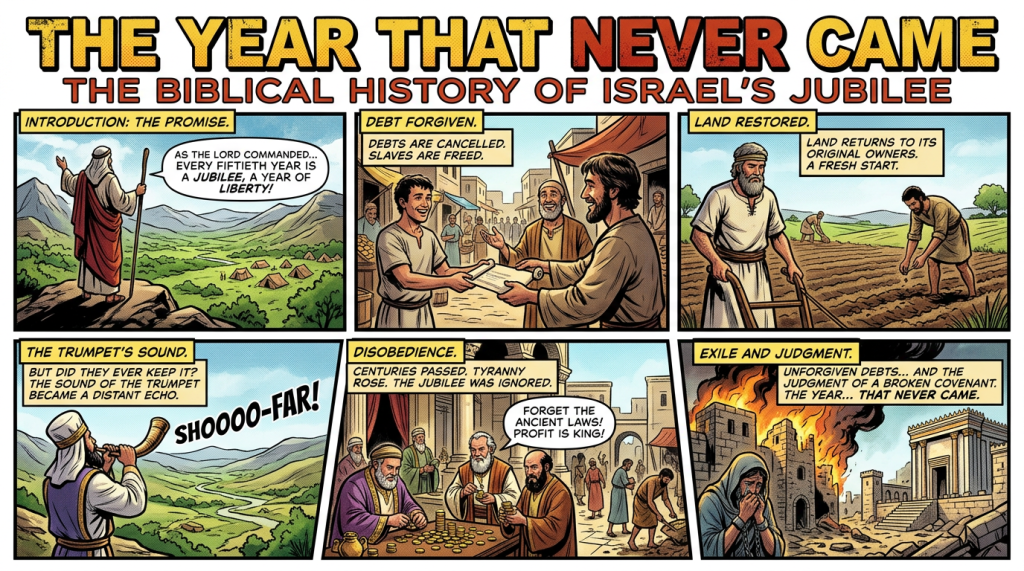
The number forty is not arbitrary; it is a recurring biblical marker of testing, completion, and transition: forty years in the wilderness, forty days of Jesus’ temptation, forty days between resurrection and ascension. The arithmetic is simple and internal to the text.
The crucifixion three to four years later does not break the cycle; it fulfills it. The Jubilee trumpet was sounded on the Day of Atonement. The death of Jesus on the cross is the atoning sacrifice that purchases the true liberty the Jubilee only pictured (Hebrews 9–10). Daniel 9:24–27 speaks of seventy weeks—490 years—which is exactly ten Jubilee cycles of forty-nine years. That prophecy reaches its terminus when Messiah is cut off, a date fixed by the same Gospel chronology at AD 33. The Jubilee proclamation of AD 27 and the atoning death of AD 33 stand within the same inaugural window. The cycles continue from the year of the proclamation.
Hosea 6:2 supplies a parallel pattern. “After two days will he revive us: in the third day he will raise us up, and we shall live in his sight.” Second Peter 3:8 states that one day with the Lord is as a thousand years. Applied to Hosea, the two days become two thousand years. Counted from the same starting point—the year of the ministry’s opening and the Jubilee declaration—the two thousand years close in 2027.
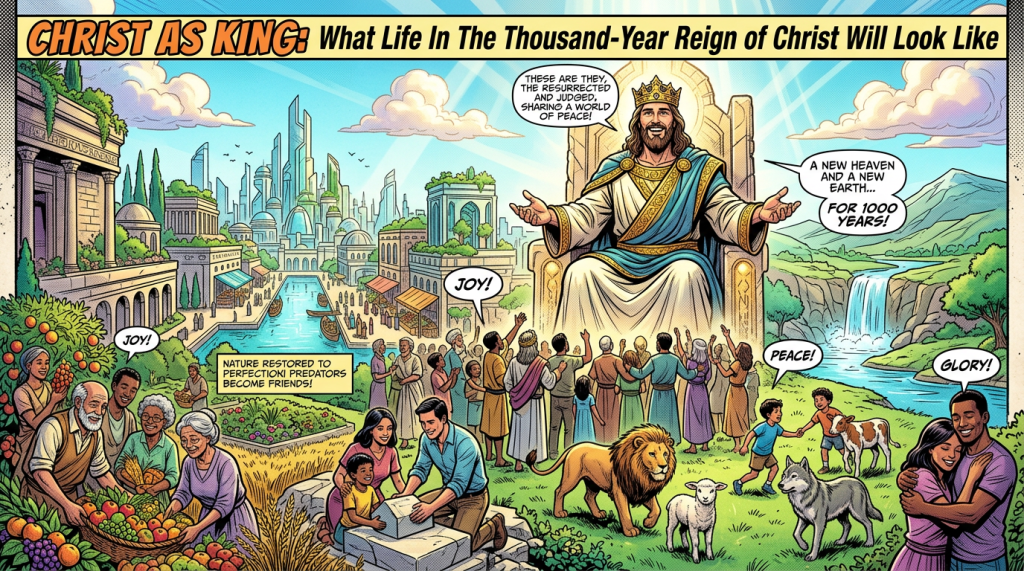
The third day then corresponds to the raising up of Israel and the living in His sight that the Jubilee’s liberty language had long anticipated. The two frameworks are independent yet convergent: one is the fifty-year cycle of Leviticus measured from Jesus’ own declaration; the other is the day-year principle of Peter applied to Hosea’s prophecy of revival. Both point to the same calendar year.
Nothing in this reading requires external calendars or later ecclesiastical tradition. The fifteenth year of Tiberius, the age of Jesus, the Passovers of John, the Friday of Nisan 14, the quotation of Isaiah 61 in Luke 4, the definition of the Jubilee in Leviticus 25, and the arithmetic of fifty-year cycles are all internal to Scripture. The result is consistent: the year Jesus stood in Nazareth and declared the acceptable year of the Lord fulfilled was AD 27.
Forty Jubilees later is 2027. The death, burial, and resurrection of AD 33 remain the atoning center that makes the eventual fulfillment of that liberty possible. The text itself supplies the dates, the interval, and the connection.



Leave a Reply