
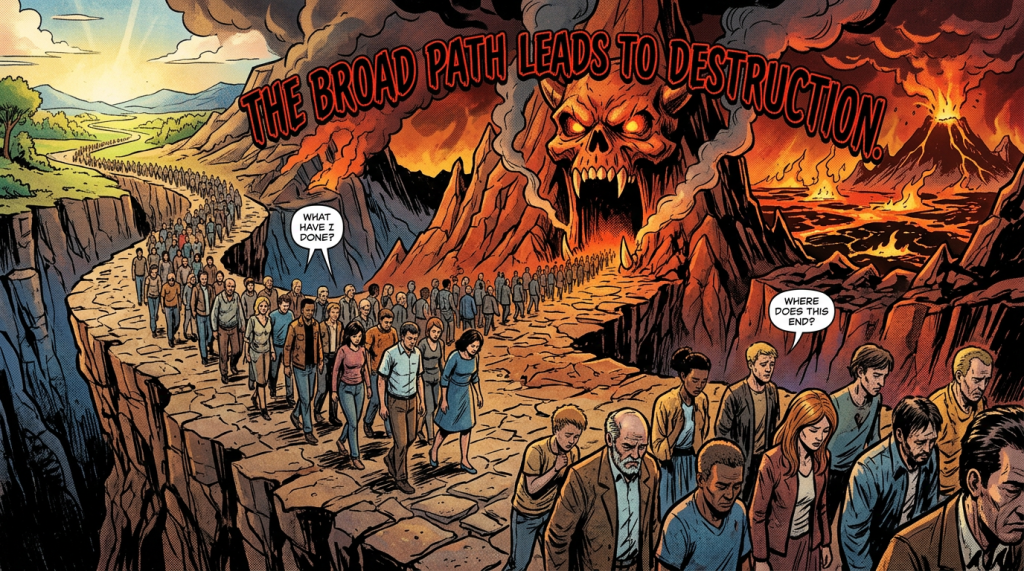
We have trained ourselves to talk about hell under the guise that the only people who goes there are people who have done really bad things and somehow many people won’t go there.
Souls do not drift into the lake of fire because they did something bad or they failed to accumulate enough decency to outweigh their sins. They go because they will not believe the gospel. Unbelief is not a minor defect at the edge of an otherwise promising life. In the text, it is the condemnation itself.
“He that believeth not is condemned already,” Jesus says, “because he hath not believed in the name of the only begotten Son of God.” The sentence is present tense. The wrath of God, John adds, “abideth” on the one who believes not the Son. Mark is blunter still: “He that believeth not shall be damned.” Paul writes of flaming fire and everlasting destruction for those who “know not God, and that obey not the gospel of our Lord Jesus Christ.”
Revelation does not ask whether a man was interesting, sincere, or useful. It asks whether his name was found in the book of life. If it was not, he was “cast into the lake of fire.” That lake is called the second death. Death and hell themselves are emptied into it. The devil is tormented there “day and night for ever and ever.” The fire prepared for the devil and his angels becomes the final address of everyone who would not have the Son.
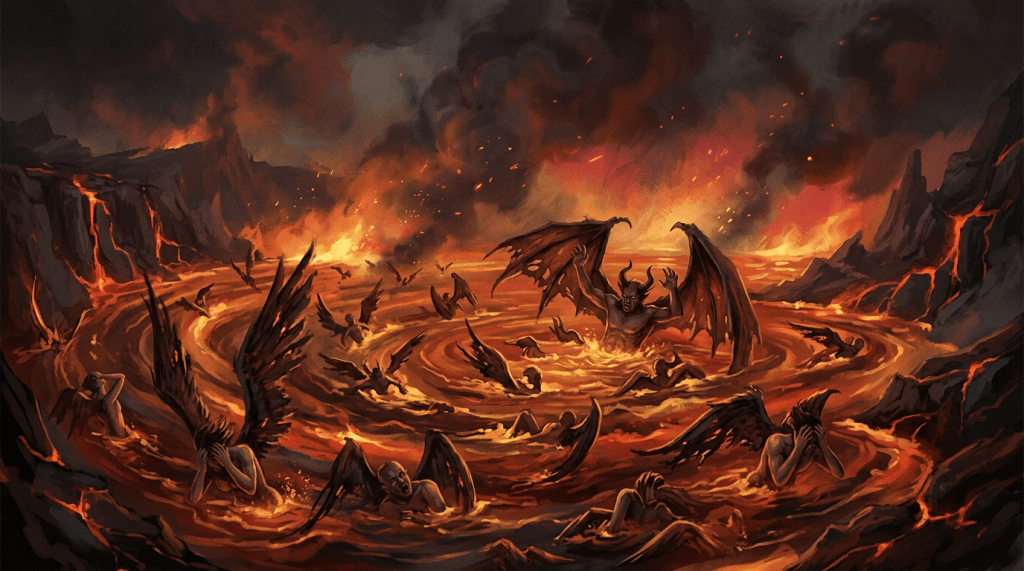
This is not the hell of folklore, a basement for cartoon villains. The Bible’s account is colder and more ordinary. A man dies once, and after this the judgment. In Luke, a rich man lifts his eyes in hell, already in torments, with a gulf fixed that no charity can cross. Jesus warns of a fire that shall not be quenched, where their worm dieth not. He tells the living to fear Him who can destroy both soul and body in hell. Then comes the last scene: the dead, small and great, standing before a white throne; books opened; another book opened, which is the book of life; and the wretched simplicity of the verdict.
The primary reason is not that the condemned never recycled, never voted well, never loved their children. The primary reason is that they refused the light when it came. “This is the condemnation, that light is come into the world, and men loved darkness rather than light.”
Modern moral imagination cannot bear that sentence, because it has already decided that hell, if it exists, must be for the obviously monstrous. Scripture will not cooperate. It keeps pairing damnation with unbelief and with the refusal of a preached gospel. That is why the most crowded roads to destruction do not look like roads to destruction. They look like virtue, culture, ancestry, and taste.
Consider the oldest counterfeit: the attempt to merit life. “By the deeds of the law there shall no flesh be justified.” “Not by works of righteousness which we have done.” “By grace are ye saved through faith… not of works, lest any man should boast.” Isaiah is unsparing about the best a man can bring in his own name: “all our righteousnesses are as filthy rags.” Paul divides the human race with an accountant’s clarity. To the one who works, reward is a debt. To the one who works not, but believes on Him that justifies the ungodly, faith is counted for righteousness. Mix those ledgers and grace ceases to be grace. “If righteousness come by the law, then Christ is dead in vain.”
Jesus told the parable for people who trusted in themselves that they were righteous. The Pharisee fasted, tithed, and thanked God he was not like other men. The publican would not lift his eyes. He asked for mercy. Only one went down to his house justified. Later, many will stand at the door with a résumé: “Have we not prophesied in thy name? and in thy name done many wonderful works?” The answer is not a critique of their bookkeeping. It is “I never knew you.” There is a way which seemeth right unto a man, and the end thereof are the ways of death. Good deeds are not the scandal. Trusting them instead of the Son is.
The other respectable counterfeit is friendliness with the world while still claiming peace with God. James does not call that balance. He calls it adultery. “The friendship of the world is enmity with God; whosoever therefore will be a friend of the world is the enemy of God.” John is no kinder: if any man love the world, the love of the Father is not in him. The lust of the flesh, the lust of the eyes, and the pride of life are not of the Father. Jesus asked how men can believe who receive honor one of another and seek not the honor that comes from God only. The carnal mind, Paul says, is enmity against God. A man may be charming, civic, and well liked, and still refuse the gospel because the world he loves would not forgive him for believing it.
Then there are the religions that try to keep some fragment of Christ while denying the Christ of Scripture. The New Testament anticipated that maneuver. It warns of another Jesus, another spirit, another gospel. It says there is none other name under heaven given among men whereby we must be saved. It says no man comes to the Father but by the Son. It says whoever denies the Son has not the Father. An angel from heaven preaching another gospel is not a consultant. He is accursed.
Islam will honor Isa (Jesus) as a prophet and even use the word Messiah, then deny that He is the Son of God and, in the dominant reading, deny that He was crucified. If He did not die for sins and did not rise, the gospel Paul delivered as of first importance has been erased. A prophet who did not hang on the tree cannot be the mediator between God and men. Judaism, which gave the world the Scriptures and of whom, as to the flesh, Christ came, stumbles at the same stone when it will not receive Jesus as the Christ those Scriptures promised. Moses is not the rival of the gospel. Jesus said that if they had believed Moses, they would have believed Him, for Moses wrote of Him. Going about to establish one’s own righteousness is not fidelity to Sinai. It is refusal of the righteousness of God.
Buddhism offers a path of effort toward the extinguishing of craving in a universe that does not require a crucified Son or a Father to whom one must be reconciled. Hinduism can make room for Jesus as one more guru or avatar among many, which is only another way of saying He is not the way, the truth, and the life. Paganism sets Him, if it sets Him at all, among the gods and the powers of the creature. Paul’s judgment remains unfashionable and intact: the things the Gentiles sacrifice, they sacrifice to devils. Gnosticism keeps the syllables of Christ and empties His flesh. It offers secret knowledge and a Saviour who only seemed to suffer. John had already written the test: every spirit that confesses not that Jesus Christ is come in the flesh is not of God.
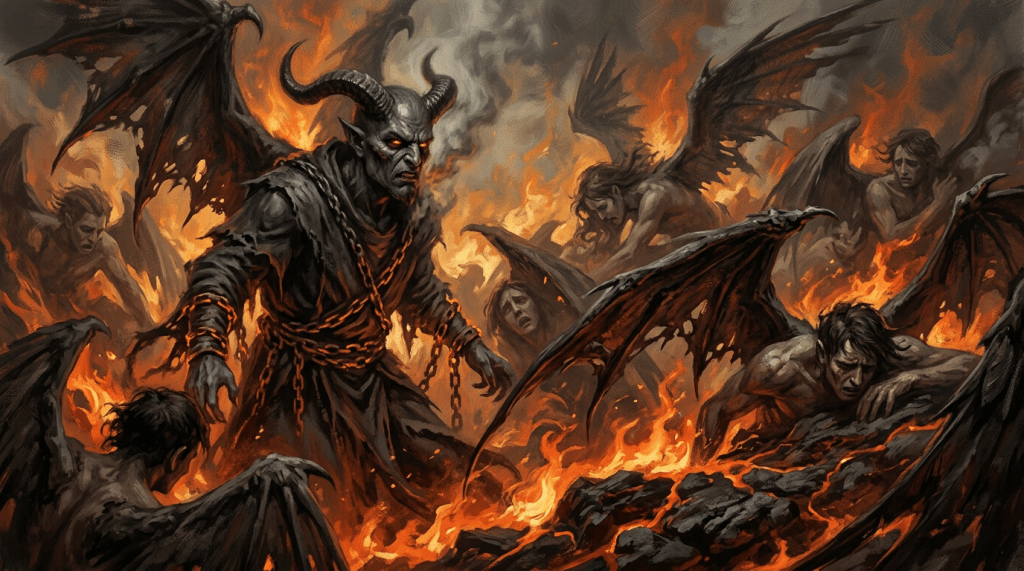
Mormonism is the most verbally Christian of the alternatives, which is why it is the most efficient. It speaks of Father, Son, and Holy Ghost, then teaches a Father who was once a man, a plurality of gods, a Christ who is not the Word who was God in the beginning, and a restored system of ordinances and extra books beside the apostolic gospel. That is precisely “another Jesus.” Atheism does not even pretend to come to the Father. It says in its heart there is no God, and then sometimes praises Jesus as a moral genius, as if the Son could be useful after the Father has been dismissed. Satanism is not a path to heaven with Christ. It is enlistment with the being the lake of fire was prepared for.
None of this requires contempt for the people inside those systems. The Bible’s charge is more severe than contempt. It is that light has come, and men have preferred darkness, or works, or the world, or another name. Sincerity does not convert a false way into a true one. The broad gate is wide enough for the devout and the cynical together. Many go in thereat.
The lake of fire is therefore not an argument against the gospel. It is what the gospel says happens when the gospel is refused. God sent not His Son into the world to condemn the world, but that the world through Him might be saved. The same chapter that announces everlasting life for whoever believes also announces that the unbeliever is condemned already. Those two sentences are not a contradiction. They are a door and the news that the door will not stay ignored forever.

There is one mediator. It says believe on the Lord Jesus Christ and thou shalt be saved. It says he that hath the Son hath life, and he that hath not the Son of God hath not life. The biblical way to hell is not a technique. It is the decision, made in a thousand respectable forms, to remain without the Son. The fire is everlasting. The book will be opened. The only question the text will not let us bury under taste or tradition is the one it keeps asking in the simplest English we have: Have you believed on the name of the only begotten Son of God—or have you found another way? The broad way of destruction.




Leave a Reply