

In the closing chapters of the Book of Daniel, a single passage has long unsettled readers who take the King James text at its word. Daniel 11:36-45 describes a willful king who exalts himself above every god, invades the glorious land, overthrows nations, seizes the treasures of Egypt, and finally plants his palace between the seas in the holy mountain—only to come to his end with none to help him.

For generations, interpreters looked to Europe or a revived Roman system. A careful, literal reading of the geography, the titles, and the sequence of events points instead to a different center of gravity: a leader rising from the Syrian sphere, operating within an Islamic framework, and empowered by the same Satanic possession that Scripture records in the case of Judas Iscariot.
The text begins with the character of the king himself. “And the king shall do according to his will; and he shall exalt himself, and magnify himself above every god, and shall speak marvellous things against the God of gods, and shall prosper till the indignation be accomplished” (Daniel 11:36). This is the man of sin, the son of perdition of 2 Thessalonians 2:3. The identical title is applied to Judas (John 17:12), into whom Satan entered (Luke 22:3; John 13:27).
The parallel is not incidental. The Antichrist’s coming is “after the working of Satan with all power and signs and lying wonders” (2 Thessalonians 2:9). Possession supplies the mechanism by which a human vessel can act solely according to an indwelling will, exalt himself above every god, and speak blasphemous things against the God of gods while prospering until the determined period ends.
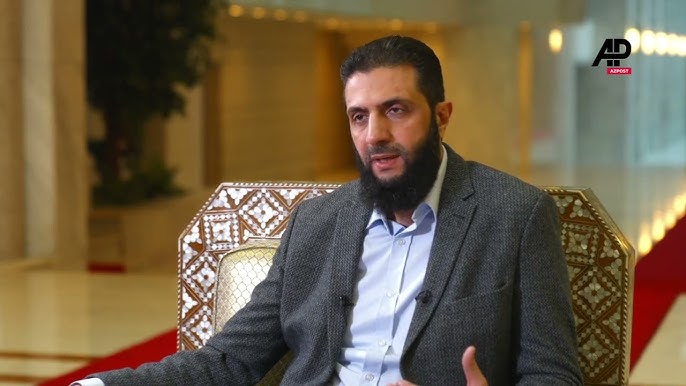
Verses 37-39 sharpen the religious profile. The king regards neither the God of his fathers nor any god; he magnifies himself above all. Yet in the next breath he honors “the God of forces” and “a god whom his fathers knew not,” placing this strange deity in the strongest fortresses, increasing its glory, and dividing the land for gain. Islam did not exist when the biblical canon closed. Its defined deity is, by chronological fact, unknown to any pre-Islamic ancestral line. Whether one accepts the further claim, advanced in some analyses, that this deity stands in opposition to the God of Abraham, Isaac, and Jacob, the textual requirement of a previously unknown god is met.
Possession enables the dual reality: the man magnifies himself while advancing the spirit that controls him, consistent with the worship given both to the dragon and the beast in Revelation 13:4.The military campaign that follows is geographically precise. “At the time of the end shall the king of the south push at him: and the king of the north shall come against him like a whirlwind” (Daniel 11:40). Throughout the chapter the king of the south is the power based in Egypt; the king of the north is the power based in Syria. Both nations today are Islamic strongholds—Egypt with a Muslim majority near 90 percent and Islam as the state religion; Syria with a Muslim majority of roughly 87 to 94 percent and a legal framework that privileges Islamic jurisprudence.
The northern king responds with overwhelming force, entering the countries, overflowing them, and passing over. He enters the glorious land—Israel—and many countries are overthrown. Yet Edom, Moab, and the chief of the children of Ammon escape. Those territories form the modern nation of Jordan. Egypt does not escape; its treasures of gold and silver are seized, and the Libyans and the Cushites (the more accurate referent of the King James “Ethiopians,” corresponding to modern Sudan) are at his steps.

The same campaign naturally encompasses additional territories already under or adjacent to Islamic control. Palestine—Gaza and the historic Philistine coastal plain—lies within or immediately beside the glorious land the king enters. When troubling tidings arrive “out of the east and out of the north” (verse 44), the king goes forth with great fury to destroy many. From his position in the southern theater those directions point to the Mesopotamian and Persian sphere (Iraq and Iran) and the Anatolian sphere (Turkey). These are the historic lands of the successive beasts of Daniel 7—Babylon, Medo-Persia, and the Seleucid expression of Greece—whose characteristics reappear in the composite beast of Revelation 13:2. The result is a coherent list of territories under the northern king’s control: Syria as his base, Egypt, Libya, Sudan, Iran, Iraq, Turkey, and Palestine. Jordan remains the explicit exception.
The final verse places the king’s headquarters “between the seas in the glorious holy mountain.” Between the Mediterranean and the Dead Sea, in the vicinity of Jerusalem, he plants the tabernacles of his palace. Then he comes to his end, and none helps him. The career ends as abruptly as it began, consistent with the broader biblical portrait of the beast’s destruction.
What the text does require—a self-exalting king from the northern (Syrian) sphere, rejection of the ancestral God, honor of a previously unknown deity, conquest of Egypt and the surrounding Islamic and adjacent lands, exemption of Jordan, action against eastern and northern powers, and a final stand in the holy mountain—aligns with the profile of a Satan-possessed leader operating inside an Islamic system.

The possession explains the boldness of the blasphemy and the demand for worship. The geography explains the theater. The chronological origin of Islam explains the “god whom his fathers knew not.”
Whether history will confirm this reading remains to be seen. The determined indignation will run its course. What a literal examination of Daniel 11:36-45 demonstrates is that the road map is already drawn.
An Islamic Antichrist, controlled by the Devil himself, can walk its entire length without forcing a single clause of the King James text. In a region where ancient titles still shape modern borders and where apocalyptic expectations continue to surface, that possibility is not a curiosity of interpretation. It is a sober observation drawn from the words themselves.


Leave a Reply