In an age that still debates the humanity of the child in the womb, one question presses with particular force upon those who claim the Bible as their final authority: What becomes of the babies who are killed before they ever draw breath, or who die in earliest infancy? The answer, drawn strictly from the plain wording of the Bible and not from man made systems of theology that came much later is clear and comforting.

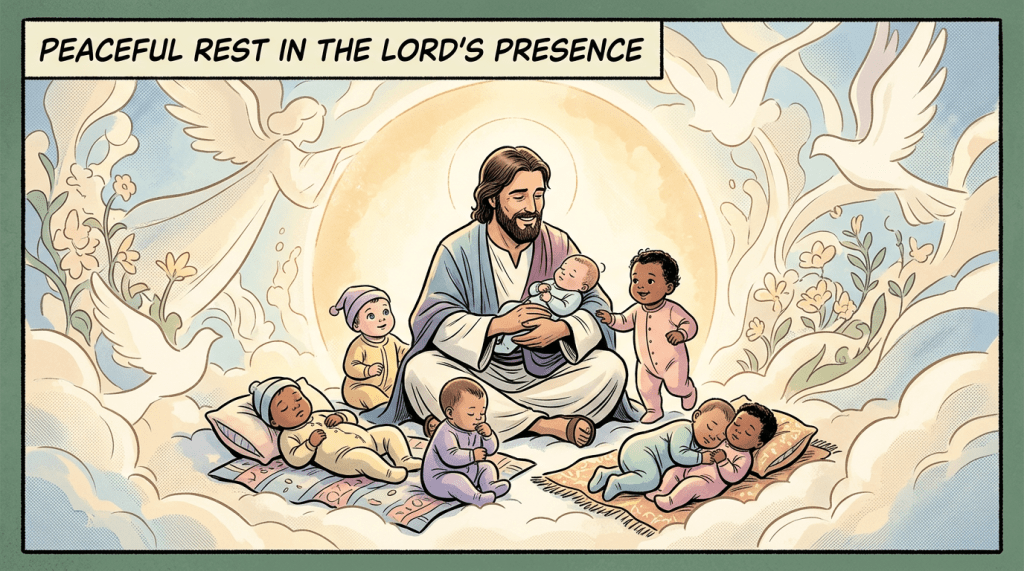
Their spirits return to God who gave them. They are received into His presence. Of such is the kingdom of heaven. They are eternally saved.
This is not sentiment. It is the consistent testimony of Scripture.
Abortion is not a private medical choice in biblical terms. It is the deliberate ending of a life formed by God in the womb. The numbers are staggering. Reliable global census figures do not exist because of underreporting. Estimates drawn from Guttmacher-WHO models and related compilations place annual induced abortions at roughly 50.4 million in 1990–94, 56 million in 2010–14, 73 million in 2015–19, and 73–75 million in recent years. The 1980s are estimated in the 40–50-plus million range annually. Cumulative totals from 1980 through the mid-2020s reach approximately 2.5–2.7 billion. In the United States the annual peak approached 1.4–1.6 million in the late 1980s and early 1990s.
Ecclesiastes 12:7 declares without qualification of age or circumstance: “Then shall the dust return to the earth as it was: and the spirit shall return unto God who gave it.” The murdered infant is not an exception. The spirit returns to its Maker. King David, after the death of his newborn son—a child who never lived outside the womb—spoke with settled confidence: “I shall go to him, but he shall not return to me” (2 Samuel 12:23). David expected reunion in the place where the righteous go, the presence of the Lord.
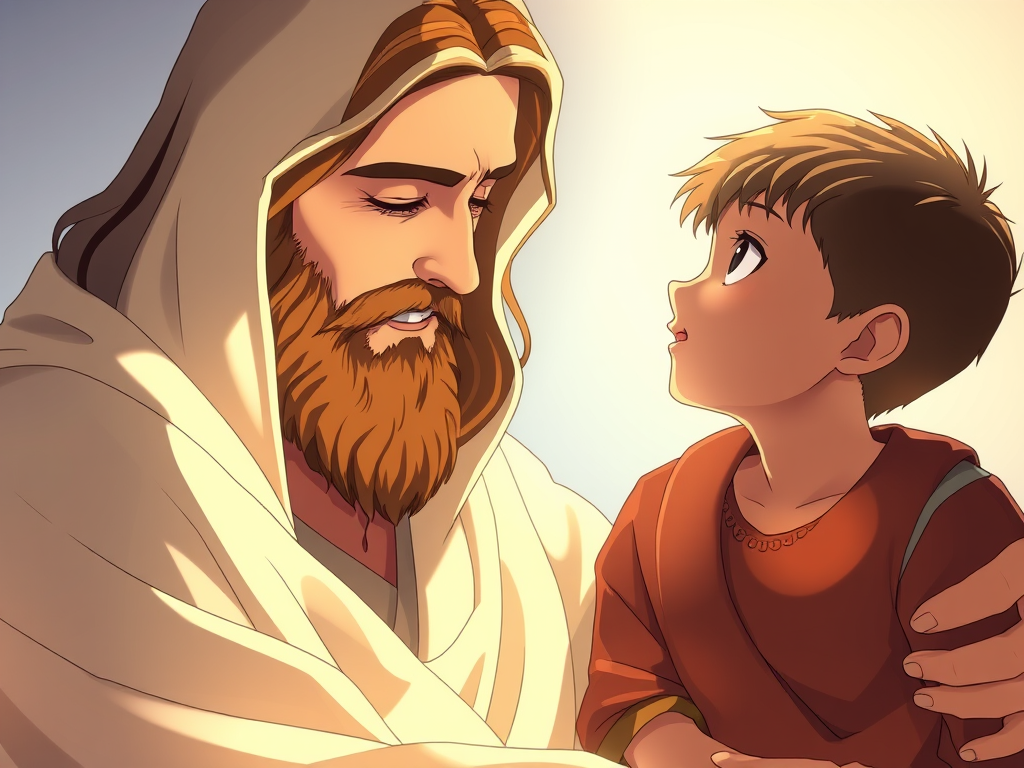
Jesus Himself settled the matter with words that admit no ambiguity: “Suffer little children, and forbid them not, to come unto me: for of such is the kingdom of heaven” (Matthew 19:14). Mark records the parallel: “of such is the kingdom of God” (Mark 10:14). He further taught that their angels “do always behold the face of my Father which is in heaven” (Matthew 18:10).
Nowhere does the text charge these little ones with personal rebellion or the rejection of light. Condemnation in Scripture is repeatedly linked to willful unbelief and the refusal of revealed truth (John 3:18-19; 12:48). An unborn or newborn child has neither. The universal consequence of Adam’s sin brings physical death (Romans 5:12), but the Bible never extends that consequence into personal guilt that consigns the infant to eternal separation from God. The spirit returns to God. The child belongs to the kingdom. David expected to join his son. Jesus welcomed such as these.
That is the biblical record. Against this plain testimony stand two long traditions that have clouded the hope of grieving parents and, in their harshest expressions, have portrayed the infant as already under wrath. The historic Catholic position, shaped decisively by Augustine of Hippo, taught that every child inherits both the guilt and corruption of Adam. Unbaptized infants, therefore, die in original sin alone and, according to the Council of Florence in 1439, “go down straightaway to hell to be punished, but with unequal pains.”
Augustine himself rejected any intermediate state of pure happiness and insisted that such children share in damnation, though of the mildest sort. Later theologians softened this into the theory of Limbo—a place of natural happiness without the Beatific Vision—but the underlying premise remained: without baptism, the infant is barred from the presence of God. Modern Catholic teaching has moved toward hope in divine mercy, yet the historical trajectory from Augustine through Florence explicitly allowed, and for centuries affirmed, the possibility of infants in hell or at least permanently excluded from heaven.
The Calvinist tradition inherited the same Augustinian starting point and adapted it through the lens of unconditional election. Total depravity means the child is born spiritually dead, under wrath, inclined only to evil. John Calvin insisted that infants are “infected with the contagion of sin” and “soiled and spotted in God’s sight.” The Westminster Confession of Faith, still the standard for many Reformed churches, states that “elect infants, dying in infancy, are regenerated, and saved by Christ through the Spirit.”
By limiting salvation to the elect, the Confession leaves open the category of the non-elect. In a system where reprobation is eternal, the logical possibility remains that some infants who die are under eternal condemnation. Some later writers made the implication explicit; others preferred silence. The premise, however, is unchanged: the infant is already guilty by virtue of Adam’s sin alone and requires a secret decree of election to escape wrath.

This doctrine has produced language that should shock any reader of the Gospels. Voddie Baucham, a prominent Reformed voice, has declared from the pulpit: “People who don’t believe in original sin don’t have children… I’ve said it before and I’ll say it again. It’s not a little angel. That’s a viper in a diaper. The angry cry happens early. The demanding cry happens early. The stiffening up of the body, that happens early. It’s so cute. Oh, that ain’t cute. One of the reasons God makes them so small is so that they won’t kill you. And one of the reasons He makes them so cute is so that you won’t kill them.”
The infant’s ordinary cries and resistance are treated as evidence of a murderous nature that must be restrained like a criminal or a venomous snake.
Paul Washer has pressed the same logic further with a vivid hypothetical.

“Imagine an 18-month-old reaching for a watch on a father’s wrist. The child is told “No,” cries, reaches again, screams, and flails. Washer concludes: “I submit to you that if that 18-month-old baby had the strength of an 18-year-old man, he would slaughter you there where you stand, father, rip the watch off your arm and walk across your bloody body, out the door without feeling an ounce of remorse.”
The infant is presented not as a living soul formed by God and belonging to the kingdom, but as already possessing the full disposition of a remorseless murderer, restrained only by physical weakness.
These statements are not accidental excesses. They are the practical outworking of a doctrine that begins with inherited guilt and ends by treating the nursery as a place of potential reprobates. Jesus reserved the language of “vipers” for the religious hypocrites of His day, not for the little children He took in His arms. He never speculated that a toddler would slaughter its parent if only it were stronger.

He said the kingdom of heaven belongs to such as these. The rhetoric of “vipers in diapers” and murderous infants is a perversion of the biblical teaching on human fallenness. It takes the real consequence of Adam’s sin—physical death and a world under the curse—and extends it into personal condemnation of those who have never themselves sinned after the similitude of Adam’s transgression.
The Bible does not require us to choose between acknowledging the Fall and affirming the salvation of infants who die. It does both. Death has passed upon all men. The spirit of the child returns to God. Of such is the kingdom. David will go to his son. The angels of these little ones behold the Father’s face. No system of original sin, however carefully reasoned, may override these words.
No decree of election or requirement of baptism may insert conditions the text itself never supplies. For the mother who has lost a child to abortion, miscarriage, or early death, the comfort is not found in speculative hope or the quiet of Limbo. It is found in the explicit testimony of Scripture. The child is with the Lord. The spirit has returned to God who gave it.
The kingdom of heaven includes such as these. That is the truth the Bible states. Every contrary tradition, however ancient or influential, must yield to it.



Leave a Reply