
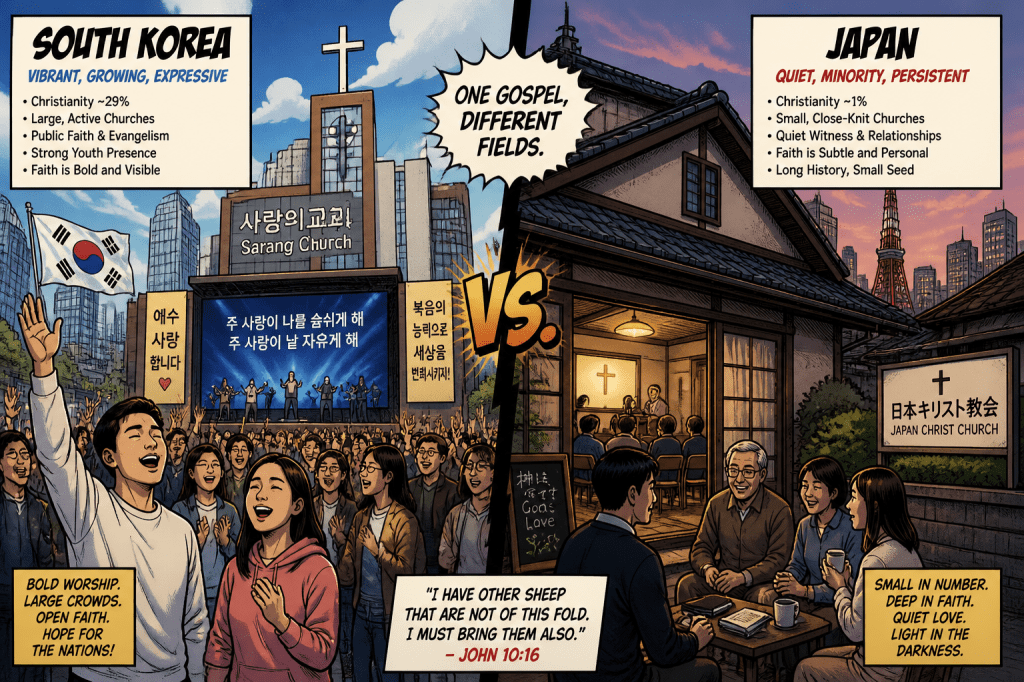
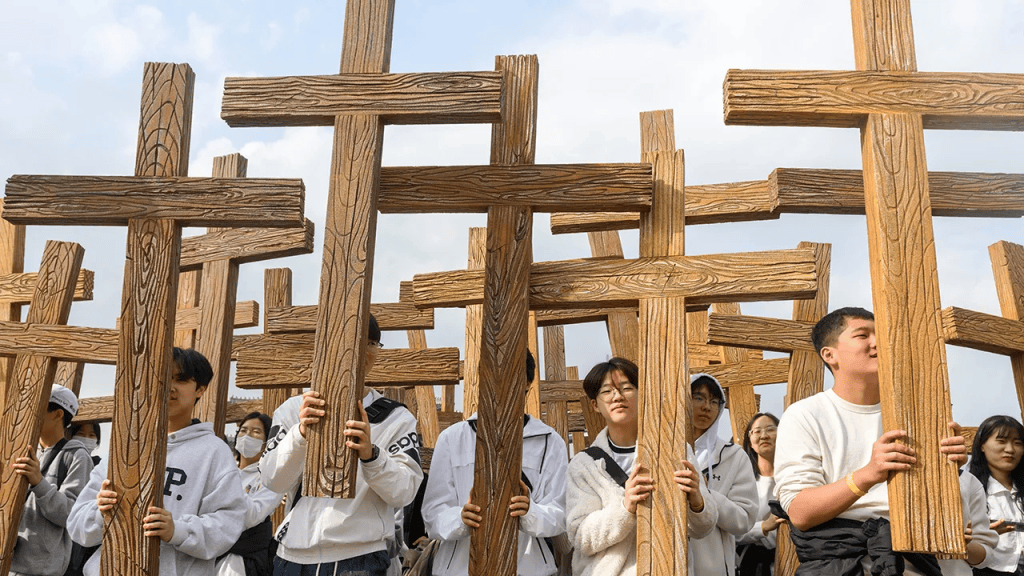
Across South Korea, Protestant megachurches and smaller congregations draw millions. Christianity here is not a quiet private faith; it is woven into the fabric of modern South Korean life—its universities, hospitals, political debates, and global outreach.
A short flight away in Tokyo, the picture is starkly different. Christian churches exist, often tucked into quiet residential streets or near university campuses, but they remain small and sparsely attended.
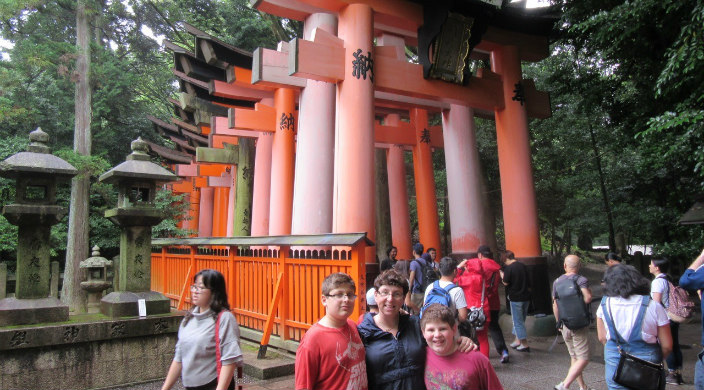
Japan’s Christian population hovers around 1 to 2 percent of the total, with evangelical believers forming an even smaller fraction. Shinto shrines and Buddhist temples dominate the religious landscape, while most Japanese identify as nonreligious in daily practice even as they participate in traditional rituals.
The contrast between South Korea and Japan—two of Asia’s most advanced, U.S.-allied democracies with intertwined histories—raises a question that has long puzzled scholars of religion: Why has Christianity flourished so dramatically in one country and remained marginal in the other?
A Numbers Gap That Defines the Divide
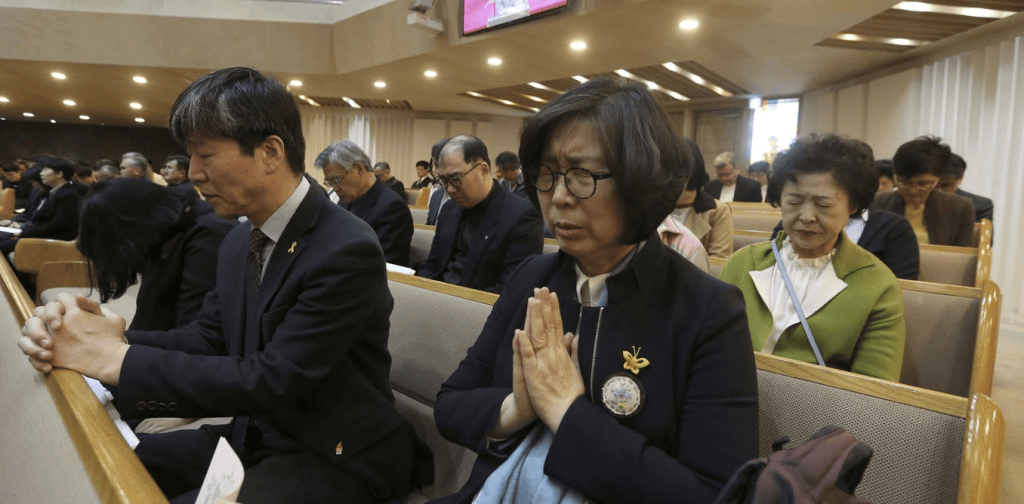
South Korea’s Christian population stands at roughly 31 percent, according to recent surveys. Protestants make up about 20 percent and Catholics around 11 percent, while roughly half the population claims no religion and Buddhists account for about 16 percent.
Estimates of committed, born-again evangelical believers—those emphasizing personal faith in Christ alone—range from 8 to 10 million in a country of approximately 51.6 million people. Protestantism in South Korea is heavily evangelical in character, shaped by Presbyterian, Pentecostal, and other traditions that stress conversion, Bible-centered teaching, and active faith.
Japan presents the opposite extreme. Christians number between 1 and 2 percent of a population of roughly 122 million. Evangelicals are estimated at around 0.4 percent, or roughly 400,000 to 600,000 people. The faith remains a small minority tradition, with limited cultural influence.
These figures alone do not fully explain the divergence. South Korea’s Christian growth is relatively recent and explosive. Protestantism arrived in force in the late 19th century and expanded rapidly after the Korean War and liberation from Japanese colonial rule. Missionaries founded schools, universities, and hospitals that became engines of modernization.

Christianity became associated with education, democracy, anti-communism, and upward mobility. Many of the country’s leading academic institutions trace their origins to Christian foundations. By contrast, Japan encountered Christianity earlier—through Jesuit missionaries in the 16th century—only to suppress it harshly for centuries.
When Protestant missions returned in the mid-19th century after the country’s opening, the faith never achieved mass appeal. Traditional religions, state Shinto in earlier eras, and a strong cultural emphasis on social harmony and group conformity limited conversion.
Missions as a Mirror of Vitality
Perhaps nowhere is the difference clearer than in missionary sending. South Korea has become one of the world’s leading exporters of Christian missionaries. Recent data from the Korea World Missions Association and the Korea Research Institute for Mission show approximately 21,000 to 22,000 long-term Korean missionaries serving in more than 170 countries.
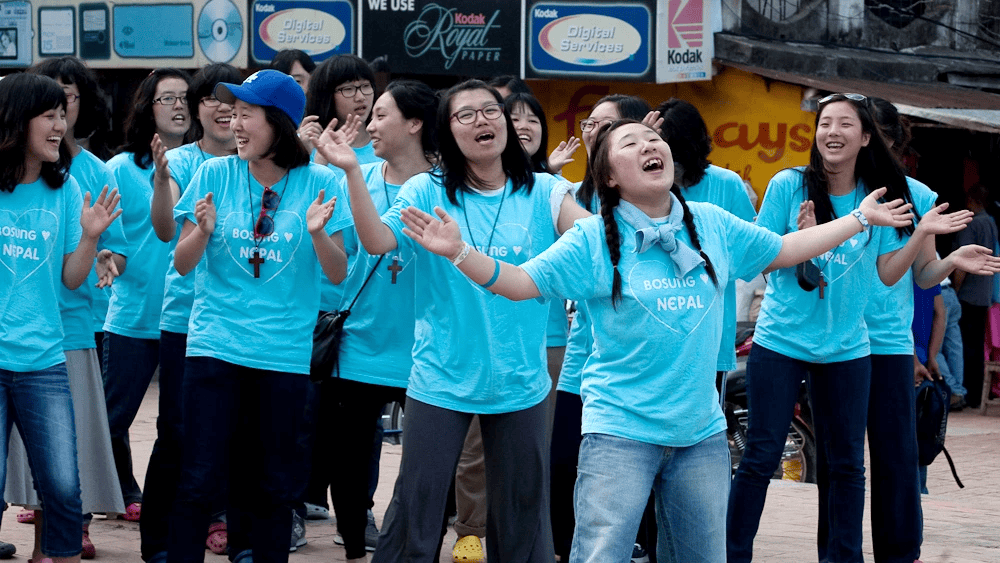
The number peaked higher before a modest post-pandemic decline, yet South Korea consistently ranks near the top globally, often second only to the United States. Korean churches, including some of the world’s largest megachurches, treat overseas mission as a central calling. Missionaries from South Korea work across Asia, Africa, Latin America, and even in Western countries.
Japan sends a tiny fraction of that number—likely only a few hundred missionaries at most. With such a small domestic Christian base, the Japanese church has limited capacity for overseas work. Instead, Japan remains a significant receiving field. Hundreds of foreign missionaries, including more than a thousand from South Korea in recent tallies, continue to serve there.
The flow of Korean missionaries into Japan itself underscores the asymmetry: one country’s vibrant evangelical movement actively seeks to reach the other.
Culture, Morality, and Public Life
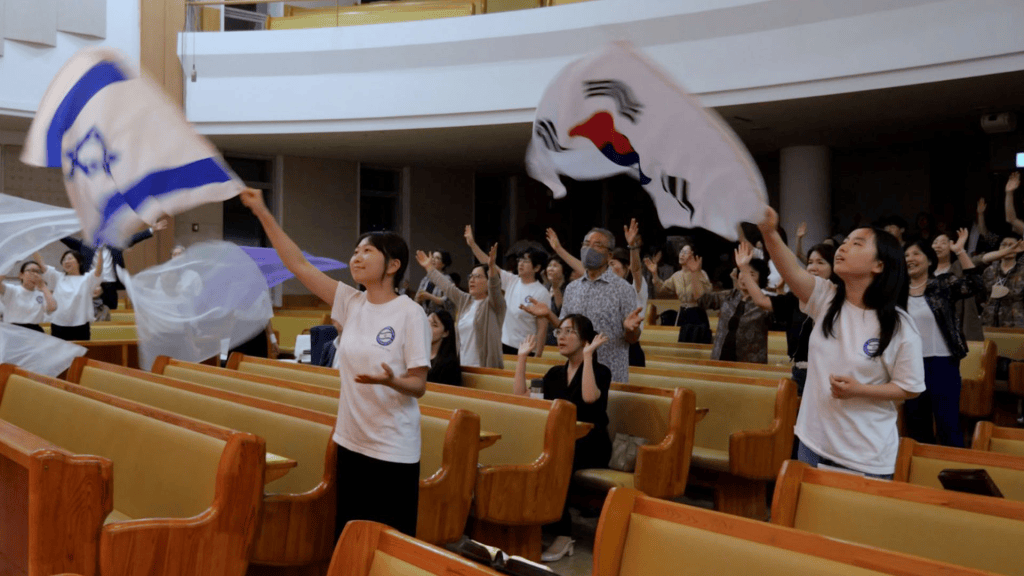
Beyond raw numbers, the two societies differ in how Christianity intersects with public values and daily life. In South Korea, Christian influence appears in higher education, civil society, and certain moral debates. Surveys have shown South Koreans holding more conservative views on issues such as homosexuality compared with Japan; one analysis found 56 percent of South Koreans viewing homosexuality as morally unacceptable versus 21 percent in Japan.
Support for same-sex marriage has also lagged in South Korea relative to more accepting attitudes in Japan. Family structures and work ethics in South Korea have at times been linked by observers and believers themselves to Protestant influences, including a strong emphasis on discipline and education.
Japan’s religious environment is marked by syncretism and secular pragmatism. Shinto and Buddhist practices remain culturally embedded—shrines, festivals, ancestor veneration—while formal religious affiliation is low. Christianity has never displaced these traditions. Public opinion and policy on social issues tend to be shaped more by postwar secular liberalism and demographic pressures than by Christian teaching.
Both countries maintain carefully calibrated foreign policies toward the Middle East. As U.S. allies dependent on regional energy supplies, South Korea and Japan officially support a two-state solution to the Israeli-Palestinian conflict. Both have condemned Hamas attacks while calling for humanitarian access and restraint in Gaza. South Korea has developed particularly close economic, technological, and defense ties with Israel, culminating in a free-trade agreement.
Yet public opinion in South Korea has grown more critical of Israel in recent years, and under President Lee Jae-myung the government issued unusually sharp comments on alleged Israeli actions, drawing Israeli protests. Japan has generally maintained a more measured diplomatic tone, providing substantial historical aid to Palestinians while avoiding the sharper rhetorical confrontations seen in Seoul. Neither country offers unconditional political support for Israel, reflecting energy security concerns and multilateral instincts.
Historical Roots and Economic Shadows
Scholars point to several interlocking factors. Korea’s experience of Japanese colonialism, war, and national division created openings for a faith that offered education, community, and an alternative source of meaning. Christianity arrived as a modernizing force tied to Western knowledge and later to democratic aspirations. Japan’s earlier, more self-confident modernization under the Meiji Restoration, combined with the suppression of Christianity and the resilience of indigenous religious practices, produced a different outcome. Missionaries in Japan often found a society less receptive to exclusive monotheistic claims.

Economic narratives also diverge. South Korea’s rapid postwar industrialization—the “Miracle on the Han River”—has been credited by some Christian leaders and certain academic studies with Protestant work ethics, high levels of belief, and the institutional infrastructure built by churches. Japan achieved its own economic transformation earlier and without comparable Christian influence, drawing instead on indigenous social discipline, state guidance, and technology transfer.
Today both nations face demographic decline, aging populations, and rising secularism. South Korean churches confront scandals, generational disaffiliation, and questions about sustainability even as they continue to send missionaries. Japanese churches struggle with low growth and the challenge of cultural distance. Yet the scale of difference remains striking: one society hosts a dynamic, globally engaged Christian movement that shapes millions of lives and projects influence abroad; the other treats Christianity as a peripheral minority faith.
A Living Contrast
Walking through Seoul’s church-dense neighborhoods or Tokyo’s quieter Christian pockets, the contrast feels almost tangible. In South Korea, Christianity is a mass phenomenon with political, educational, and missionary muscle. In Japan, it is a quiet presence that has never broken through to the cultural mainstream. The reasons lie in history, culture, timing, and the unpredictable ways societies respond to new ideas. For scholars of global religion, the two countries offer a controlled experiment in how the same faith can take root—or fail to take root—in neighboring, economically advanced East Asian societies.
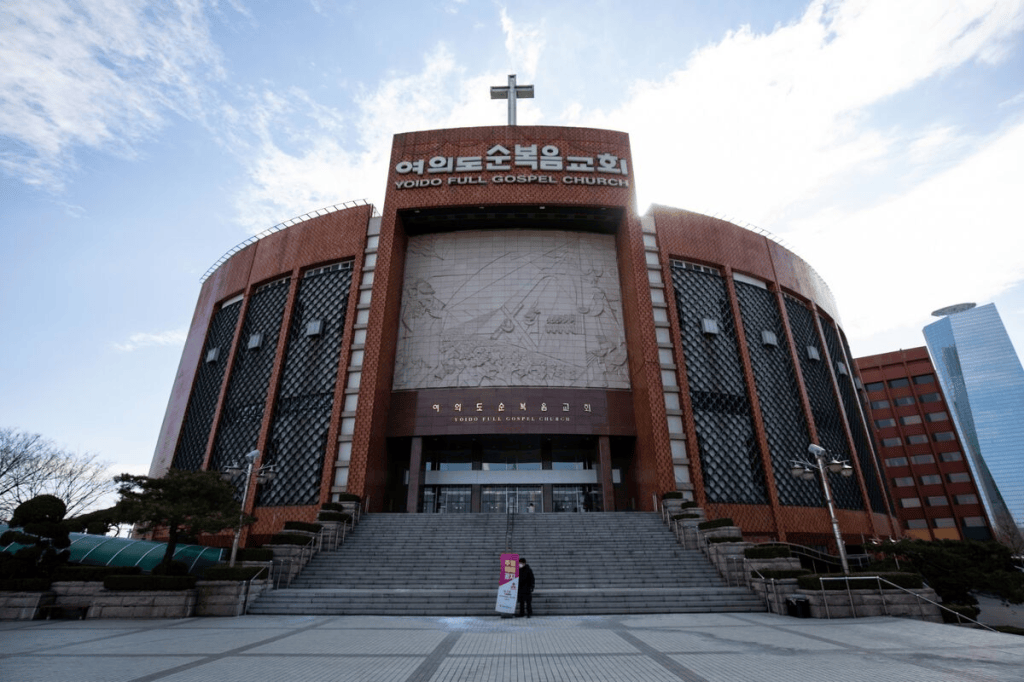
As both nations navigate an uncertain century, their Christian communities will continue to evolve. South Korea’s large evangelical base and missionary apparatus ensure that its version of the faith will remain visible on the world stage. Japan’s smaller churches will likely persist as a dedicated minority. The gap between them, forged over more than a century, shows little sign of closing.






Leave a Reply