
In the labyrinthine alleys of this ancient capital, where the ghosts of Seleucid kings mingle with the echoes of Umayyad caliphs, a new chapter unfolds.

Just over a year after the lightning fall of Bashar al-Assad’s regime in late 2024, Syria’s interim president, Ahmed al-Sharaa, has emerged as a pragmatic force, forging alliances that span the fractious Middle East. From White House meetings with President Donald Trump to debt settlements with Qatar and border pacts with Egypt, al-Sharaa’s Syria is knitting together a coalition amid ongoing chaos — Israeli airstrikes, Kurdish insurgencies, and the specter of Iranian proxies.
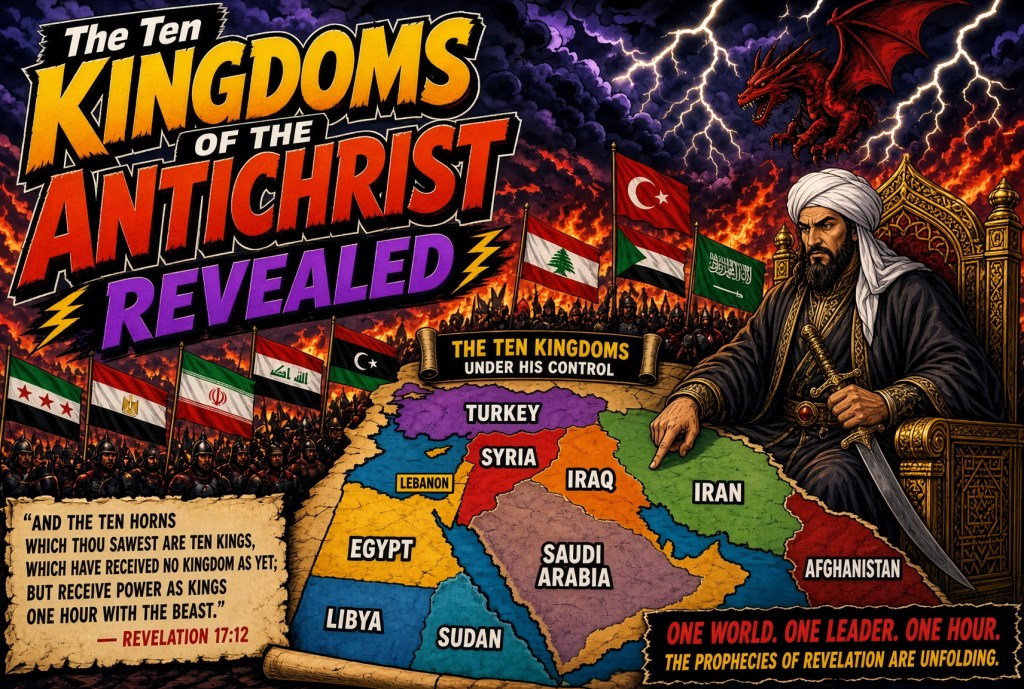
Yet for those versed in ancient texts, this diplomatic resurgence evokes a chilling resonance: the biblical “ten kings” of Revelation, a confederacy empowering the Antichrist in the end times.
A literal reading of the Bible reveals these ten as kingdoms or nations yielding power to a blasphemous ruler (Revelation 17:12–13), symbolized as iron-and-clay toes in Daniel’s statue (Daniel 2:41–42) and horns on a beast (Daniel 7:7–8, 24). This bloc, centered on the “king of the north” — a Syrian-based tyrant exalting himself “above every god” (Daniel 11:36) and invading Israel (v. 41) — wages war on God’s people during the seven-year tribulation (Daniel 9:27; Matthew 24:15–21).
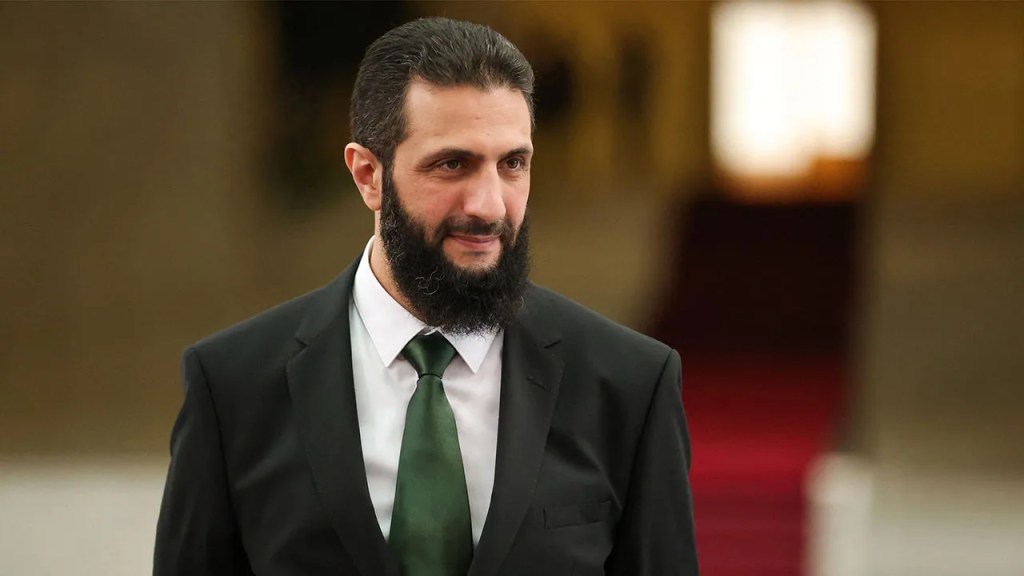
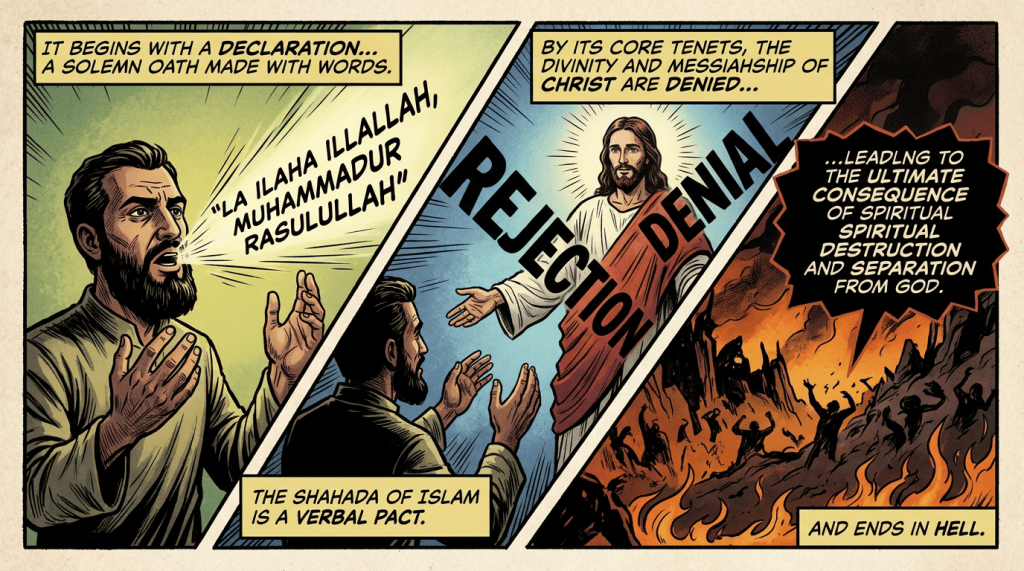
Islamic eschatology, through the Quran and hadiths, mirrors this with the Mahdi: a messianic figure rising amid turmoil to unite a global caliphate, enforcing Sharia for 7–9 years (Sunan Abi Dawud 4284–4286) alongside Isa (the false Jesus) against the Dajjal (the true Christ).
The ten kingdoms? Syria, Iraq, Turkey, Iran, Egypt, Libya, Sudan, Lebanon, Afghanistan, and Saudi Arabia. Each, through prophecy and hadith, aligns as a vassal in this final empire, their modern alignments whispering of convergence.

Syria: The Northern Throne (99% Likelihood)
Syria is the Antichrist’s central kingdom, embodying Aram-Damascus—the explicit base of the “king of the north” in Daniel 11:36-45. This blasphemous ruler exalts himself “above every god” (v. 36), honors a “god of forces” (v. 38), invades the “glorious land” (Israel, v. 41), and plants his “palace between the seas in the glorious holy mountain” (Jerusalem’s Temple Mount, v. 45). Syria’s destruction precedes his rise: Damascus becomes a “ruinous heap” (Isaiah 17:1), its gates broken (Amos 1:3-5), fire consuming palaces (Jeremiah 49:23-27), and burden falling on Damascus/Hamath (Zechariah 9:1-2)—tribulation judgments creating a vacuum for Antichrist revival (Revelation 13:3 healed wound).
As the Seleucid heartland (Daniel 11:21-35), Syria revives Antiochus IV’s abomination type. In the 10-toe empire (Daniel 2:41-42), Syria is the “head” or unifying iron, anchoring the divided confederacy (Daniel 7:24 ten kings). Islamic eschatology crowns Syria as the Mahdi’s capital: after defeating the Sufyani (Damascus tyrant), he receives bay’ah in Mecca but rules from Damascus/Jerusalem (Sunan Abu Dawud 4282, graded sahih; Nuaym ibn Hammad). Isa prays behind him in Damascus (Sahih Muslim 2937a), enforcing the caliphate.
HTS’s 2024-2025 conquests—capturing Damascus, dissolving into state institutions (January 2025), and international recognition (UN address September)—mirror this rise from ruins. Syria’s role as northern throne makes it the beast’s epicenter (Revelation 13:2 dragon empowers beast). As the primary toe, Syria unifies the bloc, launching the invasion of Israel (Daniel 11:41). The convergence of biblical northern king and Islamic Mahdi throne is unparalleled. Likelihood: 99%.

Iraq: The Assyrian Ally (90% Likelihood)
Iraq serves as a kingdom in the Antichrist’s coalition through its Assyrian heritage, called “the Assyrian” invader in Micah 5:5-6 during Israel’s tribulation distress. Psalm 83:8 includes “Assur” (Assyria, encompassing Iraq and northern Syria) aiding enemies against Israel, while revived Babylon faces judgment amid Mystery Babylon’s fall (Revelation 17-18 Roman Catholic system, separate from political beast). Iraq ties to the divided Roman empire’s eastern clay (Daniel 2:41-42), providing fractured strength to the Antichrist’s 10 kings (Daniel 7:24; Revelation 17:12-13).
Islamic hadiths position Iraq as the Mahdi’s primary stronghold after Khorasan: black-flag armies from the east (Iran) sweep through Baghdad and Kufa, establishing caliphate bases (Sunan Ibn Majah 4084, graded sahih; Nuaym ibn Hammad’s Kitab al-Fitan). The Mahdi’s forces conquer Iraq early, using its cities as launching pads for Syrian and western campaigns.
Biblically, Iraq’s eastern location links to “tidings out of the east” troubling the northern king (Daniel 11:44). As a toe, Iraq supplies manpower from its diverse populations and oil wealth, strengthening the Antichrist’s “god of forces” (Daniel 11:38 military focus). Recent HTS-Iraq debt settlements and shared anti-ISIS operations (2025) foreshadow integration under the Syrian Antichrist. Iraq’s role in the revived eastern Roman remnant—Assyrian aggression against Israel—makes it essential, distinct from Mystery Babylon’s religious harlotry. The Assyrian/Mahdi core alignment positions Iraq as a fractured yet vital toe. Likelihood: 90%.
.

Turkey: The Roman Vanguard (97% Likelihood)
Turkey represents one of the ten kingdoms in the Antichrist’s confederacy through its historical and prophetic identification with the eastern remnants of the divided Roman empire (Daniel 2:41-42 iron/clay toes, symbolizing West and East Rome’s fractured legacy). While Ezekiel 38-39’s Gog-Magog war occurs at the millennium’s end (Revelation 20:7-9, post-1000 years), Turkey’s Byzantine “Roman” heritage positions it as a revived eastern power under the Antichrist (king of the north, Daniel 11:36-45), contributing to the 10 kings who give power to the beast (Daniel 7:24; Revelation 17:12-13, distinct from Mystery Babylon/Rome in Revelation 17-18).
In Islamic eschatology, Turkey is explicitly the “Romans” or Byzantines, the primary adversary in the Malhamah al-Kubra—the greatest battle before the Dajjal’s appearance (Sahih Muslim 2897). Hadiths prophesy Constantinople’s second conquest by Muslim forces under the Mahdi (Musnad Ahmad 22899, graded hasan), integrating Turkey into his caliphate after fierce resistance. The Mahdi’s black-flag armies, having swept from Khorasan through Syria, clash with Roman (Turkish) forces in this apocalyptic war, ultimately subduing them. This perfectly inverts the biblical narrative: the Mahdi (Antichrist) defeats and absorbs the “Romans” into his 10-king bloc, fulfilling Revelation 13:7’s dominion over “all kindreds, tongues, and nations.”
Turkey’s modern trajectory amplifies this: its neo-Ottoman ambitions under leaders like Erdogan, military interventions in Syria (2025 buffer-zone expansions), and pragmatic alliances with HTS (defense pacts as of November 2025) position it as a northern power yielding to a Syrian-led Mahdi figure. As one of the toes, Turkey provides the Antichrist’s coalition with advanced military technology and strategic depth against Israel (Ezekiel 38:4-6), while its eventual submission mirrors the kings giving power to the beast for “one hour” (Revelation 17:12-13). The convergence of Ezekiel’s northern invaders and Islamic “Roman” wars makes Turkey indispensable to the end-times scenario. Likelihood: 97%.

Iran: The Eastern Troubler (99% Likelihood)
Iran, biblical Persia, troubles then submits. Daniel 11:44’s “tidings out of the east” provoke the northern king’s fury. Jeremiah 49:34–39 breaks Elam’s bow, scattering its people in tribulation winds. Hadiths launch the Mahdi from Khorasan (eastern Iran, Sahih Muslim 2897), black flags unstoppable until Jerusalem (Ibn Majah 4084). Iran’s 2025 proxy tensions with Syria (Washington Institute) and al-Sharaa’s Putin alignment (October) foreshadow absorption. Iran is ancient Persia/Elam and the source of troubling “tidings out of the east” (Daniel 11:44; Jeremiah 49:34-39 bow broken).
As eastern powerhouse, Iran supplies the northern coalition’s manpower (Ezekiel 38:4-6). In the 10-toe empire (Daniel 2:41-42). Islamic hadiths make Iran the Mahdi’s launchpad: black-flag armies from Khorasan (eastern Iran/Afghanistan) initiate his revolution (Sahih Muslim 2897; Sunan Ibn Majah 4084, graded sahih). Iran provides the eastern vanguard sweeping through Iraq to Syria. This fits Antichrist’s eastern troubles then absorption (Daniel 11:44).
Iran’s role secures the Antichrist’s eastern flank, providing revolutionary zeal and oil for the beast’s wars (Revelation 13:7). 2025 HTS-Iran proxy tensions and potential realignment echo eastern tidings yielding power. As a toe, Iran drives the bloc’s origin and momentum. Likelihood: 99%.

Egypt: The Southern Subjugate (90% Likelihood)
Egypt serves as a subdued southern kingdom in the Antichrist’s confederacy, explicitly the “king of the south” who “pushes” at the northern king but is overwhelmed (Daniel 11:40-42). The Antichrist dominates Egypt’s treasures (v. 43), integrating it into the revived Roman empire’s clay toes (Daniel 2:41-42). Hagarenes (possibly Egypt-linked through Hagar/Ishmael) conspire in Psalm 83:6; Egypt faces tribulation desolation (Isaiah 19:1-17; Ezekiel 29-30 Nile dried, princes broken), distinct from Mystery Babylon’s fall (Revelation 17-18).
In Islamic eschatology, Egypt is conquered by Mahdi armies post-Syria, either peacefully or through force after the Sufyani’s failed invasion (Nuaym ibn Hammad’s Kitab al-Fitan; al-Hakim al-Mustadrak). The Mahdi’s forces take Cairo, establishing control over the south before western expansions. Hadiths describe Egypt submitting to the caliphate, its resources funding the Mahdi’s rule (paralleling Daniel 11:43 gold/silver).
Egypt’s role as southern antagonist-turned-vassal fits the Antichrist’s whirlwind conquest (Daniel 11:40), with its ancient enmity against Israel (Exodus legacy) fueling Psalm 83’s inner-ring war. As a toe, Egypt provides population, agriculture (Nile), and strategic depth, strengthening the beast’s dominion (Revelation 13:7). Recent al-Sharaa-Cairo pacts (2025 border security, economic integration via Saudi mediation) foreshadow this submission. The biblical southern king’s defeat and Islamic Mahdi conquest converge, making Egypt a critical but broken toe in the divided empire. Likelihood: 90%.

Libya: The Western Vassal (94% Likelihood)
Libya, biblical Put, trails at the Antichrist’s “steps” (Daniel 11:43), with Ethiopians (Sudan). Jeremiah 46:9 pairs Libyans with shields in the northern chariot rage. Hadiths extend Mahdi’s western wing to Libya/Maghreb (al-Hakim al-Mustadrak 8671). Libya’s 2025 debt talks with Syria (Reuters, April) and UN channels position it as a toe.
Libya embodies ancient Put, explicitly allied with the northern invaders in Ezekiel 38:5 (“Persia, Ethiopia, and Libya with them”) and marching “at his steps” under the Antichrist (Daniel 11:43). As a western North African power, Libya supplies shield-bearing warriors to the Gog-Magog coalition mid-tribulation (Ezekiel 38:4-6), strengthening the beast’s empire. In the 10-toe structure (Daniel 2:41-42).
Islamic hadiths include Libya in the Mahdi’s Maghreb conquests, with western armies reaching Libya post-Egypt/Sudan (Nuaym ibn Hammad; al-Hakim al-Mustadrak 8671). Libya submits to the caliphate, its resources integrated. This western extension fits the Antichrist’s global dominion (Revelation 13:7).
Libya’s role provides manpower and Mediterranean access for the beast’s campaigns against Israel and saints. Post-2011 chaos and 2025 HTS-linked talks (UN channels, debt settlements) echo vassal integration. As a toe, Libya extends the Antichrist’s reach westward, fulfilling Put’s biblical alliance. Likelihood: 94%.

Sudan: The Cushite Step (93% Likelihood)
Sudan, biblical Cush, follows at the northern king’s steps (Daniel 11:43; Ezekiel 30:5). Isaiah 20:4 prophesies Cush’s captives led by Assyria (Syria/Iraq).Hadiths conquer “the land of Cush” post-Egypt (Sunan al-Tirmidhi 2230, sahih). Sudan’s 2025 war (RSF gold control) and Riyadh mediation (October) tie it to the bloc. Sudan represents ancient Cush (Ethiopia), explicitly marching with Persia and Libya in Ezekiel 38:5 (“Persia, Ethiopia [Cush], and Libya with them”) and following “at his steps” under the Antichrist (Daniel 11:43).
As a southern power, Sudan supplies warriors and treasure to the northern-led coalition (Jeremiah 46:9; Isaiah 20:4 captives). In the 10-toe empire (Daniel 2:41-42), Sudan’s Nile gold and manpower form “iron” strength amid “clay” tribal divisions.
Islamic hadiths name the “land of Cush” as conquered by Mahdi armies post-Egypt (Sunan al-Tirmidhi 2230, graded sahih; Nuaym ibn Hammad). Sudan integrates into the caliphate, its resources funding expansion. Dabbat al-Ard’s Nile ties (Sahih Muslim 2901) position Sudan as a southern eschatological hub.
Sudan’s role secures the Antichrist’s southern flank, providing manpower for invasion of Israel (Daniel 11:41-42). 2025 civil war (RSF gold control, 10M displaced) and potential HTS mediation fit vassal turmoil yielding to the northern king. As a toe, Sudan extends the beast’s reach southward, fulfilling Cush’s biblical alliance and Mahdi conquests. Likelihood: 93%.

Lebanon: The Levantine Flank (92% Likelihood)
Lebanon, biblical Tyre/Sidon/Gebal, conspires in Psalm 83:7 and falls in Zechariah 9:3–4. The northern sweep consumes it (Amos 1:9–10). Greater Sham includes Lebanon (Kitab al-Fitan). Hezbollah’s weakening (2024) and refugee returns (January 2025) integrate it under Damascus.
Lebanon represents a northern-adjacent kingdom through ancient Tyre, Sidon, and Gebal (Byblos), explicitly conspiring against Israel in Psalm 83:7 (“Tyre” and “Gebal”) and judged alongside Syria (Zechariah 9:2-4 Tyre/Hamath burden). As part of greater Sham (Syria-Lebanon-Palestine region), Lebanon falls under the northern king’s dominion during his southward sweep (Daniel 11:40). Tribulation fire consumes Tyre’s palaces (Joel 3:4-8; Isaiah 23), symbolizing judgment on coastal strongholds.
In the 10-toe empire (Daniel 2:41-42), Lebanon’s historical Phoenician “iron” (maritime trade, cedar strength) mixes with modern “clay” fragility (sectarian divisions). Islamic hadiths include Lebanon in Sham’s submission to the Mahdi (Nuaym ibn Hammad’s Kitab al-Fitan), with Beirut and coastal cities integrated into the caliphate as part of the northern conquests post-Sufyani defeat.
Lebanon’s proximity to Syria positions it as an early acquisition in the Antichrist’s expansion, providing strategic Mediterranean ports for the beast’s global reach (Revelation 13:7). Hezbollah’s 2024 weakening and subsequent HTS border negotiations (2025) echo this absorption. As a toe, Lebanon contributes naval/logistical assets and sectarian troops to the Antichrist’s forces warring against saints (Revelation 13:7). The biblical judgment on Tyre/Sidon and Islamic Sham unity make Lebanon a natural northern extension of the Syrian-led bloc. Likelihood: 92%.
Afghanistan: The Land Of The Black Flags (75% Likelihood)
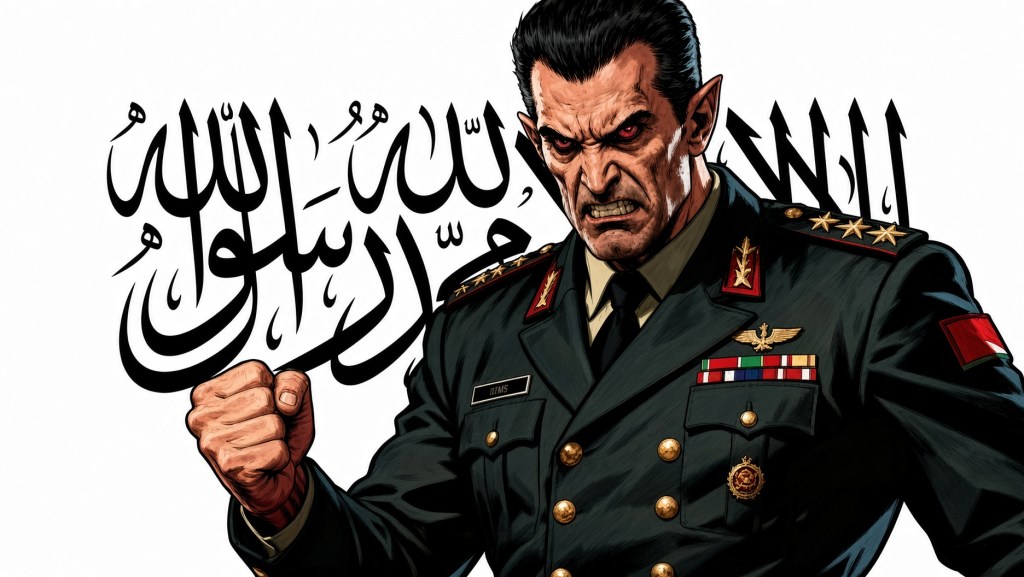
Biblically, Daniel 11:44 states that “tidings out of the east and out of the north shall trouble him: therefore he shall go forth with great fury to destroy, and utterly to make away many.” These reports come from beyond the core northern (Syrian-centered) domain of the willful king.
Afghanistan lies east of the primary Middle Eastern theater and, as a former eastern satrapy of the Seleucid Empire (the historical King of the North), supplies a concrete geographic referent for the “east” that alarms the final northern king and prompts his last, furious campaign before he plants his palace “between the seas in the glorious holy mountain” (Daniel 11:45). Revelation 16:12 further speaks of “the kings of the east” whose way is prepared by the drying of the Euphrates; Afghanistan’s position on the historic eastern approaches to Mesopotamia and the Levant fits this broader eastern mobilization without violating the exemptions already applied to Jordan (Daniel 11:41) or the boundaries of Zechariah 9.
In the world of Islam, the most widely cited eschatological traditions concern black banners arising from Khorasan. Classical formulations, preserved in collections such as Sunan Ibn Majah 4084 and Musnad Ahmad, declare that when black flags come from Khorasan one should go to them—even crawling on snow—because among them is the Caliph of Allah, the Mahdi. Other versions state that nothing will stop these banners until they are planted in Jerusalem (Iliya).
Greater Khorasan historically encompassed northern Afghanistan (including Balkh and Herat), northeastern Iran, and adjacent Central Asian territories; contemporary jihadist groups and commentators explicitly identify Afghanistan as the heart of this region. The Taliban and ISIS-K have both invoked these traditions, viewing events in Afghanistan as partial fulfillment of the expected eastern army that advances westward toward Jerusalem.
Afghanistan therefore supplies the missing eastern kingdom whose forces (aligned with Mahdi expectations) generate the troubling “tidings out of the east” of Daniel 11:44, inside the ten-nation confederation while remaining fully consistent with the northern/Syrian base of the Antichrist and the Islamic eschatological framework that maps onto the former Seleucid lands. Likelihood: 75%.

Saudi Arabia: The Ishmaelite Pledge (84% Likelihood)
Saudi Arabia, Ishmaelites/Kedar (Psalm 83:6; Jeremiah 49:28–33), protests then submits (Ezekiel 38:13, Sheba/Dedan).Mahdi’s bay’ah at Kaaba (Sunan Abi Dawud 4282). Saudi’s $15M debt payoff (April 2025) and Riyadh talks (October) align it as financier. Saudi Arabia ties to Ishmaelites and kingdoms of Kedar/Hazor, conspiring in Psalm 83:6 and plundered by northern invaders (Jeremiah 49:28-33).
Sheba and Dedan (Gulf Arabs) protest Gog’s invasion but do not join initially (Ezekiel 38:13), suggesting later submission. As a toe in the divided empire (Daniel 2:41-42), Saudi’s oil “iron” wealth strengthens the beast amid “clay” tribal divisions.
Islamic hadiths center the Mahdi’s bay’ah (pledge) at the Kaaba in Mecca (Sunan Abu Dawud 4282, graded sahih), with Arabian tribes submitting first (Sahih Muslim 2897). Mecca/Medina become initial power bases before Damascus shift. Saudi’s role as caliphate financier fits Antichrist’s economic control (Revelation 13:17).
Recent Riyadh-HTS pacts (2025 debt relief, trilateral diplomacy) and sanction lifts foreshadow allegiance to a Syrian-led bloc. As a toe, Saudi funds the beast’s campaigns (Daniel 11:38 god of forces). Likelihood: 84%.
A Coalition in Motion: November 2026’s Ominous Alignments
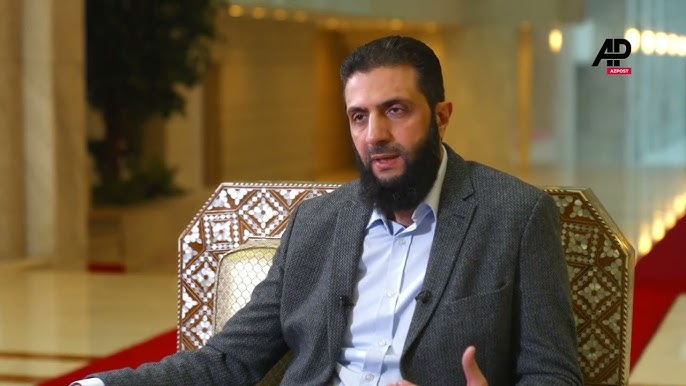
Just over two years after the rapid collapse of Bashar al-Assad’s regime in late 2024, Syria under interim President Ahmed al-Sharaa has moved from wartime fragmentation toward pragmatic regional integration. Damascus has secured limited international recognition, advanced military integration talks with the Syrian Democratic Forces, and held early post-Assad electoral processes while managing residual Israeli airstrikes, localized Kurdish and Druze tensions, and the residual presence of Iranian-aligned networks. Border and economic arrangements with Egypt and Qatar, alongside selective engagement with Turkey, have continued even as the broader Levant remains unsettled by the 2025–2026 escalation cycle.
These Syrian moves now sit inside a wider, still-fluid realignment. In August 2026, Saudi Arabia, Turkey, and Pakistan formalized the Mecca Joint Defense Agreement. In late October, senior representatives from those three states traveled to Tehran for direct talks with Iranian officials, including Mohsen Rezaei, aimed at preventing renewed escalation after the February–July 2026 U.S.-Israeli campaign that targeted Iranian nuclear and leadership targets (including the reported killing of Ali Khamenei) and prompted Iranian responses against regional bases and the temporary closure of the Strait of Hormuz. A fragile pause in direct exchanges has held since early August, even as Houthi attacks on Saudi interests and residual Hezbollah-Israel friction persist.
Further east, the Taliban continue to govern every provincial capital five years after their 2021 takeover, yet face persistent border clashes with Pakistan (including reported airstrikes and cross-border fire through October 2026) and limited anti-Taliban attacks concentrated in the northeast. Humanitarian conditions have worsened under reduced aid and mass returns, with UN assessments warning of sharply rising acute food insecurity into 2027. The Taliban have contained Islamic State-Khorasan Province territorial gains but have not eliminated the group’s external threat profile.
Taken together, the picture as of early November 2026 is not a formal ten-nation bloc but a set of overlapping diplomatic and security conversations among several of the states previously identified in this analysis—Syria under al-Sharaa, Turkey, Saudi Arabia, Iran, and Pakistan—occurring against the backdrop of repeated kinetic confrontations with Israel and the United States. These contacts remain provisional, driven more by mutual fear of wider war and shifting great-power attention than by ideological unity. They nonetheless illustrate the kind of regional maneuvering that a literal reading of Daniel 11:40–45 and Revelation 17:12–13 would expect in the period preceding any final northern-centered confederation: fractured powers testing alignments, absorbing shocks from the east and south, and gradually concentrating decision-making in a narrower set of capitals while the “tidings out of the east and out of the north” (Daniel 11:44) continue to shape the strategic environment.


Leave a Reply