
I have come to believe that the people behind the Robert Langdon film series take a certain pride in making each installment as needlessly confusing as possible. It is already difficult enough to recommend a franchise whose three titles—The Da Vinci Code, Angels & Demons, and Inferno—share no obvious connection in naming. Try explaining to friends which movies you mean and they look at you as if you are speaking a foreign language. After a few minutes of description you may realize you have accidentally outlined the plot of National Treasure instead. That was roughly my experience. It took me several minutes to accept that I actually knew almost nothing about the Langdon series and had never properly watched any of the earlier films.
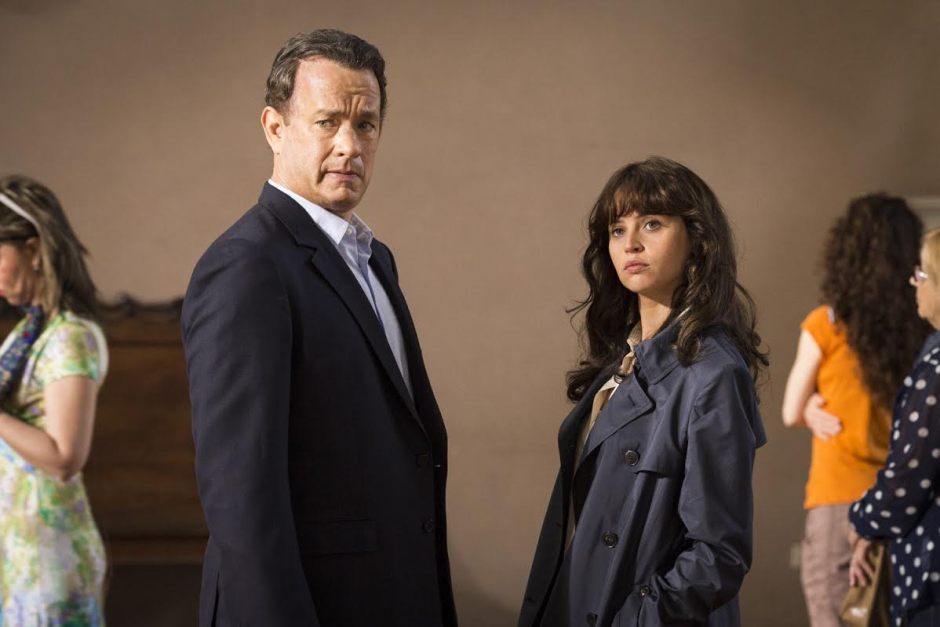
After recovering from that realization, I decided the only honest approach was to walk into Inferno completely cold—the same approach, it seems, the screenwriters themselves may have taken.The film opens in a hospital in Florence. Robert Langdon (Tom Hanks) wakes up with no memory of how he arrived there, only the knowledge that he has suffered a head injury from a gunshot. He is immediately plagued by apocalyptic visions. Moments later a female assassin enters his room and attempts to kill him. Langdon and his doctor, Sienna Brooks (Felicity Jones), flee and find themselves on the run from seemingly every authority and operative in the city. This is the point at which the movie stops making coherent sense and begins trying far too hard to appear clever. It strains to construct elaborate misdirection and a supposedly stunning twist, yet the largest revelation is telegraphed so early and so obviously that everything else feels like a series of pointless red herrings.If this review already feels muddled and poorly explained, consider that an accurate reflection of sitting through nearly two hours of the film. Inferno piles on layers of deception purely for the sake of keeping the audience off-balance. After a while the impulse to follow the plot simply evaporates.
I literally dozed off. When I woke up I discovered that Sienna was, in fact, the late villain Zobrist’s partner and had been working to release the virus all along. The only way to miss that development is to fall asleep and skip the stretches of lazy writing that broadcast it well in advance. The climax involves a race to stop the virus from being dispersed through water in a vast underground location, accompanied by the usual gunfire and a predictable victory for the protagonists. The end.The plotting of Inferno feels like an M. Night Shyamalan film pushed to absurd extremes. The central scheme is riddled with logical holes, and the villain’s plan collapses under the slightest scrutiny. One suspects the production may have moved forward on an early draft simply to capitalize on the brand. Readers of Dan Brown’s novel who already disliked the source material will find no improvement here; the adaptation is likely only to confirm their complaints. The actors are not at fault—Tom Hanks and Felicity Jones do what they can—but no performance can salvage a story this convoluted and poorly reasoned. Historical accuracy is beside the point when the narrative itself is this fundamentally broken.
Inferno is a frustrating, incoherent entry that mistakes complexity for intelligence. It confuses the audience without rewarding their attention, telegraphs its twists while pretending to be clever, and wastes a capable cast on material that never coheres. If you are a devoted follower of Robert Langdon you may feel obligated to see it. Everyone else can safely hope this is the last time the character appears on screen.
1/5






Leave a Reply