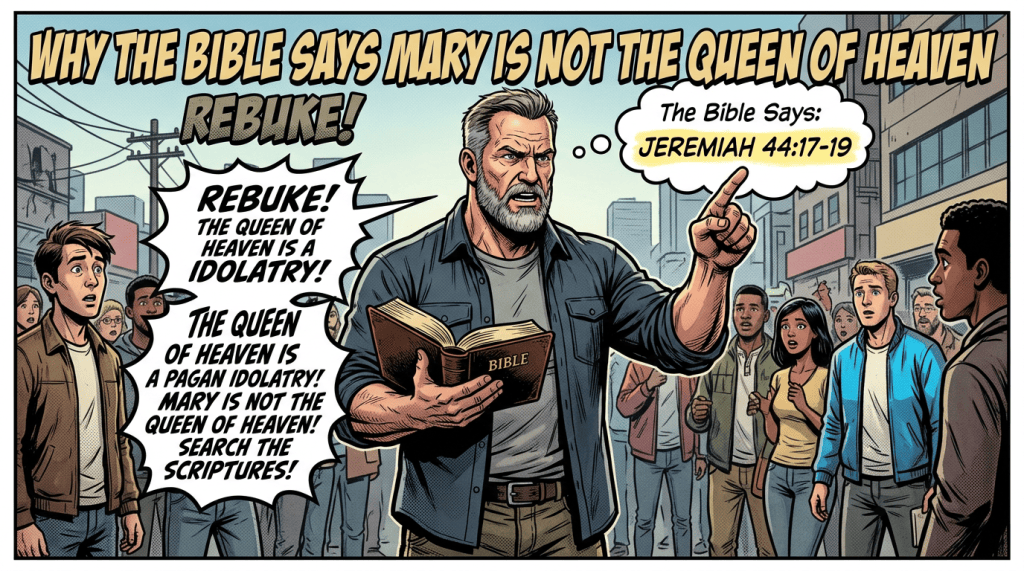
The Scriptures of the Old and New Testaments furnish the sole and sufficient rule by which every claim concerning the person and place of Mary must be judged. When that rule is applied with literal fidelity to the assertion that she is “the Queen of Heaven,” the assertion is found to be not merely unsupported but expressly condemned.
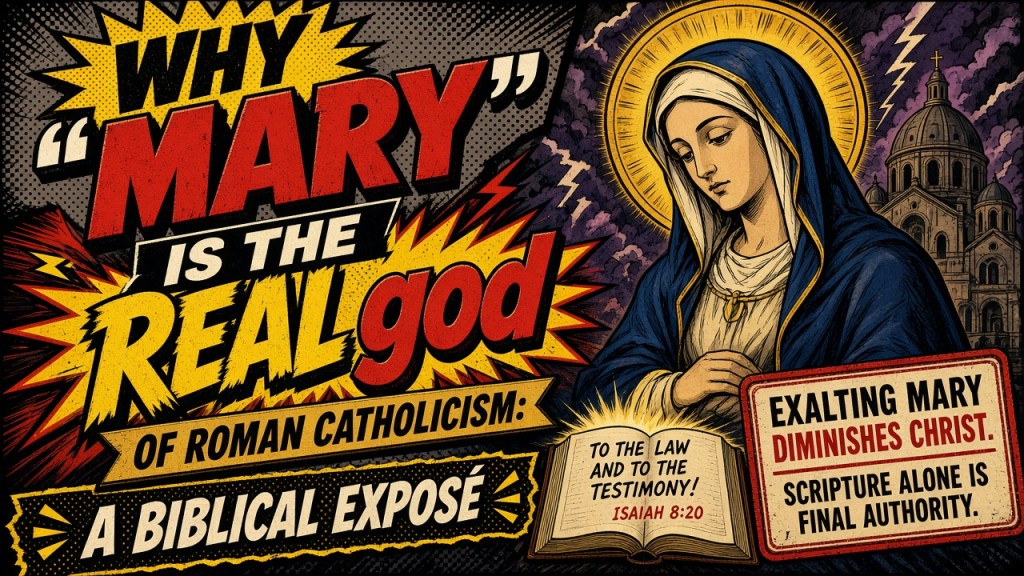
The title belongs to a pagan deity whose cult the prophets denounced; the offices of mediation, intercession, and shared glory that accompany the title in later devotion are reserved by Scripture for God alone and for the man Christ Jesus.
The phrase itself appears in Jeremiah’s indictment of Judah’s idolatry. “The children gather wood, and the fathers kindle the fire, and the women knead their dough, to make cakes to the queen of heaven, and to pour out drink offerings unto other gods, that they may provoke me to anger” (Jeremiah 7:18). The “queen of heaven” thus named is identified, both by the rites described and by the testimony of the surrounding cultures, with Ishtar—also known as Astarte or Ashtoreth—the Mesopotamian and Canaanite goddess of fertility, love, and war.
She was addressed as queen of the skies, linked with the planet Venus, and honored through household offerings in which entire families participated. The Lord through Jeremiah declares this worship an abomination that provokes His anger. Nowhere does Scripture reclaim or rehabilitate the title; it remains the designation of a false deity whose service was to be destroyed.
The same prohibition is written in the Decalogue. “Thou shalt not make unto thee any graven image, or any likeness of any thing that is in heaven above, or that is in the earth beneath, or that is in the water under the earth: Thou shalt not bow down thyself to them, nor serve them: for I the LORD thy God am a jealous God” (Exodus 20:4-5). The commandment forbids both the making of images and the acts of bowing and serving.
When statues of Mary are crowned, incense offered before them, and petitions addressed to her under the title Queen of Heaven, the practice collides directly with this text. The Lord is jealous for His name and will not share it. Isaiah records the divine declaration: “I am the LORD: that is my name: and my glory will I not give to another, neither my praise to graven images” (Isaiah 42:8). Glory and praise that belong exclusively to the LORD cannot be transferred to any creature.
The New Testament confirms the exclusivity of mediation and the rejection of creaturely worship. “For there is one God, and one mediator between God and men, the man Christ Jesus” (1 Timothy 2:5). The text admits no second mediator and no maternal co-redemptrix. When the apostle John fell at the feet of an angel to worship him, the angel immediately rebuked him: “See thou do it not: I am thy fellowservant, and of thy brethren that have the testimony of Jesus: worship God” (Revelation 19:10).
If an angel who stands in the presence of God refuses worship, a human woman must likewise refuse the ascription of queenship that implies a share in heavenly rule and the reception of prayers. The ministry of intercession within the saints is assigned not to Mary but to the Spirit: “Likewise the Spirit also helpeth our infirmities: for we know not what we should pray for as we ought: but the Spirit itself maketh intercession for us with groanings which cannot be uttered. And he that searcheth the hearts knoweth what is the mind of the Spirit, because he maketh intercession for the saints according to the will of God” (Romans 8:26-27).
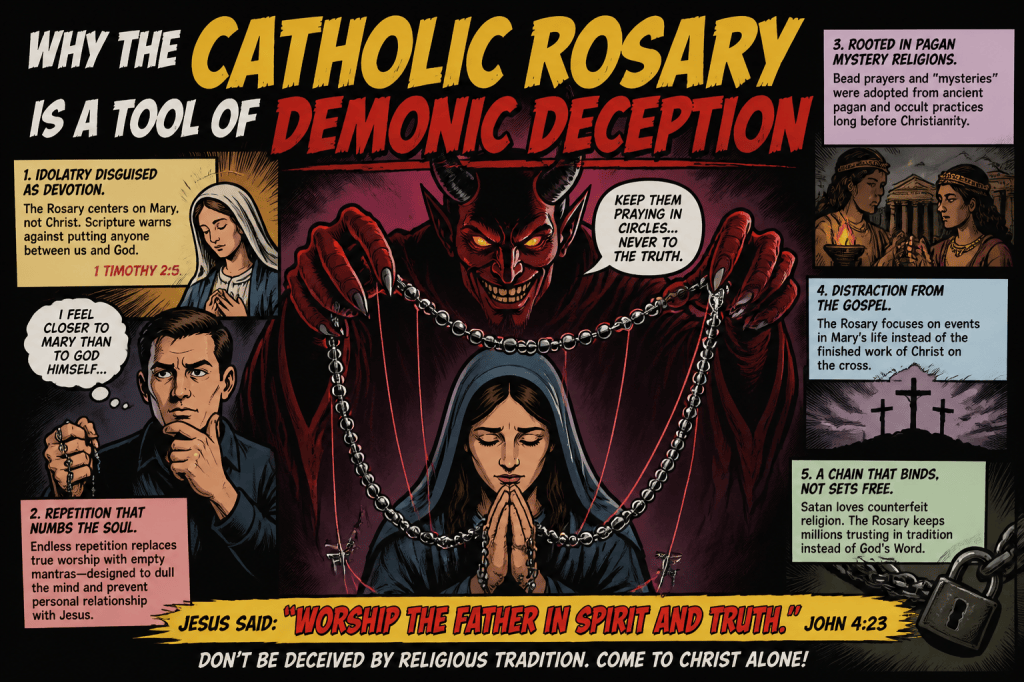
Even the honor that might naturally be given to Mary is redirected by the Lord Himself. A woman in the crowd cried, “Blessed is the womb that bare thee, and the paps which thou hast sucked.” Jesus answered, “Yea rather, blessed are they that hear the word of God, and keep it” (Luke 11:27-28). The “yea rather” is decisive. Biological relationship to Christ does not establish a higher blessedness than the obedience any believer may render. The same principle appears in Mary’s own Magnificat.
She declares, “My soul doth magnify the Lord, And my spirit hath rejoiced in God my Saviour” (Luke 1:46-47). One who needs a Saviour is not one who reigns above the need of salvation. The universal testimony of Scripture removes any exception: “For there is not a just man upon earth, that doeth good, and sinneth not” (Ecclesiastes 7:20), and “all have sinned, and come short of the glory of God” (Romans 3:23). Mary is included in the “all.” She is a redeemed sinner who magnified the Lord.
The parallels with Ishtar are not accidental. Both figures receive the identical title “Queen of Heaven.” Both are associated with maternal and intercessory roles that place them between the worshiper and the supreme deity. Both attract cakes, offerings, and crowned images. Both are invoked in connection with fertility and protection. The pagan cult of Ishtar was household-based, involving women and children in the preparation of cakes stamped or shaped in her likeness—an exact counterpart to the domestic shrines and processional statues of later Marian devotion. Scripture does not permit the transfer of a condemned title to a different person; it condemns the practice of elevating any creature to a share in the prerogatives of heaven’s King.

Mary is rightly called highly favoured and blessed among women. The error lies in the title Queen of Heaven, the ascription of mediation, the practice of bowing before images, and the offering of prayers to her as a heavenly intercessor. Those practices stand under the direct censure of the texts cited above. The texts are among the clearest statements in Scripture concerning the exclusive glory of God, the sole mediation of Christ, the prohibition of images, the universal sinfulness of mankind, and the identity of the pagan queen of heaven.
Let every claim therefore be tested by the plain sense of these passages. The God of Scripture will not share His glory. He has appointed one Mediator. He has declared that those who hear and keep His word are more blessed than those who merely bore the Messiah in the womb. And He has already named and condemned the queen of heaven whose title is now applied to Mary. On these grounds the belief must be rejected by the authority of the Word itself.



Leave a Reply