
In the sacred text of the Bible, which alone must serve as the rule of judgment for all questions of divine truth, the term “reprobate” designates one who has been tested and found wanting—rejected, disapproved, and set aside as unfit.
The Greek word underlying the English rendering, adokimos, carries the plain sense of failing the assay, as metal that will not endure the fire or as a candidate who does not meet the standard. It is no abstract category invented by later systems, but a concrete description of persons and minds that have refused the knowledge of God and been given over by Him in consequence.
The most extensive portrait appears in the first chapter of the Epistle to the Romans. There the apostle declares that men who “knew God” from the visible creation “glorified him not as God, neither were thankful; but became vain in their imaginations, and their foolish heart was darkened” (Romans 1:21). Having “changed the truth of God into a lie,” they were progressively abandoned: “God also gave them up to uncleanness” (Romans 1:24), “God gave them up unto vile affections” (Romans 1:26), and finally, “even as they did not like to retain God in their knowledge, God gave them over to a reprobate mind, to do those things which are not convenient” (Romans 1:28).
The result is a catalogue of unrighteousness filled out to the brim—envy, murder, deceit, covenant-breaking, without natural affection, unmerciful—and a mind that not only practices these things but takes pleasure in those who do likewise, while knowing the judgment of God (Romans 1:29–32). The reprobate mind is therefore not the absence of information, but the judicial consequence of willful suppression of known truth. Those so described are without excuse (Romans 1:20).
The same word is applied within the visible assembly. Writing to the Corinthians, the apostle commands, “Examine yourselves, whether ye be in the faith; prove your own selves. Know ye not your own selves, how that Jesus Christ is in you, except ye be reprobates?” (2 Corinthians 13:5). Here the reprobate is precisely the one in whom Christ does not dwell.
The test is personal and practical: either Jesus Christ is in a man, or that man is reprobate. The apostle expresses confidence that the Corinthians will prove otherwise, yet the alternative is stated without qualification. A parallel use occurs in the pastoral epistles. Of certain men in the last days who possess “a form of godliness, but denying the power thereof,” it is said that they “resist the truth: men of corrupt minds, reprobate concerning the faith” (2 Timothy 3:5, 8). Likewise, those who “profess that they know God; but in works they deny him” are “unto every good work reprobate” (Titus 1:16). In each case the profession or outward association fails the test of reality.
An Old Testament illustration confirms the meaning. Jeremiah is set as a tower and fortress to “know and try” the way of the people. The refining fails: “the founder melteth in vain: for the wicked are not plucked away.” Therefore “Reprobate silver shall men call them, because the LORD hath rejected them” (Jeremiah 6:27–30). The rejection follows the failure of the metal to yield to the fire. The same principle of rejection after testing appears in the warning of Hebrews 6:8, where ground that drinks the rain yet bears only thorns and briers “is rejected, and is nigh unto cursing; whose end is to be burned.”
From these texts several marks are plain. The reprobate is not a true believer. Where Christ is indwelling, the person is not reprobate (2 Corinthians 13:5). The condition arises after rejection of the knowledge of God or of the truth (Romans 1:28; 2 Timothy 3:8). It manifests itself in a mind given over to that which is not convenient, in resistance to the truth, and in works that deny the profession of knowing God. The state is judicial as well as moral: God “gave them over.”
Whether such a person can be saved must likewise be answered from the same standard. While a man remains in the condition of having been given over to a reprobate mind, or of resisting the truth with a corrupt mind, or of denying God by works after profession, he does not come to saving faith; the condition itself is the barrier. Yet the Scriptures nowhere erect an irreversible class of persons who, should they believe, could not be justified.
The same apostle who describes the reprobate mind also writes that the unrighteous—fornicators, idolaters, and the rest of the catalogue—“shall not inherit the kingdom of God. And such were some of you: but ye are washed, but ye are sanctified, but ye are justified in the name of the Lord Jesus, and by the Spirit of our God” (1 Corinthians 6:9–11). The invitations remain unrestricted: “whosoever believeth in him should not perish” (John 3:16); “whosoever shall call upon the name of the Lord shall be saved” (Romans 10:13). The reprobate state is the ongoing fruit of rejection; genuine repentance and faith in Christ end that state.
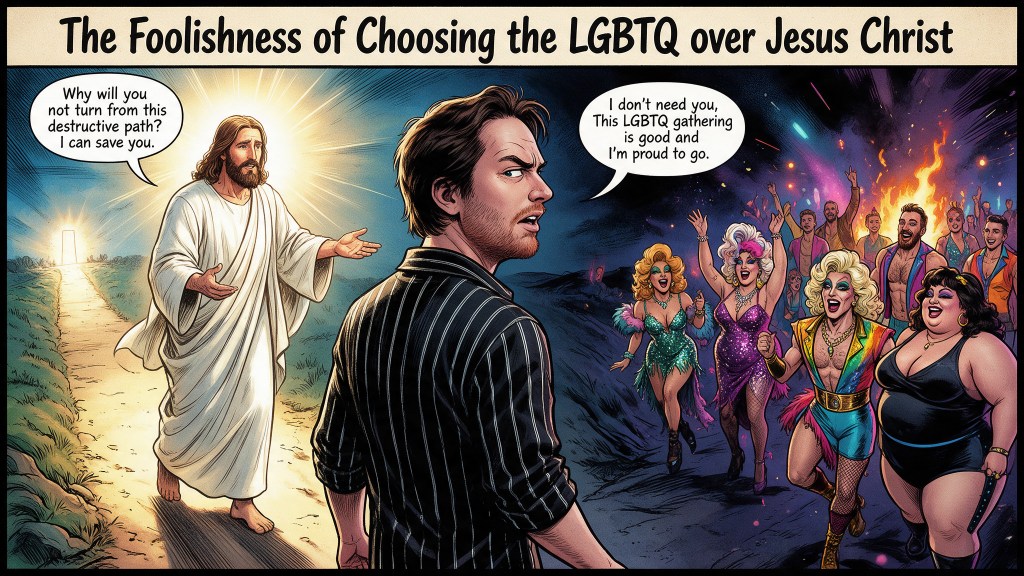
At the same time, the warnings of Scripture are severe. Where there has been full enlightenment, tasting of the heavenly gift, and partaking of the Holy Ghost, followed by a falling away that crucifies the Son of God afresh, renewal unto repentance is declared impossible while that rejection continues (Hebrews 6:4–6). The blood of the covenant by which one was sanctified, once counted an unholy thing, leaves “no more sacrifice for sins” but “a certain fearful looking for of judgment” (Hebrews 10:26–29). These texts do not license presumption; they forbid it.
Thus the biblical reprobate is neither an elect person mysteriously destined to damnation apart from his own rejection, nor merely a careless professor who may be restored at will. He is one who has been tested by the light given him, has refused to retain God in his knowledge or has resisted the truth, and has been given over or rejected in consequence.
Those who hold Christ by genuine faith are not reprobates; those who continue to reject the truth remain so, until or unless they turn and believe. In this, as in all things, the Bible alone is the standard of truth.




Leave a Reply