
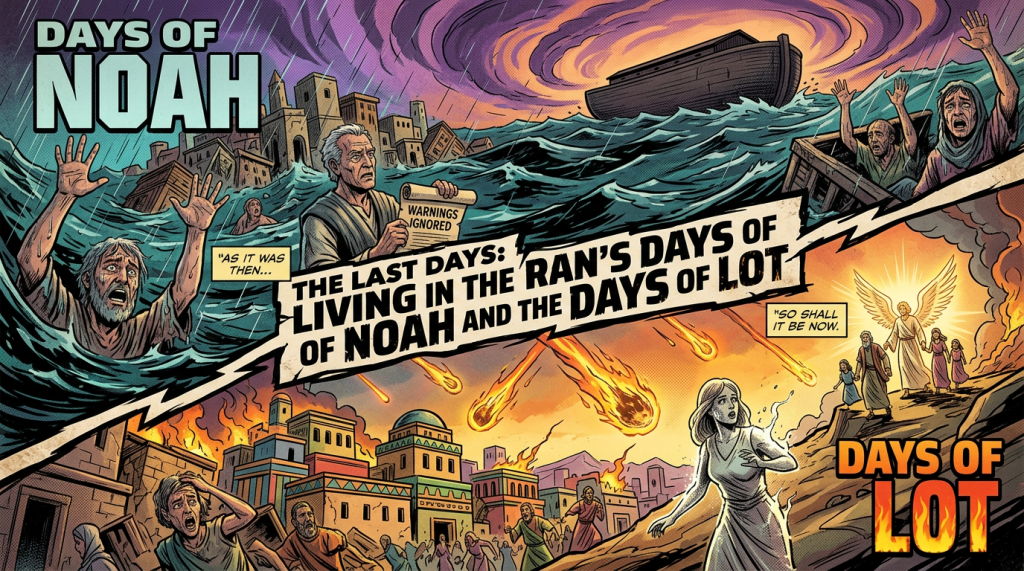
The last days, if Jesus is taken at His word, will not first look like a disaster movie. They will look like a weekday. People will eat and drink. They will marry and give in marriage. They will buy and sell, plant and build. Then, on a day that arrives like any other, the thing they did not believe in will arrive anyway.
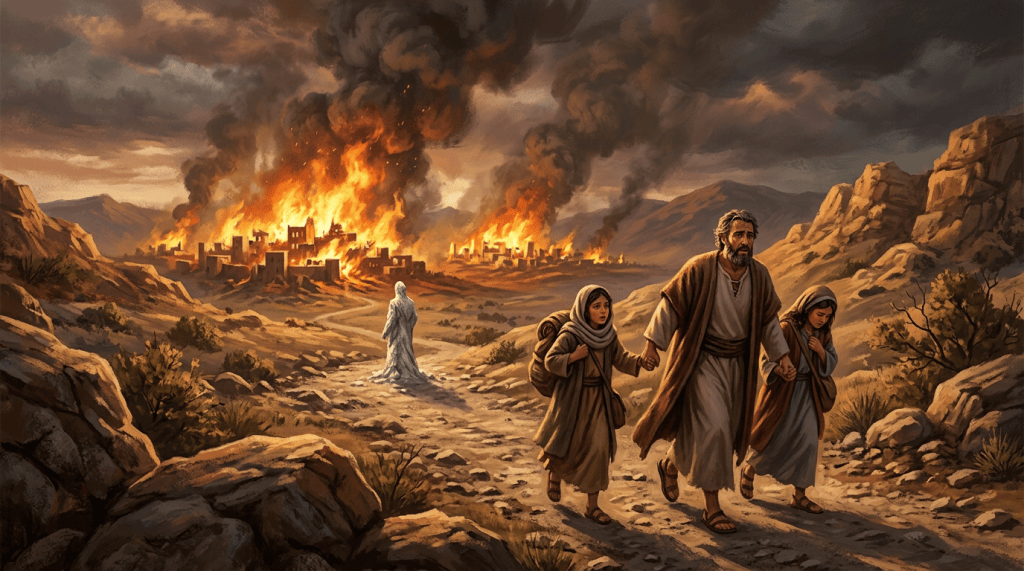
That is the comparison He chose. Not a catalog of monsters, but the days of Noah and the days of Lot.
In Luke 17 He says the days of the Son of man will be “as it was in the days of Noe.” They ate, they drank, they married, “until the day that Noe entered into the ark, and the flood came, and destroyed them all.” Likewise in the days of Lot: they ate, they drank, they bought, they sold, they planted, they builded; “but the same day that Lot went out of Sodom it rained fire and brimstone from heaven.” Matthew 24 adds the line that still explains the present: they “knew not until the flood came, and took them all away.” Mark 13 supplies the ethic: watch, lest He come and find you sleeping.
The shock is not only judgment. It is judgment wearing the clothes of routine.
Genesis does not describe Noah’s world as merely busy. “The wickedness of man was great in the earth, and … every imagination of the thoughts of his heart was only evil continually.” The earth was “corrupt” and “filled with violence.” Yet the meals continued. Sodom was a working town. Lot sat in the gate. Commerce functioned. Then the men of the city named their demand without shame, and Lot’s sons-in-law treated the warning as a joke. The same day Lot went out, the fire fell.
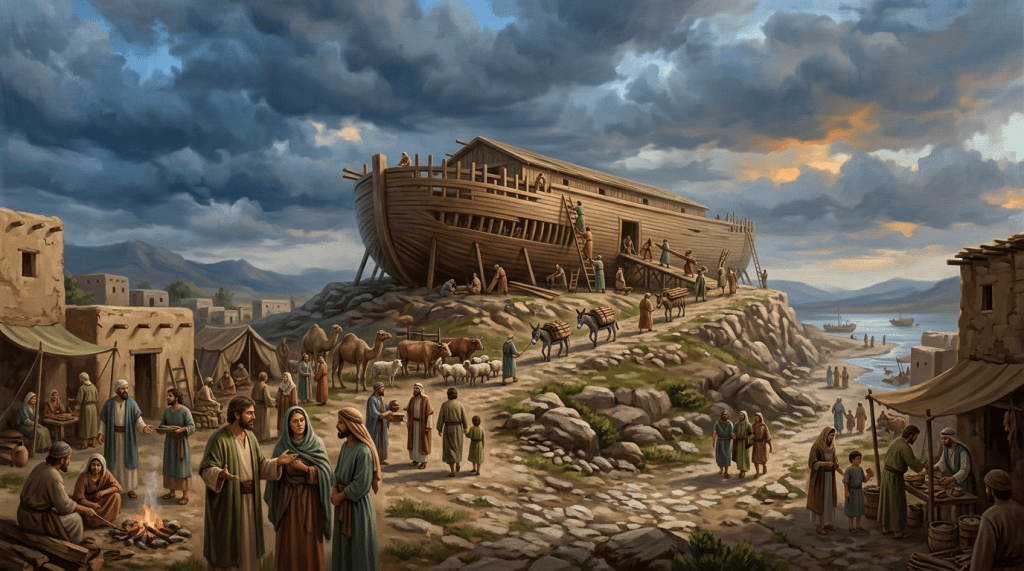
That is what the normalcy of wickedness means. Evil does not always look like collapse. It looks like consensus.
On an evening in January 2023, a labor-and-delivery nurse in Duxbury, Massachusetts, sent her husband out for takeout. While he was gone, Lindsay Clancy strangled their three children — Cora, 5; Dawson, 3; Callan, 8 months — with exercise bands in the basement of a blue suburban house. She then jumped from a second-story window. Her defense later argued postpartum psychosis; prosecutors called the killings calculated; a 2026 jury hung (11-1 in favor of Clancy) and a judge declared a mistrial. The legal argument is real. So is the scene. Dinner was being picked up. The children were at home. The house still looked like a house.
A high-school track meet is supposed to be one of the last innocent American rituals: tents, bleachers, rain delays, parents with folding chairs. On April 2, 2025, in Frisco, Texas, two 17-year-olds who did not know each other argued over a team tent. Karmelo Anthony pulled a knife from a backpack and stabbed Austin Metcalf in the chest. Metcalf died. A jury rejected self-defense and, in June 2026, sentenced Anthony to 35 years. The internet turned the case into a racial war. The field was still a track meet. A boy still died in the bleachers.
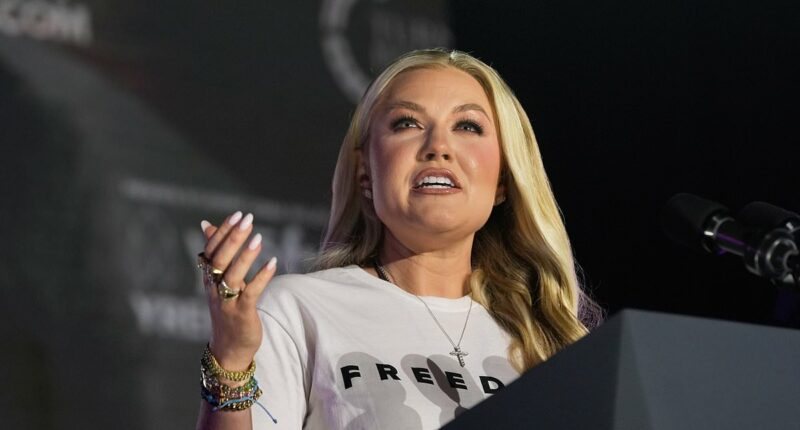
On September 10, 2025, Charlie Kirk stood on a campus in Orem, Utah, taking questions in public — the activity universities claim to exist for — and was shot in the neck. That part is simply murder. What followed was the Lot-like detail: not only the killing, but the pleasure some took in it. Students joked and imitated the shooting. Online, people posted fire emojis, “let’s fucking go,” “someone had to do it.” Teachers, a nurse, a firefighter, an assistant dean lost jobs after posts that treated a man’s death as a punchline or a public service.
Romans 1 does not stop at those who do what they know is worthy of death. It names those who “have pleasure in them that do them.” 2 Thessalonians 2 names the same appetite: “pleasure in unrighteousness.”
The hatred of Jews has stopped pretending to be a fringe mood. After October 7, 2023, antisemitic incidents in the United States and across the large diaspora communities rose to levels not seen in decades. In 2025, monitors recorded the deadliest year for Jews outside Israel in more than thirty years: killings outside the Capital Jewish Museum in Washington; a firebombing of a hostage-awareness walk in Boulder; a Hanukkah massacre near Sydney’s Bondi Beach; an attack at a Manchester synagogue on Yom Kippur. Overall U.S. incident counts later eased from the 2023–24 peak, but assaults and attacks with deadly weapons did not. Synagogues hire more security. Students hide a star of David. Isaiah’s woe — calling evil good and good evil — now includes the habit of treating Jewish death as resistance and Jewish fear as public relations.

Honesty requires a correction the prophets would have respected. National homicide in the United States is not, at this hour, “soaring.” After the 2020 spike, killings fell hard. FBI figures put the 2025 homicide rate among the lowest in generations; city samples suggest 2026 is lower still. That fact does not baptize the age. It proves the other half of Jesus’ comparison. Violence can recede on a chart and still erupt in a basement, a bleacher, a quad, a museum sidewalk. Noah’s world was not only body counts. It was a world that could keep marrying while every thought ran to evil. A falling crime rate can coexist with a rising shamelessness about the crimes that remain.
Abortion is not only the procedure but the festival around it — the shout, the costume, the inflatable womb at a convention, the insistence that grief itself is a political error. A culture may legalize what it will. When it learns to celebrate the thing, it has crossed from permission into liturgy.
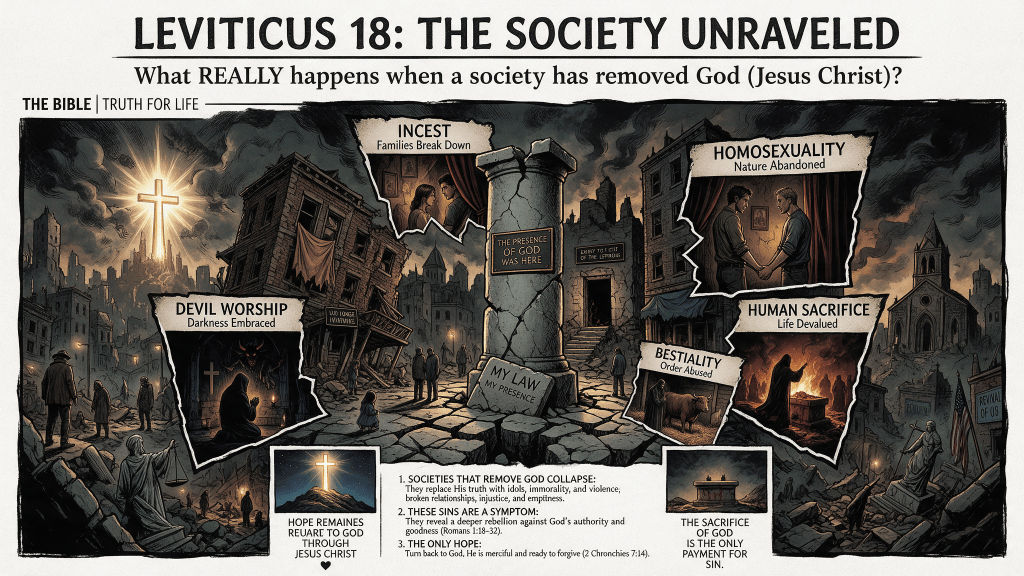
The “false gods” of the moment are rarely a goat’s head in a cellar. They are mass-market tarot at the bookstore, astrology as identity, #WitchTok as catechism. Pew found that about three in ten American adults consult astrology, tarot, or fortune-tellers at least yearly. In March 2025, a satanic group tried to stage a Black Mass in the Kansas Statehouse rotunda and scuffled with counter-protesters. That is not the majority religion of the republic. It is the old exchange Paul described: not liking to retain God in knowledge, then filling the vacancy with something that will speak on demand.

2 Timothy 3 does not describe a society that has stopped play-acting religion. It describes lovers of their own selves, without natural affection, lovers of pleasures more than lovers of God, “having a form of godliness, but denying the power thereof.” Matthew 24: “because iniquity shall abound, the love of many shall wax cold.” 2 Peter’s scoffers ask the question of every well-stocked century: “Where is the promise of his coming? for since the fathers fell asleep, all things continue as they were.”
The argument of the last days is continuity. If the grocery stores are open, the promise must be a myth.
2 Thessalonians 2 will not let the waiting flatten into a mood. It binds “the coming of our Lord Jesus Christ, and … our gathering together unto him,” then says that day does not arrive until a falling away and the revealing of the man of sin, who sits in the temple “shewing himself that he is God.” The mystery of iniquity already works. “He who now letteth will let, until he be taken out of the way. And then shall that Wicked be revealed,” with satanic signs, “all deceivableness of unrighteousness,” and a strong delusion sent upon those who “believed not the truth, but had pleasure in unrighteousness.” After restraint lifts, wickedness does not merely continue. It takes the microphone.
To live between those horizons — a sudden gathering and the later revealing of the Son of man — is to refuse two cheap consolations. The first is a date. “Of that day and hour knoweth no man.” The second is the sleep of the plausible. The master may come at even, or midnight, or cockcrowing, or morning.

Lot’s wife is the footnote Jesus refused to drop. She got out and still looked back. The last days offer a thousand reasons to treat the old world as the only real one: the takeout order, the track meet, the campus Q&A, the march, the app that tells you what the stars permit. Those things are not all sins. They were the last ordinary acts of two civilizations that “knew not.”
Watch, because the hour that looks like Tuesday is the hour He named.



Leave a Reply