
Modern-day horror movies are mostly the worst. The days of cheap practical effects, questionable acting, and VHS tracking so bad you could never quite get a clean picture are long gone—unfortunately. Ever since the one-two punch of Saw and Paranormal Activity, the genre has largely settled into two notes: jump scares and fake gore. Story has become an afterthought. Most modern horror scripts seem written for about ten minutes of setup before the killing starts. It takes a lot to impress me in this genre anymore. The Conjuring 2 was a genuine breath of fresh air—mixing real suspense, solid writing, strong performances, and actual atmosphere.
It remains the best scary movie I’ve seen in the last decade. Films like that, however, increasingly feel like happy accidents rather than the standard. Lights Out is based on a short film of the same name (sometimes referred to as “Who’s There?”) that director David F. Sandberg made years earlier. That short is essentially remade as the opening sequence of the feature. Late at night in a clothing factory, two people encounter an evil spirit that can only fully manifest when the lights are off. The story proper begins with a young boy and his unstable mother, Sophie (Maria Bello). Sophie is a former mental patient who has gone off her medication and insists her “friend” Diana is still around. That “friend” turns out to be a malevolent entity that killed her husband in the opening scene. She has effectively turned the family home into a bed-and-breakfast for a demon.
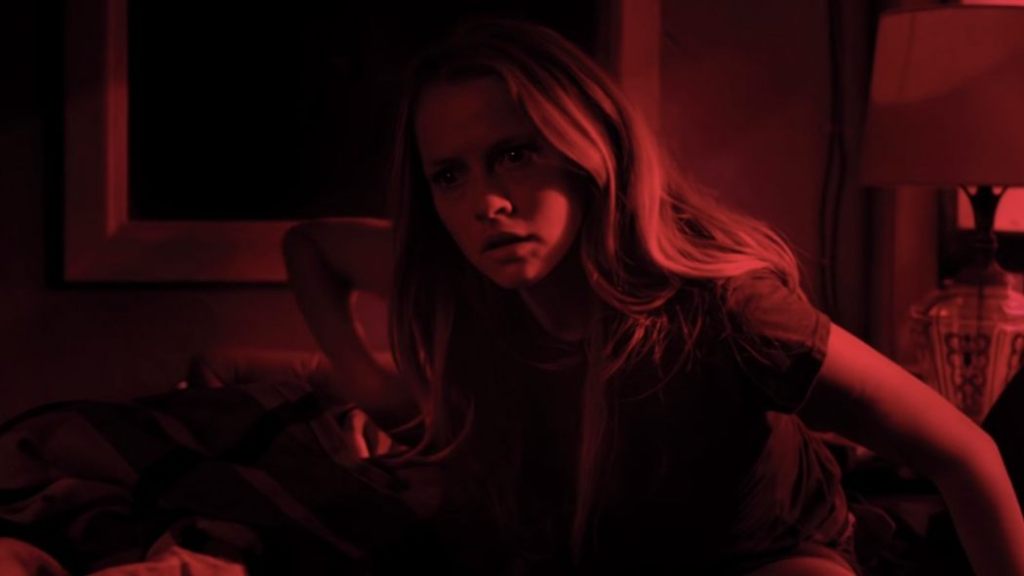
After the boy goes three days without sleep because something is living in the dark across the hall, his older half-sister Rebecca (Teresa Palmer) takes him in for a night. That plan fails almost immediately when the entity follows them. Rebecca, her little brother, and her boyfriend are forced to return to the family home to confront the problem head-on.There isn’t much more to the plot once the backstory is established. The movie becomes a straightforward “survive the night” exercise with no particularly clever plan for how to do it. You’ll be happy (or unhappy) to know that Lights Out relies almost entirely on jump scares and sudden loud noises. That’s not to say it doesn’t execute those scares competently—Sandberg has a good sense of timing and uses darkness effectively. But these kinds of scares only work to startle you in the moment. Once you’ve fallen for the same trick a few times, the power drops off sharply.
You get maybe four solid jolts, but almost nothing that lingers after you leave the theater. That’s the difference between this and The Conjuring 2. James Wan’s film left me with a lingering sense of unease. Lights Out is the kind of movie you mostly forget about by the time you reach the parking lot, and you’ll probably sleep just fine afterward.I was a bit surprised by how many positive reviews the film received. It is scary in short bursts when it manages to catch you off guard, and for a low-budget effort it is technically well-made. The main performances are solid—Teresa Palmer is a credible lead, Gabriel Bateman is effective as the terrified younger brother, and Maria Bello commits fully to Sophie’s unraveling mental state. The movie makes smart use of its limited resources, builds tension reasonably well in stretches, and creates a consistent atmosphere of dread that keeps you mildly on edge. At only 81 minutes it also doesn’t overstay its welcome.
Still, Lights Out is ultimately a short, by-the-numbers jump-scare horror film that plays every trope exactly as expected. It does what it sets out to do with a certain amount of craft, but it never elevates itself beyond efficient genre product. If the film had been twenty minutes longer and used that time to deepen the characters or the mythology, it might have left a stronger impression. Instead it will likely be remembered about as fondly as the first Annabelle—another serviceable but forgettable entry in the modern studio horror machine. (And yes, they already made Annabelle 2.)
In a better horror landscape, Lights Out would be considered a decent B-movie. In the current one, it’s just another competent but disposable night at the theater.
2/5




Leave a Reply