
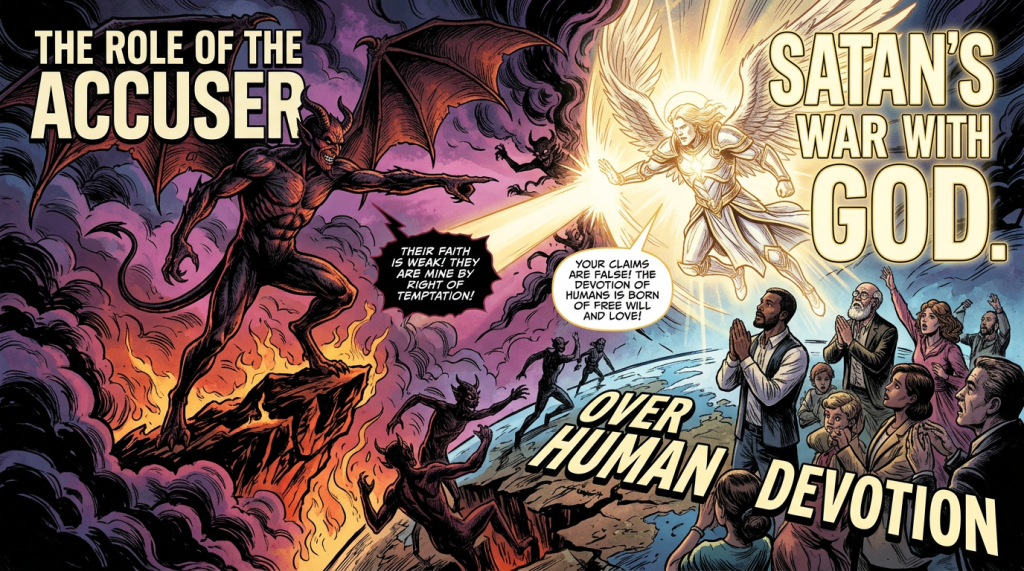
In an era that prefers to treat human failings as the products of systems, trauma, or mere social construction, the Bible presents a more austere picture. Evil is not only structural; it is personal, and one of its chief activities is accusation.

The bible shows Satan functioning repeatedly as the accuser of men—questioning motives, highlighting failures, and pressing for condemnation—while remaining under divine authority. The pattern runs from Job through Zechariah to Revelation, and it remains instructive precisely because it refuses to flatter our pretensions.
The first extended portrait appears in Job. On a day when the sons of God present themselves before the Lord, Satan comes among them (Job 1:6). Asked where he has been, he answers that he has been “going to and fro in the earth, and from walking up and down in it” (Job 1:7). When the Lord points to Job—“a perfect and an upright man, one that feareth God, and escheweth evil” (Job 1:8)—Satan does not contest the facts of Job’s conduct. He contests the motive: “Doth Job fear God for nought? Hast not thou made an hedge about him…? But put forth thine hand now, and touch all that he hath, and he will curse thee to thy face” (Job 1:9–11).
The second encounter repeats the pattern. After Job holds his integrity, Satan escalates: “Skin for skin, yea, all that a man hath will he give for his life… touch his bone and his flesh, and he will curse thee to thy face” (Job 2:4–5). The accusation is that uprightness is transactional. Remove the benefits, and the man will fall. The Lord permits limited tests, yet the text is clear that Satan initiates the challenge and acts only within the bounds set for him (Job 1:12; 2:6–7).
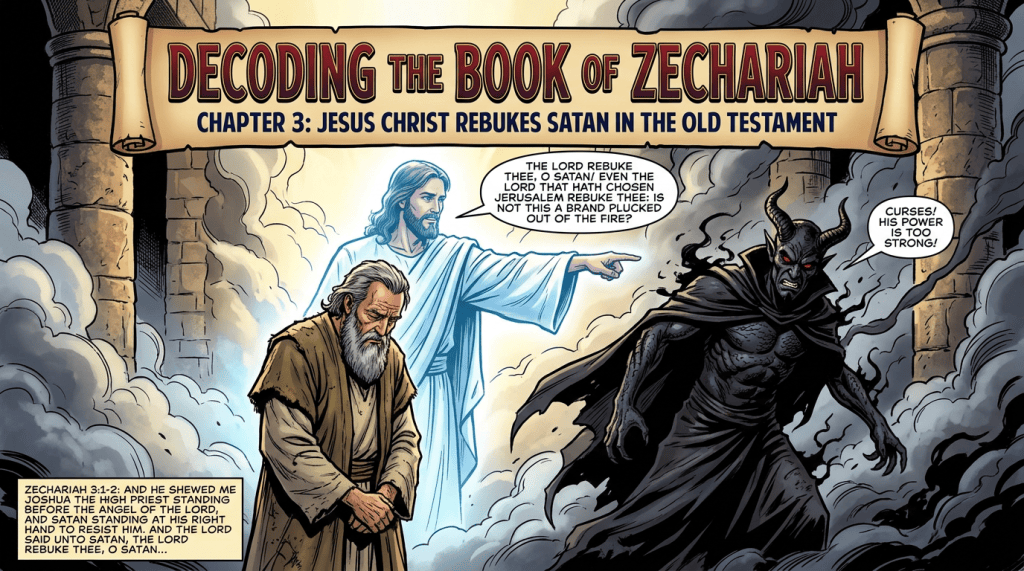
Zechariah 3 supplies a parallel courtroom scene. Joshua the high priest stands before the angel of the Lord “and Satan standing at his right hand to resist him” (Zechariah 3:1). Joshua wears filthy garments, the visible mark of defilement. The Lord does not deny the condition; He rebukes the accuser: “The Lord rebuke thee, O Satan; even the Lord that hath chosen Jerusalem rebuke thee: is not this a brand plucked out of the fire?” (Zechariah 3:2). The filthy garments are then removed, and the word is spoken: “Behold, I have caused thine iniquity to pass from thee” (Zechariah 3:4).
Accusation meets divine election and cleansing. The pattern is consistent with Job: Satan occupies the posture of an adversary bringing charges against one associated with God.
Revelation 12 gathers the role into a single title and announces its end. After war in heaven, the dragon—“that old serpent, called the Devil, and Satan”—is cast out (Revelation 12:9). A loud voice declares: “Now is come salvation, and strength, and the kingdom of our God, and the power of his Christ: for the accuser of our brethren is cast down, which accused them before our God day and night” (Revelation 12:10). The same figure who questioned Job’s motives and resisted Joshua is identified as the continuous accuser of the brethren.
The text then states the means of overcoming: “they overcame him by the blood of the Lamb, and by the word of their testimony” (Revelation 12:11).
Read together, these passages do not portray Satan as a force that can override divine sovereignty, nor do they treat accusation as mere metaphor. He moves, he challenges, he seeks the downfall of the upright into open cursing or the condemnation of the defiled, and he does so before God.
The response the texts record is not denial of human frailty—Job suffers, Joshua wears filthy garments—but insistence that the final word belongs to the Lord who sets limits, rebukes the accuser, and provides cleansing. In a culture quick to excuse or to condemn without remainder, the older account is more exacting: motives matter, integrity is tested under loss, defilement is real, and accusation does not have the last word.




Leave a Reply