
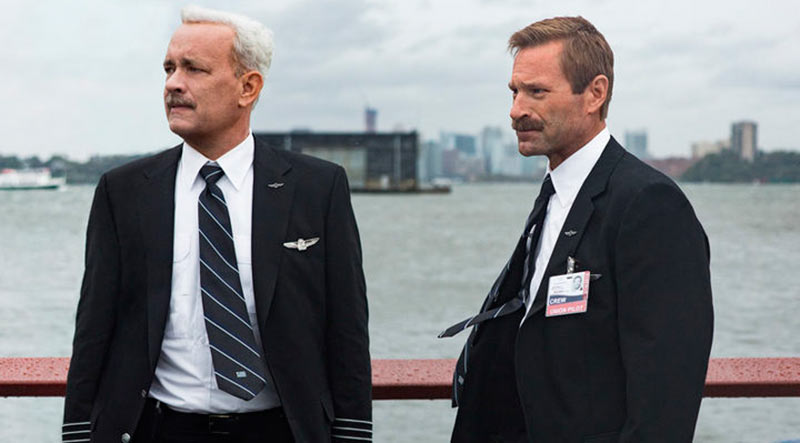
In a world where superhero movies dominate the box office, here comes another film about a hero. He doesn’t carry a shield that defies physics, transform into a giant rage monster, wear a suit of armor with a drinking problem, summon lightning at will, or look particularly good in a tight black catsuit. He is also a real person. Chesley “Sully” Sullenberger is the American airline captain who became famous in 2009 after successfully landing a disabled passenger jet on the Hudson River, saving the lives of all 155 people on board.
A dual engine failure at low altitude would have meant almost certain disaster for most pilots. Sully’s quick thinking and more than 30 years of flying experience turned a potential catastrophe into what the world immediately called a miracle. The story was compelling enough to produce a memoir, which was then adapted into a Hollywood film directed by Clint Eastwood and starring Tom Hanks.The movie opens with Tom Hanks as Sullenberger awakening from a nightmare in which the water landing ends in tragedy instead of survival. These dreams have become a recurring symptom of the PTSD he carries after the event. While the public and the media hail him as a hero, Sully is simultaneously under investigation by the National Transportation Safety Board. He rejects the “hero” label, insisting he simply did his job.
The NTSB, however, questions whether a return to LaGuardia Airport might still have been possible and whether one of the engines retained enough power to make the ditching in the Hudson unnecessary. The film becomes a battle over perception: the public sees a savior, while the investigators treat him as a pilot who may have made a reckless and avoidable decision.
Sully deliberately focuses more on the aftermath of the landing than on the landing itself. One early criticism of the film is that the first act feels unfocused. The narrative jumps between the present-day investigation, flashbacks, and dream sequences, making it temporarily unclear what kind of story Eastwood is telling. The PTSD angle is introduced early but largely fades as the investigation takes center stage. Sully’s co-pilot, Jeff Skiles (Aaron Eckhart), is the only other character given meaningful screen time. Even so, Skiles functions mostly as a supportive presence caught up in the legal and bureaucratic fight by association. This points to a broader issue: the film is more interested in the sequence of events than in deep exploration of the people living through them.
The central challenge Sully faces is the difficulty of generating suspense when the outcome is already known to virtually everyone in the audience. We know the plane hits the water and everyone lives. The best sequence in the film is the carefully recreated 208-second flight from the bird strike to the ditching. Three and a half minutes is not a long time, so the filmmakers use two main strategies to stretch the material. First, they intercut the actual emergency with the later investigation and simulations, building anticipation before showing the full event. Second, they expand the rescue operation—introducing passengers racing to make the flight, the rapid response of ferry crews and first responders, and the real danger of hypothermia in the freezing January water.
These elements add texture, but because the audience already knows there are no fatalities, the manufactured tension never fully lands.
Taken as a whole, Sully is a pretty good film. The acting is strong—Hanks brings his usual quiet integrity to the role, and Eckhart provides solid support. Eastwood’s direction is clean and unshowy. The movie offers a credible window into a man wrestling with sudden fame and the professional consequences of a decision he still believes was correct. At the same time, the core of the story remains those three and a half minutes of crisis, and the film has to work hard to fill a 96-minute runtime. There simply is not a great deal of inherent dramatic conflict once the landing is over. While the cinematography and effects used for the water landing are impressive and carefully executed, much of the surrounding material feels like necessary padding.
Sully is enjoyable in the moment and respectful of its real-life subject, yet it is also somewhat forgettable. It is a well-crafted film built around a thin central narrative that never quite overcomes the audience’s prior knowledge of the ending. The miracle on the Hudson was extraordinary. The movie version of it is competent, intermittently moving, and ultimately a little underwhelming.
2/5






Leave a Reply