
If there’s one word that’s been utterly bastardized over the last 10 to 15 years, it’s “absurdist.”
Too many films slap that label on what are really nihilist piles of garbage—stories that strip life of all purpose, leaving audiences adrift in a godless void, then have the gall to call the resulting black-pill despair a “comedy.”
Let me unpack this. In the West, “absurdist” has devolved into a catch-all for movies that erase meaning altogether, portraying existence as a chaotic joke without punchline or point. You see it in Everything Everywhere All at Once (2022), a multiverse mishmash that revels in existential dread under the guise of gay and whimsy, or the upcoming Bugonia which is Yorgos Lanthimos’ latest exercise in hollow surrealism where bugs kidnap a CEO in a plot that screams “nothing matters” while demanding Oscars for “innovation.”
Hollywood’s streamlined this into a formula: excise God, peddle purposelessness, and market the misery as mirth. It’s not absurdity; it’s a worldview that mocks hope, turning theaters into echo chambers of cynicism. But what if we reclaimed the original definition—intentionally ridiculous, bizarre, or surreal? What if, from an Eastern lens, we took a mundane setup and cranked it to 11, letting the exaggeration expose human folly without preaching oblivion?
That’s the magic of South Korean cinema, where absurdity thrives not as nihilism but as a gleeful skewering of societal norms. Enter Boss, a 2025 action-comedy from director Ra Hee-chan that embodies this pure strain. A counterintuitive comedy that flips the gangster genre on its head, blending slapstick with sly satire on ambition and identity.
At a brisk 99 minutes, it’s one of 2025’s funniest gut-punches, proving absurdity can delight without despair. The criminal underworld isn’t forgiving—leadership transitions demand ironclad systems to dodge bloodshed and ensure smooth handoffs. But what if two of three frontrunners want zero part in the gig, while the lone eager beaver is the punchline nobody trusts?
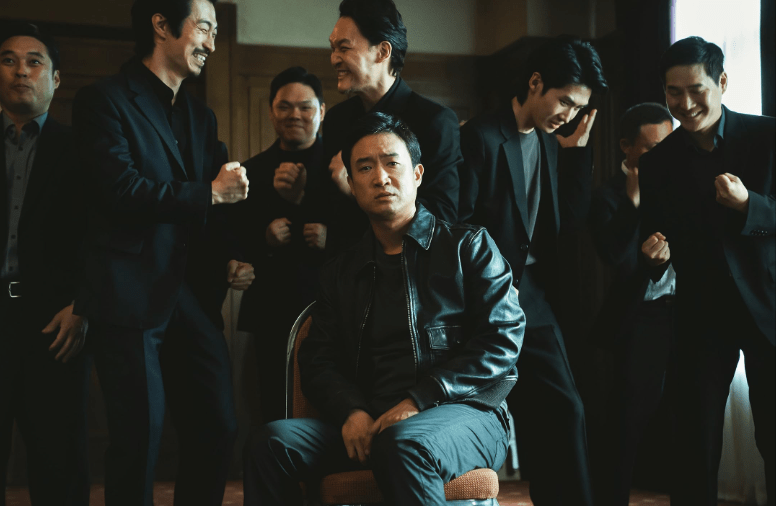
That’s the deliciously daft hook of Boss, where the syndicate’s power vacuum spirals into farce. In the shadowy ranks of the Sikgupa gang—Incheon’s biggest outfit—three lieutenants vie for the boss’s throne after their leader’s untimely demise. Top dog Soon-tae (Jo Woo-jin), a cunning enforcer, dreams not of mob dominion but of franchising his Chinese restaurant, Mimiru, into a legit culinary empire.
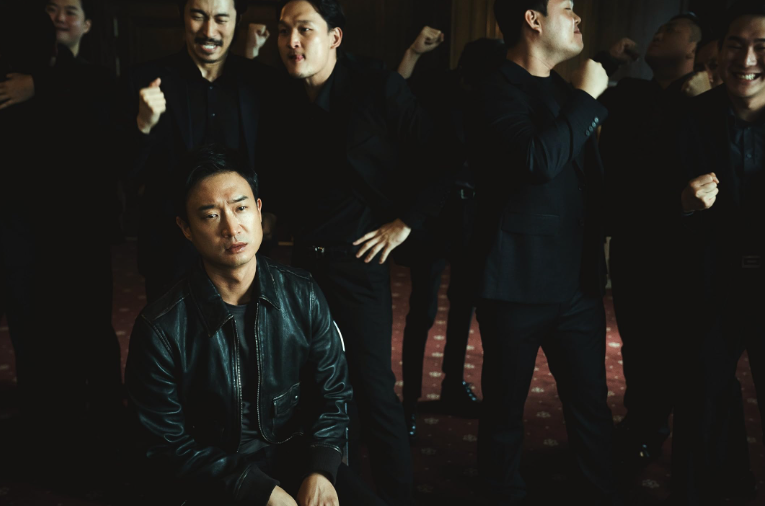
He’s got the ruthless edge for the job but zero appetite for it, plotting to offload the crown like yesterday’s leftovers. Trailing close is the silver-tongued Kang-pyo (Jung Kyung-ho), a veteran operator whose charisma could charm snakes, yet he’s betting it all on his secret tango fixation—swapping syndicate schemes for steamy midnight milongas in hidden dance halls.
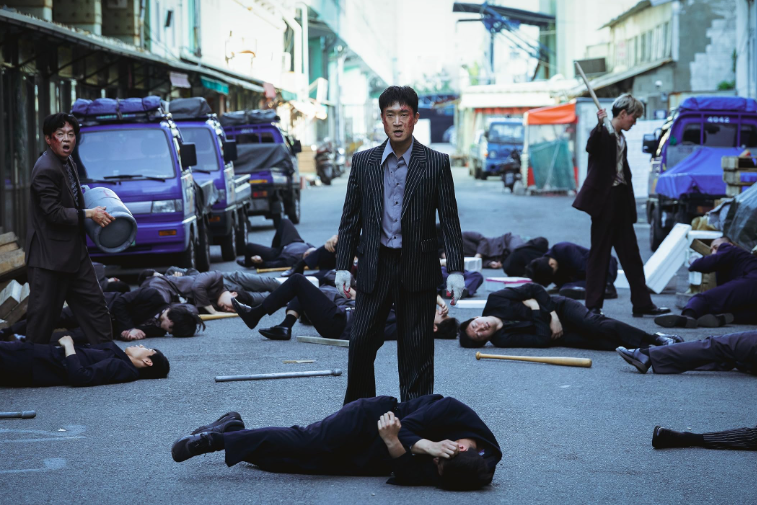
Lurking as the eternal underdog is Pan-ho (Park Ji-hwan), the hapless wildcard desperate for the gig, armed with schemes that invariably implode into comedic catastrophe. His peers dismiss him as a joke, but Pan-ho’s bulldog tenacity turns the race into a demolition derby of sabotage: tampered restaurant supplies for Soon-tae, disrupted dance auditions for Kang-pyo, and endless pratfalls that leave Pan-ho buried in his own blunders.
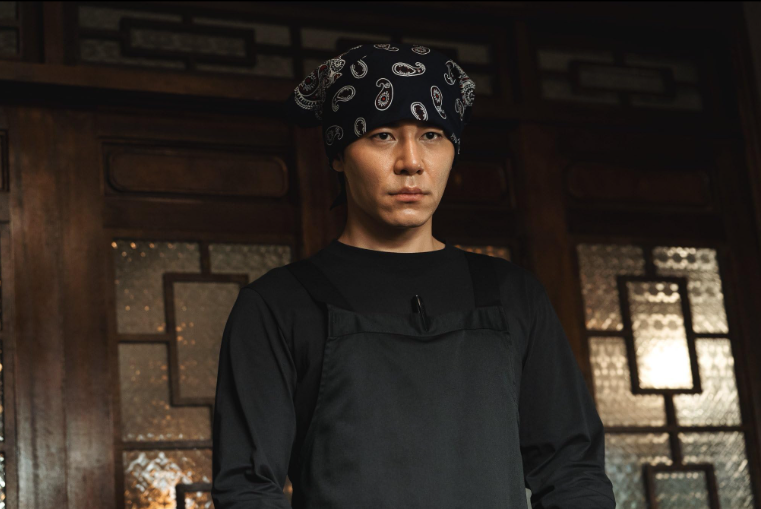
Chaos escalates with undercover cop Tae-gyu (Lee Kyu-hyung), a razor-sharp infiltrator slinging deliveries at Mimiru while plotting to torch the whole operation from inside. Personal ties tangle the mess: Soon-tae’s steely wife (Hwang Woo-seul-hye) hoards family skeletons that could topple empires, while Pan-ho woos the sultry bar hostess Ji-eun (Jung Yoo-jin), whose affections double as leverage in the loyalty lottery.
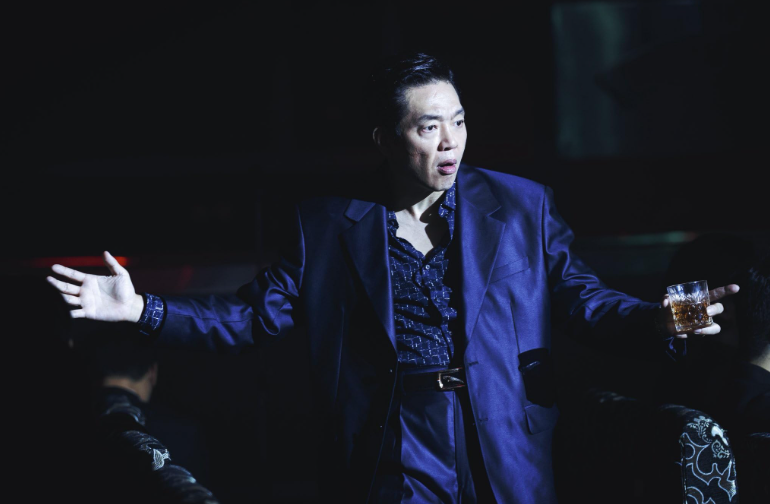
What kicks off as a calculated coup devolves into a cyclone of botched heists, alliance-flipping betrayals, and rival-gang dust-ups—all evading nosy feds amid a labyrinth of shady deals. The higher-ups’ “solution”—a bizarre gauntlet of challenges—only amps the lunacy, forcing these reluctant rivals to juggle mob machinations with their midlife crises.
Absurdity and slapstick are South Korean cinema’s lifeblood, and Boss feasts on them. It plops three villains into a zero-sum scrum where the prize is poison, cranking everyday egos into operatic excess. Soon-tae’s legit pivot clashes hilariously with Pan-ho’s sabotage—imagine poisoned dim sum or rigged health inspections gone gloriously awry.
Kang-pyo’s tango trysts provide the film’s rhythmic heart, his fluid footwork a surreal counterpoint to the gang’s blunt-force brawls. The humor peaks in the rivalry’s pettiness: contenders yielding the throne like it’s a hot potato, while Pan-ho’s earnest flops (a botched assassination attempt turning into a food fight) elicit belly laughs that border on cathartic.
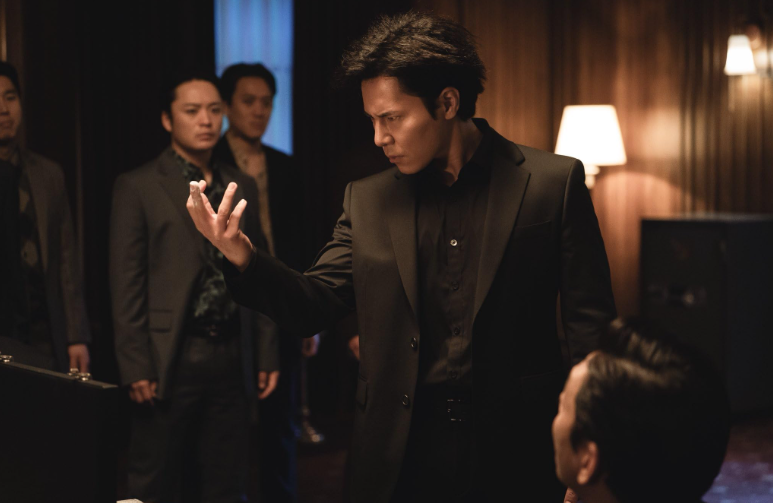
Ra Hee-chan, drawing from his Jang Jin mentorship layers the farce with kinetic action—choreographed chases through wet markets and warehouse whacks that echo The Roundup but with a wink. This Eastern absurdity fits the true definition: ridiculous exaggeration that humanizes without hollowing out.
No cosmic voids here—just flawed fellas chasing dreams in a world that won’t let them quit. The ensemble shines: Jo Woo-jin’s gravelly gravitas grounds the goofiness, Jung Kyung-ho’s charm sells the seduction of escape, and Park Ji-hwan’s rubber-faced desperation steals every scene. Supporting turns from Oh Dal-su (as a grizzled advisor) and Lee Sung-min (Tae-gyu’s deadpan delivery) add flavor, while the script’s brisk tempo—under 100 minutes—ensures it never drags.
A crowd-pleaser, blending holiday hijinks with genre subversion proves audiences crave this unpretentious joy. Boss isn’t flawless—the cop subplot occasionally veers predictable, and some gags lean on cultural in-jokes that might fly over non-Korean heads—but in a 2025 landscape clogged with Western nihilist “absurdism,” it’s a riotous rebuke.
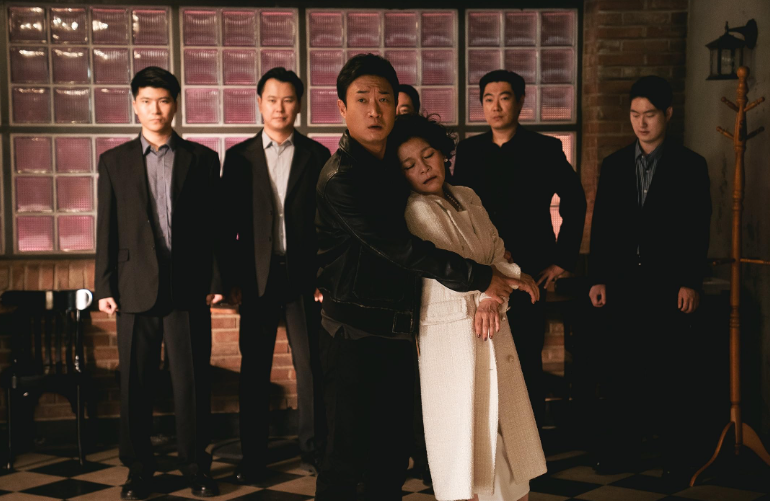
It reminds us comedy can amplify life’s lunacy without erasing its spark, delivering one of the year’s sharpest laughs.
4/5





 Society Reviews
Leave a comment