
It’s 2025, and the zombie fad has unmistakably run its course.

A decade ago, The Walking Dead was a cultural juggernaut, captivating audiences in the United States and beyond at the peak of its popularity. But it’s not 2015 anymore, and even The Walking Dead franchise is a hollow shell of its former glory. When a show plummets from 17 million viewers to a mere 700,000 in ten years, it’s a clear sign that audiences have moved on from zombies.
Yet, for reasons unfathomable, Sony Pictures decided to dredge up the 28 Days Later universe for another go with 28 Years Later. Back in 2002, 28 Days Later offered a fresh, British take on the zombie genre, introducing a fast-acting rage virus that turned people into sprinting, zombified killers who plunged the world into chaos.
Cillian Murphy led that film, delivering a raw, gripping performance. However, I’d argue that its 2007 sequel, 28 Weeks Later, outshines it. Starring Jeremy Renner as a military officer overseeing a struggling outpost tasked with reviving humanity, 28 Weeks Later dialed back the British humor for a darker, more intense action-horror experience. It was a sequel that deserved its own follow-up years ago.

Fast forward to 2025, and Sony is banking on nostalgia for a film that hit theaters nearly 25 years ago. A project stuck in development hell for years is rarely a good omen, and 28 Years Later proves why some ideas are better left on the cutting room floor. Set nearly 30 years after the initial rage virus outbreak, the film depicts a world where humanity barely remembers a time without zombified psychopaths.
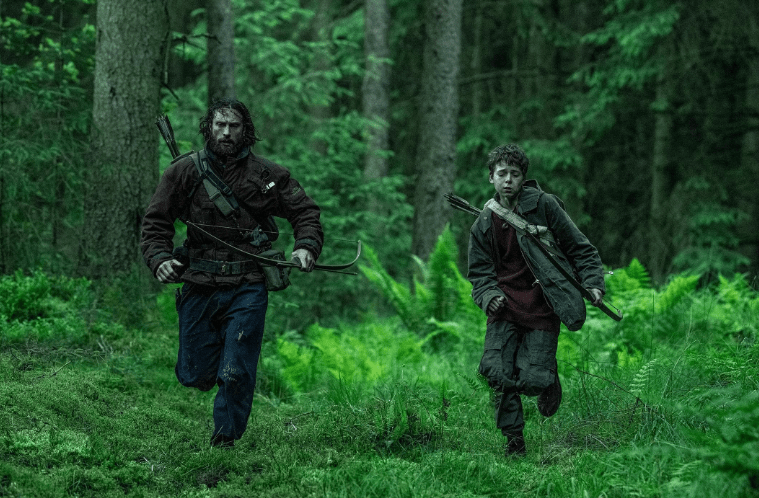
While Europe has largely freed itself from the virus, quarantined communities still grapple with new variants that spawn stronger, faster, and eerily semi-intelligent undead. The story centers on a young boy and his family. His mother suffers from a mysterious, worsening illness that defies diagnosis. The father, played by Aaron Taylor-Johnson, takes a cold, pragmatic approach, training his son to kill zombies outside the quarantine zone to prepare him for survival in their harsh reality.
This gritty dynamic sets up a promising coming-of-age tale. But after the boy discovers his father’s affair with a local woman, he defies the rules, venturing outside the zone with his ailing mother to find a rogue doctor who might hold the key to her cure. Here’s where 28 Years Later stumbles.

The first 25 minutes are compelling, grounding the story in the father-son dynamic and the brutal realities of their world. But then the film careens off a cliff, bursting into flames like a 1978 Buick with a failed parking brake. The narrative abruptly shifts from a survival tale to an absurd exploration of the mother’s empathy for the zombified creatures.
It descends further into absurdity with one of the first-ever on-screen zombie births—a jarring, tonally incoherent choice. It’s as if someone spliced a worse movie into the one you were watching 30 minutes in. The storytelling becomes so muddled that no character feels redeemable, making it nearly impossible to care about anyone, especially those the film insists you should empathize with.
The zombies, now faster, stronger, and semi-intelligent, feel like a desperate attempt to up the ante, but they only add to the narrative chaos. By the time the film tries to callback to 28 Days Later in its final moments, you’re too exhausted to care, rolling your eyes at the two-hour slog you’ve endured. I stand by my claim that 28 Weeks Later is the superior film in this trilogy.

Notably, Alex Garland and Danny Boyle, the creative duo behind 28 Days Later and its sequel, didn’t write or direct 28 Years Later. Their absence is glaring. The film’s troubled production, marked by years of creative disputes over its direction, explains its disjointed execution.
Since 2008, Garland and Boyle struggled to align on a vision for another sequel, and 28 Years Later suggests they should have left it alone. One can’t help but wonder if Juan Carlos Fresnadillo, who directed 28 Weeks Later, was unavailable.
28 Years Later starts with promise but becomes an off-putting mess that worsens with every passing minute. It’s a textbook example of a franchise overstaying its welcome, banking on nostalgia for a cultural moment long past. The zombie genre, once a vibrant reflection of societal fears, feels tired and irrelevant here.

Sony’s gamble on reviving this universe ignores the reality that audiences have moved on, and the film’s incoherent narrative only seals its fate. 28 Years Later isn’t worth the wait—or the watch.
1.5/5
Don’t forget to Subscribe for Updates. Also, Follow Us at Society-Reviews, YouTube, Twitter, Odysee, Rumble, and Twitch




 Society Reviews
Leave a comment