
We live in a world where Hollywood seems unable to understand why movie theater attendance is declining. Perhaps the issue lies in Hollywood’s persistent production of nauseating, left-wing progressive lectures thinly disguised as entertainment.

The “magical negro” stereotype has long been criticized in films. This trope typically involves a supporting Black character who exists primarily to aid the white protagonist. Coined by filmmaker Spike Lee, who was troubled by on-screen race relations in modern movies, the term critiques portrayals that some deem racist, especially when compared to more confrontational depictions of racial conflict.
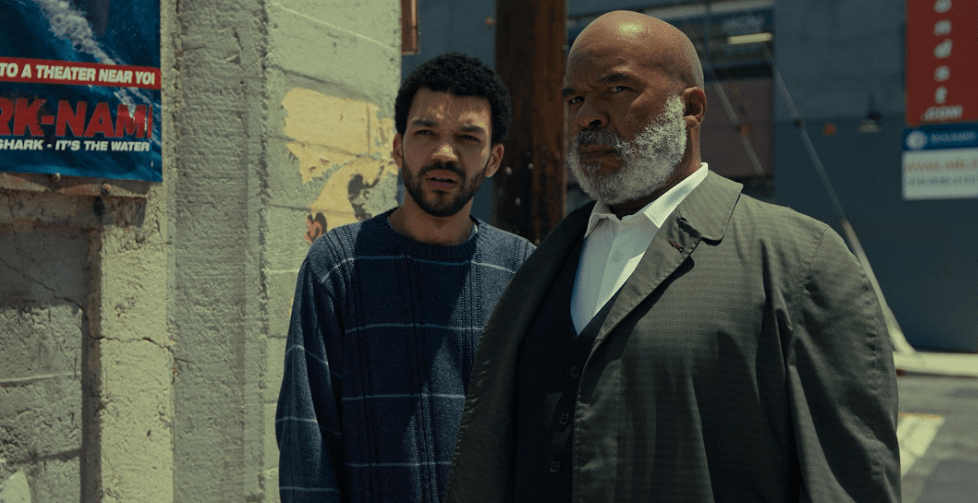
But what if this racial critique were taken a step further? What if a movie centered on a group of Black people tasked with keeping white people comfortable for their own safety? This is the premise of The American Society of Magical Negroes. The film stars Justice Smith as Aren, the textbook definition of a beta male. Aren is a failed artist struggling to sell his abstract art, which few understand and even fewer want to buy. Because he excels at being a doormat to anyone within a five-foot radius, he is recruited by Roger (David Alan Grier) to join a secret society of “magical negroes.”
Aren’s knack for making white people comfortable—purportedly the only way to prevent them from harming Black people—earns him a place in the society. He is assigned to an ad agency executive whose emotional distress, or “white tears,” requires soothing. This is not a joke; it’s the actual plot of the movie.

Along the way, Aren falls for a female coworker at the agency, but as a “magical negro,” he is forbidden from pursuing her romantically, as he must prioritize the feelings of the white executive. The American Society of Magical Negroes is arguably one of the most racist films in recent years. Yet, its greatest sin is being one of the most boring, led by an actor ill-suited to carry a feature film.
Justice Smith, Hollywood’s go-to actor for roles requiring a Black and effeminate presence, is tasked with leading this supposed comedy, thinly veiled as satire. If you’ve seen Smith in one movie, you’ve seen his entire range. He’s the cinematic equivalent of a mediocre character whose favorite hobby is binge-watching Netflix. This film not only relies on him to carry a nearly two-hour narrative but also uses him as a mouthpiece for Black oppression in America.
Kobi Libii, the writer and director, is relatively unknown. When you realize that Justice Smith’s character is essentially a stand-in for Libii himself, it becomes clear why the film feels so lifeless. Libii, who has about as much charisma as a fork in a broken socket, forces audiences to endure a movie centered on his own perspective.

Like many progressive Hollywood projects that exploit white guilt, Libii’s film perpetuates the racist narrative that white people are the world’s most dangerous threat. Its core message—that Black people die when white people are uncomfortable—is so detached from reality it would seem absurd even in a fantasy film.
The American Society of Magical Negroes cloaks its poorly disguised hatred and racism in comedy, falling back on the label of “satire” when criticized for fueling racial division. Without this division, the film has nothing to offer. There’s no chemistry between the leads, as Justice Smith struggles to convincingly portray a heterosexual character. The forced love triangle feels like a placeholder for the filmmaker’s views on race. Smith’s character only comes alive to lecture audiences about how Black people in America live under the constant threat of white hostility.

This, my friends, is called projection. Libii makes it clear he harbors resentment toward white people and America, yet expects audiences to support his film to avoid being labeled racist. The American Society of Magical Negroes is a soulless, charisma-devoid film brimming with hate.

Don’t forget to Subscribe for Updates. Also, Follow Us at Society-Reviews, YouTube, Twitter, Odysee, Rumble, and Twitch





 Society Reviews
Leave a comment