

In the landscape of Christian theology, few passages provoke as much debate as Romans 11, the Apostle Paul’s intricate discourse on God’s enduring relationship with the Jewish people.

Written nearly 2,000 years ago, this chapter has become a flashpoint in modern evangelical circles, particularly as interpretations of Israel’s role in God’s plan clash with evolving views on replacement theology—also known as supersessionism—and covenant theology.
At its core, Romans 11 presents a vivid metaphor: an olive tree representing God’s covenant people, with natural branches (ethnic Israel) partially broken off due to unbelief, allowing wild branches (Gentiles) to be grafted in. Yet Paul insists these natural branches can—and will—be restored. “And so all Israel will be saved,” he declares in verse 26, quoting Old Testament prophecies of a Deliverer coming from Zion to remove ungodliness from Jacob.
For many scholars and pastors, this is not mere allegory but a literal promise of national Israel’s future spiritual revival. “Paul is clear: God’s gifts and calling to Israel are irrevocable,” says Thomas Schreiner, a New Testament professor at Southern Baptist Theological Seminary, echoing Romans 11:29. This view, often aligned with dispensationalism, sees a distinct future for ethnic Israel, separate from the church’s role in the present age.

Yet traditional covenant theology, influential in Reformed circles, has long interpreted these promises as fulfilled spiritually in the church, which includes believing Jews and Gentiles as the “new Israel.” Replacement theology, a stronger variant, posits that the church has fully superseded ancient Israel, rendering national Jewish restoration unnecessary or impossible.
Romans 11, however, appears to dismantle such frameworks. Paul begins with a rhetorical question: “Has God rejected his people? By no means!” (verse 1). He points to himself—a Jew—as evidence, alongside a remnant chosen by grace. The chapter’s olive tree imagery underscores continuity: Gentiles partake in Israel’s spiritual root but do not replace it. “Do not be arrogant toward the branches,” Paul warns in verse 18, cautioning against the very conceit that has fueled historical supersessionism.
The climax comes in verses 25-26: Israel’s partial hardening is temporary, lasting “until the fullness of the Gentiles has come in.” Then, “all Israel will be saved.” Commentators like John Murray and Douglas Moo, from Reformed traditions, interpret this as a future mass conversion of ethnic Jews, not merely the ongoing salvation of individual Jews or a symbolic reference to the church.

This reading poses a profound challenge to replacement theology. If God has permanently cast off national Israel, why does Paul envision their regrafting as “life from the dead” (verse 15)? Why affirm they remain “beloved for the sake of the fathers” (verse 28)? As one evangelical leader put it in a recent commentary, “Replacement theology thrives on Gentile arrogance, which Paul directly counters.”
Even within covenant theology, diversity exists. Figures like R.C. Sproul acknowledged a “future for ethnic Israel,” while others, following John Calvin, spiritualized the promises more fully. But a growing chorus—spanning outlets like Desiring God and The Gospel Coalition—argues that Romans 11 demands recognition of Israel’s enduring election.
This theological tension intersects with contemporary realities. Evangelical support for the modern state of Israel, long a hallmark of Christian Zionism, remains robust among older generations, with polls showing consistent affirmation of biblical ties to the land and people. Yet younger evangelicals are shifting, influenced by social media portrayals of the Israeli-Palestinian conflict and progressive critiques of nationalism.

A 2025 study by Infinity Concepts and Grey Matter Research found evangelical views on Jews as “God’s chosen people” holding steady at around 49 percent, but generational gaps hint at erosion. Barna Group data from recent years shows support for Israel among those under 30 plummeting in some metrics, raising questions about the future of pro-Israel evangelicalism.
Critics of Christian Zionism argue it politicizes scripture, tying faith to a modern nation-state. Proponents counter that Romans 11’s promises—irrevocable covenants, future salvation—naturally extend to affirming Jewish self-determination in their ancestral homeland.
The debate is not merely academic. Historical supersessionism has contributed to centuries of Christian antisemitism, from medieval pogroms to modern indifference during the Holocaust. Post-Vatican II Catholic teaching and evangelical statements have repudiated punitive forms of replacement theology, emphasizing shared roots and God’s faithfulness.

“If we ignore Paul’s warning against boasting, we risk repeating the errors of the past.”
Ultimately, Romans 11 redirects focus from human systems to divine mystery. Paul ends with a doxology: “Oh, the depth of the riches and wisdom and knowledge of God!” (verse 33). All things—from Israel’s temporary stumbling to Gentile inclusion to future restoration—serve God’s glory.
In an era of polarized faith and geopolitics, this ancient text invites humility. Whether one leans dispensational or covenantal, Paul’s message endures: God has not abandoned His ancient people. Their story, intertwined with the church’s, points to a redemptive future where mercy triumphs for all.
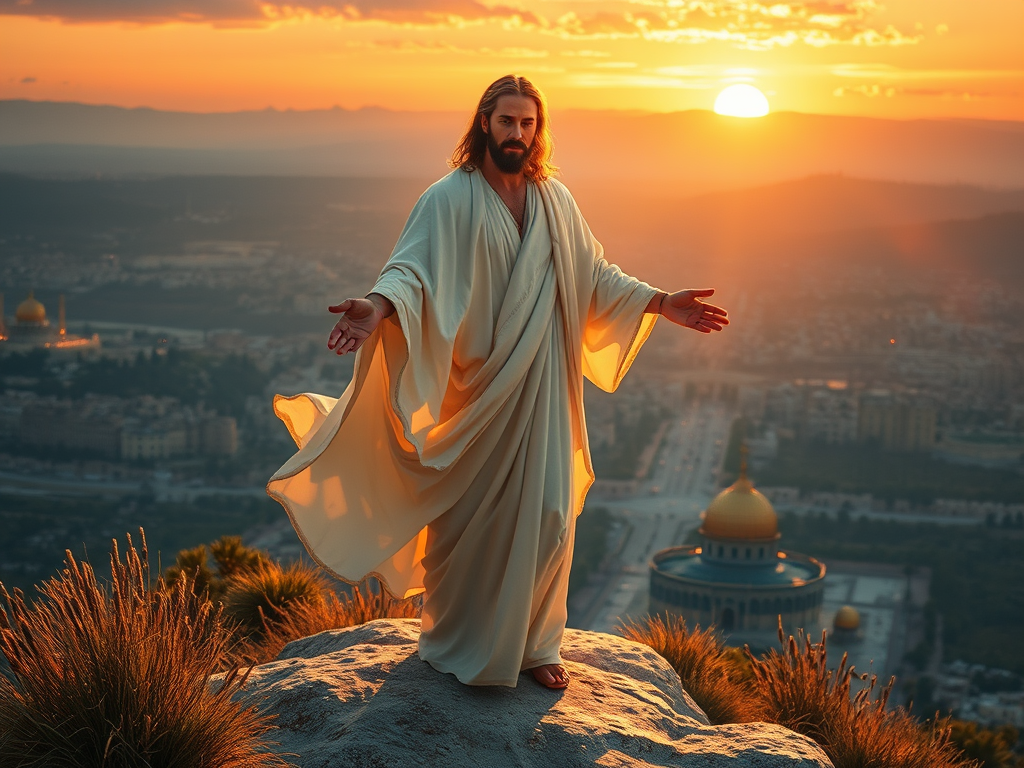
As evangelicalism navigates these waters, Romans 11 stands as a clarion call—one that tears down walls of replacement and rebuilds bridges of hope.
Don’t forget to Subscribe for Updates. Also, Follow Us at Society-Reviews, YouTube, Instagram, Twitter, Odysee, Rumble, and Twitch





 Society Reviews
Leave a comment