

As Israel navigates a fragile ceasefire in Gaza, diplomatic breakthroughs like the recent recognition of Somaliland, and persistent security threats—including a deadly vehicle ramming and stabbing attack in the north on Dec. 26—questions about the nation’s spiritual and theological significance persist among Christians worldwide.

For many evangelical Protestants, who form a key pillar of U.S. support for Israel, the biblical chapter of Romans 10 offers a stark portrait: a zealous but spiritually misguided people in need of salvation through faith in Jesus Christ. This New Testament passage, written by the apostle Paul nearly 2,000 years ago, describes the ancient Israelites’ rejection of God’s righteousness in favor of their own efforts—a description some believers say mirrors aspects of modern Israel’s religious landscape.
In a nation where Judaism predominates and only a tiny fraction of Jews accept Jesus as Messiah, Romans 10 serves as both a diagnosis of Israel’s current spiritual state and a pointed critique of certain Christian theological frameworks that downplay the Jewish people’s distinct future role.
Paul, himself a Jew, opens the chapter with heartfelt longing: “Brethren, my heart’s desire and prayer to God for Israel is, that they might be saved.” He acknowledges their “zeal of God, but not according to knowledge,” as they seek to establish their own righteousness rather than submit to God’s through faith in Christ.

This zeal without knowledge, proponents of a literal reading argue, echoes contemporary Israel. Recent data from sources like the Pew Research Center and Israel’s Central Bureau of Statistics show that while the country is overwhelmingly Jewish—about 78 percent of the population—religious practice varies widely. Many identify as secular or “Hiloni” (non-observant), with growing numbers in Reform streams, but orthodox Judaism emphasizes Torah observance and tradition over recognition of Jesus as the fulfillment of messianic prophecies.
Messianic Jews—those who believe in Jesus while maintaining Jewish identity—number only an estimated 10,000 to 20,000 in Israel, a small remnant amid a population of over 10 million. Most Israelis adhere to traditional Judaism, which rejects the Christian claim that Jesus is the Messiah foretold in the Hebrew Scriptures.
For dispensationalist theologians and many evangelicals, this national unbelief is not evidence that God has abandoned Israel but a temporary “partial hardening” described in Romans 11. Romans 10 underscores Israel’s accountability: They have heard the gospel—”Have they not heard? Yes verily, their sound went into all the earth”—yet as a nation, they remain “disobedient and gainsaying,” with God still “stretching forth his hands” in mercy.

This interpretation directly challenges two influential Christian theological systems: replacement theology (also called supersessionism) and aspects of covenant theology.
Replacement theology posits that the church has permanently supplanted Israel as God’s covenant people, with Old Testament promises to the Jewish nation now fulfilled spiritually in Christianity. Proponents often spiritualize prophecies about Israel’s restoration, applying them solely to the church.
Yet Romans 10, read literally, portrays Israel’s unbelief as ongoing but not final. Paul quotes Old Testament passages addressed to Israel, applying them to his contemporaries’ rejection of Christ while expressing hope for their salvation. If the church had fully replaced Israel, critics ask, why would Paul grieve so deeply for their salvation or diagnose a national spiritual ailment?

Covenant theology, prevalent in Reformed traditions, emphasizes continuity between Old and New Testaments, viewing the church as the fulfillment of Israel’s promises. While not all covenant theologians embrace full replacement, many interpret Israel’s covenants as expanded to include Gentiles in the church, without a distinct future national restoration.
Romans 10 pushes back, these critics contend, by maintaining sharp distinctions: Israel pursues righteousness by works of the law, while salvation comes by faith in Christ—available to all, but rejected nationally by Jews in Paul’s day and, by extension, today. The chapter’s climax in verse 21—”All day long I have stretched forth my hands unto a disobedient and gainsaying people”—quotes Isaiah 65:2, explicitly about Israel, suggesting God’s patient outreach continues.
In the context of 2025’s Israel—marked by religious freedom for minorities, including about 185,000 Christians (mostly Arab), but also reports of rising attacks on Christian symbols by some ultra-Orthodox groups—this biblical lens gains traction among pro-Israel evangelicals.

Polls show evangelical support for Israel remains robust, particularly among older generations, driven by beliefs in biblical promises to the Jewish people. A recent survey by Infinity Concepts and Grey Matter Research found attitudes unchanged from 2021, with many viewing Jews as God’s chosen people and prioritizing spiritual support for the nation.
Yet shifts are evident among younger evangelicals, with some questioning unconditional backing amid the Gaza conflict and broader geopolitical debates. Influencers like Tucker Carlson have critiqued “Christian Zionism” as misguided, while others highlight humanitarian concerns.
Still, for those adhering to a literal interpretation, Romans 10 rebukes any theology that writes off Israel’s future. The chapter is part of Romans 9-11, a unit affirming God’s faithfulness: Israel stumbled but did not fall permanently; their rejection brought salvation to Gentiles, provoking jealousy that will eventually lead to national repentance (Romans 11:11-26).This view sees modern Israel’s existence—not as salvation itself, but as a sign of God’s enduring covenants. Promises of land and restoration, given unconditionally to Abraham, remain intact.
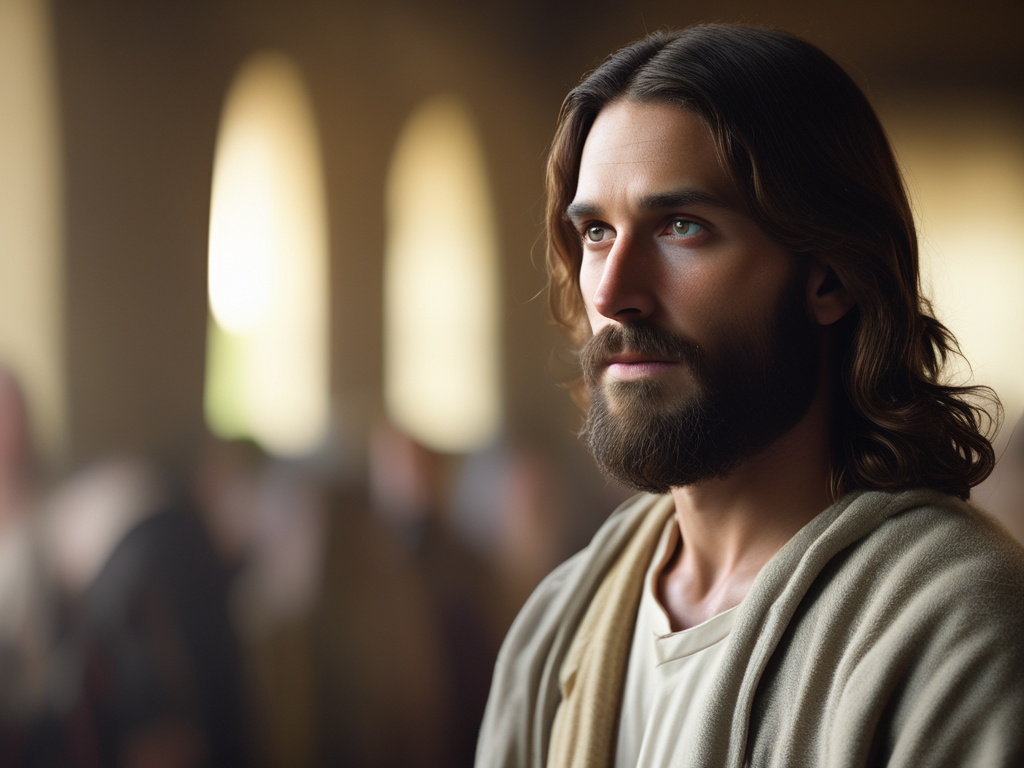
As one evangelical leader put it in a recent statement, God’s gifts and calling to Israel are “irrevocable.” In a world of shifting alliances, Romans 10 invites Christians to pray for Israel’s salvation—not as a replaced entity, but as a beloved nation still central to God’s redemptive story.
Amid holiday tensions—Christmas celebrations subdued in Bethlehem due to ongoing regional strife—and efforts by some Jewish and Christian groups in Israel to build bridges, the ancient words of Paul resonate anew: zeal alone is insufficient; true righteousness comes by faith.
Whether one sees Romans 10 as prophecy fulfilled or theological warning, it ensures the debate over Israel’s place in Christian thought—and God’s plan—remains far from settled.
Don’t forget to Subscribe for Updates. Also, Follow Us at Society-Reviews, YouTube, Instagram, Twitter, Odysee, Rumble, and Twitch



 Society Reviews
Leave a comment