
Every autumn, after the solemn fasting of Yom Kippur and before the joyous week of Sukkot, five ordinary days slip by on the Jewish calendar: Tishri 11 through Tishri 15.
In synagogue life they are simply the days when families scramble to finish building their sukkah, buy the citron and palm branch, and sweep the last crumbs of leaven from the house. Most Jews have never heard them called by their ancient rabbinic names, and few pause to ask why the holiest day of the year is followed by a deliberate five-day gap before the festival of “rejoicing with the Divine Presence.”
Yet an astonishing convergence of biblical prophecy, Jewish tradition, and precise chronological patterns has led a growing number of scholars and believers—Jewish and Christian alike—to see these five days as one of the most overlooked prophetic intervals in Scripture.
The Day of Atonement (Yom Kippur, Tishri 10) is the only day on which the high priest once entered the Holy of Holies to make atonement for the entire nation. Zechariah 12:10–13:1 and Romans 11:26 describe a future moment when the Jewish people will look upon “Me whom they have pierced,” mourn as for an only son, and experience national cleansing.
The timing is explicit: “In that day there shall be a fountain opened to the house of David and to the inhabitants of Jerusalem for sin and for uncleanness.”
Five days later, on Tishri 15, the Feast of Tabernacles begins. Zechariah 14:16-19—perhaps the clearest millennial passage in the Hebrew Bible—declares that after the dramatic battle in which “the LORD shall be king over all the earth,” every surviving nation will be required, year after year, “to keep the feast of tabernacles.” Refusal will bring drought. The command is so specific that it implies the very first observance must begin in the same year as the victory. Between those two appointed times lie exactly five days.
Jewish tradition never treats those days as filler. The Mishnah and Talmud give them distinct roles:
- Tishri 11 is “the day after the Atonement,” when the final verdict of Yom Kippur is sealed and carried out.
- Tishri 12 is marked by the beating of the willow—a final, symbolic removal of sin.
- Tishri 13 is the day of gathering the four species, representing the ingathering of every type of person.
- Tishri 14, the eve of Sukkot, is the frantic final preparation of the sukkah, because on the next day the Shekinah glory is said to come and dwell.
Tishri 10 – YOM KIPPUR The Visible Second Coming & National Atonement of Israel
- Sunrise to noon
The sky is rolled back as a scroll (Revelation 6:14). Every eye sees Him (Revelation 1:7).
The Lord descends with His already-raptured church (Jude 14-15; Revelation 19:14). - Early afternoon
His feet stand on the Mount of Olives (Zechariah 14:4).
Catastrophic earthquake splits the mountain east-west, creating a new valley (Zechariah 14:4-5). - Mid-afternoon
The armies gathered against Jerusalem are destroyed by the sword from His mouth (Revelation 19:15, 21).
The beast (Antichrist) and false prophet are seized and cast alive into the lake of fire (Revelation 19:20). - Late afternoon – sunset
Surviving Jews in Jerusalem and worldwide “look upon Me whom they have pierced” (Zechariah 12:10).
National mourning, family by family (Zechariah 12:12-14).
A fountain is opened for sin and uncleanness (Zechariah 13:1).
“All Israel shall be saved” (Romans 11:26).
This is the final, ultimate Yom Kippur.
Tishri 11 – Day 1 after Yom Kippur – Execution of the Decree & Initial Cleansing
- The decree sealed on Yom Kippur is now carried out (Jewish tradition: “Yom Hameyuchas”).
- The Lord purges the rebels from Israel (Ezekiel 20:37-38).
Tishri 12 – Day 2 – Final Removal of Sin from the Land
- Jewish tradition: the “beating of the willow” – last traces of sin symbolically cast away.
- The abomination is removed from the temple mount (Daniel 12:11).
Tishri 13 – Day 3 – The Ingathering & Resurrection
- Jewish tradition: gathering the four species (lulav) – all humanity represented.
- Christ gathers all surviving nations before His throne (Matthew 25:31-32).
- The sheep-and-goats judgment of living Gentiles (Matthew 25:33-46).
- Resurrection of Old Testament saints (Daniel 12:13 – “stand in thy lot at the end of the days”).
- Resurrection of tribulation martyrs (Revelation 20:4 – “they lived and reigned with Christ a thousand years”).
Tishri 14 – Day 4 – Erev Sukkot – The Great Day of Preparation
- Jewish tradition: final building of the sukkah, cleansing the house, preparing the feast.
- The land is declared ceremonially clean enough for the Divine Presence.
- Surviving nations are organised and summoned to Jerusalem (Zechariah 14:16).
- Final instructions are given for the first millennial observance of Tabernacles.
- The resurrected saints receive their positions of authority for the kingdom (Luke 19:17-19).
Sunset Tishri 14 → Sunrise Tishri 15 – Day 5 – The First Day of the Feast of Tabernacles
- The sun rises on the first official day of the 1,000-year reign of Christ.
- The nations that are left go up to Jerusalem “to worship the King… and to keep the feast of tabernacles” (Zechariah 14:16).
- The Lord now literally tabernacles among men (Ezekiel 37:26-28; Revelation 21:3).
- The earth is filled with the knowledge of the glory of the LORD (Habakkuk 2:14).
- From this day forward, every year begins with the commanded observance of Sukkot under the personal reign of Messiah.

For centuries, rabbis taught that these five days are when heaven and earth are made ready for the Divine Presence to return. Christian scholars who read the Hebrew Scriptures literally have noticed something breathtaking: the events that must occur immediately after the Second Coming and before the inauguration of the promised Messianic kingdom fit precisely into those five days.
When the Lord returns, Zechariah says His feet will stand on the Mount of Olives, splitting it in two (14:4). Revelation 19:20 adds that the beast and false prophet are cast alive into the lake of fire. Matthew 25:31-46 describes Jesus sitting on His throne of glory and separating the nations as a shepherd divides sheep from goats. Daniel 12:13 and Revelation 20:4 speak of a resurrection of Old Testament and tribulation saints who will reign with Him a thousand years. Ezekiel 39:11-16 requires a seven-month burial of the armies of Gog just to cleanse the land. Ezekiel 20:37-38 says the Lord will purge the rebels from among His people.
None of these can happen in a single instant. They require a short, defined interval of preparation and judgment. The five days provide exactly that interval. A precise timeline illustrates the fit. If the crucifixion and resurrection occurred in A.D. 33 (the date favored by the majority of conservative scholars), then two thousand biblical years later—matching Hosea 6:2’s “after two days He will revive us; in the third day He will raise us up”—lands in 2033. A seven-year tribulation beginning on Yom Kippur 2026 would end on Yom Kippur 2033.
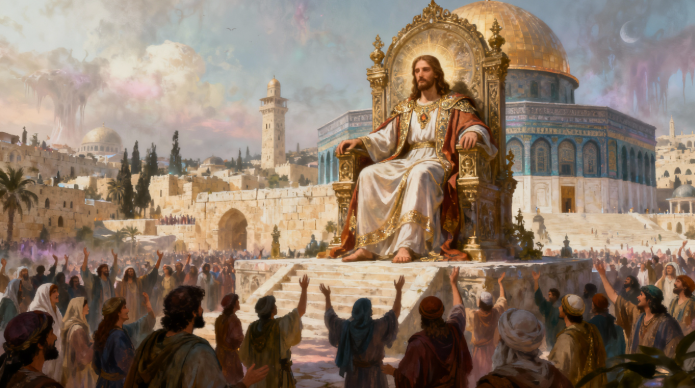
Christ’s return on that Day of Atonement would fulfill Israel’s national cleansing. Five days later, Tishri 15, 2033, the Feast of Tabernacles would dawn—and the first official year of the thousand-year reign would begin, exactly as Zechariah requires. Jewish tradition, preserved for millennia without recognizing its ultimate meaning, rehearses the sequence every single year:
For believers who hold to a literal reading of both Testaments, the five days are not a curious gap. They are the hinge on which history turns: the brief, intense moment when the old age is judged, the earth is cleansed, and the Messianic kingdom of peace is finally, joyously inaugurated under the branches of the sukkah.
Whether one awaits the Messiah’s first coming or His second, the ancient Jewish calendar still whispers the same message every autumn: after atonement comes preparation, and after preparation comes the great rejoicing when God dwells with His people.

Five days. Five thousand years of longing compressed into less than a week. When that final Yom Kippur arrives, the Jewish people—and the watching world—may discover that the five days they have always observed were never ordinary at all.
Don’t forget to Subscribe for Updates. Also, Follow Us at Society-Reviews, YouTube, Twitter, Odysee, Rumble, and Twitch



 Society Reviews
Leave a comment