
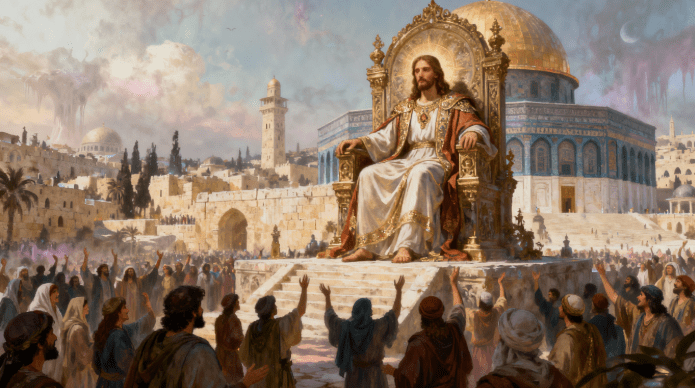
The 14th chapter of Zechariah stands as one of the most devastating passages in Scripture for any theology that claims God has permanently cast away the Jewish people or transferred Israel’s promises to the Church.
Written around 520–518 B.C. to a post-exilic Jewish community rebuilding Jerusalem, Zechariah’s vision is unmistakably national, geographic, and Jewish. It is not an allegory. It is not “spiritualized.” Read literally in the King James Bible, it obliterates Replacement Theology (supersessionism), Covenant Theology’s amillennial framework, and the notion that the Church is the “new” or “true” Israel. Let us walk through the chapter verse by verse.
Verses 1–2: The Final Global Assault on Jerusalem
“Behold, the day of the LORD cometh, and thy spoil shall be divided in the midst of thee. For I will gather all nations against Jerusalem to battle; and the city shall be taken, and the houses rifled, and the women ravished; and half of the city shall go forth into captivity, and the residue of the people shall not be cut off from the city.”
- This is unmistakably the literal city of Jerusalem—not “the Church” or a spiritual entity.
- God Himself gathers all nations against it in the future (“the day of the LORD”).
- The horrors are physical: plunder, rape, captivity. Replacement Theology cannot spiritualize this away without doing violence to the text. If Jerusalem here is “the Church,” then God is gathering the nations to ravish the Church—an absurd reading rejected by every major commentator, even amillennial ones.
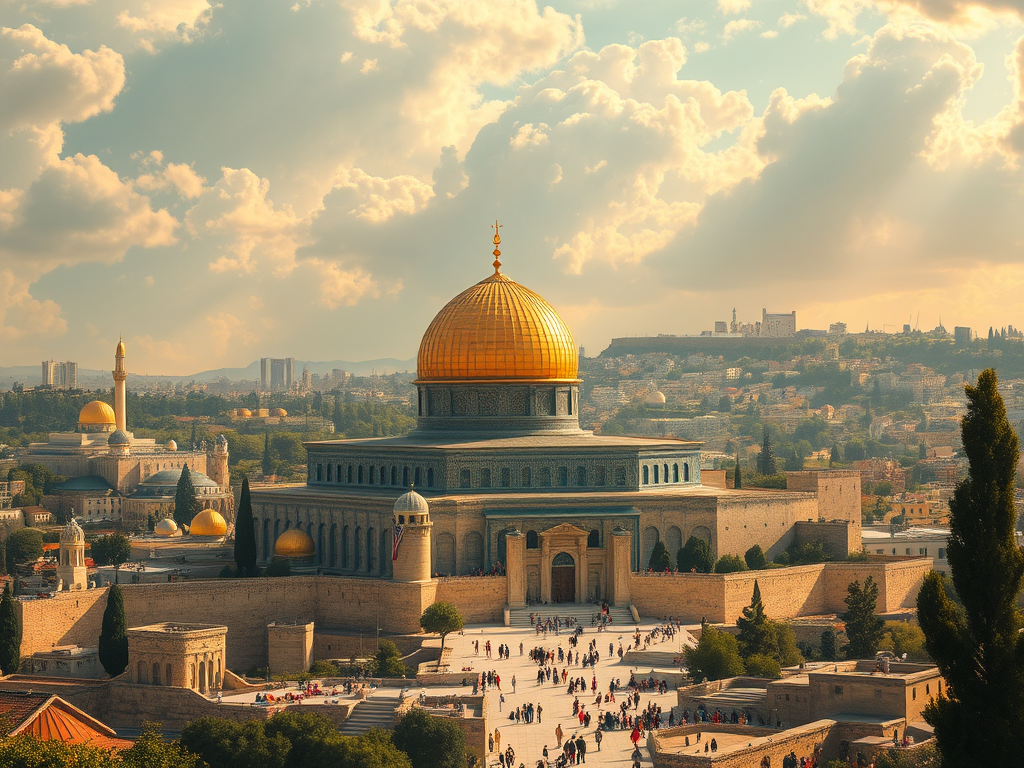
Verses 3–5: The Physical Return of Messiah to the Mount of Olives
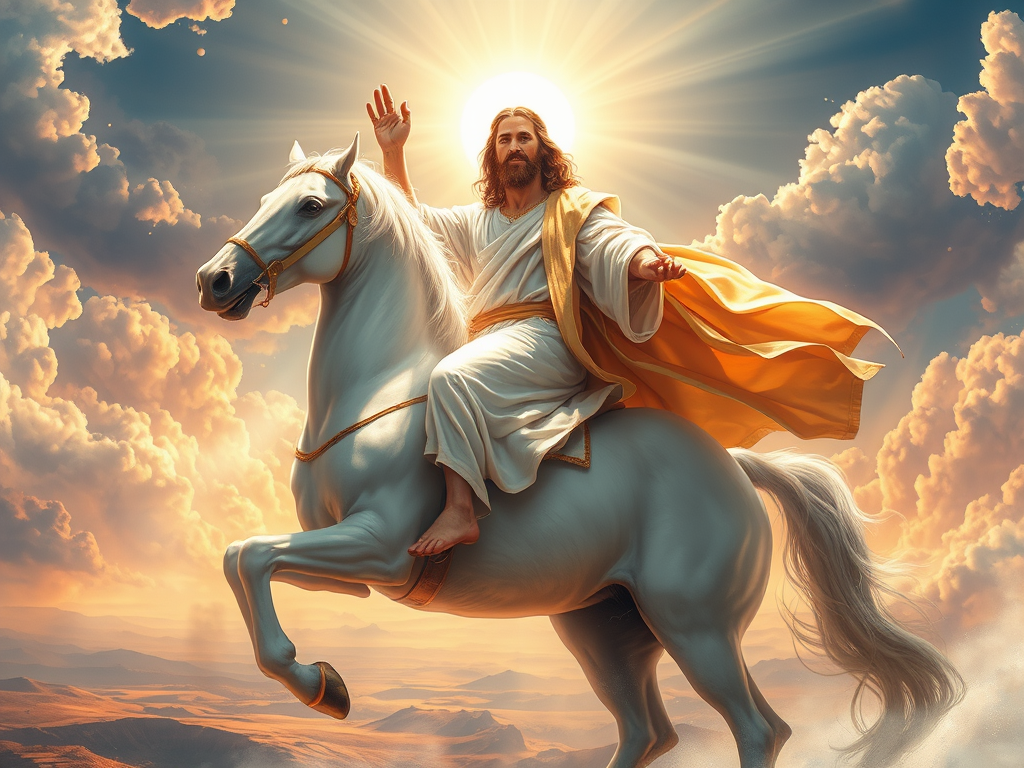
“Then shall the LORD go forth, and fight against those nations, as when he fought in the day of battle. And his feet shall stand in that day upon the mount of Olives, which is before Jerusalem on the east, and the mount of Olives shall cleave in the midst thereof toward the east and toward the west… and ye shall flee to the valley of the mountains… yea, ye shall flee, like as ye fled from before the earthquake in the days of Uzziah king of Judah: and the LORD my God shall come, and all the saints with thee.”
- The LORD (Yahweh) physically returns and His feet stand on the Mount of Olives—the exact location from which Jesus ascended (Acts 1:11–12). This is the Second Coming.
- A topographic miracle occurs: the mountain splits, creating a valley for Jewish inhabitants to escape.
- “All the saints” come with Him—believers return to a Jewish Jerusalem that is still under siege.
- Covenant Theology often insists Christ’s kingdom is already fully realized spiritually. Here, the kingdom arrives with seismic, literal intervention to rescue ethnic/national Israel.
Verses 6–7: Cosmic Signs and Living Light
“And it shall come to pass in that day, that the light shall not be clear, nor dark: But it shall be one day which shall be known to the LORD, not day, nor night: but it shall come to pass, that at evening time it shall be light.”
- Supernatural atmospheric changes accompany the Lord’s return—echoing Joel 2 and Matthew 24.
- This is not the eternal state (where there is no night, Rev 21:25); it is a transitional day known only to God. The text demands a future, literal fulfillment.
Verses 8–9: Living Waters from Jerusalem and Universal Kingship
“And it shall be in that day, that living waters shall go out from Jerusalem; half of them toward the former sea, and half of them toward the hinder sea: in summer and in winter shall it be. And the LORD shall be king over all the earth: in that day shall there be one LORD, and his name one.”
- Living waters flow from literal Jerusalem—fulfilling Ezekiel 47 and Joel 3:18. John applies this imagery spiritually to believers now (John 7:38), but the geographic source remains Jerusalem in the age to come.
- The LORD becomes king over all the earth—a future event, not the present spiritual reign claimed by amillennialism. The Shema (Deut 6:4) is universally realized only after Israel’s deliverance.
Verses 10–11: Topographical Transformation and Eternal Security for Jerusalem
“All the land shall be turned as a plain from Geba to Rimmon south of Jerusalem: and it shall be lifted up, and inhabited in her place… And men shall dwell in it, and there shall be no more utter destruction; but Jerusalem shall be safely inhabited.”
- Massive geological upheaval exalts Jerusalem geographically and politically.
- The city is safely inhabited forever—no more “utter destruction” (herem). This directly contradicts Replacement Theology’s claim that Jerusalem’s judgments (70 A.D.) were final and irrevocable.
Verses 12–15: Plague on the Attackers and Plunder Reversed
“And this shall be the plague wherewith the LORD will smite all the people that have fought against Jerusalem; Their flesh shall consume away while they stand upon their feet… And so shall be the plague on the horse, on the mule… And the wealth of all the heathen round about shall be gathered together…”
- A horrific, instantaneous plague strikes the invading armies—often linked to nuclear-like effects in modern interpretation.
- The plunder taken from Jerusalem (v. 1) is reversed; Israel plunders her enemies. God fights for the Jewish inhabitants as He did in Exodus and Joshua.
Verses 16–19: The Nations Worship at Jerusalem During the Millennium
“And it shall come to pass, that every one that is left of all the nations which came against Jerusalem shall even go up from year to year to worship the King, the LORD of hosts, and to keep the feast of tabernacles. And whosoever will not come up of all the families of the earth unto Jerusalem… upon them shall be no rain…”
- Surviving Gentiles are required to pilgrimage to Jerusalem annually for the Feast of Tabernacles—a distinctly Jewish feast (Lev 23:34).
- Punishment (drought, plague) falls on nations that refuse. This is a future earthly kingdom centered on a restored Israel and a rebuilt Temple system.
- If the Church were the “new Israel” and Old Testament feasts abolished, why does God enforce a Jewish feast on the nations? This is lethal to Covenant Theology’s claim that the Church fulfills and supersedes Israel’s role.
Verses 20–21: Universal Holiness Centered in Jerusalem
“In that day shall there be upon the bells of the horses, HOLINESS UNTO THE LORD… Yea, every pot in Jerusalem and in Judah shall be holiness unto the LORD of hosts… and in that day there shall be no more the Canaanite in the house of the LORD of hosts.”
- Even mundane objects bear the inscription once reserved for the high priest’s crown (Ex 28:36).
- “No more the Canaanite” (unclean foreigner) in the house of the Lord—complete separation and purity in a restored Jewish Temple worship.

Why Zechariah 14 Destroys Supersessionist Theologies
- Jerusalem remains the geographic and spiritual center of God’s kingdom—not Rome, Constantinople, or “the Church universal.”
- Ethnic/national Israel is delivered, regathered, and exalted—never permanently abandoned (contra Rom 11:1–2, but here visibly fulfilled).
- Jewish feasts and Temple worship continue in the future age—directly contradicting claims that they are forever abolished.
- The Lord’s physical return is to rescue and reign over Israel, not to evacuate the Church and leave Israel behind.
- Gentiles serve and worship at Jerusalem under Jewish primacy—reversing Replacement Theology’s hierarchy.
In short, Zechariah 14 is a literal, future, Jewish-centered vision of the Messianic kingdom. Any theology that spiritualizes these details away must do so by overriding the plain text. The chapter leaves no room for the idea that God has abandoned the Jews or that the Church is the “new Israel.”

Instead, it gloriously reaffirms that Israel remains beloved for the fathers’ sakes (Rom 11:28), and one day “the LORD shall be king over all the earth” from a restored, exalted Jerusalem. Replacement Theology does not survive an honest reading of this chapter. Zechariah 14 buries it.
Don’t forget to Subscribe for Updates. Also, Follow Us at Society-Reviews, YouTube, Instagram, Twitter, Odysee, Rumble, and Twitch



 Society Reviews
Leave a comment