
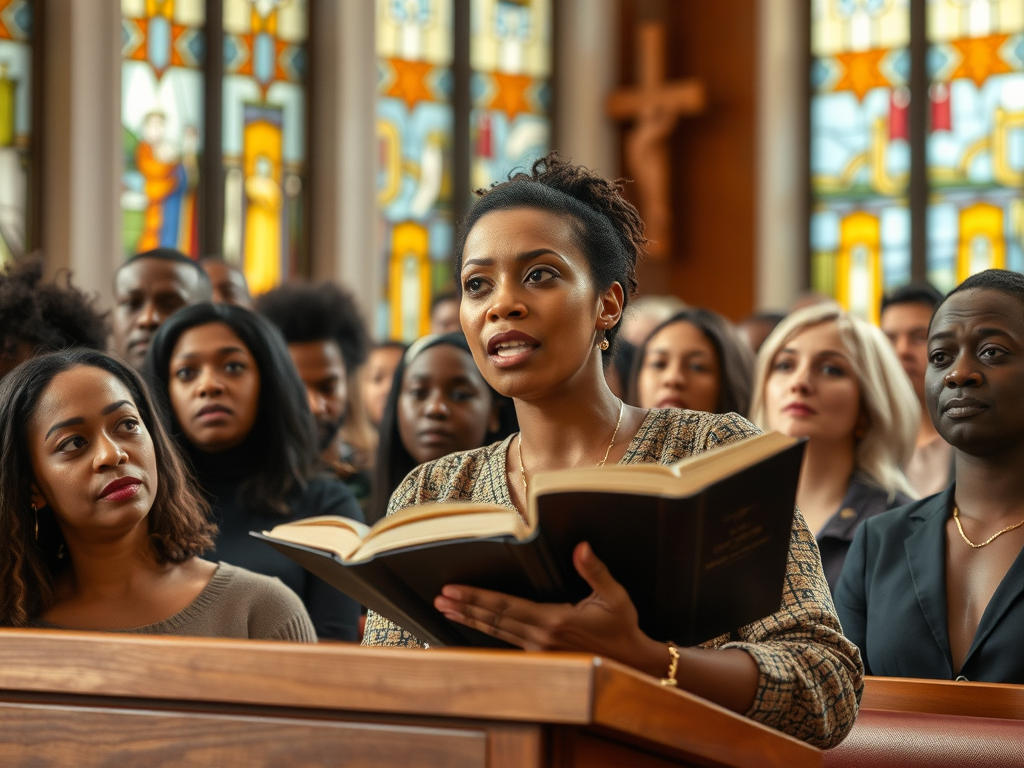
In the Book of Revelation, Jesus issues a stark warning to the church in Thyatira: “I have this against thee, that thou sufferest that woman Jezebel, which calleth herself a prophetess, to teach and to seduce my servants.” For some conservative evangelicals, this ancient rebuke feels eerily prescient in today’s fractured religious landscape.

The “Jezebel spirit” — a term drawn from the biblical figure known for idolatry, manipulation, and rebellion against God’s order — has become shorthand in certain circles for a perceived infiltration of progressive influences into evangelical churches. It manifests, critics say, in subtle shifts: women assuming roles traditionally reserved for men, softened teachings on sin, and a cultural accommodation that prioritizes emotional appeal over doctrinal rigor.
This isn’t abstract theology. In megachurches and Bible Belt congregations alike, pastors and lay leaders are grappling with what they see as a takeover — one that erodes biblical authority and sows division. “It’s not about individual women; it’s a spirit of compromise that tolerates what Scripture forbids,” said the Rev. John MacArthur, the influential pastor of Grace Community Church in Sun Valley, Calif., who has long warned against such trends. Drawing from a framework circulating in conservative Christian media, here are 10 telltale signs that this spirit may already hold sway in your pews. These markers, rooted in evangelical critiques, reflect real-world tensions playing out in denominations like the Southern Baptist Convention and charismatic networks.
The Pulpit Is No Longer Reserved for Men
The most visible flashpoint is the rise of female pastors, which some view as a direct usurpation of male authority, echoing 1 Timothy 2:12: “I suffer not a woman to teach, nor to usurp authority over the man.”
When Saddleback Church, once America’s second-largest Southern Baptist congregation, ordained three women as pastors in 2021, Rick Warren declared it a simple matter of “calling over chromosomes.” The Southern Baptist Convention disagreed and expelled Saddleback in 2023. Yet the practice has outrun polity: a 2024 survey found more than 1,800 women serving as senior or co-pastors in churches that still claim to be complementarian.
Similarly, Fern Creek Baptist Church in Louisville, Ky., led by the Rev. Linda Barnes Popham since 1993, was expelled for the same reason. Popham, who appealed the decision, told CNN the ouster felt like a “divorce,” but her congregation voted to retain her. A 2023 study by The American Reformer identified over 1,800 female pastors in SBC churches, signaling the practice’s quiet entrenchment despite official. Critics argue this tolerance invites the Jezebel spirit, seducing churches into cultural conformity.
“Soft Complementarianism” Has Become Indistinguishable from Egalitarianism
Even in churches claiming to uphold male headship — or “complementarianism” — boundaries blur. “Soft” policies allow women to preach under “elder oversight” or lead mixed-gender classes, critics say, paving the way for full equality. Many churches still print “men lead, women follow” in their bylaws, but on Sunday morning a female “teaching pastor” delivers the main sermon while the male senior pastor sits on a stool and nods approvingly. The arrangement is justified with the phrase “under the authority of the elder board”—an elder board that often fears the backlash of saying no.
Marriage Is Taught as “Mutual Submission” Rather Than Male Headship
At popular conferences and in bestselling marriage books, couples are told that Ephesians 5:21 (“submit to one another”) cancels out Ephesians 5:22-24 (“wives, submit to your husbands… in everything”). The practical result: wives are encouraged to “step up and lead the home spiritually” when they feel their husbands are failing. Divorce lawyers who specialize in evangelical clients report that wives now initiate 75 to 80 percent of splits, frequently citing “lack of spiritual leadership” as grounds.
Ephesians 5:23 declares the husband the “head of the wife, even as Christ is the head of the church.” Yet evangelical conferences increasingly preach “mutual submission,” twisting verse 21 out of context to suggest husbands forfeit headship if wives feel “unsafe.” At Snowbird Wilderness Outfitters’ annual marriage retreat in North Carolina, sessions emphasize “voluntary submission” and wives “stepping up to lead” spiritually.
John Mark Hicks’ 2025 Ephesians study frames marriage as “mutuality and self-sacrificial service” without hierarchy. The Eastside Evangelical Lutheran Church’s 2018 Gospel Unity conference (echoed in 2025) urged men to embrace their “feminine side,” training wives to override husbands rather than win them through “chaste conversation” (1 Peter 3:1–2).

Sermons Rebuke “Toxic Masculinity” but Almost Exclusively
Pulpits brim with rebukes of “toxic masculinity,” but female failings — gossip, contention — go unaddressed. On Father’s Day 2020, MacArthur’s “Act Like Men” sermon at Grace Community Church decried feminism’s assault on patriarchy as “tyrannical and toxic,” yet noted churches rarely teach women’s roles, yielding emasculated men.
Cornerstone Church Kingston’s 2023 “Masculinity: The Toxic and the True” (from 1 Timothy 2:8) fixated on male anger while glossing over women’s deception (v. 14). Pastor Adam Ericksen’s 2024 sermon “Overcome Toxic Masculinity with the Bible” blamed men for demeaning women, offering no parallel to Proverbs 21:9’s contentious wife. Biola University’s 2023 podcast “Truth and Toxic Masculinity” critiqued purity culture’s harm to women but minimized male leadership lapses, fostering one-sided guilt.
A search of sermon transcripts on from 2020 to 2025 shows the phrase “toxic masculinity” appearing 4,200 times. The phrase “contentious wife” (Proverbs 21:19) appears 11 times. Pastors who dare quote 1 Peter 3:1-6 on wives winning husbands “without a word” are quickly accused of spiritual abuse.

Worship Feels More Like a Concert Than a Service
The lights are dark, the bass is loud, and the lyrics are 80 percent first-person singular: I, me, my, consume me, drench, overwhelm. Hymns with third-person theology (“A Mighty Fortress Is Our God”) have been replaced by looping choruses written in the intimate language once reserved for the Song of Solomon. Critics note that the majority of the most-streamed worship songs are now written and led by women or by men adopting a similarly sensual vocal style.
Colossians 3:16 calls for “psalms, hymns and spiritual songs” that teach and admonish. But Bethel Church’s output — think “Oceans” with its repetitive, breathy vocals — fosters “emotional frenzy,” critics charge, akin to Baal worship (1 Kings 18). A 2024 Onward in the Faith analysis described Bethel’s leader instructing crowds to “let your spirit receive… through the sound,” bypassing intellect. G3 Ministries’ 2024 post urged ditching Hillsong/Bethel/Elevation songs, as they bankroll prosperity gospels. Female-led sets at these churches emphasize sensuality over substance.
LGBTQ Inclusion Began in the Women’s Ministry

Across denominations that have moved toward full affirmation—United Methodist (2019 split), Presbyterian Church (USA), Evangelical Lutheran Church in America, and many non-denominational megachurches—the tipping point almost always started with a women’s Bible-study leader advocating for her gay son or transgender grandchild. “Listening circles” became “affirming cohorts,” and within three to five years the church’s public stance had changed.
Romans 1:26–27 condemns unnatural relations, yet “inclusion” often germinates in women’s groups. The Evangelical Lutheran Church in America (ELCA), an evangelical affiliate, traces its LGBTQ+ affirmation to 1970s women’s ministries, culminating in 2009 ordinations and 2011 same-sex marriages. The 1991 Reconciling in Christ program, via women’s “dialogue” groups, now spans 310+ ministries. The United Church of Christ ordained its first LGBTQ+ minister in 1972 through women’s advocacy, evolving into “Open and Affirming” coalitions with Bible studies as entry points. By 2025, ELCA Bishop Elizabeth Eaton’s videos hail LGBTQ+ “gifts” in women’s contexts, sidestepping repentance.
Faithful Pastors Are Removed Through Anonymous Accusations
In the past five years, high-profile firings at Gateway Church, Hillsong, Willow Creek, and dozens of lesser-known congregations have followed the same script: a pastor preaches a series on biblical sexuality or male headship, a group of women (often staff wives) circulates a Google Form collecting stories of being “hurt” or “silenced,” and the elder board—terrified of being labeled misogynistic—asks for the pastor’s resignation “for the unity of the church.”
Like Jezebel’s plot against Naboth (1 Kings 21), accusations topple truth-tellers. In 2023, Cross Timbers Church in North Texas fired lead pastor Josiah Anthony after anonymous women complained of “inappropriate communication.” Gateway Church’s 2024 scandals saw elders, pressured by women’s claims, remove Robert Morris for past sins, then his son James, amid “drama-stirring” charges. Moore’s 2018 “Letter to My Brothers” accused SBC leaders of sexism, sparking cancel campaigns against critics like MacArthur, who endured boycotts for upholding 1 Timothy 2:12. A 2023 Medium piece detailed women preachers like Moore being “forced out” via false elder-meeting witness.

The Women’s Ministry Operates as a Parallel Power Structure
Events like IF:Gathering (annual since 2014, 2025 in Austin) feature Jennie Allen promoting “unleashed” leadership, mocking “old-fashioned submission.” Sessions on “rising up” draw thousands, breeding contempt for male headship — as 2018 critiques noted. Empowering Women in Industry’s 2025 Chicago conference (evangelical ties) mentors women bypassing men. Corning Community College’s 2026 event (church-partnered) workshops ignore biblical roles, seeding discord.
Annual women’s conferences with names like “Unleashed,” “Fierce,” and “Limitless” draw thousands. Speakers routinely mock “1950s submission teaching” and declare, “This is the hour of the woman.” Attendees return to their home churches newly convinced that male authority is a relic of patriarchy, not Scripture.
Divorce Is Normalized, Even Celebrated as “Freedom”
In many evangelical circles, “I’m just not happy” has replaced adultery as the accepted reason for ending a marriage. Women’s ministries host “divorce care” groups that sometimes feel more like celebrations of new beginnings. One Texas megachurch even ran a sermon series titled “Beautifully Broken” that featured three newly divorced women sharing their stories from the main stage while the congregation applauded.

Malachi 2:16 says God “hateth putting away.” Yet Barna’s 2023 study (updated 2025) shows 33 percent of married evangelicals divorced, with women initiating 70–80 percent for “unhappiness” or “lack of leadership” — unbiblical per Matthew 19:9
A 2025 Pew analysis pegs Protestant divorce at 51 percent, evangelical women 28 percent higher than men, often on emotional grounds. CDC data (stable through 2024) indicates 25 percent annual Christian divorces, with wives leading. IFS’s 2025 brief notes premarital choices reduce stability, but wives’ post-marriage initiations spike.
The Men in Leadership Act More Like Ahabs Than Davids
The senior pastor apologizes for the Bible instead of preaching it. He is quick to platform female voices but slow to correct doctrinal drift. When confronted, he responds with, “I don’t want to be the bad guy” or “My wife thinks we need to listen to women more.” The spirit of Ahab—weak, passive, ruled by fear of female displeasure—has become the dominant model of evangelical leadership.
None of these changes happened overnight. They arrived incrementally, wrapped in the language of love, empowerment, and cultural relevance. By the time many congregants notice that the church no longer feels like the one they joined twenty years ago, the transformation is nearly complete.Some will read this list and hear only misogyny.

Others will see a sober warning from Scripture itself: “You tolerate that woman Jezebel… I have this against you.” The question every evangelical must now ask is not whether change is coming—it has already arrived—but whether there is still time to repent before the Lord removes the lampstand.
Don’t forget to Subscribe for Updates. Also, Follow Us at Society-Reviews, YouTube, Instagram, Twitter, Odysee, Rumble, and Twitch




 Society Reviews
Leave a comment