

In the annals of human inquiry, few questions have provoked more debate than the relationship between divine justice and human choice. A close reading of the Bible reveals a chilling doctrine: God does not merely allow unbelief to persist. At a certain threshold, He actively gives up on the unbeliever, delivering them to a state from which return becomes impossible.

This is not a medieval relic or a fringe interpretation. It is the plain teaching of three pivotal New Testament passages—Romans 1, 1 Corinthians 15, and 2 Thessalonians 2—each addressing a distinct moment in salvation history. Together, they form a theological triptych of divine abandonment.
The Mechanism: A Three-Stage Surrender
The process begins in Romans 1, where Paul describes humanity’s primal encounter with God through creation. “That which may be known of God is manifest in them; for God hath shewed it unto them,” he writes (Romans 1:19). The heavens declare glory; the conscience bears witness. Yet when this knowledge is “held… in unrighteousness”—when truth is acknowledged but not honored—God responds with a threefold judicial act.
First, “God gave them up to uncleanness” (v. 24). Then, “God gave them up unto vile affections” (v. 26). Finally, “God gave them over to a reprobate mind” (v. 28). The Greek verb paredōken is not passive permission but active consignation. God does not merely step aside; He hands the rejector over, as a judge delivers a sentence.

This is the biblical equivalent of a moral event horizon. The reprobate mind—adokimon in Greek, meaning “tested and found worthless”—is not a temporary lapse but a sealed condition. The unbeliever’s capacity to perceive truth atrophies, not by accident, but by divine decree.
The Gospel: The Non-Negotiable Truth
If Romans 1 concerns general revelation, 1 Corinthians 15 narrows the lens to the specific truth that saves: “Christ died for our sins according to the scriptures; and that he was buried, and that he rose again the third day” (vv. 3–4). Paul calls this “the gospel… by which also ye are saved, if ye keep in memory what I preached unto you, unless ye have believed in vain” (v. 2).The phrase “believed in vain” is devastating. It describes not ignorance but informed rejection—knowing the historical and scriptural facts of Christ’s death and resurrection, yet refusing to trust them.
For such a person, Paul warns, “ye are yet in your sins” (v. 17). There is no middle ground. The resurrection is not a negotiable doctrine; it is the hinge on which eternity turns.
The Tribulation: Strong Delusion as Final Judgment
The most dramatic expression of divine abandonment occurs in 2 Thessalonians 2, set explicitly in the future period Christians call the Tribulation. After the church is removed (v. 7), the “man of sin” is revealed. Those who rejected the gospel beforehand face a supernatural escalation: “God shall send them strong delusion, that they should believe a lie: that they all might be damned who believed not the truth” (vv. 11–12).Note the agency: God sends the delusion. This is not Satan’s deception alone but a divine response to prior unbelief.

The Greek energeian planēs—“working of error”—implies an active, irresistible influence. The rejector does not merely wander into falsehood; God ensures they embrace it.
Why God Gives Up
The biblical rationale is not capricious but judicial. God’s holiness demands response to truth. When truth is repeatedly suppressed, mercy gives way to justice. As the Puritan Thomas Watson wrote in 1660, “God’s patience is not endless; it is a dam that holds back wrath until the measure of iniquity is full.”
This is not incompatible with God’s love. Love offers; love warns; love pleads. But love does not coerce. When the offer is spurned with full knowledge, love withdraws, and justice takes the stage.
The Two Dispensations
The doctrine operates differently across biblical eras. In the present Church Age, rejection of the gospel results in immediate condemnation—“He that believeth not is condemned already” (John 3:18)—but without the “strong delusion” of 2 Thessalonians. The unbeliever remains in a state of spiritual death, yet the door of repentance theoretically stands open until physical death.
In the Tribulation, the stakes escalate. Post-rapture, the gospel is preached globally by Jewish witnesses and an angel (Revelation 14:6). Those who reject it then face not only condemnation but divine hardening. The delusion is so complete that they worship the Antichrist, sealing their doom.

A Warning in Plain Sight
The Bible does not present this doctrine as esoteric. It is proclaimed in the open, for “whosoever will” to hear. The tragedy is not that God is cruel, but that humanity is stubborn. As C.S. Lewis observed, “There are only two kinds of people in the end: those who say to God, ‘Thy will be done,’ and those to whom God says, in the end, ‘Thy will be done.’”
The point of no return is not a line drawn in sand but in the human heart. When truth is known—whether through creation, conscience, or the gospel—and deliberately refused, God honors the choice. He does not chase forever. At some point, He stops knocking.
For the reader holding this newspaper, the question is not academic. The gospel has been declared. The resurrection is attested. The warning is clear. The Bible offers no third category—no limbo, no purgatory, no posthumous appeal. There is belief, or there is abandonment.
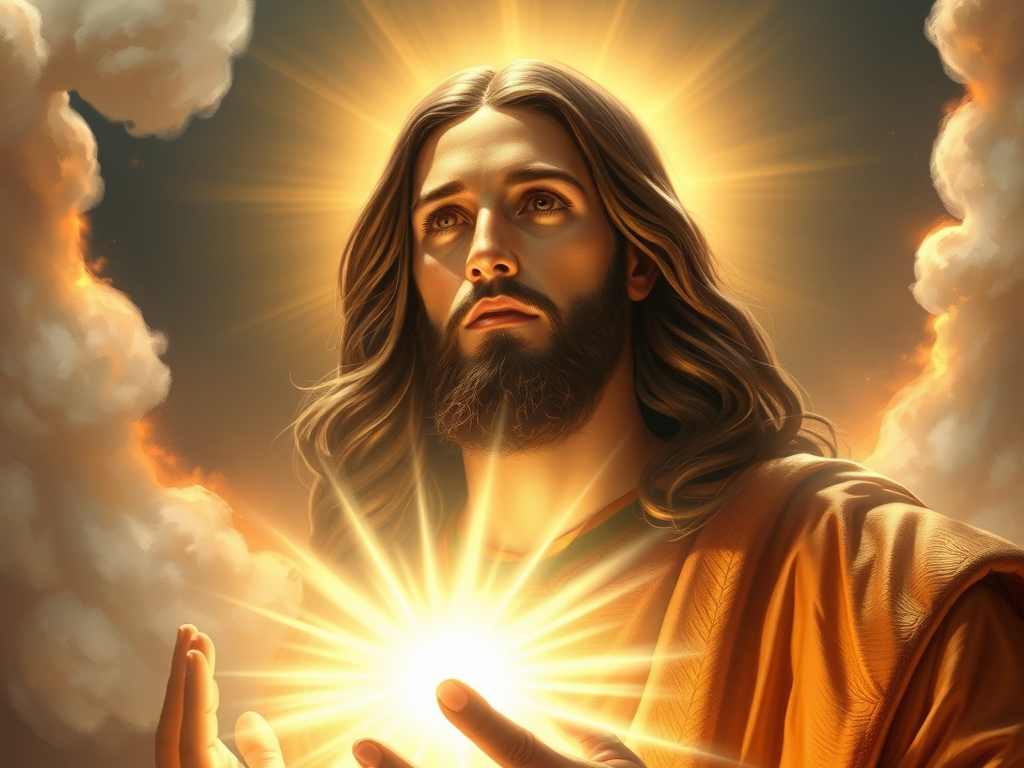
The door stands open. But it will not stand open forever.
Don’t forget to Subscribe for Updates. Also, Follow Us at Society-Reviews, YouTube, Twitter, Odysee, Rumble, and Twitch




 Society Reviews
Leave a comment