
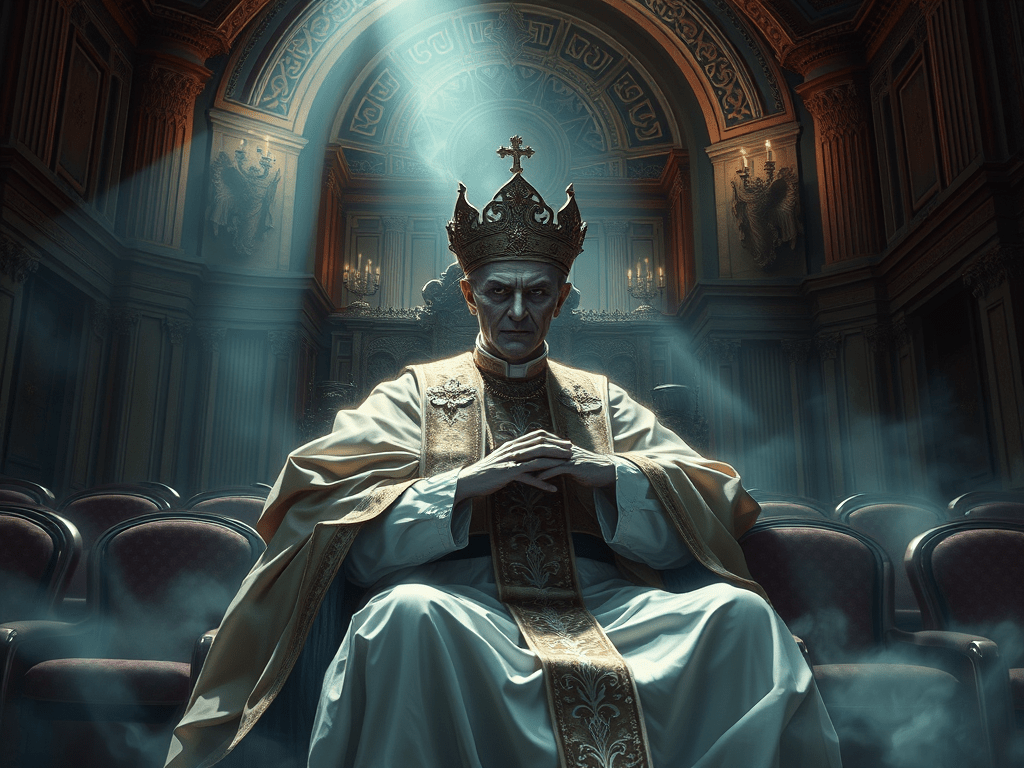
In an era dominated by neuroscience, pharmacology and data-driven psychiatry, a provocative argument has resurfaced in certain religious circles: that many of today’s most alarming behaviors — mass shootings, opioid-induced catatonia, schizophrenic hallucinations, celebrity meltdowns and even radical shifts in personal aesthetics — are not merely medical or psychological phenomena but manifestations of literal demonic possession.

Citing scripture as the sole arbiter of truth, point to passages like Mark 5:1-13, where Jesus expels a “legion” of demons from a tormented man, and Deuteronomy 32:17-18, which equates idolatry with sacrifices “unto devils,” to frame contemporary crises as spiritual rather than clinical.
The argument gained renewed attention following the August 2025 attack on Annunciation Catholic Church in Minneapolis, where 23-year-old Robin Westman, who identified as transgender, killed two children and wounded 17 others during Sunday Mass. Investigators recovered weapons inscribed with antisemitic slogans and references to “killing Donald Trump,” alongside a digital trail idolizing past school shooters. Westman’s actions, proponents assert, mirror the violent outbursts of the Gadarene demoniac — self-harm, superhuman rage, and a targeting of the faithful and innocent.
Similar parallels are drawn to the 2023 Covenant School shooting in Nashville, where Audrey Hale, also identifying as transgender, killed three children and three adults. These cases are highlighted as emblematic of a deeper spiritual pattern: hatred directed at Jews, Christians, and children, groups explicitly protected in Scripture.

Drug-induced states offer another focal point. Fentanyl, now implicated in over 70,000 annual overdose deaths, produces extreme muscle rigidity, seizure-like convulsions and a vacant, puppet-like demeanor in users. Video footage of individuals frozen mid-stride or collapsing in rigid postures has circulated widely, prompting comparisons to the “tearing” of the possessed man in Mark 1:26. The Greek term pharmakeia — translated as “sorcery” in Galatians 5:20 and linked etymologically to drug use — is invoked to argue that chemical intoxication opens doorways to demonic influence.
Schizophrenia, affecting roughly 1 percent of the global population, presents perhaps the most contested case. Up to 90 percent of patients report auditory hallucinations — voices that command, argue or reveal forbidden knowledge. Biblical literalists liken these to the unclean spirit in Mark 1:24 that publicly identifies Jesus as “the Holy One of God.” Historical accounts of exorcisms interrupting psychiatric treatment, only for symptoms to recur until spiritual intervention, are cited as evidence that antipsychotic medications treat symptoms while ignoring root causes.
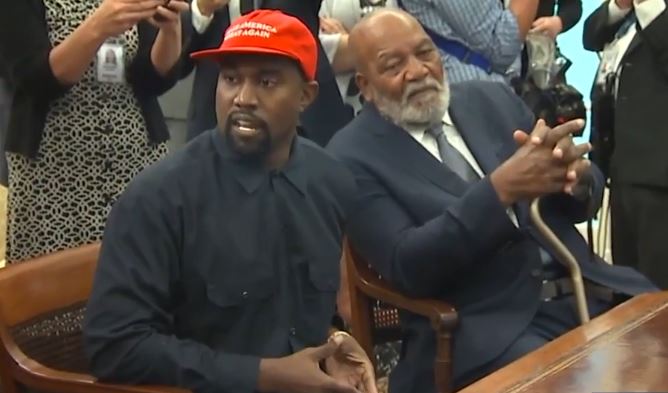
Public figures are not exempt. Britney Spears’s 2007 breakdown — head-shaving, paparazzi assault, involuntary hospitalization — is recast as a public convulsion akin to the synagogue incident. Kanye West’s manic episodes, Charlie Sheen’s “tiger blood” rants and Mariah Carey’s emotional collapse are framed as spirits exploiting fame’s isolation to drive self-destruction.
Even aesthetic choices enter the discourse. Cynthia Erivo’s portrayal of Elphaba in the 2024 film adaptation of Wicked — green skin, black attire, a cackling defiance — is labeled a cultural “sacrifice unto devils,” glorifying rebellion in the mold of Satan’s fall. The argument extends to any celebrity transformation perceived as grotesque or anti-normative, suggesting that visual provocation invites spiritual oppression.
The Secular world, including the American Psychiatric Association and the National Alliance on Mental Illness, rejects these interpretations as dangerous stigmatization. “Attributing complex neuropsychiatric conditions to supernatural forces discourages evidence-based treatment and delays care,” said Dr. Sarah Chen, a Yale psychiatrist specializing in psychosis.
Yet the biblical framework persists in evangelical and charismatic communities, where deliverance ministries report thousands of exorcisms annually. Pastors cite Mark 16:17 — “In my name shall they cast out devils” — as a mandate for direct confrontation. Some point to documented cases where prayer coincided with sudden symptom remission, though skeptics attribute such outcomes to placebo or spontaneous recovery.

The debate reveals a deeper cultural fault line: between a secular worldview that trusts empirical science and a literalist one that elevates Scripture above observation. As overdose deaths climb, mass shootings recur and mental health systems strain, the question is not merely academic. If even a fraction of these crises involve spiritual dimensions, proponents argue, then prayer, repentance and exorcism belong alongside — or instead of — therapy and medication.
For now, the possessed man of Gadara remains a distant parable. But in church basements, crisis hotlines and online forums, his story is retold as a warning: that behind the statistics and diagnoses, unseen forces may still cry out in the night, waiting for a voice of authority to command them to flee.
Don’t forget to Subscribe for Updates. Also, Follow Us at Society-Reviews, YouTube, Twitter, Odysee, Rumble, and Twitch




 Society Reviews
Leave a comment