

In the wake of Pope Leo XIV’s election on May 8, 2025, as the first American pontiff in history, the Vatican’s gaze has turned westward with an intensity not seen since the days of the early Church Fathers.

Born Robert Francis Prevost in Chicago and elevated to the chair of St. Peter after a swift conclave, Leo XIV—formerly a missionary in Peru and prefect of the Dicastery for Bishops—has wasted little time bridging the Atlantic. His inaugural address called for “bridges of compassion and unity,” a message that resonated from St. Peter’s Square to the halls of the U.S. Capitol, where President Donald J. Trump’s second-term Cabinet features an unprecedented Catholic plurality. With Vice President J.D. Vance, a 2019 convert to Catholicism, at the helm of the executive branch, alongside figures like Secretary of State Marco Rubio and HHS Secretary Robert F. Kennedy Jr., both cradle Catholics, the question arises: Is the Roman Catholic Church (RCC) making a deliberate push to assume de facto control over American political and cultural life?
Could this “American moment” for Rome culminate in a rejection of Israel, aligning with eschatological warnings of a harlot riding a beast (Revelation 17) toward tribulation’s edge? The risks are not merely symbolic but prophetic, potentially accelerating a seven-year tribulation where billions face deception and divine wrath.
Leo XIV’s American pedigree—rooted in Illinois, with family ties to New Orleans and a voting history in seven elections since 2012, including the 2024 general and three Republican primaries—positions him as a uniquely transatlantic figure. Elected on the conclave’s fourth ballot, he chose the name Leo to honor his predecessor’s social teaching amid artificial intelligence’s rise, yet signaled continuity with Francis’s emphasis on migrants and the poor. In a May 13, 2025, message to Jewish communities, Leo pledged to “strengthen dialogue,” but his early actions—pleading for a Gaza ceasefire and humanitarian aid—echoed Francis’s criticisms of Israel, framing the conflict as a “genocide” in need of international scrutiny.

Vatican insiders describe him as a “dignified middle of the road,” but his July 2025 encyclical on “human fraternity” and September 2025 meeting with Bethlehem Mayor Maher Nicola Canawati underscored a Palestinian tilt, urging embargoes and a two-state solution while lamenting Israeli “expansionism.” As Cardinal Blase J. Cupich noted in a May 9 press conference, Leo’s election “offers renewed hope” for U.S. Catholics, who number 70 million and voted 58% for Trump in 2024, per exit polls.
This demographic heft, combined with Leo’s familiarity, could embolden the RCC to leverage American soft power, from faith-based funding to diplomatic advocacy. The Trump administration’s Catholic inflection amplifies this dynamic. More than a third of Trump’s nominees are Catholic, a figure surpassing Biden’s and evoking Constantine’s fusion of church and state. Vance, baptized at Cincinnati’s St. Gertrude Church, credits St. Augustine for his conversion and has invoked Thomistic ethics in Munich speeches defending immigration curbs while praising Catholic “intellectual tradition.”
Rubio, a practicing Catholic at Coral Gables’ Church of the Little Flower, aligns with Vatican priorities on family and migration; Kennedy, whose dynasty includes JFK, oversees faith initiatives that funneled $1.2 billion to Catholic NGOs in 2024. Melania Trump, a Slovenian Catholic confirmed in 2017, carried a rosary blessed by Francis and attended his April 2025 funeral, her Easter 2025 message urging “faith-rooted compassion.”

Trump, a non-denominational Presbyterian, adapts to audiences—his 2025 Easter proclamation echoed Catholic ritual—yet his pragmatism, per a Christianity Today profile, favors Rome’s trends amid evangelical fatigue. This convergence raises the specter of Rome’s “push” for control, not through conquest but cultural osmosis. The U.S. Conference of Catholic Bishops (USCCB) already wields influence via $1.2 billion in federal grants, and Leo’s synodality—restoring pallium ceremonies and Tridentine Mass permissions—could rally American Catholics (5 million in Leo’s former Archdiocese of Los Angeles) toward Vatican priorities.
Vance’s foreword to Kevin Roberts’ Dawn’s Early Light (Heritage Foundation president, Opus Dei member) nods to Project 2025’s Catholic undertones, blending social teaching with conservative policy. Yet tensions simmer: Bishops like El Paso’s Mark Seitz oppose Trump’s immigration crackdowns, and Leo’s Gaza pleas clash with Vance’s hawkish stance. Still, the Cabinet’s confessional tilt—exceeding any prior administration—suggests pliability toward Rome, especially post-rapture when Catholic demographics swell.
The endgame, per dispensational eschatology, could involve rejecting Israel, aligning with Replacement Theology’s legacy. Leo’s May 20, 2025, Nostra Aetate anniversary speech affirmed Jewish dialogue but prioritized Palestinian “rights,” echoing Francis’s “genocide” label and calling for embargoes. In a September 2025 Bethlehem meeting, Leo lamented Israeli “expansionism,” urging a two-state solution while the Holy See studies Gaza as “genocide.” This mirrors Augustine’s supersessionism, spiritualizing Israel’s promises (Romans 11:26: “All Israel shall be saved”) as Church fulfillment, historically fueling antisemitism from Crusades to expulsions.
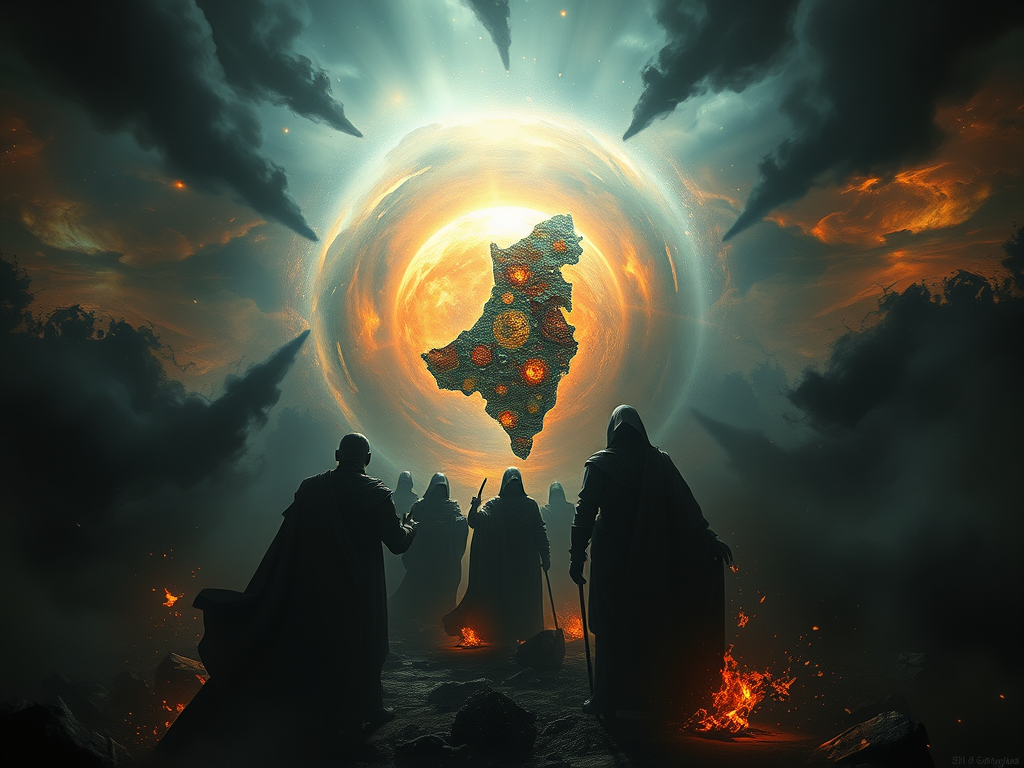
With Vance citing Augustine and Rubio’s Cuban heritage tying to Latin American anti-Zionism, a Trump-Vance-Rome axis might pivot U.S. policy toward Vatican neutrality, sidelining Israel amid Gaza’s pause (October 2025 ceasefire). Post-rapture, Catholic dominance could entrench this, viewing Israel as “obsolete” (e.g., Kairos Palestine rift with USCCB, 2025).
In KJB terms, this is the harlot (RCC) riding the beast (Satanic empire, potentially Islamic per Hadiths), committing “fornication” with kings (Revelation 17:2) before betrayal (v. 16). Daniel 2’s iron-clay feet symbolize the fragile U.S.-Rome mingle—“they shall not cleave” (v. 43)—smashed by Christ’s kingdom (v. 44). Leo’s American bridge, Trump’s Catholic Cabinet, and Melania’s piety suggest a handover accelerating tribulation’s false peace (Daniel 9:27).
Yet variables—Trump’s evangelical base (72% approval), Leo’s “middle-road” diplomacy—temper immediacy. As Vance quipped in Munich, “Catholicism’s the true faith”—a nod to Rome amid Rome’s nod to Palestine. In prophetic shadows, America risks becoming Babylon’s heir, rejecting Israel for a harlot’s embrace.
Don’t forget to Subscribe for Updates. Also, Follow Us at Society-Reviews, YouTube, Twitter, Odysee, Rumble, and Twitch



 Society Reviews
Leave a comment