

In the air-conditioned sanctuaries of suburban America, a phrase has gained currency among certain evangelical circles: “easy-believism.” It is wielded as a cudgel against those who dare suggest that salvation might hinge on a single, decisive act—believing in Jesus Christ as the Son of God.

The term implies intellectual laziness, spiritual shallowness, a kind of theological fast food. Critics insist that genuine faith must be proven through sacraments, moral rigor, or visible suffering. Anything less, they say, is counterfeit.
Yet in the blood-soaked churches of northern Nigeria, where Fulani militants torch pews and slit throats for the crime of baptism, no one speaks of “easy-believism.” In the underground house churches of Tehran, where conversion from Islam is punishable by hanging, believers do not debate whether faith must be supplemented by works.
And in the Saudi prison cells where a whispered confession of Christ can earn a lashing, the gospel is not a philosophical abstraction—it is a death sentence. The Bible, taken literally as the standard of truth, offers no quarter to such sophistry. “For God so loved the world, that he gave his only begotten Son, that whosoever believeth in him should not perish, but have everlasting life” (John 3:16).

Seven times in the Gospel of John, Jesus repeats the condition for eternal life: belief. Not belief plus baptism. Not belief plus perseverance under persecution. Not belief plus a lifetime of good deeds. Just belief.This is not a loophole; it is the scandal of grace. The Apostle Paul, writing to the Romans, anticipates the objection: “But to him that worketh not, but believeth on him that justifieth the ungodly, his faith is counted for righteousness” (Romans 4:5).
The thief on the cross—mocked, bleeding, minutes from death—had no time for catechism classes or charity drives. His plea was simple: “Lord, remember me when thou comest into thy kingdom.” Christ’s reply was immediate: “Today shalt thou be with me in paradise” (Luke 23:43).To dismiss this as “easy” is to stand in the tradition of the Pharisees, who burdened the people with rules Christ came to fulfill. “Woe unto you, scribes and Pharisees, hypocrites!” Jesus thundered. “For ye shut up the kingdom of heaven against men” (Matthew 23:13).
The modern equivalent is the pastor who insists that faith must be proven—by speaking in tongues, by tithing 10 percent, by enduring hardship as a badge of authenticity. Such demands echo the Galatian heresy Paul condemned: “If righteousness come by the law, then Christ is dead in vain” (Galatians 2:21).
The global church bears witness against this arrogance. In Nigeria, where Open Doors reports over 5,000 Christians killed in 2024 alone, believers die for one confession: “Jesus is Lord.” They do not die for their attendance records or their positions on predestination. In Iran, where the regime executes apostates under Article 26 of the penal code, converts risk everything for the promise of John 6:47: “He that believeth on me hath everlasting life.”
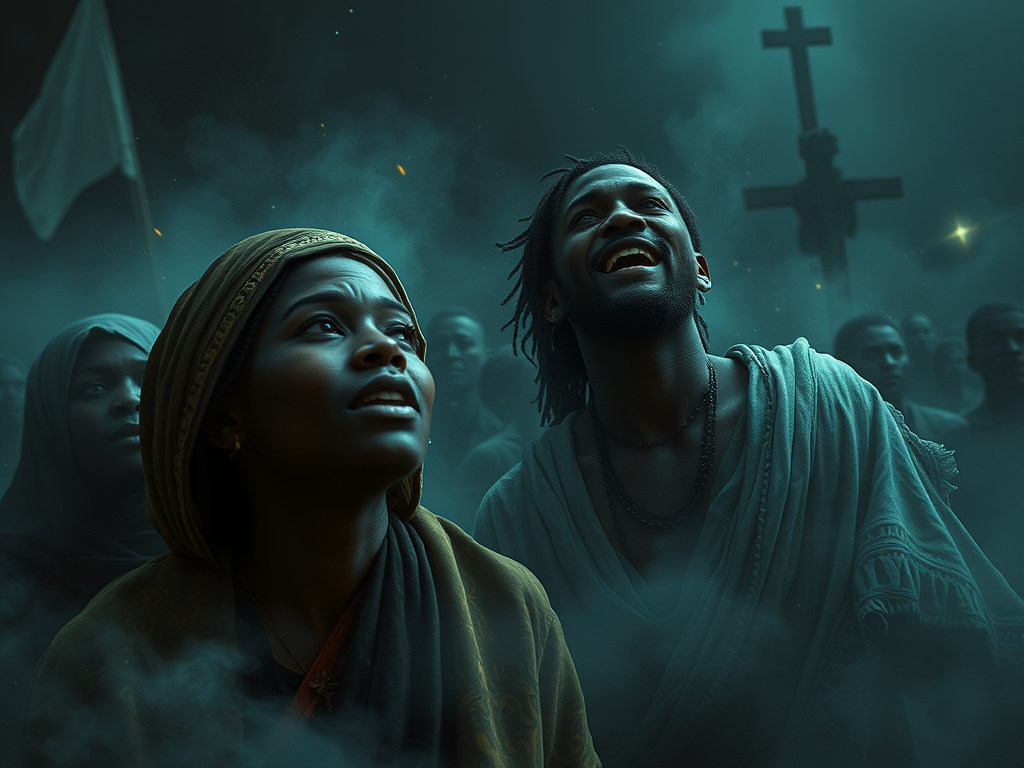
These are not hypothetical martyrs; they are the present-tense body of Christ, and their blood cries out against the complacency of the West.The irony is searing. In the very places where faith is most costly, it is also most simple. A 12-year-old girl in Maiduguri, dragged from her home and given the choice between recanting Christ or watching her family burn, does not parse the nuances of justification.
She believes—or she dies. Her faith is not “easy.” It is the narrow gate, the pearl of great price, the treasure hidden in a field worth selling everything to obtain. Western Christians, safe behind their pulpits and podcasts, would do well to remember the warning of James: “Thou believest that there is one God; thou doest well: the devils also believe, and tremble” (James 2:19).
Demons acknowledge Christ’s identity; they do not trust Him for salvation. The difference is not complexity—it is surrender. The Nigerian pastor beheaded for preaching John 3:16 is not more “advanced” in his theology than the American suburbanite who trusts Christ in a moment of crisis. Both stand on the same ground: the blood of the Lamb.The blasphemy of “easy-believism” is not merely doctrinal error.

It is a failure of imagination—a refusal to see the gospel through the eyes of the persecuted. It is the Pharisee thanking God he is not like the publican, the older brother resentful of the prodigal’s welcome. It is, in the end, a denial of the sufficiency of Christ’s work. “It is finished,” He cried from the cross.
Not “It is finished, pending your performance.” Let the church in the West repent of its pride. Let it cease adding to the gospel what Christ never required. And let it honor the martyrs—not by demanding their suffering as a prerequisite for authenticity, but by believing the same simple, costly, glorious truth they died to proclaim: that whosoever believeth in Him should not perish, but have everlasting life.
Don’t forget to Subscribe for Updates. Also, Follow Us at Society-Reviews, YouTube, Twitter, Odysee, Rumble, and Twitch




 Society Reviews
Leave a comment