

The intersection of faith and governance has rarely felt more portentous than it does in the fall of 2025 when it comes to American Power.

With Pope Leo XIV—born Robert Francis Prevost in Chicago and elevated to the papacy in May—now presiding over the world’s 1.4 billion Catholics from the Vatican, and President Donald J. Trump’s second-term Cabinet boasting an unprecedented Catholic plurality, whispers of ecclesiastical influence have swelled into a chorus.
More than a third of Trump’s nominees hail from Catholic backgrounds, including Vice President J.D. Vance, Secretary of State Marco Rubio, CIA Director John Ratcliffe, Transportation Secretary Sean Duffy, and Health and Human Services Secretary Robert F. Kennedy Jr. This alignment, set against Melania Trump’s longstanding Catholic faith and the president’s own enigmatic relationship with Christianity, raises a stark question: Could the Trump administration, wittingly or not, facilitate a handover of American sovereignty to what some eschatological interpreters call “Mystery, Babylon”—the Roman Catholic Church as foretold in Revelation 17?
In the context of a prophesied seven-year tribulation, the variables—from demographic shifts post-rapture to geopolitical pragmatism—tilt toward a chilling plausibility, one that echoes the brittle empires of Daniel 2 and the harlot’s seductive ride in Revelation. The new pontiff’s American roots add a layer of symbolic intimacy to this dynamic. Leo XIV, a 69-year-old Augustinian friar with decades in Peru and a doctorate in canon law from Rome’s Pontifical College of St. Thomas Aquinas, embodies a bridge between continents.

Elected on May 8, 2025, after Pope Francis’s death in April, he declared from St. Peter’s balcony, “Peace be with all of you,” invoking a missionary ethos shaped by his Chicago upbringing and global service. Yet his selection—hailed as a “dignified middle of the road” by Vatican insiders—coincides with a Trump administration primed for Catholic synergy.
Vance, the Ohio senator turned vice president who converted to Catholicism in 2019, has called his faith “persuaded over time that Catholicism was true,” crediting St. Augustine’s Confessions. Rubio, a cradle Catholic with evangelical rhetorical flair, and Kennedy, the environmental lawyer turned HHS chief whose family dynasty traces to JFK, underscore the Cabinet’s confessional heft.
As a 2025 National Catholic Reporter analysis noted, “more than a third of Trump’s nominees are Catholic,” a figure exceeding any prior administration and signaling an “emergent Catholic right” poised to infuse policy with Thomistic social teaching. Melania Trump’s influence, subtle yet profound, amplifies this Catholic undercurrent. Raised in Slovenia’s Catholic milieu, she confirmed her faith in 2017, carrying a rosary blessed by Pope Francis during a Vatican visit.

Their 2005 Episcopal wedding in Palm Beach belied her private devotion; insiders describe her as a “quiet Catholic” who leaned on prayer amid family trials, including her mother’s 2024 death. On her 55th birthday—coinciding with Francis’s funeral on April 26, 2025—she attended with Trump, later telling People magazine, “It is a sad time for Catholics around the world.”
In a White House where faith offices expand under Paula White-Cain (Trump’s evangelical pastor) and Jennifer Korn (a Catholic from his first term), Melania’s piety—evident in her 2025 Easter message urging “compassion rooted in faith”—could nudge domestic policies toward Vatican priorities like migration and family support, even as Trump’s bombast clashes with Leo XIV’s diplomatic tone.
Trump’s own faith trajectory, however, injects ambiguity. Raised Presbyterian but self-identifying as non-denominational, he has courted evangelicals while courting Catholic voters—securing 58% of their support in 2024, per exit polls.

In a February 2025 Oval Office address, he quipped, “I think I’m not, maybe, heaven-bound,” musing on Gaza deals as redemptive acts, a rare vulnerability that evangelicals like Paula White hailed as “raw honesty.” However, Trump’s focus on his own works shows an ignorance of the gospel of salvation that points to the death, burial, and resurrection of Jesus and not the works of man.
A May 2025 Munich speech by Vance excoriating U.K. prayer bans drew applause from Opus Dei-linked advisors, hinting at alignment with Leo XIV’s synodality. Trump’s 2025 Easter proclamation—”proclaim… ‘HE IS RISEN!’”—blends evangelical fervor with Catholic ritual, suggesting a pragmatic pivot toward Rome’s trends amid evangelical fatigue.
The rapture’s hypothetical calculus sharpens this scenario. In premillennial dispensationalism—espoused by 23% of U.S. Protestants per Pew’s 2024 Religious Landscape Study—the pre-tribulation rapture (1 Thessalonians 4:16–17) would disproportionately harvest evangelicals (40% of adults, but higher in rapture-believing subsets).
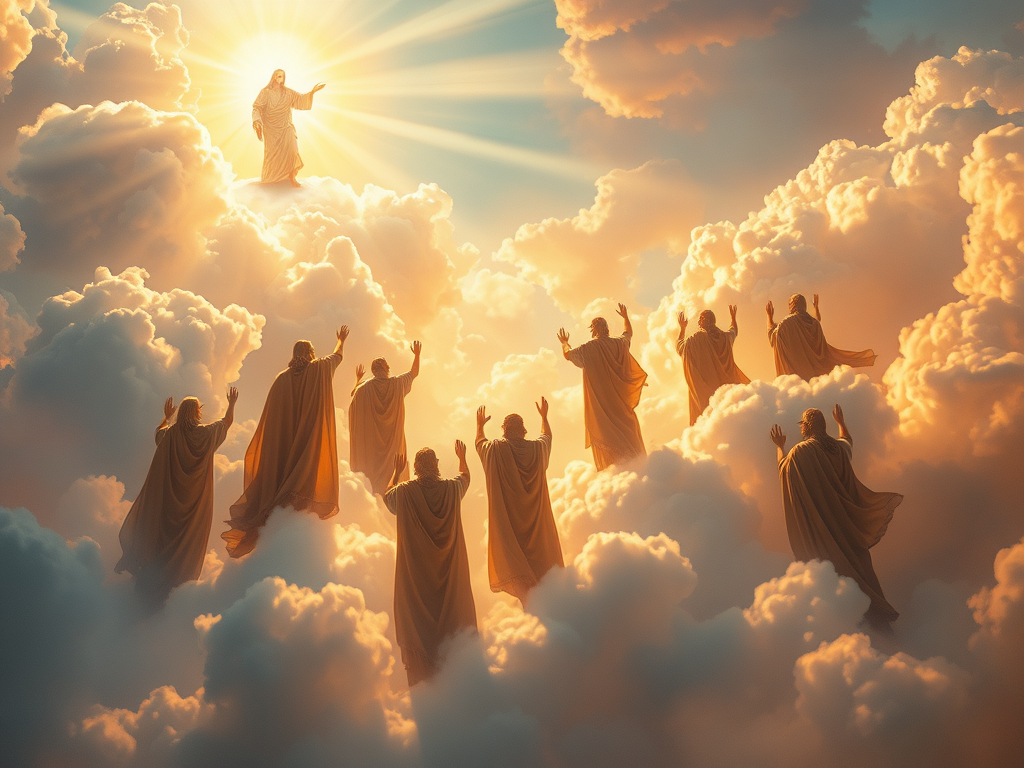
Catholics, at 19–22% nationally (Gallup 2023; Pew 2025), with lower evangelical fervor, might comprise a post-rapture plurality. A 2025 Pew update notes Protestants at 40%, Catholics at 19%, unaffiliated at 29%—but rapture adherents skew Protestant (e.g., 72% of white evangelicals per PRRI 2024).
Post-event, a Catholic-heavy populace—bolstered by Hispanic immigration (78% Catholic, per 2023 Migration Policy Institute)—could amplify RCC sway, especially with Leo XIV’s U.S. ties fostering “respectful dialogue” (Vatican News, June 2025). In a Trump-Vance administration, this could manifest as deference to Rome. Vance’s 2025 Munich address invoked Aquinas to defend immigration curbs, yet praised Catholic “intellectual tradition.”
Rubio, as Secretary of State, echoed Leo XIV’s July 2025 encyclical on “human fraternity,” aligning U.S. aid with Vatican migration priorities. Kennedy’s HHS role—overseeing faith-based initiatives—mirrors Francis-era partnerships, potentially funneling funds to Catholic NGOs (USCCB received $1.2 billion in 2024 federal grants).

Trump’s non-denominationalism, per a 2025 Christianity Today profile, “adapts to the room,” suggesting pliability toward Catholic trends like family incentives (child tax credit expansion, echoing Laudato Si’ on demographics). With Vance—a Catholic convert citing Augustine—poised for succession, a post-Trump era could entrench Vatican alignment.
Prophetically, this evokes Revelation 17’s harlot (RCC) riding the beast (Satanic empire), committing “fornication” with kings (v. 2) before betrayal (v. 16). Daniel 2’s iron-clay feet symbolize fragile unions—Catholic institutional might (iron) mingling with democratic clay, yet “they shall not cleave” (v. 43). In tribulation context, such handover accelerates the Antichrist’s rise (Daniel 9:27), with America—Babylon’s heir—facilitating one-world religion (Revelation 13:8).
Post-rapture Catholic dominance could yield state-backed power, echoing Constantine’s 4th-century fusion but inverted: Rome’s influence over a depleted Protestant remnant. Vance’s Hindu wife and Trump’s pragmatism suggest checks. Still, the 2025 Catholic Cabinet plurality—exceeding Biden’s (per NCR)—and Melania’s piety signal momentum.
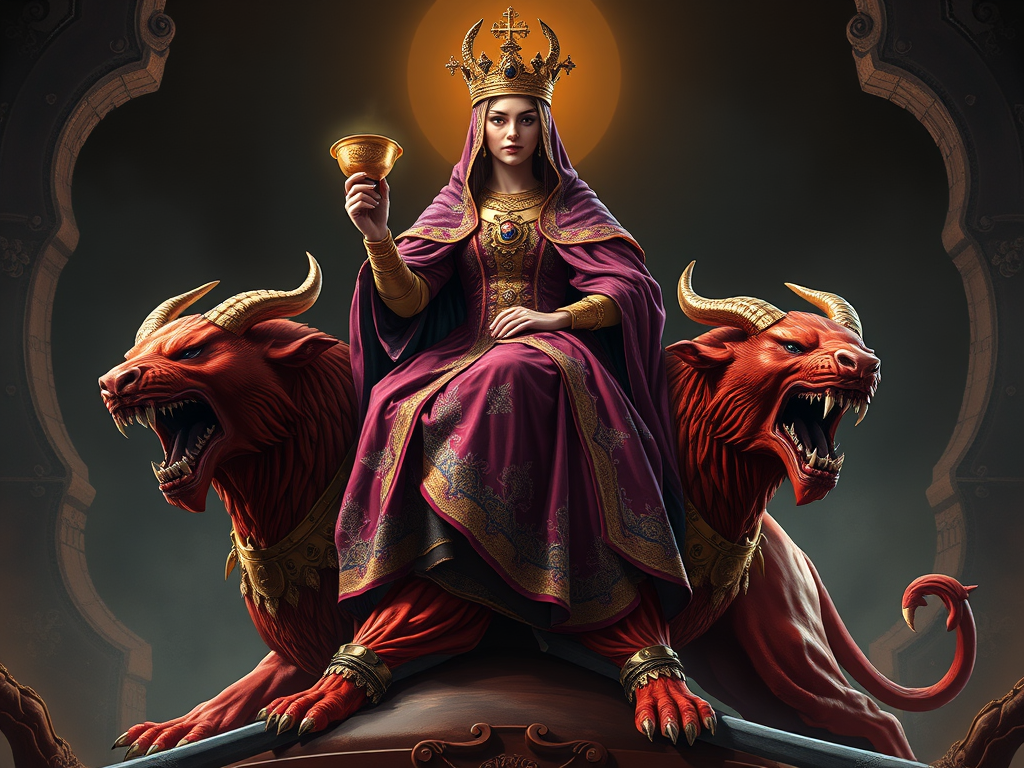
As Vance quipped in a March 2025 interview, “Catholicism’s the true faith”—a nod to Augustine amid policy nods to Rome. In eschatological terms, this isn’t mere politics; it’s prophetic prelude. The KJB’s warnings—harlot’s fall (Revelation 18:21), stone crushing empires (Daniel 2:45)—urge vigilance. Whether Trump hands America to Mystery, Babylon remains speculative, but the variables align perilously.
In a post-rapture vacuum, Catholic resurgence could crown the harlot, ushering tribulation’s shadow. For now, the American Pope and Catholic Cabinet compose a symphony of influence, harmonious yet haunting.
Don’t forget to Subscribe for Updates. Also, Follow Us at Society-Reviews, YouTube, Twitter, Odysee, Rumble, and Twitch



 Society Reviews
Leave a comment