

In the shimmering sprawl of Los Angeles, where the Hollywood sign looms like a secular monument, the influence of the Roman Catholic Church has long cast a shadow as long as the San Gabriel Mountains.

From the city’s very founding to the flickering reels of its film industry, the Church’s fingerprints are everywhere, shaping stories that equate “true Christianity” with papal pomp and ritual, while sidelining the Bible’s unadorned gospel of faith alone. Revelation 18 depicts “Babylon the Great,” a harlot city of commerce and seduction, whose “merchandise” includes “souls of men” (v. 13), and whose fall mourns kings and merchants (v. 9–11), while this city is not Los Angeles, the parallels are interesting.
Daniel 2’s statue of empires ends with feet of iron and clay—a brittle fusion of power (iron) and fragility (clay)—smashed by God’s kingdom (v. 44–45). Hollywood, born under Catholic auspices in “Our Lady Queen of the Angels,” embodies this: a gold-rush of souls where Rome’s iron bureaucracy once censored content, and its clay narratives now venerate the Pope amid anti-Christian themes.
Yet, despite the persistent trope of Jewish control, Catholics hold disproportionate sway in power positions, perpetuating a subtle, seductive influence that aligns with Babylon’s “wines of fornication” (Revelation 14:8).

Los Angeles’ origins are inseparable from Catholic mission work, a claim the Church proudly asserts and history substantiates. Founded in 1781 as El Pueblo de Nuestra Señora la Reina de los Ángeles del Río de Nuestra Señora la Reina de los Ángeles de Porciúncula—”The Town of Our Lady the Queen of the Angels”—the settlement was established by Spanish Franciscan friars under the auspices of the Catholic monarchy.
The city’s namesake church, La Iglesia de Nuestra Señora la Reina de los Ángeles (dedicated 1822), stands as its oldest structure and a Los Angeles Historic-Cultural Monument, serving as the sole parish until the mid-19th century.
The Archdiocese of Los Angeles, tracing its lineage to these missions, now oversees 5 million Catholics, with the Cathedral of Our Lady of the Angels (2002) echoing the city’s Marian devotion. The Church’s role in California’s colonization, via missions like San Gabriel Arcángel (supporting the original Asistencia in 1784), underscores this foundational claim, blending evangelism with imperial expansion.

In Revelation 18’s lament for the fallen city—”thy merchants were the great men of the earth” (v. 23)—Los Angeles, Hollywood’s heart, mirrors a commercial Babylon birthed in Catholic piety, its “luxury” (v. 3) now cinematic excess.
This historical tether evolved into overt control during Hollywood’s formative years. In the 1930s, amid scandals and moral panics, the Catholic Church wielded unprecedented influence through the National Legion of Decency (1933), a ratings body that mobilized millions to boycott “immoral” films, slashing box office by 20 percent and forcing studios to comply. The Legion’s Catholic roots amplified the Motion Picture Production Code (1930), drafted by Jesuit priest Daniel Lord and enforced by Catholic bureaucrat Joseph Breen, who—backed by Pope Pius XI’s 1936 encyclical Vigilanti Cura—banned nudity, profanity, and “ridicule of religion” while mandating Catholic-friendly morals: good triumphs over evil, marriage sanctified.
Breen, a devout Catholic, consulted with groups like the Catholic Legion, ensuring films upheld “Christian morality” via groups blending Protestant, Jewish, and Catholic oversight, but Catholic leverage dominated. Publishers like Martin Quigley, a pious Catholic, lobbied Wall Street investors to enforce it, tying loans to compliance.

This “iron” bureaucracy (Daniel 2:40) molded Hollywood’s Golden Age, producing 60 films annually by 1940, but at the cost of creative clay—married couples shown in twin beds, interracial romance forbidden. Revelation 18:11’s merchants weeping over lost trade evokes studios’ capitulation, their “souls of men” commodified under Catholic oversight.
Yet, Hollywood’s portrayals of “true Christianity” consistently favor Catholicism over Bible-based faith, a legacy of this control. Golden Age epics like The Bells of St. Mary’s (1945) and Going My Way (1944)—both Oscar winners—glorify priests and nuns as moral anchors, with Bing Crosby’s Father O’Malley embodying saintly charisma. Films like Boys Town (1938) and The Keys of the Kingdom (1944) depict Catholic clergy as heroic reformers, aligning with the Code’s mandate for religion “carefully and respectfully handled.”
Protestant or evangelical characters, when present, appear as fundamentalist caricatures—hypocritical preachers in Elmer Gantry (1960) or bigoted enforcers in Inherit the Wind (1960), distorting the Scopes Trial to vilify Bible literalism. Post-Code, this bias persists: The Da Vinci Code (2006) and Angels & Demons (2009) portray Catholic conspiracies as sinister, yet venerate papal intrigue; Spotlight (2015) indicts abuse but frames the Church as a monolithic institution, not individual sin.
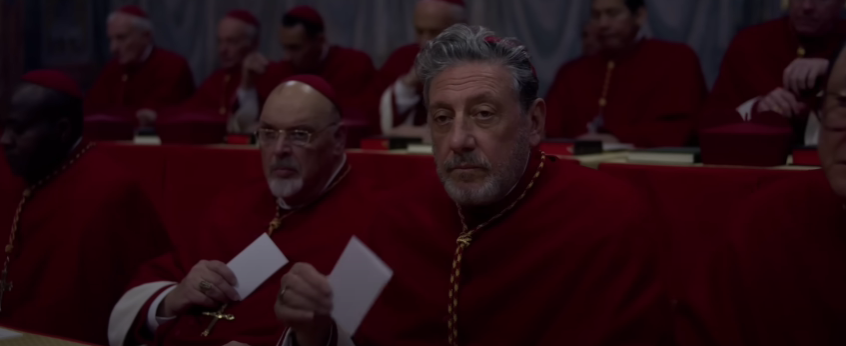
Evangelical faith? Mocked as cultish in Saved! (2004) or fanatical in God’s Not Dead parodies. Revelation 18:23’s “sorceries” deceiving nations evokes Hollywood’s narrative alchemy, transmuting Bible-based faith into Protestant caricature while exalting Catholic aesthetics.
Hollywood’s veneration of the Pope amid anti-Christian themes is equally paradoxical, a “wine of fornication” (Revelation 14:8) that seduces while subverting. Despite films like The Exorcist (1973) invoking Catholic exorcism positively, broader portrayals mock faith: Saved! ridicules evangelicals; The Last Temptation of Christ (1988) humanizes Jesus to provoke.
Yet popes fare better: The Two Popes (2019) humanizes Francis and Benedict; The Young Pope (2016) satirizes but glamorizes Vatican intrigue. Oscar-night nods, like Scorsese’s Silence (2016), nod to Catholic suffering without endorsing its theology. A 2023 poll showed 43% of Christians feel Hollywood misrepresents their faith, yet papal films draw acclaim.

Daniel 2:41’s “divided kingdom” reflects this: iron papal authority endures, clay anti-Christian themes fracture, but the alloy persists, venerating hierarchy over gospel. Finally, the narrative of Jewish control overshadows Catholic influence, despite evidence of the latter’s depth. The “Jewish Hollywood” trope, rooted in founders like Warner Bros. and MGM’s Louis B. Mayer, persists via antisemitic canards (e.g., 1990s controversies).
Yet Catholics dominate power: executives like Disney’s Bob Iger (raised Catholic) and Warner Bros.’ Ann Sarnoff; producers like Kathleen Kennedy (Lucasfilm). Historically, Breen and Quigley (Catholic) enforced the Code; today, Catholics like Mark Wahlberg, Martin Scorsese, and J.J. Abrams hold sway.
A 2021 Franciscan Media report lists 20+ practicing Catholics in key roles, from directors (Scorsese) to actors (Wahlberg), outpacing overt Jewish figures in influence. Revelation 18:12’s “merchandise of gold, silver, and precious stones” evokes this gilded Catholic undercurrent, trading souls while the Jewish narrative distracts. In Hollywood’s Babylonian bazaar, Rome’s legacy endures: a city of angels born Catholic, censored by its values, venerating its popes amid faith’s mockery.

Daniel’s iron-clay feet suggest fragility—alliances that mingle but never merge. As Revelation 18:21 declares Babylon’s violent end, so too may this influence fracture, but not before shaping narratives that seduce the world. For now, the Church’s subtle sway persists, a gold-veined clay in Tinseltown’s empire of dreams.
Don’t forget to Subscribe for Updates. Also, Follow Us at Society-Reviews, YouTube, Twitter, Odysee, Rumble, and Twitch



 Society Reviews
Leave a comment