
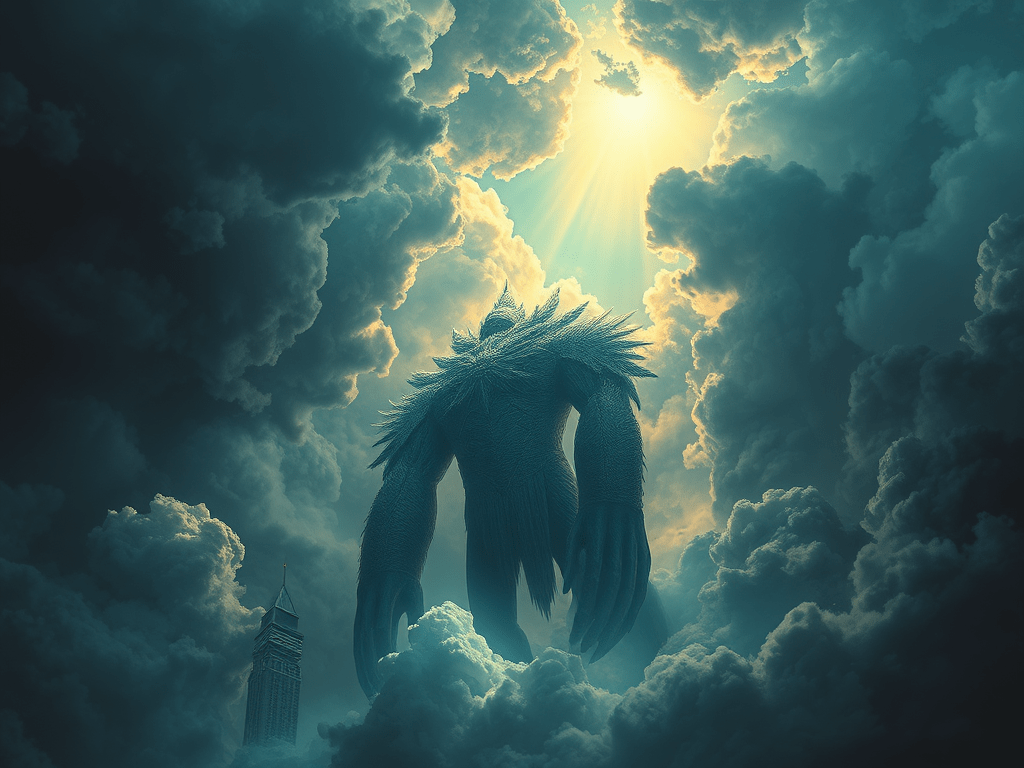
In an age dominated by cinematic universes and billion-dollar franchises, a curious thread connects the caped crusaders of Marvel and DC to ancient scriptural warnings: the Nephilim.

Described in the Bible as the hybrid offspring of fallen angels and human women, these “mighty men… of renown” (Genesis 6:4) are not merely a footnote in Genesis—they are, according to a literal reading of Scripture, the primordial source of global mythologies, pagan pantheons, and even today’s superhero archetypes.
This interpretation, rooted exclusively in the text of the Bible, presents a sweeping narrative: the Nephilim did not vanish with the flood. Their memory survived through Noah’s descendants, was corrupted at the Tower of Babel, and reemerged as the gods of Greece, India, and Scandinavia—before resurfacing in the 20th century as Superman, Wonder Woman, and Thor.
The Biblical Origin: A Literal Union of Heaven and Earth
The foundation lies in Genesis 6:1-4 (KJV):
“And it came to pass, when men began to multiply… that the sons of God saw the daughters of men that they were fair; and they took them wives… There were giants in the earth in those days; and also after that, when the sons of God came in unto the daughters of men, and they bare children to them, the same became mighty men which were of old, men of renown.”

Here, “sons of God” are identified not as human believers—a term absent before the New Testament—but as angelic beings, as confirmed in Job 1:6, 2:1, and 38:7, where they present themselves before God and shout for joy at creation. These angels, having fallen with Satan (Revelation 12:7-9), took human form, married women, and produced hybrid offspring: the Nephilim.
Their existence provoked divine judgment. God declared, “My spirit shall not always strive with man, for that he also is flesh” (Genesis 6:3), limiting human lifespan to 120 years—a grace period before the flood. Noah alone was “perfect in his generations” (Genesis 6:9), meaning his bloodline remained uncorrupted.
The New Testament reinforces this: 2 Peter 2:4-5 and Jude 1:6 describe angels who “kept not their first estate” being chained in darkness—tied directly to the flood era. Their sin? Leaving their spiritual realm to cohabit with humanity.
Post-Flood Survival: Memory, Not Blood

Only eight souls survived the deluge (1 Peter 3:20). Yet Genesis 6:4 notes the giants existed “in those days; and also after that.” Post-flood giants—Og of Bashan (Deuteronomy 3:11), Goliath (1 Samuel 17), the Anakim (Numbers 13:33)—suggest either surviving Nephilim lineage or renewed angelic incursions.
More significantly, the true history of the antediluvian world was carried orally by Noah’s family. As nations scattered from Babel (Genesis 11:1-9), they retained fragments of this truth—distorted into mythology.
The Corruption of Truth: From Nephilim to Pantheon
The Apostle Paul warned that humanity “changed the truth of God into a lie” and “worshipped and served the creature more than the Creator” (Romans 1:25). This, the argument goes, is the origin of global paganism.
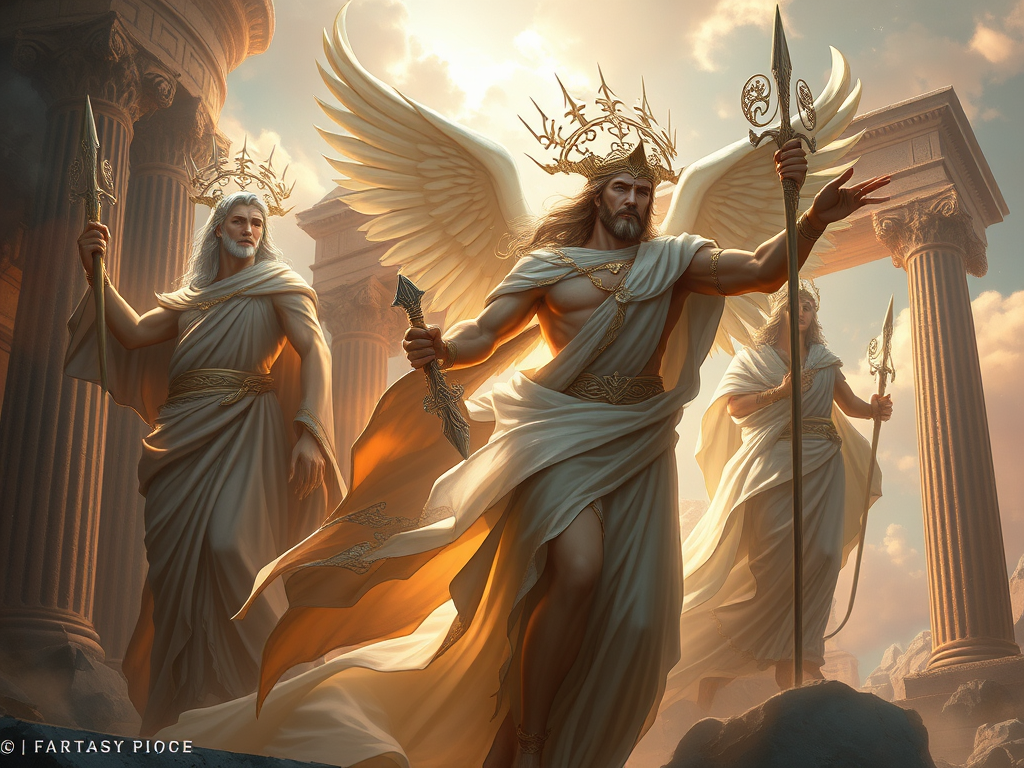
- Greek Gods: Zeus, fathering demigods like Heracles through human women, mirrors Genesis 6:2. The Titans represent the original “sons of God”; the Gigantes, post-flood giants warring against Olympus. Prometheus, chained for giving fire, echoes the fallen angels’ forbidden knowledge (2 Peter 2:4). Even the Greek underworld—Tartarus—is named in Scripture as the prison of these angels (2 Peter 2:4, Greek: tartaroō).
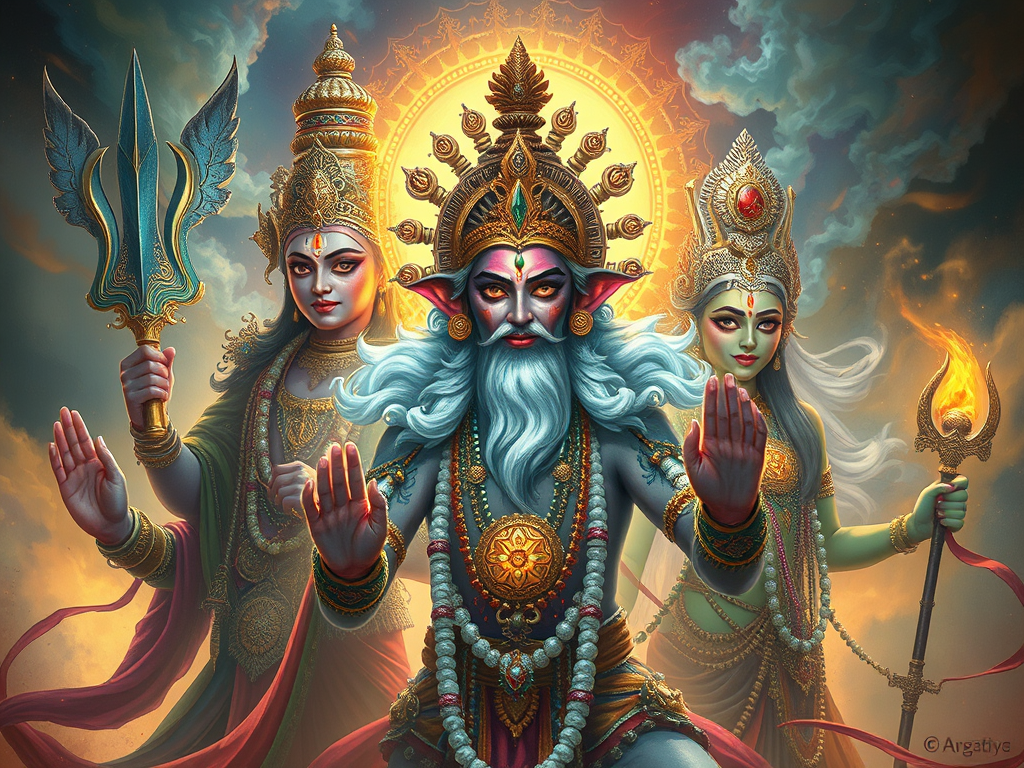
- Hindu Deities: Indra, the thunder-wielding king, parallels Nimrod, the “mighty hunter before the Lord” (Genesis 10:9). Krishna, born of divine incarnation and human mother, fits the Nephilim hybrid mold. Shiva’s destructive dance reflects the violence that “filled the earth” (Genesis 6:11). Kali, demanding blood, violates God’s decree (Genesis 9:4-6) and aligns with demonic sacrifice (1 Corinthians 10:20).
- Norse and Others: Thor, wielding a hammer against giants (Jötnar), reenacts battles between divine and Nephilim forces. The pattern is consistent: superhuman beings, hybrid births, cataclysmic floods (Deucalion, Manu), and rebellion against heaven.
Paul’s words in 1 Corinthians 10:20 are stark: “The things which the Gentiles sacrifice, they sacrifice to devils, and not to God.” The gods of the nations, then, are not metaphors—they are demonic entities, some the disembodied spirits of dead Nephilim.
The Ephesian Precedent: Commerce in False Gods
In Acts 19:24-35, silversmiths in Ephesus profited from shrines to Diana (Artemis), a goddess tied to fertility and the moon—echoes of Nephilim mating rituals. When Paul preached against “gods made with hands” (v. 26), the craftsmen rioted, fearing loss of trade. The town clerk defended the “image which fell down from Jupiter” (v. 35)—a meteorite idol, but symbolically, a relic of fallen angelic power.
This model—profit through pagan hero worship—finds modern expression in the comic book industry.
Superman, Wonder Woman, and the Nephilim Reboot
Superman, rocketed from a dying world (Krypton = fallen angelic realm), raised by human parents, embodies the Nephilim formula: divine origin + human upbringing = superhuman savior. His “S” shield marks him as a “man of renown.
”Wonder Woman, daughter of Zeus and Hippolyta, trained among Amazon warriors, is a direct descendant of the Diana cult in Ephesus. Her lasso of truth and bulletproof bracelets are modern talismans—replacing biblical armor (Ephesians 6:11-17) with pagan symbols.

Marvel’s Thor is the Norse god repackaged. The Hulk channels Nephilim rage. Darkseid and Thanos are Titan-like tyrants. Captain Marvel’s cosmic energy recalls Lucifer’s fall “as lightning” (Luke 10:18).“As It Was in the Days of Noah”
Jesus warned: “As it was in the days of Noe, so shall it be also in the days of the Son of man” (Luke 17:26). People ate, drank, married—normalized the abnormal. Nephilim unions were commonplace. Today, superhero media normalizes god-human hybrids, transhuman enhancement, and moral relativism.
The flood came suddenly. So will final judgment (Luke 17:37): “Wheresoever the body is, thither will the eagles be gathered together.” Superman’s eagle-like “S” and Roman-inspired iconography may be more than coincidence.

A Theological and Cultural Reckoning
This reading—strictly literal presents a unified theory:
- Nephilim were real historical beings.
- Their memory survived the flood via Noah’s line.
- At Babel, truth was corrupted into pagan gods.
- Greek, Hindu, and Norse pantheons are demonic distortions.
- Modern superheroes are the latest iteration—profit-driven idols (Acts 19 model).
- Society today mirrors pre-flood wickedness (Luke 17:26-30).
Critics will call this fundamentalist overreach. But within its own hermeneutic—where Scripture alone is truth, and all else is judged thereby—the logic is airtight. The Nephilim are not myth. They are the missing link between Eden and Endgame.

As comic sales soar and cinematic universes expand, one biblical question lingers: Are we entertaining angels unawares—or demons in disguise?
Don’t forget to Subscribe for Updates. Also, Follow Us at Society-Reviews, YouTube, Twitter, Odysee, Rumble, and Twitch



 Society Reviews
Leave a comment