

In the vivid imagery of the Book of Revelation, as presented in the Bible, a mysterious figure looms large: “Mystery, Babylon the Great, the Mother of Harlots and Abominations of the Earth” (Revelation 17:5).

This enigmatic “harlot” has sparked centuries of debate, with Catholic apologists often pointing to ancient Jerusalem as the culprit, citing its historical unfaithfulness. However, a literal reading of the KJB, particularly Revelation 17 and 18, alongside Daniel 2, 7, and Revelation 12:3, reveals a compelling case that this harlot is none other than the Roman Catholic Church, not the fallen city of Jerusalem destroyed in 70 AD.
The Harlot’s Profile: A Roman Fingerprint
Revelation 17 paints a striking picture of the harlot, seated on a “scarlet coloured beast, full of names of blasphemy, having seven heads and ten horns” (17:3). She is adorned in “purple and scarlet colour, and decked with gold and precious stones and pearls” (17:4), wielding a “golden cup” filled with “abominations and filthiness of her fornication.” Her forehead bears her title, and she is “drunken with the blood of the saints” (17:6), reigning over the “kings of the earth” (17:18). The beast’s seven heads are identified as “seven mountains” (17:9), a clear nod to Rome, the city famously built on seven hills.
This description aligns seamlessly with the Roman Catholic Church. The Vatican, headquartered in Rome, embodies the opulence described—think papal vestments in purple and scarlet, the Vatican’s vast treasures, and its global influence over nations through centuries of diplomacy and concordats. The “golden cup” evokes the Eucharist, central to Catholic worship, but condemned in a KJB framework as idolatrous due to transubstantiation (contrary to Hebrews 10:10-12). The Church’s historical persecution of Bible-believing Christians—millions killed during the Inquisition and Reformation—matches the harlot’s bloodshed, a grim legacy of martyrdom.

Contrast this with Jerusalem. By 70 AD, when Roman legions razed the city, Jerusalem was a regional hub under occupation, not a global powerhouse. Its temple, once ornate, lay in ruins, lacking the ongoing wealth or influence of the harlot. While Jerusalem persecuted early Christians (Acts 8:1), its scope was limited compared to the Catholic Church’s centuries-long, worldwide campaign against “heretics.” The KJB’s “seven mountains” may tempt some to point to Jerusalem’s hills, but Rome’s seven-hill identity was far more iconic in the ancient world, especially in Revelation’s Roman context.
The Beast: A Satanic, Roman System
The harlot rides a beast with seven heads and ten horns, a figure tied to Satan himself. Revelation 12:3 describes a “great red dragon” with identical features, explicitly identified as “that old serpent, called the Devil, and Satan” (12:9). This beast’s lineage traces back to Daniel 7’s fourth beast, a “dreadful and terrible” empire with ten horns (7:7), widely understood as the Roman Empire, and Daniel 2’s iron kingdom with ten toes, symbolizing Rome’s divided successors (2:40-41). The beast’s “names of blasphemy” (Revelation 17:3) echo the “great words” of Daniel’s little horn (7:8, 25), a figure of arrogance against God.
The Roman Catholic Church fits this narrative perfectly. Emerging from the ashes of the Western Roman Empire, the papacy inherited Rome’s political and cultural mantle, wielding influence over European kingdoms (the ten horns/toes). The KJB condemns practices like papal infallibility or veneration of images as blasphemous (Exodus 20:4-5), aligning with the beast’s character. The harlot’s ride on this Satanic, Roman system suggests a religious institution exploiting its power, a role the Vatican has played for centuries, from crowning emperors to shaping modern geopolitics.
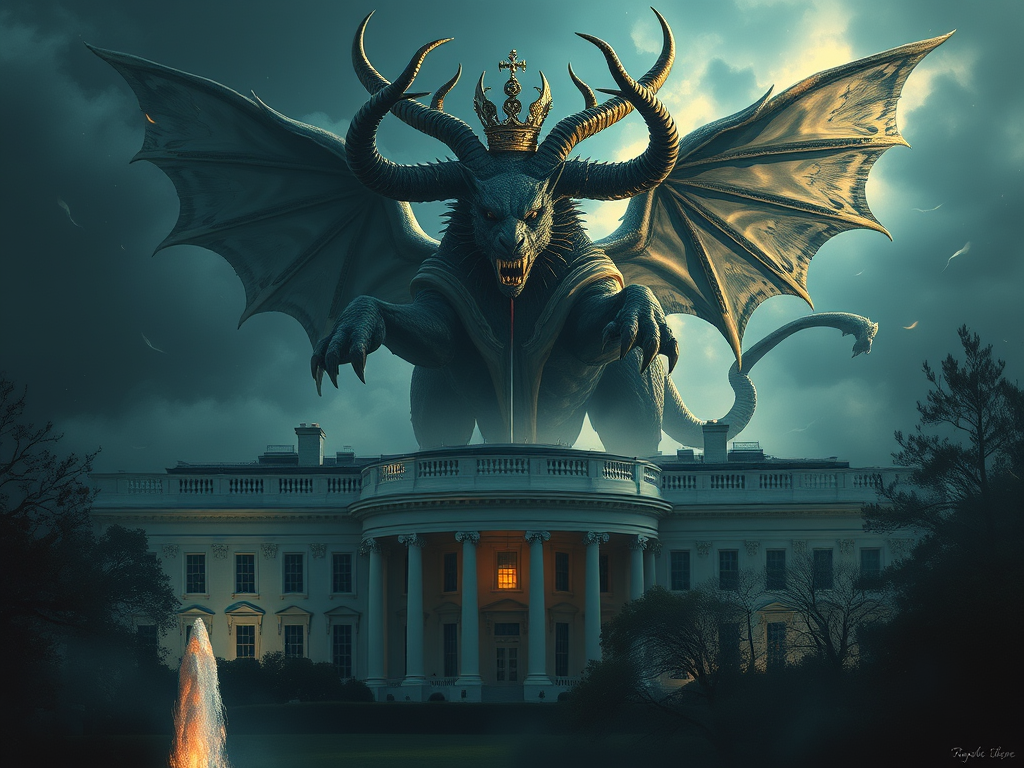
Jerusalem, however, was no rider of Rome’s beast. In 70 AD, it was crushed by Roman power, not allied with it. The KJB’s depiction of the harlot as a global force, reigning over kings (17:18), cannot apply to a subjugated city with no post-70 AD influence. The beast’s Satanic nature further distances Jerusalem, whose sins were covenantal unfaithfulness (Ezekiel 16), not a partnership with a Roman, Satanic system.
The Fall of Babylon: A Future Cataclysm
Revelation 18 details the harlot’s destruction, a sudden, fiery judgment: “Her plagues come in one day… she shall be utterly burned with fire” (18:8). Kings and merchants mourn her fall, lamenting the loss of her “great riches” (18:17) and trade in “gold, and silver, and precious stones… and souls of men” (18:12-13). This “great city” is “found no more at all” (18:21), a permanent end that shakes the world.
This points to a future event during the tribulation, a period of divine wrath in Revelation’s timeline (chapters 6-19). The Roman Catholic Church, with its global economic footprint—think Vatican wealth and historical indulgences—fits the harlot’s commercial dominance. The “souls of men” trade evokes Catholic practices like relics or indulgences, condemned in the KJB (Acts 8:20). The ten horns, kings of a fragmented Roman system (17:12), turn against the harlot (17:16), suggesting a future betrayal by political allies, possibly under the Antichrist’s regime (Revelation 13). This aligns with the Church’s enduring presence, poised for a climactic fall.

Jerusalem’s destruction in 70 AD, however, falls short. The siege was protracted, not a sudden “one hour” event (18:10). While significant, it didn’t disrupt global trade or prompt worldwide mourning, as Jerusalem was not a commercial hub. Its rebuilding after 70 AD contradicts the KJB’s permanent fall (“found no more”). Moreover, Revelation, written circa 95 AD, frames the harlot’s destruction as future, not a past event. Jerusalem’s role as a victim of Rome, not its partner, further disqualifies it.
Refuting the Catholic Case for Jerusalem
Catholic apologists argue that Jerusalem’s Old Testament harlotry (Ezekiel 16) and early Christian persecution (Matthew 23:37) make it the harlot. But this ignores key KJB evidence. Jerusalem’s influence was regional, not global, and its destruction lacked the economic or political scope of Revelation 18. The beast’s Roman and Satanic identity (Daniel 7, 2; Revelation 12:3) ties the harlot to Rome, not a city Rome destroyed. The harlot’s ongoing power and future fall point to an active institution like the Roman Catholic Church, not a city in ruins by 70 AD.

The Verdict
The KJB’s literal testimony in Revelation 17 and 18, corroborated by Daniel 2, 7, and Revelation 12:3, identifies Mystery, Babylon as the Roman Catholic Church. Its Roman base, global reach, wealth, persecution of saints, and alignment with a Satanic, Roman beast system make it the harlot, destined for a fiery end in the tribulation. Jerusalem, while unfaithful in its time, lacks the scope, Roman connection, and future judgment described. The evidence is clear: the harlot’s scarlet robes drape the Vatican, not the ruins of Jerusalem.
Don’t forget to Subscribe for Updates. Also, Follow Us at Society-Reviews, YouTube, Twitter, Odysee, Rumble, and Twitch



 Society Reviews
Leave a comment