
The Roman Catholic Church (RCC) claims to be the true heir of Christ’s apostles, tracing its lineage to Peter and the early church in the Book of Acts. Catholic apologists point to Matthew 16:18 in the King James Bible (KJB) to argue their church is the rock of Christianity.
But a closer look at the Bible tells a different story—one of deception, where Pagan Rome hijacked the early church, blending Babylonian paganism with Christian trappings to create a religious system the KJB calls “Mystery, Babylon the Great, the Mother of Harlots and Abominations of the Earth” (Revelation 17:5). Far from the apostolic purity of Acts, the RCC’s origins and practices reveal a pagan core, rooted in Rome’s idolatrous past, not the Bible’s truth.
The Harlot of Revelation: A Pagan Impostor
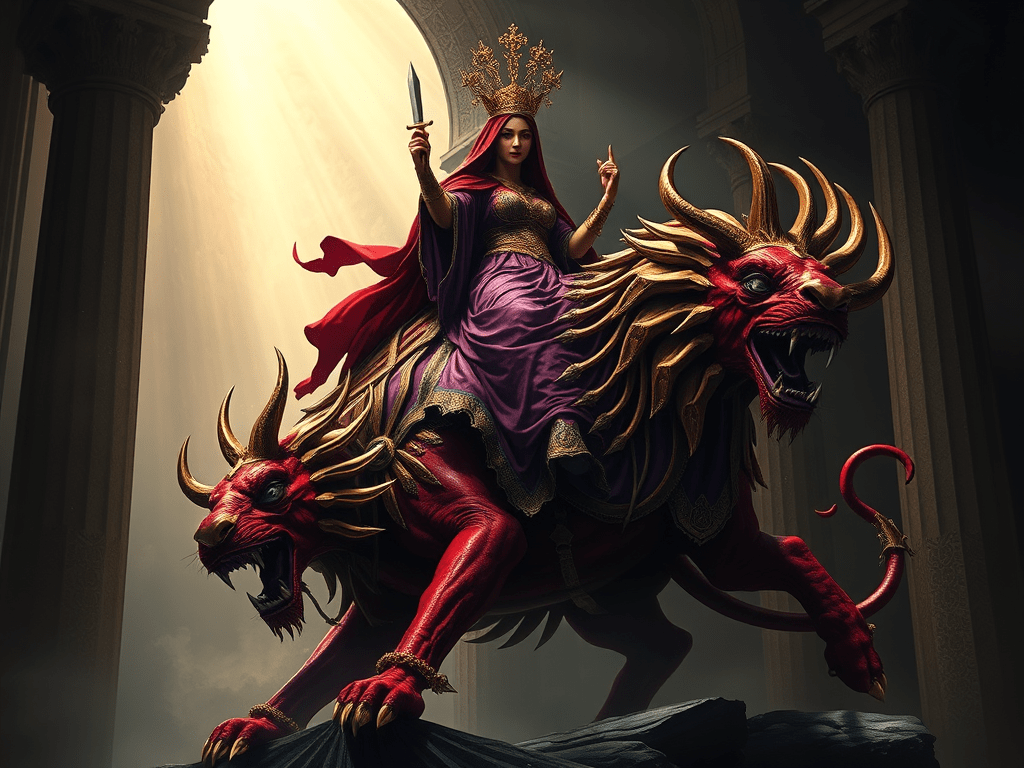
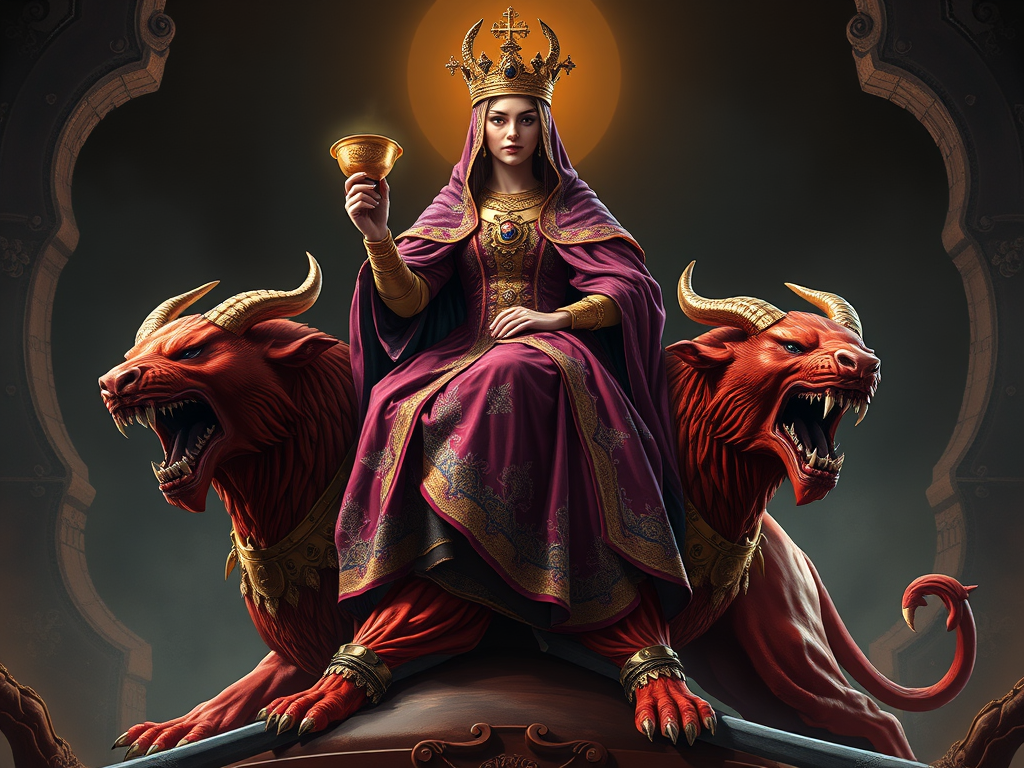
Revelation 17 introduces a woman riding a “scarlet coloured beast, full of names of blasphemy, having seven heads and ten horns” (17:3). She’s decked in “purple and scarlet colour,” dripping with “gold and precious stones,” holding a “golden cup full of abominations” (17:4). Her title, “Mystery, Babylon the Great,” marks her as a religious system steeped in spiritual infidelity, reigning over kings (17:18) and drunk with the blood of saints (17:6).
The beast’s seven heads are “seven mountains” (17:9)—Rome’s famous hills—and its ten horns echo the divided Roman Empire of Daniel 2’s iron toes (2:41-42) and Daniel 7’s fourth beast (7:7). Revelation 12:3 ties this beast to Satan himself, the “great red dragon” with matching heads and horns. This harlot, the KJB reveals, is the Roman Catholic Church, not ancient Jerusalem as Catholic apologists claim.

Its Roman base, global influence, and historical persecution of Bible-believing Christians (think Inquisition, Reformation martyrs) fit the profile. But the real bombshell is how the RCC’s practices—idolatry, Mariolatry, ritualistic Mass, papal supremacy, and pagan festivals—mirror Babylonian paganism, funneled through Pagan Rome, not the simple, Christ-centered faith of Acts.
Pagan Rome’s Takeover: A Satanic Heist
The early church in Acts was a model of biblical purity: believers gathered for preaching, fellowship, and breaking bread (Acts 2:42), rejecting idolatry (Acts 15:20) and centering on Christ’s finished work (Acts 4:12). But by the 4th century, Pagan Rome, the iron kingdom of Daniel 2 and the dreadful beast of Daniel 7, began reshaping Christianity. Emperor Constantine’s Edict of Milan (313 AD) legalized Christianity, but it came with a catch: Pagan Rome’s religious machinery—rooted in Babylonian idolatry (Jeremiah 51:7)—infiltrated the church, cloaking pagan practices in Christian garb.
Constantine, a former sun-worshiper, blended Christian and pagan elements, like making Sunday (dedicated to Sol Invictus) the day of worship, sidelining the biblical Sabbath (Exodus 20:8-11). The Bishop of Rome rose to power, adopting the imperial title Pontifex Maximus, once held by Roman emperors. By the 5th century, the RCC had morphed into a hierarchical institution, mirroring Rome’s pagan priestly colleges, not the decentralized elders of Acts (Acts 14:23).

This takeover, warned of in Revelation 12:9 where Satan deceives “the whole world,” set the stage for the RCC to peddle paganism as Christianity, fulfilling the harlot’s role on the Roman, Satanic beast (Revelation 17:3).
Pagan Practices in Catholic Clothing
The RCC’s practices, when viewed through the KJB’s lens, scream Babylonian paganism, not apostolic Christianity. Here’s how:
- Statues and Idolatry: Babylonian temples were packed with idols of gods like Marduk and Ishtar, venerated as divine conduits (Jeremiah 50:2). Pagan Rome continued this with statues of Jupiter and Venus. The RCC’s churches are filled with statues of Mary, Jesus, and saints, kissed and adorned in worship-like devotion. The KJB calls this idolatry (Exodus 20:4-5, 1 John 5:21), a direct echo of Babylonian and Roman paganism. Acts’ church? No statues, just spiritual worship (Acts 17:24-25).
- Mary as Queen of Heaven: Babylonians worshiped Semiramis, the mother goddess, and her son Tammuz, as mediators (Ezekiel 8:14, Jeremiah 44:17). Rome’s cult of Cybele, the “Magna Mater,” followed suit. The RCC exalts Mary as “Queen of Heaven” and “Mediatrix,” with prayers like the Rosary mimicking Cybele’s devotions. The KJB rejects any mediator but Christ (1 Timothy 2:5) and condemns the “Queen of Heaven” (Jeremiah 44:25). Acts never elevates Mary beyond a humble believer (Acts 1:14).
- The Mass and Ritualism: Babylonian priests performed repetitive sacrifices, believing they transformed offerings into divine substances. Rome’s Mithraic cults had ritual meals with consecrated bread and wine. The RCC’s Mass claims to turn bread and wine into Christ’s literal body (transubstantiation), a daily sacrifice that defies the KJB’s once-for-all atonement (Hebrews 10:10-12). The ornate chalice and incense mirror pagan rituals, unlike Acts’ simple breaking of bread (Acts 2:42).
- Papal Supremacy: Babylon’s high priests and Rome’s Pontifex Maximus claimed divine authority. The RCC’s Pope, also called Pontifex Maximus, asserts infallibility and vicarship of Christ, a blasphemous claim in the KJB (2 Thessalonians 2:4). Acts shows no supreme leader; Peter was a fellow elder (1 Peter 5:1), not a pope.
- Pagan Festivals: Babylonian fertility rites and Rome’s Saturnalia and equinox festivals were Christianized by the RCC into Christmas and Easter, complete with pagan symbols like eggs (linked to Ishtar). The KJB rejects pagan worship (Deuteronomy 12:30-31), and Acts records no such festivals, only Scripture-based preaching (Acts 17:2).

These practices, rooted in Babylonian paganism via Pagan Rome, align with the harlot’s “abominations” (Revelation 17:5) and her “golden cup” of deception (17:4), deceiving Christians into accepting paganism as faith.
The Global Deception
The RCC’s global reach, with over a billion followers and diplomatic ties to nations, mirrors the harlot’s reign over kings (Revelation 17:18). Its wealth—gold, art, and Vatican treasures—matches the harlot’s opulence (Revelation 17:4, 18:7). By claiming apostolic authority, the RCC convinced Christians that its paganized rituals were biblical, fulfilling Satan’s deception (Revelation 12:9). The KJB’s warning of the harlot’s “fornication” with kings (17:2) reflects the RCC’s historical alliances, from crowning emperors to modern geopolitics, a far cry from Acts’ persecuted, humble church (Acts 8:1).
The Roman Catholic Church’s origins lie not in the apostolic church of Acts but in Pagan Rome’s takeover, blending Babylonian idolatry with Christian veneer. Its statues, Marian devotion, Mass, papal claims, and festivals echo the paganism of Babylon and Rome, condemned in the KJB as “abominations” (Revelation 17:5). The early church’s simplicity and Christ-centered faith (Acts 2:42) stand in stark contrast.

As the harlot riding Satan’s Roman beast, the RCC deceived generations, but the KJB exposes its true roots—pagan, not Christian, awaiting divine judgment (Revelation 18:21).
Don’t forget to Subscribe for Updates. Also, Follow Us at Society-Reviews, YouTube, Twitter, Odysee, Rumble, and Twitch



 Society Reviews
Leave a comment